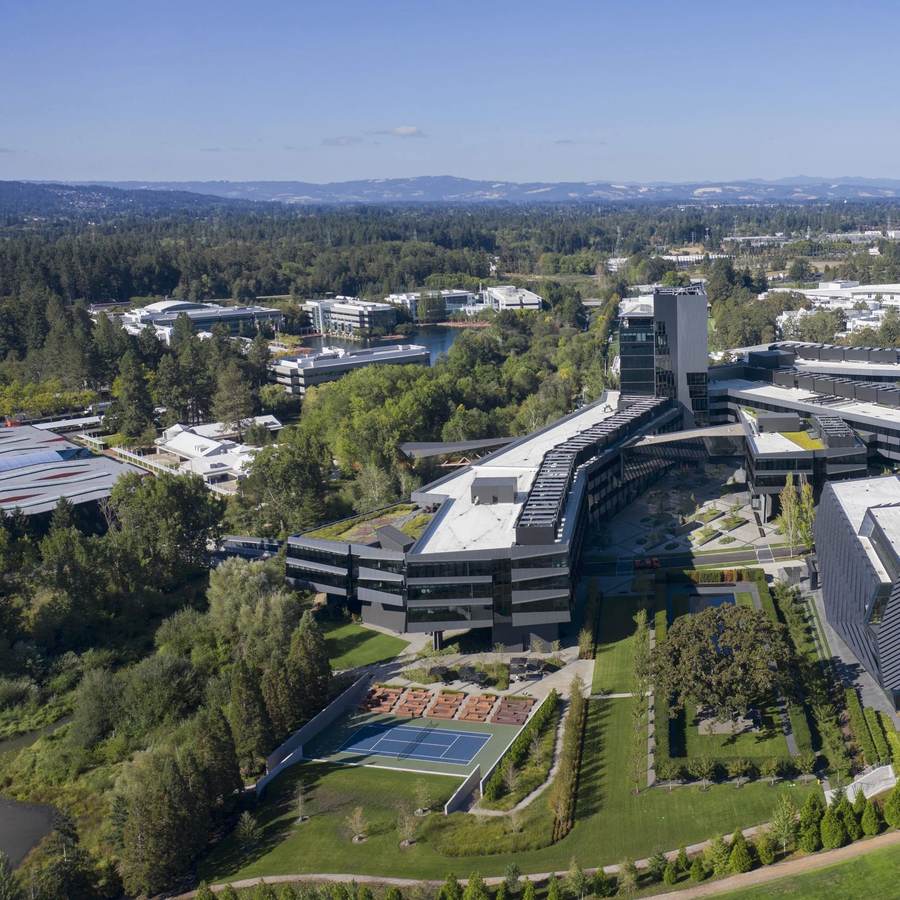
Nike stock worst year ever fears moved closer to reality Friday after the sportswear company paired a fiscal first-quarter revenue miss with a forecast for a high-single-digit sales decline across fiscal 2027. The shares fell 8.5% in after-hours trading Thursday and were down about 7.6% before Friday's open. At those levels, Nike had lost roughly 48% to 49% in 2026, putting the stock on course for its worst calendar year in Dow Jones Market Data records and among the S&P 500's largest laggards.
The selloff was not a verdict on one weak quarter. Nike reported $11.21 billion of revenue for the June-to-August period, down 4% as reported and 5% on a currency-neutral basis, against consensus estimates near $11.32 billion to $11.33 billion. Earnings of $0.48 a share beat expectations around $0.43 to $0.44. Net income slipped 2%, to $712 million from $727 million, while gross margin improved 60 basis points to 42.8%—the clearest bright spot in the release.
What changed the market's calculation was the distance between those modestly better profit mechanics and the outlook. Management now expects fiscal 2027 revenue to fall by a high-single-digit percentage, far worse than the roughly 2% decline analysts had modeled. Adjusted earnings are forecast at $1.15 to $1.35 a share, excluding about $0.15 a share of restructuring expense, compared with consensus near $1.67 to $1.68. An earnings beat built partly on discipline could not outweigh a reset that says demand will remain weak and restructuring will become more expensive before it becomes productive.
Why this matters
Nike is not merely another retailer confronting a cautious consumer. It is the industry's scale leader, a brand whose distribution, athlete roster and product franchises historically created demand rather than waited for it. When the company warns that lifestyle merchandise has become a “sea of sameness,” the admission reaches beyond seasonal fashion. It says the commercial engine that once converted cultural relevance into full-price sales is no longer reliably separating Nike from a crowded field.
The earnings report also makes the turnaround more measurable. The question is no longer whether chief executive Elliott Hill inherited an overextended direct-to-consumer strategy, stale lifestyle franchises and damaged wholesale relationships. Those problems are established. The question is whether the fixes are producing enough new growth to offset the deliberate removal of old volume. This quarter's answer was no: performance products grew, but their base remains too small to carry Sportswear, Jordan Brand and Greater China.
That gap matters to workers as well as shareholders. Nike's new operating model, called Pace, targets $2.5 billion in cumulative savings through fiscal 2031 and will mean fewer roles, with notifications beginning in calendar 2027. The company has not disclosed the number of jobs affected. Cost savings can protect investment in design, sport and supply-chain systems, but layoffs also risk removing experience from an organization that needs faster decisions and more locally relevant products. Execution—not the size of the savings headline—will determine which effect wins.
Nike earnings forecast 2027: the numbers behind the shock
The quarter's regional mix explains why the Nike earnings forecast 2027 fell so far below Wall Street's expectations. North America rose 2% on a currency-neutral basis to $5.127 billion, evidence that wholesale repair and performance launches can still produce growth in Nike's largest market. Europe, the Middle East and Africa fell 5% to $3.176 billion. Latin America and Asia Pacific were essentially flat at $1.463 billion. Greater China dropped 26% currency-neutral to $1.18 billion.
China is not a small side business that can be offset indefinitely. It has historically been a major profit pool and remains Nike's third-largest geography. Sales there have now fallen for nine consecutive quarters, according to reporting cited by Wealth Professional. Nike is resetting inventory, reducing discounting and taking online sales rights away from some large retail partners beginning in January. Those steps may improve brand health, but management warned that the cleanup will pressure revenue and profitability into fiscal 2028 and take multiple seasons.
The gross-margin gain deserves recognition. Lower warehousing and logistics expense helped lift the measure to 42.8%, showing that operating discipline is having an effect. Yet margins cannot compound if the revenue base keeps shrinking. Investors generally reward a company for selling fewer low-quality units when that sacrifice clears the way for healthier demand. They become less patient when each cleanup uncovers another year of contraction.
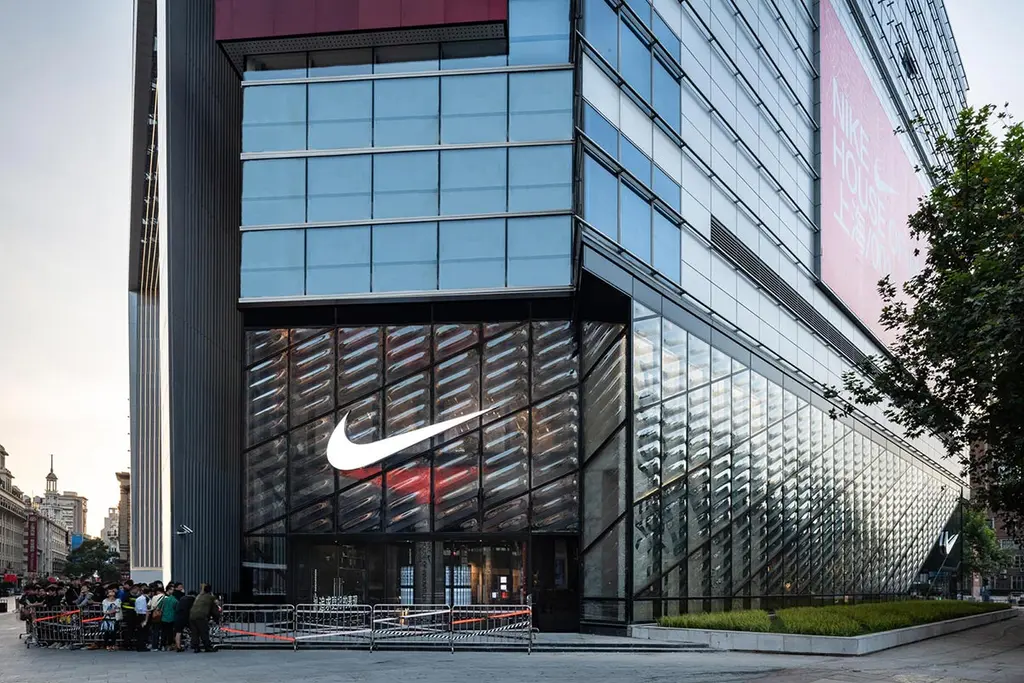
Nike China sales decline is a product test, not only a channel reset
The Nike China sales decline is often described as a distribution problem: too much product, too much digital discounting and stores that have gone too long without a refresh. Those are real weaknesses, but treating them as the whole problem would be comforting and incomplete. Local sportswear companies have gained credibility in performance and fashion, while global rivals have sharpened their assortments. Consumers have more credible ways to spend the same yuan.
Nike's decision to remove unprofitable digital distribution can make reported sales worse before it makes the business better. The useful indicators will therefore be more specific than quarterly revenue alone: fewer promotions, cleaner inventory, stronger full-price sell-through, refreshed stores and products designed for local consumers rather than imported as global leftovers. A smaller China business can be healthier. A smaller business with no improvement in demand is simply smaller.
The comparison with peers is uncomfortable. Adidas has rebuilt momentum around running, football and selected lifestyle franchises. On has turned premium running into a platform and, according to the New York Post, added Kylian Mbappé after the football star ended a two-decade relationship with Nike. New Balance has expanded its performance credibility and cultural reach. Puma remains uneven, but it still competes for athletes, shelf space and attention. None has Nike's global scale; all benefit when that scale produces sameness rather than distinction.
Nike Sportswear sales decline exposes the lifestyle overhang
Nike Sportswear, which accounts for roughly half of revenue, fell by a low-double-digit percentage. Jordan Brand declined by the mid-teens. The planned Dunk pullback alone removed about $200 million from Sportswear revenue, while Converse recorded a 14th consecutive quarterly decline. Some of this contraction is intentional: Nike is reducing the retro inventory and promotional volume that weakened scarcity and trained shoppers to wait for discounts.
But the Nike Sportswear sales decline also shows the risk of relying on yesterday's icons for tomorrow's growth. Retro shoes can remain valuable franchises without carrying the entire innovation burden. When too many colorways and near-identical silhouettes fill the market, the product becomes visible without feeling new. Hill's “sea of sameness” phrase is powerful because it identifies a creative problem, not just a planning error.
The Jordan Brand sales decline is especially important. Jordan is both a performance legacy and a lifestyle economy of its own. Reducing oversupply can restore desirability, but cuts have to be paired with new reasons to care—fresh basketball performance, disciplined storytelling and fewer releases with clearer identities. Scarcity alone does not create relevance; it amplifies relevance that already exists.
Performance is the proof point—and still too small
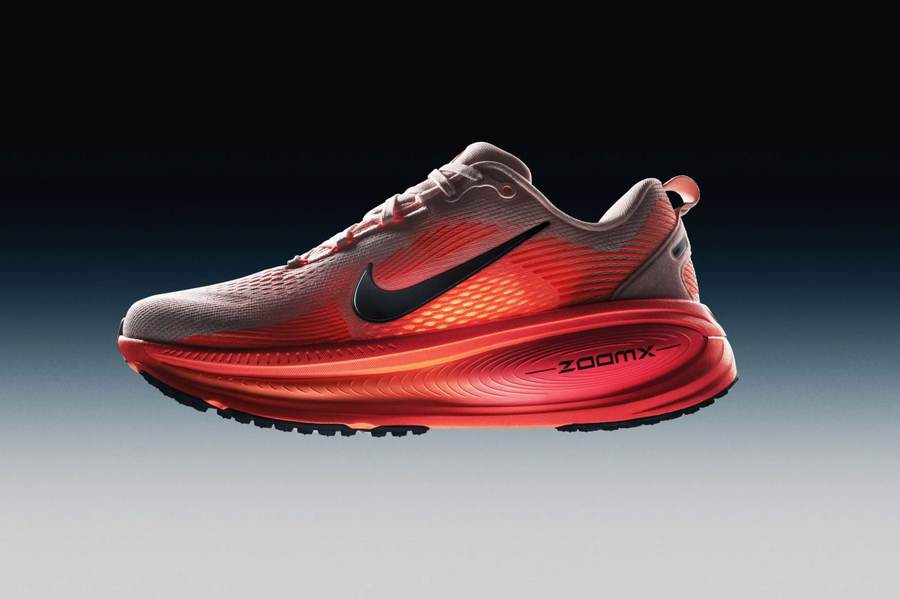
The countercase inside the report is real. Nike's performance portfolio grew by a high-single-digit percentage across running, football, training, basketball, tennis and golf. The Vomero running line has gained traction. A new Caitlin Clark signature sneaker launched Thursday and sold out. These are not cosmetic wins. They support Hill's decision to reorganize the company around sport and show that consumers still respond when Nike delivers specific technical value and cultural energy.
Hill nevertheless gave investors the sentence that defines the quarter: “Our Nike performance business is not yet large enough to offset the pressure we're seeing in Nike Sportswear, Jordan Brand, and Greater China.” The issue is scale and timing. A sold-out launch demonstrates demand, but without production and repeatable follow-on products it can remain a small event. A successful running family can grow quickly, but it must compete against brands whose identities are already concentrated in that category.
Nike's task is to turn individual successes into a portfolio. That means the Vomero cannot be one bright shoe on an overloaded wall, and the Caitlin Clark launch cannot be a one-day scarcity story. The company needs consistent franchises at multiple prices, sport-specific credibility and enough supply to translate heat into material revenue without recreating the glut it is now clearing.
Elliott Hill turnaround: correcting the DTC-era overreach
Hill took over in 2024 after Nike's direct-to-consumer push had gone too far. The earlier strategy aimed to own customer relationships, capture retail margin and collect better data through Nike's stores and apps. In principle, those goals were rational. In practice, Nike reduced its presence with important wholesale partners before its own channels were strong enough to replace their reach, assortment and local knowledge.
The Elliott Hill turnaround has tried to reverse that overcorrection by restoring retailer relationships, centering product teams on sport and clearing aged lifestyle stock. That repair takes time because distribution decisions ripple through future order books, while footwear design and manufacturing run on long calendars. Hill's warning that the turnaround “will take time” is therefore credible. It is also less reassuring nearly two years into his tenure, especially now that guidance points to a deeper decline rather than stabilization.
The hardest judgment is whether Pace is acceleration or another reset. Consolidating four regions into three—Americas; Asia Pacific plus Greater China; and Europe, the Middle East and Africa—could reduce duplication and speed decisions. A new campus in India can add technical and operational talent. Modernizing the supply chain can improve availability and lower cost. Yet organizational charts do not create a better shoe. Pace succeeds only if those savings and simpler reporting lines move resources closer to athletes, designers and local consumers.
Nike layoffs Pace plan: savings have a human and strategic cost
The Nike layoffs Pace plan is expected to generate about $2.5 billion of cumulative savings through fiscal 2031. Reuters-syndicated reporting says most savings are due in fiscal 2029 and 2030, while the company expects roughly $1 billion of pretax charges over the period, largely tied to severance and other employee costs. That long schedule makes Pace less of an emergency quarter fix than a multi-year redesign.
For employees, the uncertainty begins before formal notifications. Nike said decisions about affected roles will start in 2027 and continue beyond it. The company has not supplied a headcount. Investors should resist treating an undisclosed number of cuts as automatic evidence of productivity. Savings are valuable only if the remaining organization can create, commercialize and replenish winning products faster.
The danger is false efficiency: a leaner company that has lost the category expertise or market judgment needed to grow. The opportunity is the opposite: fewer layers, clearer authority and more investment in product. Hill's language about becoming more agile, efficient and athlete-focused signals the intended outcome. The next investor day must show how the structure achieves it, not merely how much it costs.
Who benefits if Nike's reset stalls
On is the clearest narrative beneficiary. Its running technology and premium positioning already challenge Nike in a category Nike wants to reclaim, and Mbappé's move gives On a global football symbol. Adidas benefits if Nike's lifestyle pullback leaves more room for its terrace, football and running franchises. New Balance can capture shoppers who want technical running credibility and a different lifestyle vocabulary. Puma has an opening in football and accessible sport-fashion even if its own execution remains mixed.
Retailers can benefit from competition, too. Nike's return to wholesale restores traffic-driving product, but partners now negotiate with several brands capable of filling premium shelf space. That reduces Nike's leverage compared with the period when retailers depended more heavily on the Swoosh. Athletes benefit from competing sponsorship offers and greater freedom to choose brands aligned with their sport or audience.
There is a limit to the rival-wins framing. Nike remains an enormous business with rare global awareness, a deep roster and the capital to fund product, marketing and distribution at scale. Its performance growth shows that consumers have not rejected the brand. Rivals gain most if Nike's recovery remains slow, not because Nike has become irrelevant overnight.
Who loses
The most immediate losers are employees whose roles may disappear under Pace. Shareholders have already absorbed a historic drawdown, and the weak earnings range implies less profit support while the reset runs. Suppliers and retail partners tied to declining franchises may see lower orders. Mall owners and franchisees in China face a difficult period as Nike cuts unprofitable digital distribution and refreshes a store base management says has gone years without enough investment.
Nike also loses some strategic freedom when its share price is weak. Management must invest through a downturn while proving discipline, maintain athlete relationships while competitors bid aggressively, and avoid overproducing every early hit. The brand can afford that balance, but the cost of mistakes rises when investors no longer assume growth will return on its own.
Nike stock plunge October 2026 in market context
The Nike stock plunge October 2026 reflects a dramatic change in expectations. A company once valued as a dependable global compounder is being priced as a turnaround with uncertain duration. An 8.5% after-hours fall and roughly 48% to 49% year-to-date decline are not just reactions to $110 million or so of missed quarterly revenue. They represent the market's lower confidence in when the bottom arrives and what profitability looks like afterward.
Being one of the S&P 500's largest laggards in a year of uneven economic growth intensifies the comparison. Investors can choose companies with clearer earnings momentum. Nike must therefore offer more than a credible destination; it must provide milestones that can be checked quarter by quarter. Cleaner inventory, less discounting, stabilized China sales, growing wholesale orders and sustained performance growth would make the long-term case tangible.
The worst-year-ever label is conditional on the losses holding through December. It is a useful measure of market damage, not a forecast that the business will fail. Stocks can recover before reported sales turn if investors see credible leading indicators. They can also remain weak after cost savings begin if revenue quality does not improve. The next rerating depends on evidence that Nike is again creating demand.
What to watch at Nike investor day 2026
The Nike investor day 2026 scheduled for next month now carries unusual weight. Management needs to reconcile a long-term product story with a near-term contraction. Investors should look for a bridge from today's high-single-digit revenue decline to stabilization: how much of the fall is deliberate franchise reduction, how much is external demand weakness and how much reflects lost share.
China should come with concrete milestones. Nike can explain which digital doors are being removed, how inventory age and discount rates are changing, when store refreshes begin and what local product pipeline is coming. Performance should come with scale targets: whether running, football, training and basketball can grow fast enough to offset the planned lifestyle contraction and when those businesses become large enough to change total-company growth.
Pace needs similar precision. The $2.5 billion savings target stretches to fiscal 2031, with much of the benefit years away. Investors will want annual phasing, expected restructuring charges, reinvestment priorities and a clear account of how three regions improve speed. Employees deserve timely detail on how roles are selected and supported. A plan built around agility should not produce a prolonged fog.
What success looks like—and how long it could take
Success does not require Nike to recreate the market conditions of its peak years. It requires a healthier sequence. First, the company reduces old inventory and promotions without losing more relevance. Second, North American gains broaden beyond a few launches, while Europe stops contracting. Third, China returns to cleaner full-price demand after the distribution reset. Finally, performance growth becomes large enough to outweigh the planned decline in Sportswear and Jordan.
The earliest financial signs would be sequentially improving currency-neutral sales, sustained gross margin without excessive cost cutting and a better mix of full-price product. The commercial signs would be stronger reorder rates, more balanced digital and wholesale growth, and hit franchises that extend across seasons. The cultural signs are harder to quantify but equally important: athletes choosing Nike, younger consumers treating new products as original rather than repetitive, and retailers allocating scarce premium space willingly.
Failure would look like repeated restructuring with targets pushed farther out, performance wins that remain too small, and China weakness explained indefinitely as a cleanup. Nike has enough scale to absorb a slow recovery, but time is not neutral. Every season allows On, Adidas, New Balance, Puma and local Chinese brands to deepen relationships Nike must later win back.
The balanced conclusion is that Nike's turnaround is neither disproved nor on schedule. The 42.8% gross margin, North American growth, performance momentum and sold-out Caitlin Clark launch show working pieces. The high-single-digit annual decline, 26% China drop, lifestyle weakness and new layoffs show those pieces are not yet a system. Friday's market reaction was severe because the burden of proof has shifted: investors are no longer paying for the promise that Nike can recover; they are waiting to see the recovery in the numbers.
Sources
- Nike Investor Relations — Fiscal 2027 first-quarter results
- Reuters syndication via LA Post — forecast, Pace plan and China reset
- Wealth Professional — regional results, consensus estimates and restructuring
- MarketWatch via Morningstar — stock performance, portfolio detail and investor expectations
- New York Post — Friday trading and athlete departures
Image sources: Hero photograph from PDX Monthly; Shanghai store photograph from House of Heat; Vomero photograph from Test Runner.