Schneider Electric PTC deal
- Schneider Electric PTC deal
- industrial software acquisition
- industrial AI strategy
- PTC stock price

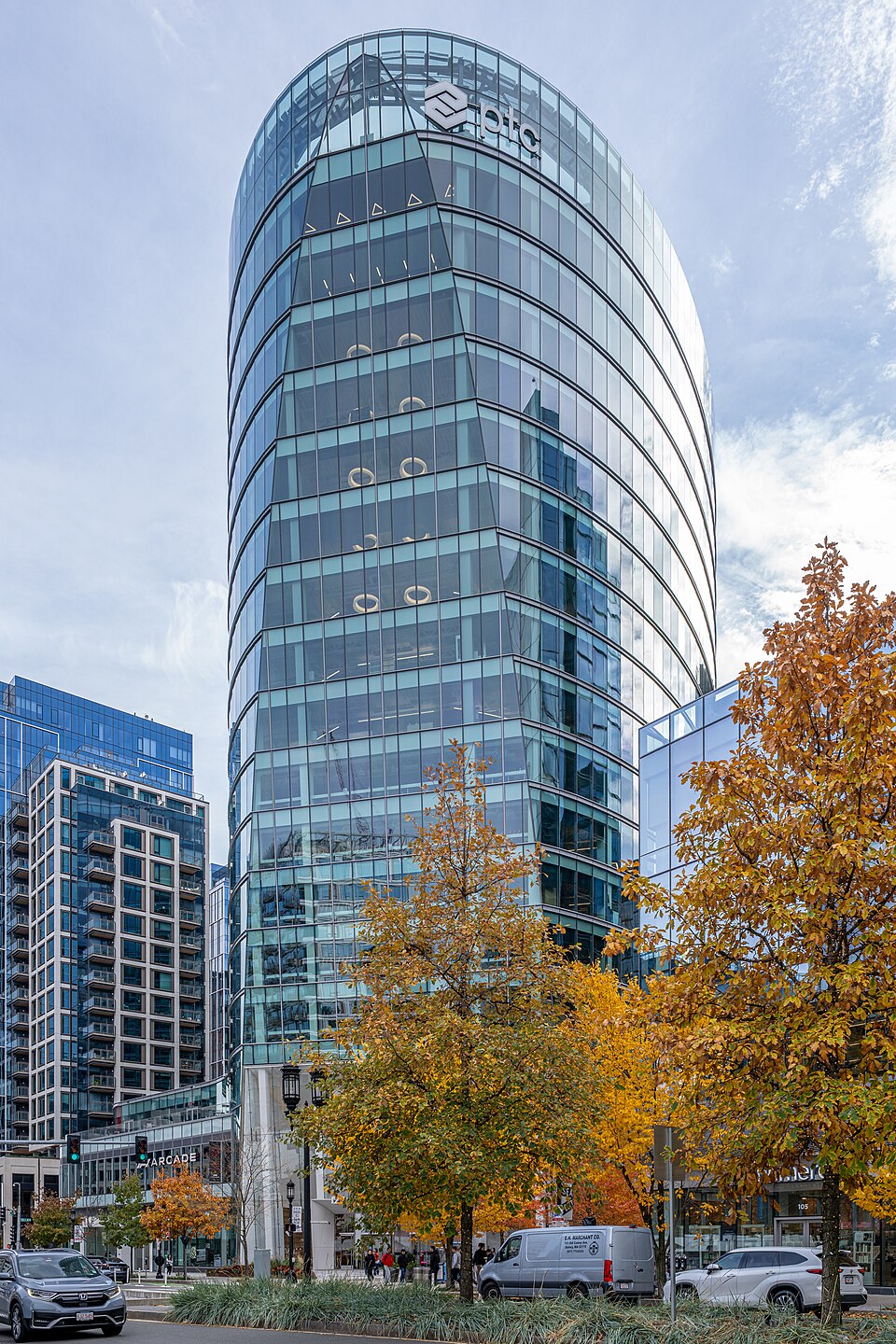
PARIS — The Schneider Electric PTC deal is the clearest sign yet that the next industrial contest will be fought as much in data models as in factories. Schneider agreed Monday to buy Boston-based industrial-software maker PTC for $205 a share in cash, valuing its equity at about $22.6 billion and the enterprise at $23.7 billion. It is the largest transaction in Schneider's history.
PTC's board has recommended that shareholders approve the offer, which Schneider expects to close in the third quarter of 2027. The buyer plans to finance the transaction with a combination of equity and new debt. That financing choice matters because investors immediately divided the deal into two stories: PTC holders received a rich exit, while Schneider holders were asked to fund and trust a complicated transformation.
The split was visible before the U.S. opening bell. PTC shares rose roughly 34% to 35%, reaching about $195.60, while Schneider shares fell about 8% to 10% in Paris to roughly €274. The decline erased around €15 billion, or about $17 billion, from Schneider's market value. Buyers applauded the software target; owners of the acquirer demanded proof.
Why this matters
The data layer is becoming the new industrial moat
For two decades, “digital industry” often meant attaching software to machinery after the hardware was sold. Schneider's wager reverses that order. Product design, operational control and the data connecting them become the strategic center; electrical distribution, cooling and automation become the physical systems where that intelligence acts.
IG analyst Angeline Ong captured the logic neatly: “Schneider Electric isn't bolting on software, it's building a full stack to construct a moat: PTC for design, AVEVA for operations, Cognite as the AI layer connecting them.” That stack describes an industrial AI strategy with a continuous flow of information. PTC models what a product should be. AVEVA helps operate the plant that makes it. Cognite organizes the underlying industrial data so software and AI can interpret what is happening.
The moat is not merely a collection of licenses. It is the data context produced when engineering intent meets operational reality. A competitor can copy a dashboard or match a component price. It is harder to displace a platform that already understands a customer's design files, asset history, factory processes and energy usage. Schneider is betting that this context will become the control point for industrial AI.
From circuit breakers to the data-center backbone
A two-century evolution accelerates
Schneider's roots reach back to industrial-revolution France. Its modern identity was built on unglamorous but essential equipment: circuit breakers, power distribution, automation systems and controls. The rise of cloud computing turned that hardware into strategic infrastructure. Data centers need reliable power, cooling and prefabricated IT modules at immense scale, making the Schneider Electric data center business a major beneficiary of the AI buildout.
Schneider shares nearly doubled over the past three years as that demand surged. In July, the company reported record first-half results and raised its revenue forecast. That strength created currency and confidence for a buying spree, but it also raised the standard for any deal. Investors already owned a powerful data-center growth story; management now has to prove that a software-heavy future improves it rather than dilutes it.
The 2026 software M&A wave comes to industry
The PTC bid follows Schneider's June agreement to buy industrial-data and AI company Cognite Holding for $3.1 billion. Last month it also launched an approximately €1.2 billion, or $1.35 billion, takeover bid for smart-device maker Shelly Group. The Cognite acquisition supplies the data layer, Shelly broadens connected endpoints, and PTC reaches upstream into design and engineering.
That sequence makes Schneider Electric buys PTC more than a one-off headline. It is a consolidation thesis. The company is assembling pieces across the industrial lifecycle while software valuations remain pressured by fears that AI will disrupt existing products. Jefferies put the tension plainly: “AI disruption fears are still weighing on software valuations, which allows acquiring PTC at a decade low valuation but could still weigh on Schneider post deal.”
Berenberg analyst Nay Soe Naing characterized the price as healthy in a compressed valuation environment and amid difficult investor sentiment across software. For a broader view of the infrastructure cycle driving this appetite, see our coverage of Nvidia's expanding AI computing ecosystem and the $11.6 billion Anthropic-Akamai cloud agreement.
Who benefits, who loses, and what critics say
PTC holders receive the certainty
The $205 per share PTC offer gives shareholders cash and a 42.3% premium to the October 2 closing price. Against the 30-day volume-weighted average price, the premium is 46.1%. Those figures matter because PTC stock was down 29% over the preceding 12 months. The bid crystallizes value immediately rather than asking holders to wait for software sentiment to recover.
The approximately $195.60 premarket PTC stock price still sat below the offer, reflecting time to closing and the usual regulatory and execution discount. But the narrow gap showed that traders regarded completion as plausible and the board recommendation as meaningful.
Schneider holders absorb the uncertainty
Schneider shareholders face the opposite proposition. They surrender near-term financial flexibility and take on integration risk before the promised benefits arrive. New debt can increase pressure on capital allocation; equity issuance can dilute existing owners. Most important, management must combine PTC with an AVEVA Schneider portfolio that is still central to the strategy and a Cognite asset only agreed in June.
Ong's warning explains the Schneider Electric shares drop: can one company finance and integrate three software assets without losing customers, talent or product focus? The €15 billion market-cap hit was not a verdict that PTC lacks value. It was the market charging Schneider in advance for complexity.
Competitors gain a window
Siemens, Hexagon and other industrial-software rivals do not need to defeat the finished Schneider stack immediately. They need to exploit the transition. Customers can delay migrations, demand interoperability guarantees or use procurement cycles to negotiate harder while product road maps are reconciled. Employees and developers may also reconsider where their work fits inside a much larger organization.
Critics will watch whether Schneider preserves openness or steers customers toward a closed combination of PTC, AVEVA and Cognite. A moat built by making data more useful can strengthen customer loyalty. A moat built by making data harder to move can provoke backlash and regulatory attention.

The deal math: premiums, revenue mix and synergies
A large premium to a depressed base
The 42.3% premium is generous when measured against one day's close. The 46.1% premium to the 30-day average makes the same point over a longer window. Yet a premium alone does not prove overpayment. Because PTC had lost 29% in 12 months and software valuations were compressed, Schneider can argue that it is paying a control premium without paying a cycle peak price.
The market-cap arithmetic offers a more skeptical reading. Schneider lost about €15 billion of market value in one session — a paper decline approaching three-quarters of PTC's $22.6 billion equity value after rough currency conversion. Markets can overreact, and an acquirer's one-day move is not the deal's final cost. Still, the scale of the reaction says investors believe a significant portion of projected value could be consumed by financing or integration.
Nearly one-quarter of revenue becomes software and services
After closing, Schneider says nearly a quarter of revenue will come from software and services, up from less than a fifth. That change is more consequential than the five-percentage-point shorthand suggests. Software tends to bring recurring revenue, higher incremental margins and deeper customer integration. It also changes the company's risk profile: retention, product compatibility and developer ecosystems become as important as factory capacity and component demand.
What €250 million and €800 million mean by Year 3
Schneider is targeting €250 million in annual run-rate cost synergies by the third year after completion and approximately €800 million in revenue synergies. The distinction matters. Cost savings are largely under management's control: duplicate corporate functions, procurement and infrastructure can be consolidated, though cuts can damage innovation if pushed too far. Revenue synergies are harder. They require customers to buy more because the combined offer is genuinely better.
At face value, €1.05 billion of combined annual cost and revenue opportunity sounds large. But revenue synergies are sales, not profit. Their economic value depends on margins, the spending required to win those sales and how quickly they arrive. Investors should therefore treat the €250 million cost target as the more measurable commitment and the €800 million revenue target as the strategic test.
The integration challenge resembles a recurring software lesson: connected systems create value only when the links work reliably. Our analysis of the Boeing 737 MAX software glitch explores the operational cost when complex systems fail at their interfaces.
What happens next
Scenario one: the Q3 2027 close stays on track
The cleanest path requires PTC shareholder approval, regulatory clearance and stable financing. Schneider then needs a disciplined integration playbook: retain key engineers, publish product road maps early, protect customer choice and define exactly how PTC, AVEVA and Cognite exchange data. If those steps are visible before closing, some of today's execution discount can narrow.
Scenario two: regulators or financing stretch the timetable
A deal this large crosses jurisdictions and combines significant industrial-software assets. Regulators may focus on interoperability, market concentration and control of industrial data. Meanwhile, a long closing window exposes financing to changes in rates and equity markets. Delay would not necessarily defeat the transaction, but it would postpone synergies and increase uncertainty for customers and employees.
Scenario three: integration works, but more slowly
This may be the most realistic middle case. Cost actions can arrive on schedule while revenue synergies lag because industrial customers move cautiously. Schneider can still create value if the platform improves retention and cross-selling over a longer horizon, but investors would need patience and transparent milestones rather than broad “full stack” promises.
The signal for the software sector comeback in 2026
The takeover tells other industrial groups that depressed software multiples may be an opening rather than a warning. Companies with strong balance sheets and physical installed bases can buy software capabilities they might struggle to build quickly. PTC's premium will also reset expectations among potential targets: boards now have evidence that strategic buyers will pay for industrial data and workflow ownership.
That does not guarantee a broad software sector comeback in 2026. It points instead to selective consolidation around defensible data, recurring industrial workflows and clear links to physical assets. The likely takeover candidates are not simply companies with an AI label; they are companies whose software already sits inside the decisions factories, engineers and operators cannot easily postpone.
The bottom line
Schneider is using the strength of its data-center and electrification businesses to buy a larger claim on the intelligence layer above them. The ambition is coherent: PTC for design, AVEVA for operations and Cognite for connected data. The price may prove attractive if that architecture turns into a working commercial system.
But industrial history is full of grand architectures that looked cleaner in investor slides than in customer environments. The measure of this deal will not be whether Schneider owns three respected software names. It will be whether an engineer, plant manager or data-center operator can move from design intent to operating insight with less friction than before. That is the moat Schneider wants — and the proof investors now demand.