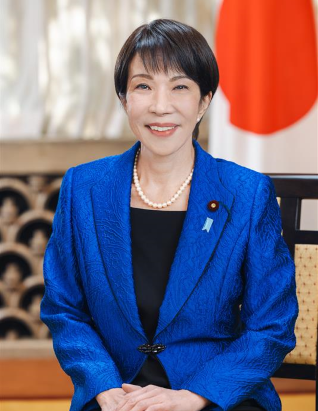
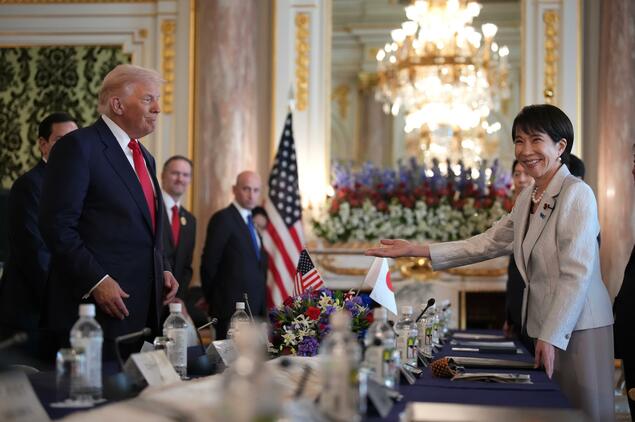
NEW YORK — Prime Minister Sanae Takaichi met President Donald Trump for about 35 minutes on September 22 on the sidelines of the United Nations General Assembly, placing Japan’s concerns directly before the U.S. president ahead of his September 24 White House summit with Chinese President Xi Jinping. The timing—not merely the cordial language—made the meeting consequential.
Takaichi called the exchange “very open and cordial” and said the two leaders held “solid discussions” on security, the economy, economic security, the Indo-Pacific, China, North Korea and the International Criminal Court. At one point she asked the press to “please leave”; Trump answered, “Well, you heard her.” The brief public exchange underscored that the most sensitive part of the conversation would happen away from cameras.
The two leaders also discussed cooperation in artificial intelligence, semiconductors and critical minerals to “win the technology competition,” along with steady implementation of the Japan–U.S. tariff agreement. Trump praised Takaichi as a friend who would “go down as one of the great prime ministers.” Those compliments matter politically, but they are not guarantees about what Washington will or will not concede to Beijing.
Why this matters: the exposed ally spoke first
Roughly 36 hours before the most important U.S.–China summit of this diplomatic cycle, the ally most exposed to a change in American Taiwan policy got an audience first. Japan hosts U.S. forces, sits close to Taiwan and depends on sea lanes and advanced-technology supply chains that would be disrupted by a cross-strait crisis. A bargain made in Washington could therefore alter Tokyo’s security environment without Japan being at the table.
That is the strategic meaning of the US Japan alliance Trump Takaichi encounter. The meeting gave Tokyo a chance to define its red lines before Trump and Xi moved into a bilateral negotiation dominated by trade, technology and security. It did not give Takaichi a veto. The distinction is central: access can shape a president’s briefing, but only the September 24 outcome will show whether it shaped policy.
A 35-minute meeting in a compressed diplomatic window
This was the fourth Trump–Takaichi meeting since the June 2026 G7 summit in Evian. Frequency can strengthen personal communication, but the compressed schedule also reveals the limits of influence. Thirty-five minutes had to cover military deterrence, tariffs, critical minerals, North Korea, the ICC and the wider Indo-Pacific while Xi was preparing to arrive in Washington on September 23. Trump was expected to receive him on the tarmac at Joint Base Andrews before the September 24 White House summit.
At her September 23 press conference in New York, Takaichi described the discussion of China as “timely,” said stable U.S.–China relations are important to Japan and declined to disclose details. That was a disciplined answer. Publicly specifying a demand could have boxed Trump in before the summit or given Beijing a clear target to resist; silence, however, also leaves Japan unable to claim that any later U.S. position reflects an explicit promise.
Trump Xi summit Taiwan arms sales: Tokyo’s immediate risk
Reuters reported concern that Trump could soften U.S. support for Taiwan as part of an economic agreement, while Xi was expected to ask him to halt arms sales to the island. That does not establish that Trump has agreed to such a concession. It identifies the issue Japan is watching most closely.
A halt could matter in three ways. It could reduce Taiwan’s ability to replace and modernize defensive systems; it could weaken confidence in U.S. commitments across the first island chain; and it could encourage Beijing to test whether commercial incentives can separate Washington from its allies’ security concerns. Even ambiguous language—such as slowing approvals without announcing a new policy—could produce practical effects while allowing each side to describe the summit differently.
The Xi Jinping–Trump White House meeting Thursday will therefore be judged not only by its communiqué. Tokyo will look for changes in licensing, delivery schedules, military messaging and how U.S. officials describe the future of Taiwan’s self-defense.
Takaichi China warning at UNGA and the November 2025 rupture
Takaichi’s warning did not begin in New York. In November 2025, she said Japan could deploy its defense forces if Taiwan-related military action threatened Japan. Beijing reacted angrily, and Tokyo–Beijing relations froze. That Japan Taiwan defense statement made explicit a point often left implicit: a Taiwan contingency could become a direct Japanese security emergency.
For Beijing, the statement challenged its insistence that Taiwan is an internal matter. For Tokyo, it reflected geography and alliance planning. The East China Sea, Japan’s southwestern islands and the U.S. bases supporting regional operations mean escalation would not remain neatly confined to the Taiwan Strait. The two governments’ positions are therefore not merely rhetorical opposites; they rest on incompatible views of what counts as legitimate defense preparation.
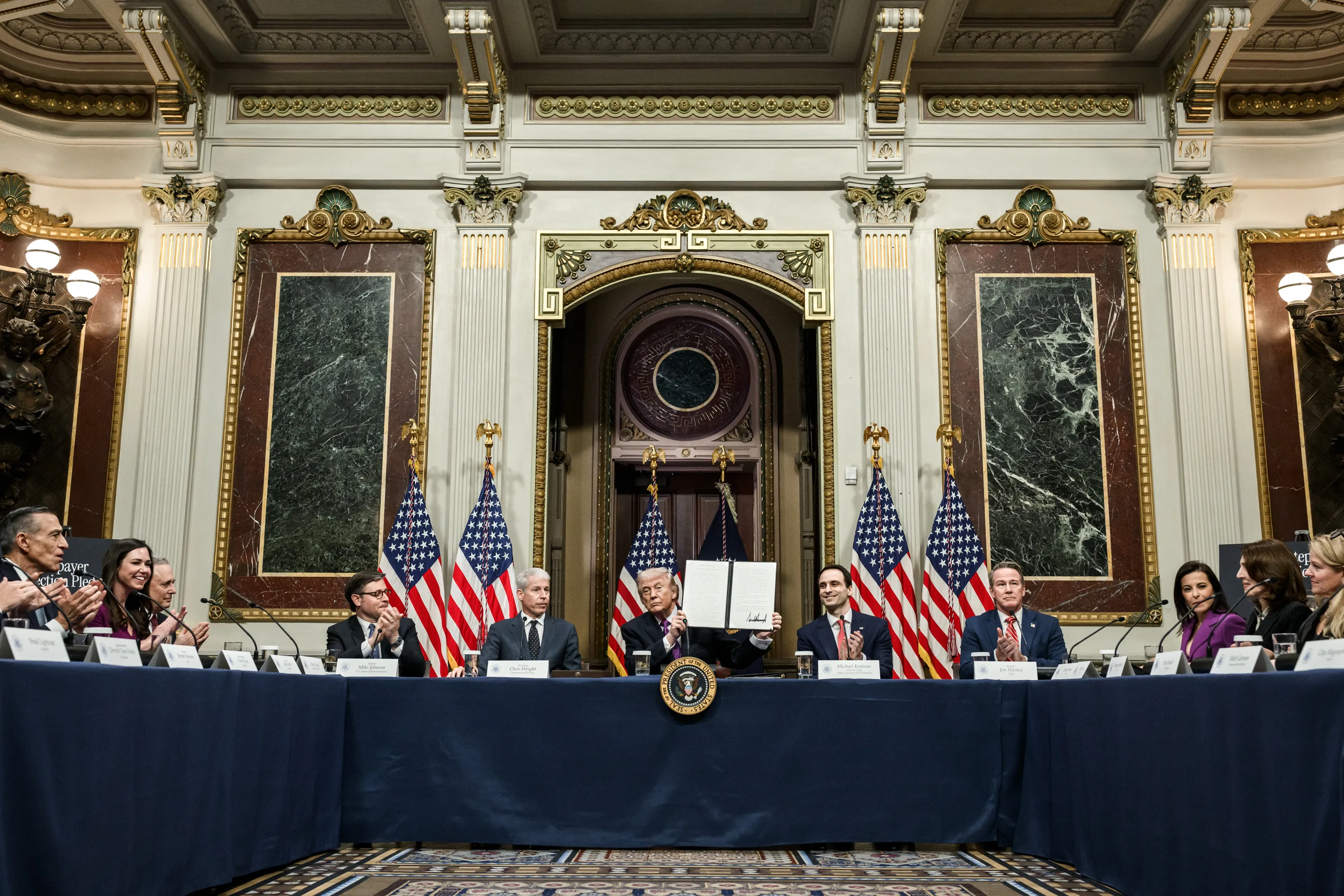
Japan rare earth China pressure: leverage short of a blockade
China’s response has extended beyond official protest. Japanese companies have faced restricted access to rare-earth magnets, tourist flights have been reduced and Chinese aircraft and warships have increased activity near Japan. Each measure sits below the threshold of open conflict while imposing costs on Japanese business, tourism and defense planning.
This is a pressure playbook built around asymmetry. China can exploit its position in processed rare-earth supply chains, vary administrative access and create persistent military operating costs without declaring a formal embargo or crisis. Russia’s increased drills near Japan add another source of pressure, while both Beijing and Moscow have invoked wartime-militarism rhetoric to cast current Japanese security policy through the history of the 20th century.
Tokyo’s answer is likely to combine diversification, stockpiling, allied industrial policy and continued surveillance. The AI, semiconductor and critical-mineral cooperation discussed with Trump is therefore not separate from defense policy; it is the economic-security layer of deterrence.
Japan PM UNGA speech enemy state clause: why removal matters
In her General Assembly speech, Takaichi called for references to “enemy states” to be removed from the U.N. Charter. The clauses are a legacy of World War II and no longer determine Japan’s practical participation in the international system. Formal removal would nonetheless matter because China and Russia continue to use wartime history in present-day arguments about Japanese military policy.
Deleting obsolete text would not settle historical disputes or give Japan a Security Council seat. It would remove a legal-symbolic residue that Moscow and Beijing can cite, and it would align the Charter’s language with Japan’s modern role as a major U.N. contributor. This is institutional housekeeping with geopolitical consequences—not a substitute for reconciliation, but one less ambiguity available for political use.
A possible May Beijing visit and reciprocal summit rhythm
The diplomacy may continue through a possible Takaichi visit to Beijing in May. Until dates and terms are formally announced, that prospect should be treated as planned diplomatic sequencing rather than a settled summit. If it occurs, a Washington meeting before a Beijing visit would create a reciprocal rhythm: consultation with the ally first, direct engagement with the rival next, then an attempt to stabilize Japan–China relations without abandoning Japan’s security position.
That sequence could lower miscalculation if both sides use it to clarify thresholds. It could also deepen disagreement if Beijing expects the visit to produce a retreat from Takaichi’s November 2025 language and Tokyo instead treats it as a forum for repeating that position.
North Korea abduction issue Japan and the ICC
Trump expressed support for the immediate resolution of North Korea’s abduction of Japanese citizens. For Japan, the abduction issue is not a ceremonial talking point; it is a long-running domestic and diplomatic priority tied to families seeking answers and to the broader question of how engagement with Pyongyang would be structured.
The leaders also discussed North Korea more broadly and the International Criminal Court. The available accounts do not disclose an agreement on the ICC, so it would be wrong to infer one. Its inclusion shows how wide the agenda had become and how legal institutions now sit alongside deterrence and trade in alliance management.
Takaichi Zelenskyy meeting UNGA and Ukraine diplomacy
During the same New York visit, Takaichi met Ukrainian President Volodymyr Zelenskyy and reaffirmed that Japan stands with Ukraine, including continued aid and sanctions on Russia. That message links Japan’s European and Indo-Pacific security arguments: Tokyo has repeatedly treated coercive territorial change in one theater as relevant to deterrence in another.
Japan’s support does not erase policy differences within the broader coalition, nor does it establish that every ally shares Tokyo’s preferred approach to China. It does show that Takaichi was using UNGA for more than one bilateral objective—reinforcing the sanctions coalition while preparing for the consequences of the Trump–Xi talks.
UN Security Council reform Japan: the institutional track
In her meeting with U.N. Secretary-General António Guterres, Takaichi called expansion of both permanent and non-permanent Security Council membership “indispensable” and connected the argument to the UN80 initiative. Japan’s case is that the Council’s postwar structure no longer reflects the distribution of economic weight, population and diplomatic responsibility.
Reform remains difficult because it requires states with existing privileges to accept a change in representation and influence. The enemy-state-clause campaign is narrower and more achievable in principle, but both initiatives serve the same Japanese objective: replace the legal and political architecture of 1945 with institutions that recognize Japan’s contemporary role.
Three scenarios for September 24
- No Taiwan concession. Trump rejects any halt to arms sales and the summit concentrates on trade, technology or implementation mechanisms. Japan gains reassurance, although Beijing may respond with continued economic and military pressure.
- An ambiguous economic bargain. The leaders announce commercial progress while using vague language on Taiwan or leaving arms deliveries unmentioned. This is the hardest outcome to read. Washington could claim continuity while approvals slow in practice; Beijing could claim momentum without securing a formal commitment.
- Explicit or practical softening. Trump agrees to halt, delay or materially narrow arms sales, whether publicly or through subsequent administrative action. Beijing would gain strategic leverage, Taiwan would face a capability and confidence shock, and Japan would have to accelerate its own defense and supply-chain responses.
Winners, losers and Japan’s available responses
Japan wins if early access produces clear continuity in U.S. Taiwan policy and stronger cooperation on critical minerals, chips and AI. Taiwan wins if arms support remains predictable rather than becoming a bargaining chip. Beijing wins if economic incentives generate distance between Washington and its allies, even without a dramatic joint statement.
Trump wins politically if he can claim an economic result without sacrificing allied confidence. He loses leverage if partners conclude that every security commitment is negotiable. Takaichi loses if the warm personal language is followed by a U.S. concession that Japan was unable to prevent; she gains if the meeting demonstrates that Tokyo can shape the agenda before decisions are made.
Japan’s responses range from faster rare-earth diversification and greater semiconductor cooperation to increased defense readiness and deeper coordination with other Indo-Pacific partners. None is a complete substitute for U.S. power. Together, however, they can reduce the cost of uncertainty and make economic coercion less effective.
Signals to watch next
Watch the White House readout for any language on Taiwan, arms sales or “stability”; compare it with Beijing’s account; then follow licensing and delivery decisions rather than relying on adjectives from the summit. Tokyo’s public reaction will also matter. A quick endorsement would suggest reassurance; unusually careful or delayed language could signal unresolved concern.
Other indicators include Chinese rare-earth export administration, tourist-flight capacity, military activity near Japan, movement on a possible May Beijing visit and whether the tariff agreement proceeds without new disputes. The essential test is not whether the leaders call their meetings cordial. It is whether the resulting policies leave the region more predictable—or make alliance commitments another variable in an economic negotiation.