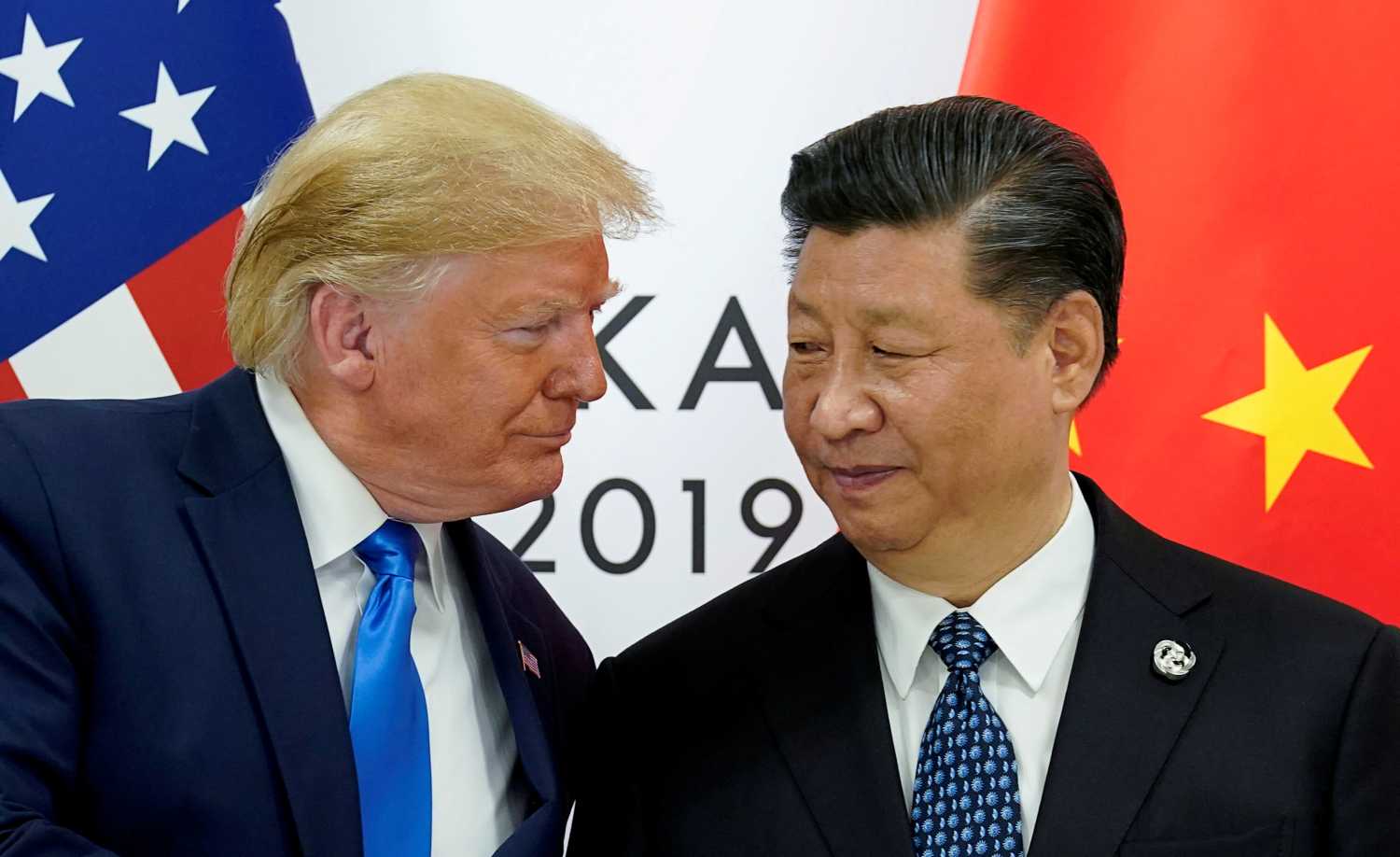
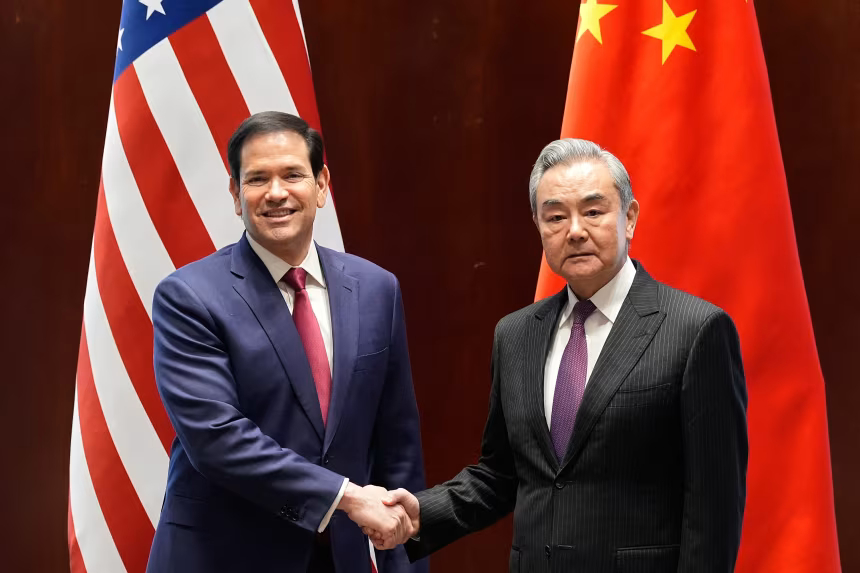
A summit with a deadline
The September 24 meeting will be Xi’s first White House visit since 2015 and his third meeting with Trump in under a year. Their tariff truce expires November 10 after earlier duties exceeded 100%. Leader-level contact has become a way to manage escalation, not proof of strategic trust. That makes written follow-through more important than ceremony: businesses need customs rules and dates, not merely photographs.
Why this matters
The two largest economies remain deeply connected while building barriers around technology, investment and security. A summit can unlock agricultural purchases, non-tariff changes and tariff reductions that negotiators cannot finalize alone. Yet concentrating agreements at the top creates fragility. If the leaders publish incompatible accounts, companies will treat the truce as personal and reversible, too short for factories, hiring or supply-chain redesign.
The imbalance and the possible bargain
China is heading toward a second consecutive trade surplus near $1 trillion, a politically potent figure shaped by competitiveness, weak domestic demand and global supply chains. Reporting points to possible announcements on agriculture and measures covering roughly $30 billion in goods. That would be meaningful to affected sectors but modest against the relationship’s scale. Narrow, countable bargains may be more durable than sweeping declarations on subsidies and industrial power.
Winners, losers and critics
Farmers, importers and exporters gain from predictability. Protected producers may lose insulation if tariffs fall. Security hawks on both sides will resist concessions involving sensitive technology, while rights groups warn that commercial priorities can marginalize Xinjiang and other abuses. The presence of a CEO delegation would add pressure for practical licensing and payment rules. Investment follows procedure more reliably than it follows summit rhetoric.
What happens next
Watch the exact treatment of the November 10 deadline, tariff-line detail, enforcement, agricultural volumes and whether export controls remain separate. A published schedule suggests durability; vague promises of more dialogue amount to a pause. The best case is a limited agreement that prevents renewed triple-digit tariffs. The worst is a deal announced in principle and disputed within days. This summit can manage rivalry, but it cannot dissolve it.
The evidence test
This report separates the dated facts from the interpretation built around them. For “Xi Heads to Washington: The September 24 White House Summit Will Test the Trade Truce,” the strongest evidence is specific: official decisions, published results, dated market or schedule figures, and reporting that identifies what is known. A headline can be directionally accurate while still overstating certainty. Readers should therefore distinguish a confirmed event from a forecast, and a forecast from a scenario. That discipline is especially important in world / china–u.s., where a single update may change the practical outlook without changing the underlying structure.
What would change the conclusion
Good analysis should be falsifiable. The argument here would need revision if later primary records contradict the reported figures, if the timetable moves, or if the actors behave differently from the incentives described above. Pay particular attention to a summit with a deadline, why this matters, the imbalance and the possible bargain. These are not decorative subthemes; they are the mechanisms connecting the headline to consequences. An update that changes one of those mechanisms deserves more weight than a new quotation that merely repeats an established position.
Who has agency
Events are often described as if they happen to a passive public, but institutions, firms, officials, workers, consumers and communities make choices within constraints. The powerful can set rules and timing; less powerful groups can adapt, organize, substitute or refuse. Evaluating agency prevents two errors: assuming leaders control every outcome, and assuming nobody can alter the path. In this story, the distribution of bargaining power matters as much as the most visible announcement, because implementation happens through many smaller decisions after attention moves elsewhere.
First-order and second-order effects
The first-order effect is the immediate change described in the headline. Second-order effects arrive through confidence, prices, staffing, regulation, supply chains, habits or institutional precedent. They are harder to measure and easier to exaggerate. The responsible approach is to identify the transmission channel and then look for evidence that it is operating. A plausible chain is not yet an observed result. This distinction keeps analysis useful without turning possibility into prediction, and it helps explain why some dramatic announcements fade while modest procedural changes compound.
The comparison problem
Numbers acquire meaning only against a baseline. The relevant comparison may be the previous year, a prior cycle, a peer institution, the size of the affected market or the share exposed rather than the headline total. Nominal levels can sound historic while representing a small percentage change; averages can conceal a few extreme observations. For this reason, the report uses comparisons to test scale instead of presenting figures as self-explanatory. When future updates arrive, compare like with like and preserve the original cutoff date.
What critics get right
Criticism is most useful when it identifies a missing mechanism, an excluded group or a cost shifted out of view. It is less useful when it simply predicts failure without conditions. Skeptics of the developments covered here are right to ask who verifies claims, who bears transition costs and whether short-term success can last. Supporters are right to ask what the realistic alternative would be. Holding both questions together avoids false balance: evidence can favor one conclusion while still acknowledging trade-offs and uncertainty.
Three scenarios, not one forecast
A base case assumes announced rules and schedules broadly hold. An upside case requires implementation to improve, uncertainty to fall and participants to respond constructively. A downside case begins when deadlines slip, trust weakens or a secondary shock compounds the first. Scenario thinking is not a way to avoid judgment; it clarifies which assumptions carry the conclusion. The most informative future report will identify which path is becoming more likely and why, rather than treating every new detail as a reversal.
The editorial judgment
The central conclusion is that the headline matters because it changes incentives, not because it guarantees an outcome. The facts reported today establish a new starting point. They do not erase history, settle criticism or make projections certain. Readers should keep the scale of the event in proportion, watch the actors with power to implement it and resist narratives built only from momentum. That is the difference between following a story and merely following its noise.
A practical reader checklist
For the next update, check five things in order: whether the date or deadline changed; whether an official document confirms the claim; whether the reported number is a level, a rate or a forecast; whether the people carrying the cost are the same people receiving the benefit; and whether implementation matches the announcement. Then compare the update with the baseline in this article rather than with the loudest social-media reaction. This method will not eliminate uncertainty, but it will make revisions visible and keep a developing story from being judged by an isolated moment.
How to follow the next update
Return to the dated facts in this report before treating a new headline as a changed story. For “Xi Heads to Washington: The September 24 White House Summit Will Test the Trade Truce,” the decisive update will be one that changes implementation, scale or the distribution of costs—not another round of commentary about the same event. Check whether later reporting uses the same definitions and time period, whether it cites a primary record, and whether a projected effect has actually appeared. That approach preserves room for surprise while preventing a fast-moving news cycle from turning uncertainty into contradiction. We will revise the assessment when evidence changes the mechanism, not simply when attention moves.
Sources: Reuters summit preview; Reuters CEO delegation; Le Monde overview; UHRP open letter. Figures and schedules are a fixed September 18, 2026 snapshot and do not update live.