Syria military aid Saudi Arabia
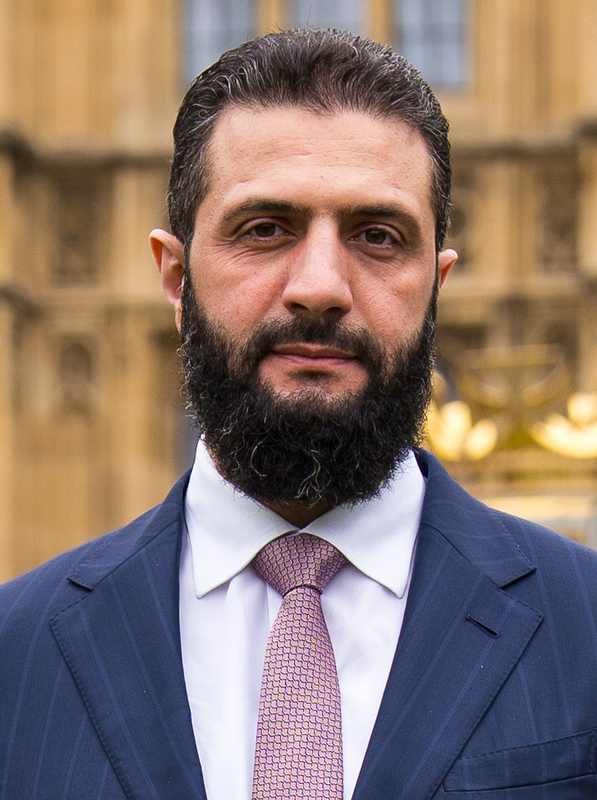
Less than a year after the fall of Bashar al-Assad, Damascus is carefully considering Syria military aid Saudi Arabia requested for the war in Yemen — assistance that could put Syrian boots on a foreign battlefield for the first time under President Ahmed al-Sharaa, according to a Reuters exclusive published October 7, 2026 that cites a US official and a Syrian military official briefed on the matter.
The report, filed from Riyadh by Timour Azhari, landed on Wednesday — one day after al-Sharaa's fifth visit to Saudi Arabia since he took power in December 2024, a visit whose official readouts made no mention of military cooperation. If Damascus agrees, it would rank among the most consequential foreign-policy decisions of the post-Assad era: a government still stitching together an army from the wreckage of a 14-year civil war, asked to fight an Iran-backed movement on behalf of a Gulf monarchy.
Why this matters: the axis flip, made concrete
For anyone who followed the Middle East over the last two decades, the geometry here is the story. Under Assad, Syria was the indispensable land bridge of Iran's "axis of resistance" — the corridor through which money, weapons, and advisers flowed to Hezbollah in Lebanon and, further afield, to the Houthis in Yemen. Houthi missiles arcing toward Riyadh were, from Damascus's old vantage point, someone else's problem at best. Now the polarity has reversed: Saudi Arabia is asking the new Syria for troops, and a US official is among the sources describing the request.
If Damascus says yes, it would be one of the clearest demonstrations yet that the regional map has been redrawn — a former Iranian client being courted to fight an Iranian ally. That is the symbolism. The substance is harder: Syria's armed forces are not the Assad-era military, with its Russian air cover and Iranian militia auxiliaries. They are a work in progress — former rebel factions, including al-Sharaa's own Hayat Tahrir al-Sham lineage, being fused into something resembling a national army while the country rebuilds.
Reuters quotes a Syrian diplomat saying Damascus's primary focus remains domestic recovery from the civil war. That line deserves to be read as both a statement of fact and a negotiating posture. Everything about this story — the consideration, the leak, the careful wording — suggests a government that knows the price of saying yes and the price of saying no, and is making both capitals do the math. The one thing to hold onto, amid the noise this report will generate: nothing has been agreed. Consideration is not a commitment, and in Damascus's position, it may never become one.
The Reuters story in detail: what is actually on the table
The Reuters exclusive, published October 7 and filed by Timour Azhari in Riyadh, rests on two officials: a US official and a Syrian military official briefed on the discussions. According to the report, the options Damascus is weighing run from defensive aid — help protecting the kingdom — to the deployment of Syrian forces in an offensive capacity alongside Saudi-backed Yemeni troops fighting the Houthis. The US official said Saudi Arabia had asked Syria to deploy forces against the Houthis.
The report further says Riyadh is seeking help across the United States, Europe and the Middle East for defensive and offensive support — a picture of a kingdom canvassing its partners as its renewed campaign in Yemen grinds on. On the ground, Reuters describes a collection of Yemeni government forces operating with Saudi air support and making only limited advances since the operation began on Monday, October 5.
A Syrian diplomat, speaking on the record, said Syria stood with Saudi Arabia while stressing the government's domestic recovery priorities and saying cooperation would proceed through official channels and bilateral agreements. The Saudi government's media office and Yemen's information minister did not respond to Reuters' requests for comment, the report says. Reuters also cautioned that a deployment could deepen tensions with neighbours.
Note what this sourcing gives us and what it doesn't. Two briefed officials plus an on-record diplomat is solid for a "considering" story; it is not evidence of a decision, a timeline, or terms. The wise reader treats everything downstream of this paragraph as informed reasoning about a live possibility — not as fact.
The Ahmed al-Sharaa Riyadh visit October 2026 — and what the readouts left out
The timing is what makes this more than a think-tank hypothetical. Al-Sharaa arrived in Riyadh on Tuesday, October 6, and met Crown Prince Mohammed bin Salman — the Mohammed bin Salman al-Sharaa meeting that, according to three state news agencies, covered everything except the subject Reuters is now reporting. The visit was choreographed as a state occasion: al-Sharaa was received at King Khalid International Airport by the Riyadh governor, Prince Faisal bin Bandar bin Abdulaziz, and traveled with his foreign minister, Asaad al-Shaibani.
The Saudi side, according to the Saudi Press Agency via WE News, fielded a heavyweight lineup — Defence Minister Prince Khalid bin Salman, Foreign Minister Prince Faisal bin Farhan, and national security adviser Musaed al-Aiban. The presence of the defence minister in the room is the detail that will get the most re-reading now. The official readouts — from SPA, from Syria's SANA, and from the Qatar News Agency — stuck to the familiar script: bilateral relations, reconstruction and investment, and the latest regional developments. No mention of military cooperation.
There are two honest readings of that omission, and both deserve air. One: the military request is genuinely new or newly urgent, driven by the Houthi missile attacks on Saudi Arabia in recent weeks, and the readouts simply predate it. Two: it was discussed and deliberately kept out of the public record, because neither side yet knows whether there is anything to announce. Both readings point to the same underlying fact: Syria Saudi relations post-Assad have moved fast — this was al-Sharaa's fifth trip to the kingdom since December 2024, according to Al-Monitor via Newscord — and the relationship is now being tested on the hardest question in the region: who fights, and for whom.
From a September rejection to October consideration — with caveats
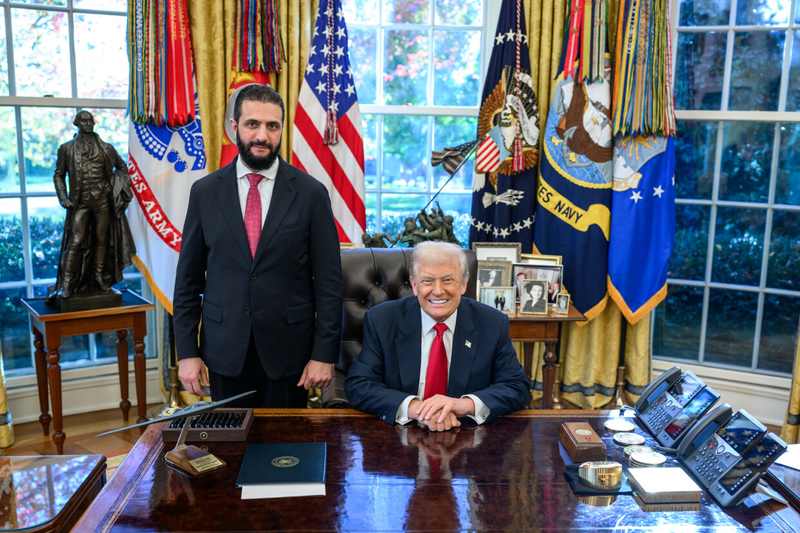
Here is where the story gets genuinely strange, and where attribution discipline matters most. On September 19, TBS News and Türkiye Today, citing Syrian sources, reported that Damascus had politely rejected a Saudi request — made, those reports said, several months ago — to organise and deploy fighters. The reported rationale at the time: Damascus was focused on organising its own military and did not want to be drawn into third-party conflicts, according to Türkiye Today. TBS News, citing Turkish sources, added that Turkey's own position on any such arrangement would be determined under the Mecca pact.
Less than three weeks later, Reuters describes active consideration. If both reports are accurate, that is a marked shift. But the caveats are doing real work here, so let me state them plainly. The September reporting is Syrian-sourced and second-hand; it was not independently verified in this article's research. The October reporting has two briefed officials and is published by Reuters — a stronger basis, but still a "considering" story, not a decision.
It is possible the September report was incomplete or wrong. It is equally possible that Damascus's calculus changed as the Houthi missile attacks on Saudi Arabia intensified through September and October — Abha's airport was hit, Riyadh's King Khalid International was hit — and as Riyadh's renewed ground campaign, launched October 5, produced only limited advances. A government can reject a vague months-old request and seriously consider a specific new one; those are not the same decision. Treat the rejection-to-considering arc as analysis with attribution, not as a proven policy reversal. What is fair to say: the direction of travel, if the reporting holds, is from no to maybe — and in diplomacy, maybe is where the price gets negotiated.
Who benefits, who loses
If Damascus says yes, Riyadh gets more than manpower
For Saudi Arabia, Syrian participation would be valuable on two levels. The practical level: the renewed Yemen campaign is, by Reuters' account, a collection of Yemeni government forces with Saudi air support making limited headway. Experienced Syrian fighters — many of them battle-hardened from a 14-year civil war — could stiffen that force. The political level may matter more: a Syria that broke with Iran sending troops to fight the Houthis lets Riyadh frame the Saudi Arabia Yemen war Houthis campaign as an Arab undertaking rather than a Saudi one, and it would be read across the region as a verdict on the new Middle East.
Washington, for its part, gets burden-sharing — a theme the US official's presence in the sourcing hints at. None of this is cost-free for Riyadh: folding another country's forces into an already complex command structure adds friction, and a Syrian deployment that goes badly would become Riyadh's problem to explain.
Damascus is negotiating with a weak hand it is trying to play well
For al-Sharaa's government, the upside of yes is leverage. Syria needs reconstruction money on a scale only Gulf capital can provide, and it needs Arab legitimacy to complete its journey from sanctioned pariah — first under Assad, then as a former jihadist-led transitional authority — to recognised state. Being useful to Riyadh is a currency Damascus can spend.
The downside is domestic and immediate. The Syrian army is still rebuilding; the fuel price hike protests of recent days, reported by outlets citing local accounts, are a reminder that the government's domestic standing is fragile and that economic pain is already biting. Sending soldiers to die in Yemen while Syrians protest fuel prices at home is the kind of contrast that ends governments. And there is a deeper risk: the new army's cohesion is untested, built from factions that until recently fought each other. A foreign deployment could either forge it or fracture it. Nobody cited in the reporting claims to know which.
The Houthis and Iran would read it as encirclement — and as propaganda
For the Houthis and their backers in Tehran, a Syrian deployment would be a symbolic blow: the axis they once counted on, inverted. Expect, if it happens, a propaganda response framing Syrian troops as mercenaries — speculation, but grounded in how the Houthis have framed every previous escalation. The material effect on the battlefield is harder to assess honestly: the Houthis have absorbed years of air campaigns and kept firing missiles, including the recent strikes on Abha and Riyadh. Whether Syrian ground forces change that equation depends on numbers, roles, and rules of engagement — none of which have been reported.
Neighbours' stakes: Israel, the Mecca defence pact, and the Gulf
Reuters' warning that a deployment could deepen tensions with neighbours is doing quiet work, so let me spell out who those neighbours are and why they would care. Israel first: Israel has struck targets inside Syria for years and watches the new Syrian military's orientation closely. A Syrian army that becomes a security partner of Saudi Arabia — and, by extension, of the US-led regional architecture — changes Israel's northern calculus in ways Jerusalem has not publicly addressed. This is analysis, not reporting: no Israeli official has commented on the Reuters story.
Turkey second: the September reporting explicitly tied Ankara's position to the Mecca pact — the September defence arrangement linking Saudi Arabia, Turkey, and Pakistan that this site has covered previously. If the Mecca defence pact Saudi Arabia Turkey Pakistan framework becomes the umbrella under which a Syrian role is discussed, Turkey moves from bystander to stakeholder, with its own leverage over Damascus.
Third, the Gulf: the smaller Gulf states will read a Syrian deployment as a precedent — if Riyadh can hire another Arab army for Yemen, the region's security marketplace has a new vendor. Each of these dynamics is speculative; what is not speculative is that all three capitals will now be gaming out Damascus's answer.
The numbers: Yemen war casualties, airport strikes, and a stretched Syrian army
Start with the human cost, because the strategy talk can make it abstract. Al-Monitor, citing World Health Organization figures, reports more than 5,100 casualties in Yemen since August 6 — including 959 deaths. Read that number carefully: nearly a thousand dead in roughly two months, after the relative calm that followed the 2022 UN truce. The truce's collapse is the context for everything else: the UN Security Council held emergency meetings on September 10 and 15, and the renewed Saudi-led campaign that began October 5 is the sharp end of that collapse.
Then the strikes that reportedly concentrated minds in Riyadh: Houthi missile attacks on Saudi Arabia in recent weeks included a claimed ballistic-missile strike on Riyadh; the airport attacks are the confirmed ones. At Abha, an attack on Tuesday killed 2 people, according to the General Authority of Civil Aviation. At Riyadh's King Khalid International Airport on Wednesday, an attack killed 1 Sudanese national and wounded 8, according to CNN's October 7 reporting. Three dead across two airport strikes in two days — small numbers beside Yemen's toll, but politically enormous, because they brought the war to the kingdom's front door and, reportedly, to its request list.
On the Syrian side, the relevant number is harder to pin down and more important: the size and readiness of an army still being rebuilt from civil-war factions. No reliable public figure exists for how many deployable troops Damascus could spare — which is itself the point. The Syrian army rebuilding fuel protests story is really one story: a state trying to reconstruct its coercive and economic foundations simultaneously, now being asked to project force abroad.
Finally, the Bab el-Mandeb shipping attacks — the Houthis' Red Sea campaign against commercial vessels — are the backdrop that internationalised this war long before October. They are why Washington is in the sourcing of this story at all: the Yemen war stopped being a regional file the moment container ships started burning.
Three scenarios for whether Syria deploys troops to Yemen
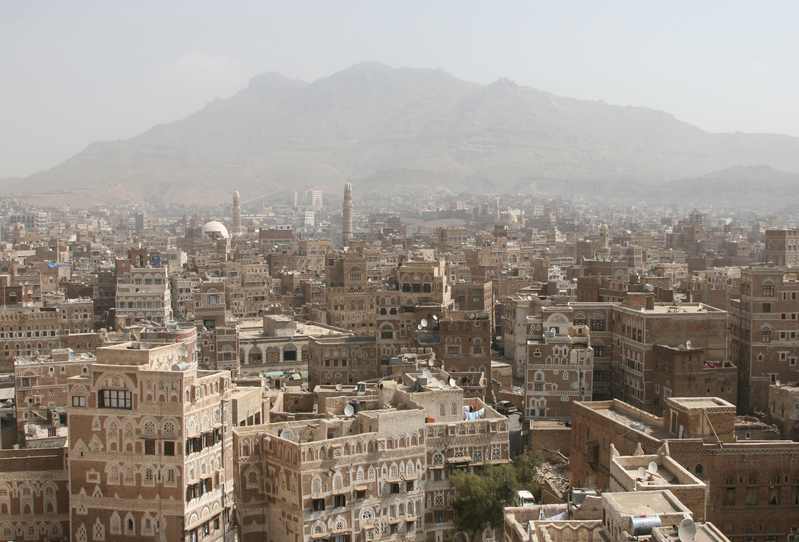
Nothing is decided, so the honest move is scenarios — labeled as scenarios, not predictions.
Scenario one, the defensive package: Damascus agrees to help protect the kingdom — air-defence crews, training, intelligence-sharing, advisers — without Syrian units in offensive combat. This fits the Reuters framing of defensive aid protecting the kingdom, costs Damascus the least domestically, and still lets Riyadh claim Arab partnership.
Scenario two, the limited deployment: Syrian units embedded with Saudi-backed Yemeni forces under Saudi air cover, in an offensive capacity — the maximalist version of what the US official described. This offers the highest military value for Riyadh, the highest political risk for Damascus, and the version most likely to trigger regional tensions.
Scenario three, the diplomatic role: Damascus says no to troops but yes to everything around troops — political support, a mediating channel, intelligence cooperation — giving Riyadh a face-saving Arab consensus without Syrian casualties.
My read, offered as analysis: scenario one is the path of least resistance, scenario three is the face-saving fallback, and scenario two only happens if Riyadh's price — reconstruction funds, political cover, or both — is high enough to outweigh the fuel-protest arithmetic at home. Watch the signals: any Syrian-Saudi military cooperation agreement announced through official channels, any movement of Syrian air-defence assets, and above all whether the September-style denials return or go quiet.
Sources
- Reuters exclusive by Timour Azhari, Riyadh, October 7, 2026 — Syria weighs military aid for Saudi Arabia amid Yemen war
- Qatar News Agency — al-Sharaa–Mohammed bin Salman meeting in Riyadh, October 6, 2026
- Saudi Press Agency via WE News — attendee list for the Riyadh meeting
- TBS News / Türkiye Today, September 19, 2026 — earlier Syrian-sourced rejection reporting
- Al-Monitor via Newscord — WHO Yemen casualty figures and al-Sharaa's fifth Saudi trip
- CNN, October 7, 2026 — King Khalid and Abha airport casualties reported by GACA
Reporting note: Reuters' account remains a sources-say report about options under consideration. The September rejection is attributed to TBS News and Türkiye Today; WHO casualty figures are attributed through Al-Monitor; airport casualties are attributed to CNN and GACA. Scenario analysis is labeled and no deployment is presented as decided.