A witness told Reuters smoke and fire were seen near the Aramco facility in Riyadh on Saturday. Saudi authorities have said nothing, Aramco has not commented, and nobody has claimed responsibility — but the timing, amid the worst Saudi–Houthi escalation since the 2022 truce, is impossible to ignore.
A large plume of smoke and fire was seen rising in the vicinity of an Aramco facility in Riyadh on Saturday, a witness told Reuters. There was no immediate confirmation from Saudi authorities about the fire, and Aramco did not immediately respond to a request for comment. There was no immediate claim of responsibility.
Reuters framed the report plainly: the fire comes amid escalating hostilities between Saudi Arabia and Yemen's Iran-aligned Houthis, who have stepped up attacks on Saudi cities and energy infrastructure. WION reported the same morning that smoke was rising near the Aramco site in Riyadh, and Egypt Oil & Gas carried the story under the headline "Fire Seen Near Aramco Facility in Riyadh as Houthi Attacks Escalate." That is the sum of what is verified. Everything else — the cause, the culprit, the consequences — sits in a fog that neither Riyadh nor the Houthis seems in a hurry to clear.
What is confirmed vs. what is claimed
Because this story is already generating confident claims online, here is the line between what is verified and what is not.
Confirmed (Reuters, October 3): fire and smoke were seen near an Aramco facility in Riyadh on Saturday, per a witness account. Saudi authorities have not confirmed the fire. Aramco did not immediately respond to a request for comment. Nobody has claimed responsibility. Separately, the Houthis said last week they had attacked Saudi Aramco facilities in Yanbu with missiles and drones; Saudi Arabia said at the time it had intercepted six ballistic missiles fired toward Taif and the Yanbu area, but reported no damage to Aramco facilities. And the World Food Programme says this is the most serious escalation between Saudi Arabia and the Iran-aligned Houthis since a UN-brokered truce largely halted cross-border attacks in 2022 (Reuters, October 2).
Claimed but unverified: footage and accounts circulating on X — including the Iran Observer, osinthexagone, and MerruX accounts — claim the fire was a Houthi strike. Those are unverified social-media claims, not confirmed reporting. Open-source satellite data reported by Turkish media (Türkiye Today) citing NASA FIRMS shows higher-intensity VIIRS thermal hits across the Riyadh refinery with thick smoke visible in satellite imagery — reported, but not independently verified. Axios reporting, relayed by ZeroHedge, says Saudi Arabia is preparing a major offensive against the Houthis in the coming days — reported, not our own confirmed fact. Treat every version of "who did it" as unproven until an official source or independently verified evidence says otherwise.
How we got here: the worst escalation since 2022
The UN-brokered truce of 2022 largely halted cross-border attacks between Saudi Arabia and the Houthis, and for years the front lines stayed mostly inside Yemen. That era appears to be over. The World Food Programme now calls this the most serious escalation since that truce — and the target map tells the story.
Last week, the Houthis said they had struck Aramco facilities in Yanbu with missiles and drones; Riyadh answered that it had intercepted six ballistic missiles headed for Taif and the Yanbu area, while reporting no damage to Aramco assets. In July and August, Houthi attacks hit the Jazan refinery, according to Turkish media reporting. In August, the Houthis declared a maritime embargo against Saudi Arabia. And just last month, a fuel-depot plume rose over King Khalid airport after Houthi-claimed attacks on what they called "sensitive" sites in the Saudi capital. Each step widened the geography of the war; Saturday's smoke over Riyadh may be the widest step yet.
Why this matters: the capital was supposed to be safe
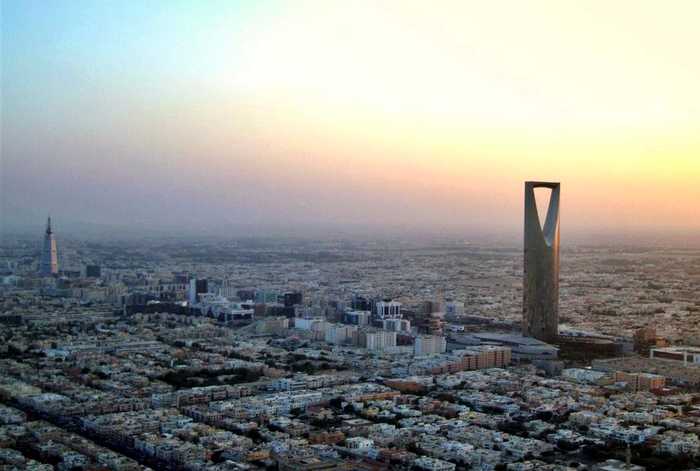
Riyadh has always been the psychological firewall of this conflict. Yanbu, Jazan, the border provinces — those are where the war was supposed to stay. The capital sat behind layers of air defense, distance, and the assumption that neither side wanted to force the other's hand in the seat of Saudi power. A visible fire at a Riyadh Aramco asset, in the current escalation wave, punctures that assumption whether or not a Houthi missile caused it.
There is a second, quieter significance: the silence. Riyadh has confirmed nothing. The Houthis have claimed nothing — yet. In past rounds, claims and denials arrived within hours. This time, both capitals are holding their cards, and in this region, silence from both sides at once usually means both sides are still deciding what the next move costs.
The attribution fog: why nobody is talking
Riyadh's silence is explicable. Confirming a successful strike on the capital's own refinery invites market jitters, awkward questions about air defenses, and domestic unease — and it starts a clock on retaliation that the Kingdom may not want ticking yet. Saying nothing buys time to investigate, to verify, and to choose a response on its own terms rather than the news cycle's.
The Houthis' silence is more interesting. Strategic ambiguity is leverage: let Riyadh wonder, let the markets price the risk, let the region debate — all without firing another shot. But there is a second possibility worth stating plainly: they may not be responsible, and claiming an attack they did not carry out would invite a Saudi response they do not want while the reported Saudi offensive is supposedly being prepared. Either way, silence is not evidence. Readers should hold judgment until an official statement, a credible claim, or independently verified evidence arrives — whichever comes first.
Who benefits, who loses
The Houthis gain leverage from every image of smoke over Riyadh, real or ambiguous. Each incident strengthens their hand in any future negotiation and their standing with supporters who measure the movement by its ability to reach into the Saudi heartland.
Global crude markets price risk, not just barrels: insurance costs for Saudi energy infrastructure rise with each incident, and traders will attach a premium to Gulf supply for as long as the escalation ladder has rungs left. Saudi Arabia's Vision 2030 investor narrative takes the subtler hit — a capital city pitching itself as a stable hub for global capital does not benefit from unexplained refinery fires.
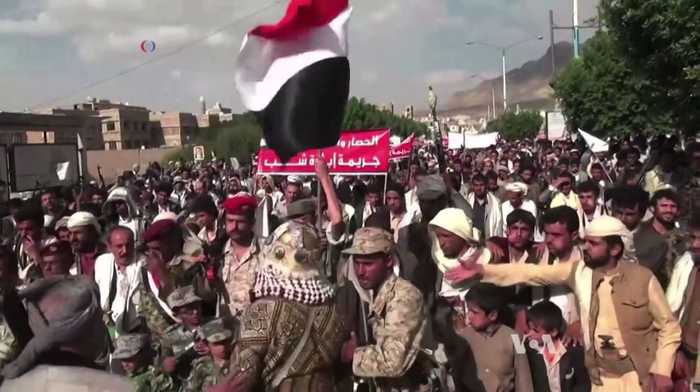
The heaviest cost, as ever, falls on Yemeni civilians. The World Food Programme reports record hunger in Yemen as the conflict intensifies — and with a major Saudi offensive reportedly in preparation, the people with the least power in this equation face the most danger from its next chapter.
The oil-market read: small fire, big signal
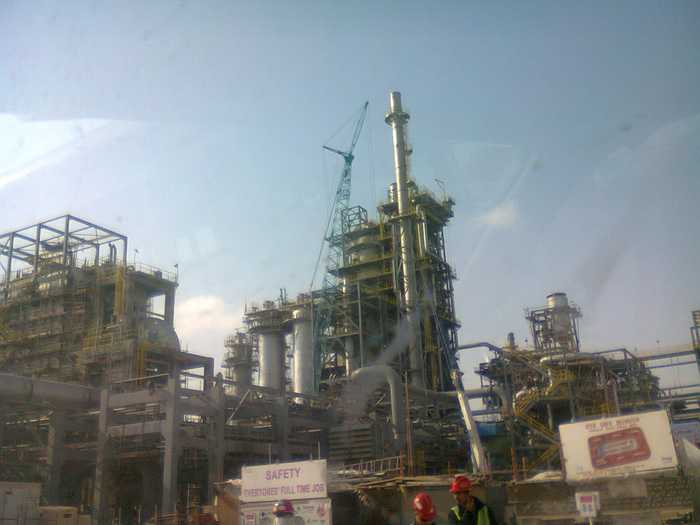
Keep the numbers in proportion. The Riyadh refinery's capacity is roughly 130,000 barrels per day, according to Turkish media reporting — domestic refining capacity, not an export terminal. A fire there does not directly shut down crude shipments. For scale, the Jazan refinery processes about 400,000 barrels per day.
The proper historical comparison is Abqaiq in 2019: about 5.7 million barrels per day knocked offline in a single attack, roughly 5 percent of global supply, with crude spiking on the order of 20 percent in a day. Saturday's incident is two orders of magnitude smaller in direct output terms. The systemic risk is not this refinery — it is Red Sea shipping and a wider Saudi–Houthi war. Shipping analysts note recent Yanbu crude loadings conducted without continuous vessel-tracking signals, and Saudi crude made up about 90 percent of the record 2.17 million barrels per day loaded at Egypt's Sidi Kerir terminal, per Egypt Oil & Gas. Markets will price the war, not the fire — and the war is getting more expensive.
What happens next: three scenarios
1. A Houthi claim lands. If the Houthis confirm they struck the Riyadh refinery, this moves up the escalation ladder immediately — expect a Saudi retaliation and a hardening of positions on both sides. Watch for the wording: Houthi claims have historically named specific weapons and targets, and the details will indicate how much capability sits behind the rhetoric.
2. The reported Saudi offensive materializes. Axios reporting, relayed by ZeroHedge, describes a major Saudi offensive against the Houthis in the coming days. If true, the war widens — and with Yemen's hunger crisis already at record levels, the humanitarian cost would be severe. This is the scenario the WFP warning is really about.
3. De-escalation through U.S. or UN pressure. The wild card is Washington. President Trump's remarks last week that a bombing campaign against Tehran could resume after the midterm elections — reported in the same ZeroHedge piece — cut both ways: American posture could restrain Riyadh or embolden it, and Tehran's calculus will shape Houthi behavior in turn.
What we know this morning is a plume of smoke over Riyadh and silence from everyone who could explain it. In this war, the silence is usually temporary. Watch for an official Saudi statement, a Houthi claim, and independent satellite confirmation — whichever comes first will set the next chapter.
Sources
- Reuters (primary — witness account, escalation context, Yanbu/Taif intercepts): Fire, smoke seen near Aramco facility in Riyadh, witness says
- WION (Oct 3 — "Smoke Rises Near Aramco Site in Riyadh"): WION Headlines
- Egypt Oil & Gas ("Fire Seen Near Aramco Facility in Riyadh as Houthi Attacks Escalate" — shipping data, maritime embargo): Fire Seen Near Aramco Facility in Riyadh
- Türkiye Today via europesays (NASA FIRMS satellite data; Jazan/July–August attacks; refinery capacity — reported, not independently verified): satellite monitoring report
- ZeroHedge (Axios reporting on reported Saudi major-offensive preparations; Trump remarks — attributed, not stated as confirmed): Black Smoke Reported Over Critical Aramco Refinery
- Reuters (WFP — record hunger in Yemen; worst escalation since the 2022 truce): Record numbers going hungry in Yemen amid escalating conflict, WFP says
Related coverage
- Yemen faces record hunger as Saudi–Houthi conflict escalates, WFP warns
- Yemen government repels Houthi push on Taiz–Aden road
- Mawiya market strike in Taiz: what the attack signals