World · Middle East · Syria
World / Middle East — Syria flash floods have killed five people, four of them children, after heavy rain and severe thunderstorms that began on Wednesday turned wadis, culverts and camp tracks across northern and eastern Syria into floodwater by Thursday. Five more — two of them children — are still missing. It is the country’s second deadly flood in the same provinces in about two weeks, and it has again found the same people, in the same places, with the least protection.
Track it live: Syria map tracker
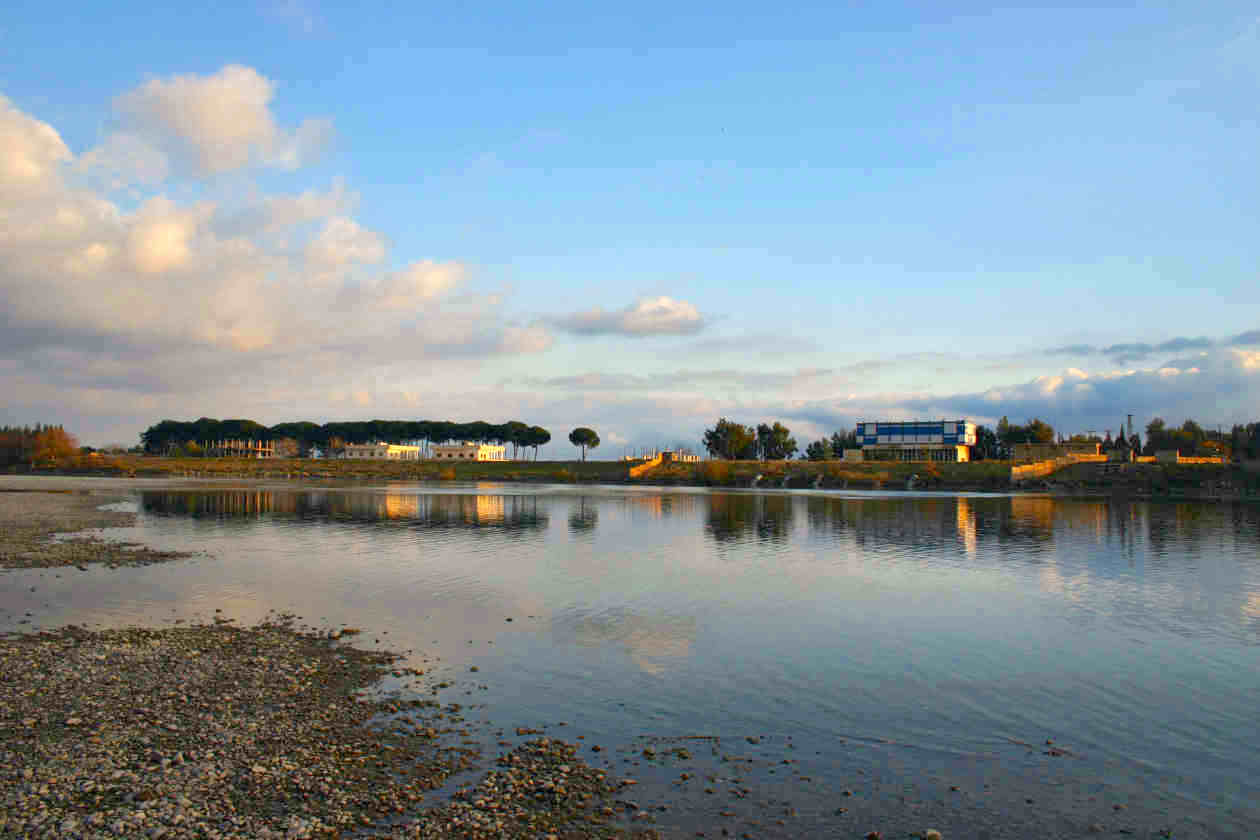
Syria flash floods have killed at least five people, including four children, after heavy rain and severe thunderstorms swept across northern and eastern Syria from Wednesday, October 28, the Ministry of Emergency and Disaster Management said in a statement on Thursday. The four children drowned in bodies of water in Raqqa and Deir Az Zor governorates. A man died when floodwater caught his car near al-Salmani Bridge in the western Raqqa countryside. Five other people, including two children, remain missing in rural Raqqa, Deir ez-Zor and Aleppo, and search operations were continuing on Thursday as the ministry issued situation updates on its X account. Thursday, October 29, was the second consecutive day the ministry recorded flood responses across the country.
The flooding damaged infrastructure and disrupted bridges in five governorates — Aleppo, Raqqa, Deir Az Zor, Hasakah and Homs — and, according to the state news agency SANA, brought down al-Salmani Bridge, west of Tabqa, closing the road that links Raqqa to Aleppo. About 375 families were evacuated from three flooded displacement camps in the Raqqa countryside. Emergency and Disaster Management Minister Raed al-Saleh said all ministry teams were on alert; the alert covered Aleppo, Raqqa, Deir ez-Zor, Hasakah, Hama, Homs and Latakia. Those figures — the deaths, the missing, the rescues and the evacuations — are the ministry’s account, relayed by SANA, Anadolu and Al Jazeera; independent confirmation from the flood zones themselves remains limited, and the toll may change as the searches conclude.
What happened: flash floods in Syria, province by province
The storm system arrived on Wednesday and did its damage the way flash floods in Syria usually do: not through the great river itself, but through the dry channels, drainage lines and low crossings that cross the steppe and the farmland of the north and east. Rain that falls hard on baked, compacted ground does not soak in. It runs, gathers speed in wadis that are dry for most of the year, and arrives at culverts, earthen bridges and camp tracks as a wall of muddy water. By Wednesday night, Civil Defense teams under the ministry were answering distress calls across six provinces, and the calls kept coming through Thursday. For the families of the missing, following Syria weather floods updates ministry by ministry, the wait centred on five names — two of them children.
Raqqa floods: four children, a driver and a closed road west
Raqqa governorate, in the north, recorded the heaviest human cost. The ministry said children drowned in bodies of water in Raqqa and in neighbouring Deir Az Zor — the kind of deaths that happen when floodwater fills pits, ponds, drainage basins and swollen channels near homes and camps, in places where children walk and play. In the western Raqqa countryside, a man died when the flood caught his car near al-Salmani Bridge. The bridge itself did not survive the storm: SANA reported that al-Salmani Bridge, west of Tabqa, collapsed in the flooding, shutting the road linking Raqqa to Aleppo — one of the main overland connections between the Euphrates valley and Syria’s second city. The ministry said flooding had damaged infrastructure and disrupted several bridges across the affected provinces, and reporting from the Civil Defense put seven bridges, culverts and unpaved crossings out of service in the first night alone.
Deir Az Zor flooding: helicopters, stranded roads and a province gone dark
In Deir Az Zor, the eastern governorate that runs down the Euphrates toward the Iraqi border, the flooding cut into the province’s already thin connections to the rest of the country. Syrian army helicopters rescued two people trapped by floodwater along the Deir ez-Zor–Palmyra road, the desert highway that links the east to central Syria, SANA reported. Deir ez-Zor’s provincial media directorate reported a complete loss of communications after floodwaters damaged the main fibre-optic lines — a failure that matters beyond inconvenience, because the same networks carry the distress calls and coordination messages that a flood response runs on. Rescue teams also pulled people from vehicles stranded by floodwater in Deir ez-Zor, part of a countrywide pattern in which the deadliest place to be in a flash flood is inside a car on a low crossing.
Syria displacement camps flooded: 375 families out of three Raqqa camps
The largest single displacement of the storm came from the camps. The ministry said about 375 families were evacuated from three flooded displacement camps in the Raqqa countryside — Sahlat al-Banat, Al-Younani (also rendered Al-Yunan) and Al-Maqas — after rainwater inundated the sites. In Kasrat Suroor, also in rural Raqqa, responders assisted more than 100 families stranded after an earthen culvert collapsed. Camp flooding is a distinct kind of emergency: tents and makeshift shelters have no foundations, no raised floors and no drainage, and the tracks between them become channels. Families lose not only shelter but the stored food, blankets, documents and fuel that were inside the tent when the water came through — at the very start of the wet season, with the coldest months still ahead.
The people evacuated this week are among the most exposed people in Syria: families displaced by years of war, living on low, flat ground that was available precisely because nobody else wanted to build on it. When heavy rain comes, that ground floods first. Aid workers have made the point after every camp flood of the past decade, and this week’s evacuations — hundreds of families moved out of three camps in a single governorate, in a single storm — show how little the underlying siting problem has changed, even as the war that created the camps has ended.
The rescue operation, in numbers
The ministry’s figures, read in sequence rather than as rival claims, describe a response that scaled up over two days. As of 11:30 p.m. on Wednesday (2030 GMT), Civil Defense teams had carried out 165 field responses and rescued 15 civilians from trapped vehicles. Emergency teams had received more than 350 distress reports by that stage. In later ministry reporting, the number of people rescued from floodwaters or stranded vehicles across Raqqa, Deir ez-Zor and Homs had risen to 25. The two rescue figures are not a contradiction: the first is a Wednesday-night snapshot, the second the count after Thursday’s operations. Minister Raed al-Saleh said all ministry teams were on alert, and the ministry said teams remained deployed in the affected provinces, responding to calls and assisting residents, while search operations for the five missing continued in coordination with local authorities.
Put against the baseline the UN children’s agency set earlier this year, the scale of this week’s response is easier to read. UNICEF reported in June that 17,000 people in Syria had already been adversely affected by flooding this year, including about 2,000 children among 700 displaced families, and that 49 water treatment plants in Deir Az Zor and Raqqa had stopped operating. A single storm system has now added at least 375 evacuated camp families in Raqqa alone — more than half the entire displaced-family count UNICEF recorded for the year to June — plus more than 100 assisted families in one village, 165 field responses in the first day, and five deaths. The year’s flood ledger, in other words, was already long before this week; October’s storm has extended it in the same two governorates UNICEF flagged in June.
Why this matters
Syria floods kill five people in a week when the country is supposed to be rebuilding. That is the hard centre of this story. Syria is in a post-Assad recovery: a transitional government is trying to restore services, reopen roads and persuade displaced families that return is possible. The systems that decide whether an ordinary autumn storm becomes a deadly one — drainage networks, culverts, bridges, water treatment plants, camp sites with somewhere for water to go — are exactly the systems that more than a decade of war damaged, deferred or destroyed. None of the deaths this week required an extraordinary storm. They required heavy rain, of the kind northern and eastern Syria receive every autumn, meeting infrastructure that could not absorb it and camps pitched on flood-prone low ground.
The composition of the toll makes the point more sharply than the total. Four of the five dead are children, and two of the five missing are children. Syria flood deaths — children drowned in bodies of water near where they live — are not a freak category of accident; they are the predictable edge of a landscape full of unguarded water — flooded quarries, drainage basins, swollen channels, water standing in pits beside camps and villages — in provinces where two children were swept away in the Maadan area of Raqqa only about two weeks earlier, in mid-October rains. When the same kind of death repeats in the same province within a fortnight, the explanation is structural, not meteorological. The weather is the trigger; the exposure is the cause.
There is also a quieter infrastructure story inside the bridge and the fibre-optic line. The al-Salmani Bridge collapse closed the Raqqa–Aleppo road, a route that carries food, fuel, patients and trade between the Euphrates valley and the north-west. Deir ez-Zor lost its main communications lines to floodwater. A country’s flood resilience is measured in exactly these unglamorous assets — the culvert that holds, the crossing that stays open, the cable that stays dry — and this week, in province after province, they did not hold. Each failure narrows the response to the next one: a closed road slows the rescuers as well as the rescued, and a dark communications network slows everything.
Context: the second deadly flood in the same provinces in two weeks
This week’s deaths are not the start of a pattern; they are its continuation. The Syria heavy rain floods October 2026 produced were, by the standards of the region’s autumn, an ordinary storm system. In mid-October, two children were swept away in Maadan, in the Raqqa countryside, during heavy rains — the same governorate, the same kind of water, the same kind of victims. Syria’s displacement camps flood repeatedly each winter, and the geography explains why the east keeps appearing in these reports. Raqqa and Deir Az Zor sit in and around the Euphrates basin: a broad, low river plain crossed by seasonal watercourses, irrigation channels and drainage lines, where settlements, farms and camps cluster near water because water is livelihood. The same flatness that makes the land farmable makes it floodable, and the same channels that carry irrigation in summer carry storm runoff in October.
Earlier this year, the river itself made the point at larger scale: UN reporting on the late-spring Euphrates flooding described thousands of households affected across Raqqa and Deir ez-Zor, water stations knocked out and crossings damaged, before UNICEF’s June assessment counted 17,000 people adversely affected by flooding nationwide this year and 49 water treatment plants out of service in these two governorates. October’s disaster is a different mechanism — storm runoff and flash floods rather than a rising main river — arriving at the same result: the east’s water infrastructure and the people who live beside it are the country’s flood front line, in every season, by every pathway water can take.
October has been a month of deadly floods far beyond Syria, and the comparison is instructive rather than comforting: in Chile, record October rain sent the Mapocho River over its banks in Santiago and forced helicopter rescues, as we reported in Chile Santiago Floods: Mapocho Overflow Triggers Helicopter Rescues as Record October Rain Tests Capital; and in Spain, record rain in Catalonia killed two people and left others missing around Barcelona, as we reported in Catalonia Floods Kill Two as Record Rain Hits Barcelona. In each case the rain fell on places whose drainage, land use and settlement patterns had been set in drier or poorer times. Syria’s version of that story is harsher only in degree: the camps have no drainage at all.
What officials say, and what aid agencies warn comes after the water
Officials, for their part, describe a state responding at full stretch. The emergency minister put every ministry team on alert across seven provinces; Civil Defense teams logged 165 field responses in the first day and took more than 350 distress calls; the army put helicopters into the rescue effort on the Deir ez-Zor–Palmyra road; and the ministry has kept up a running public account of the operation through its statements and its X feed. Searches for the five missing — in rural Raqqa, Deir ez-Zor and Aleppo — were still under way on Thursday, coordinated with local authorities. That is the official picture, and the verifiable core of it — the evacuations, the rescues, the closed road — is consistent across SANA, Anadolu and Al Jazeera’s reporting.
Aid agencies tend to look one step further down the timeline, at what floodwater leaves behind. When water treatment plants stop — as 49 did in Deir Az Zor and Raqqa in this year’s earlier flooding, by UNICEF’s June count — families drink from unsafe sources, and the risk of waterborne disease rises in exactly the crowded camp conditions where illness spreads fastest. Flooded latrines, contaminated wells and standing water around tents are the standard preconditions. The 375 families evacuated this week will need clean water, sanitation and dry shelter before they need anything else, and the camps they were evacuated from will need their water points checked before families are sent back into them. The storm lasts a day; the water-safety problem it creates lasts weeks.
What happens next
The immediate question is the search. Five people, two of them children, were still missing on Thursday in the countrysides of Raqqa, Deir ez-Zor and Aleppo, and every hour that passes in flood country narrows what searchers can hope to find. The ministry says the searches continue; their outcome will decide whether this storm’s final toll is five or higher, and it is the figure to watch in the ministry’s next updates.
Second is the road. The al-Salmani Bridge collapse has closed the Raqqa–Aleppo link west of Tabqa, and until a temporary crossing or a repaired span restores it, traffic between the Euphrates valley and Aleppo faces long detours on secondary roads that the same storm has damaged. How quickly engineers can assess and replace a collapsed bridge, in a province full of damaged crossings, is a practical test of the recovery the government describes.
Third is the argument this flood will force about the camps. Three camps in one governorate were inundated and emptied in a single storm, two weeks after two children died in rainwater in the same province, at the very start of the wet season. The choices are the ones Syrian officials and aid agencies have deferred for years: drain and raise the existing sites, move the most flood-prone camps to higher ground, or accelerate the returns and reconstruction that would empty them altogether. October’s rain will not be the last of this season; the ministry’s own alert already spans seven provinces, and field teams were reported on high alert along the coast amid forecasts of further heavy rainfall. The measure of this week will be whether the next storm finds the same families in the same tents on the same low ground — or whether, this time, something has moved.
Sources
- Al Jazeera / Associated Press (October 30, 2026) — “Flash floods kill five in Syria”: the ministry’s death toll of five, including four children who drowned in Raqqa and Deir Az Zor, the man killed near al-Salmani Bridge, the five missing, and UNICEF’s June figures.
- Anadolu Agency (October 29, 2026), reporting the ministry statement via SANA — “Floods kill 5, including 4 children, leave 5 missing in Syria”: the 165 field responses as of 11:30 p.m. Wednesday, the rise in rescues to 25 people, the helicopter rescue on the Deir ez-Zor–Palmyra road, Minister Raed al-Saleh’s alert and the camp evacuations.
- The Syrian Observer (October 30, 2026) — “Deadly Flash Floods Paralyze Eastern Syria: 15 Rescued, Hundreds Evacuated Across Six Provinces”: the 165 field interventions, more than 350 distress calls, the seven bridges, culverts and roads put out of service, and the Kasrat Suroor culvert collapse.
- SANA, the Syrian state news agency (October 2026), as carried in international coverage of the floods: the al-Salmani Bridge collapse west of Tabqa and the closure of the Raqqa–Aleppo road.
- UNICEF flooding assessment (June 2026), as reported in coverage of the October floods: 17,000 people adversely affected by flooding in Syria this year, about 2,000 children among 700 displaced families, and 49 water treatment plants in Deir Az Zor and Raqqa out of service.
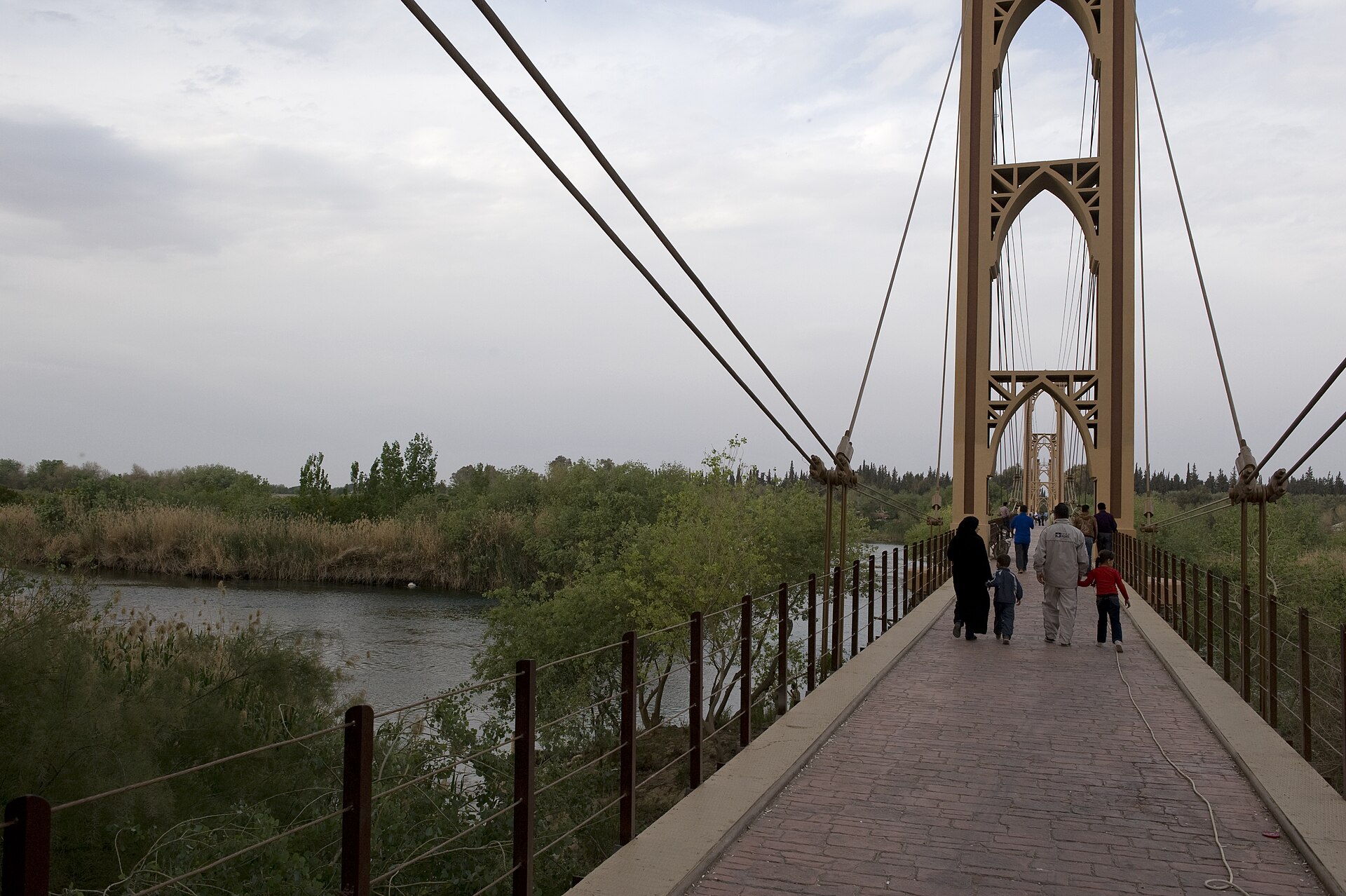
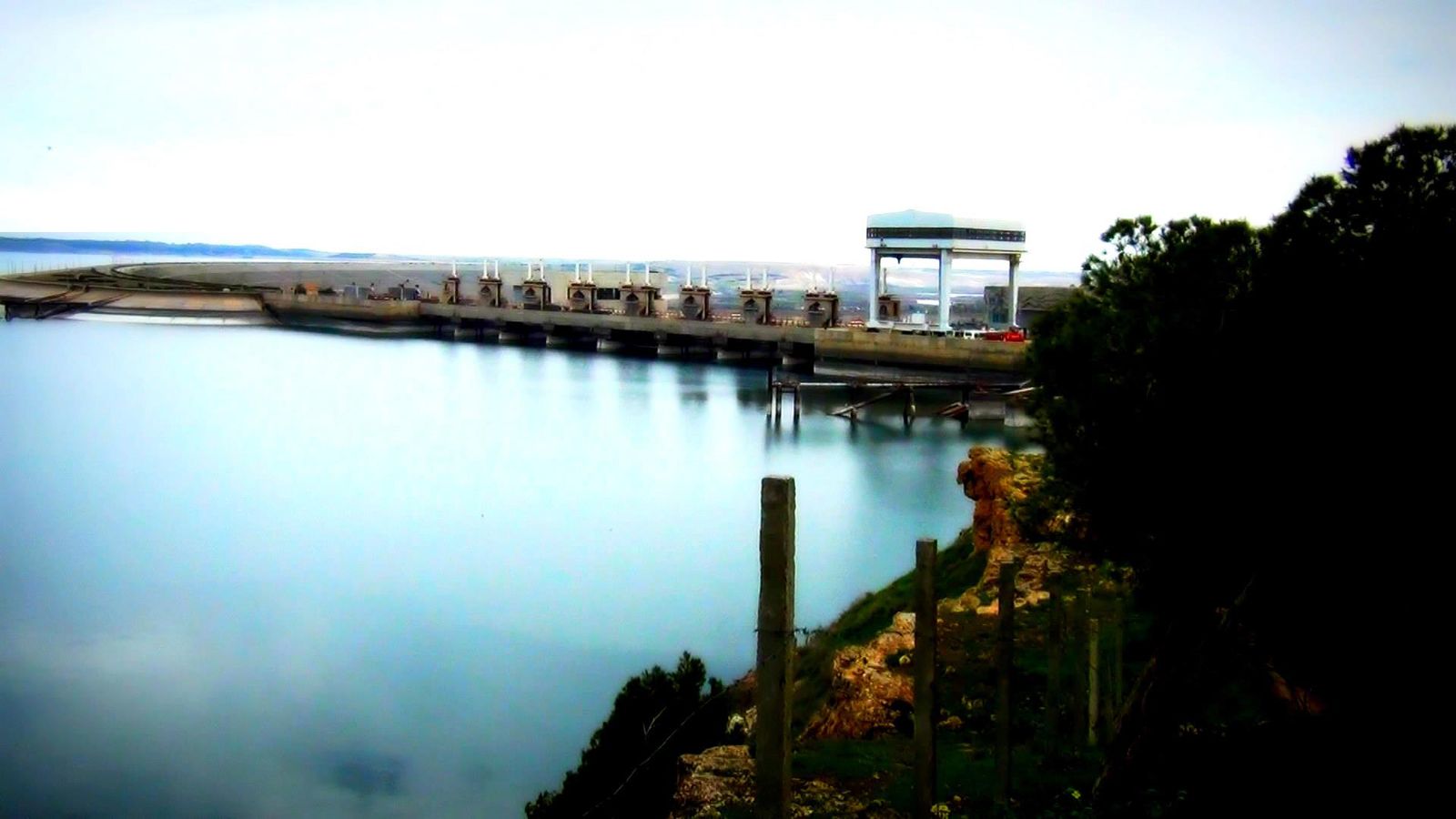
- Photos: Zeledi, Dosseman and Mohamed7799 via Wikimedia Commons (CC BY-SA), as credited in the captions. File photographs of the Euphrates at Raqqa and Deir ez-Zor and of Tabqa Dam — not photographs of this week’s flooding.