Markets
The headline indexes fell on Thursday, but the selling was really one company's story. Alphabet's worst day in years dragged the Nasdaq down 1.4 percent, while small caps, health care and financial stocks rose — a split-screen session that says more about the price of the AI boom than about the health of the wider market.
Track it live: live markets tracker — indexes, yields, oil and gold

Stock market today ended with a puzzle for anyone glancing at the closing numbers. The Nasdaq Composite fell 1.38 percent to 26,184.72 and the S&P 500 slipped 0.30 percent to 7,720.39, while the Dow Jones Industrial Average eased 0.25 percent to 52,342.56. Yet the small-cap Russell 2000 climbed about 1.1 percent to near 2,863, the equal-weight version of the S&P 500 — the one that treats a regional bank the same as a tech giant — rose during the session, and the VIX fear gauge eased to around 16. That is not what a broad selloff looks like. It is what it looks like when one very large company has a very bad day.
The company was Alphabet. The Google parent plunged 12.6 percent after reporting third-quarter revenue of about $127.6 billion that missed expectations and, more jarring for investors, negative free cash flow of $9.1 billion as its artificial-intelligence building spree consumed cash faster than the business generated it. Alphabet held its full-year capital-spending forecast at $195 billion to $205 billion. The message the market heard: the AI arms race is now big enough to swallow the cash flow of one of the most profitable companies on Earth, at least for a quarter.
Why markets moved: the AI bill came due
Technology stocks had led all three major indexes higher in the first three sessions of the week, helped by Claude maker Anthropic filing its go-public paperwork on Monday. Thursday reversed the mood. The Roundhill MAGS fund, which tracks the Magnificent Seven, fell almost 2 percent. Microsoft edged lower by about 1 percent even though its results beat expectations — Azure cloud revenue grew 48 percent and free cash flow reached $18.6 billion — because the contrast with Alphabet sharpened the question hanging over the whole sector: which AI spending is already paying for itself, and which is a promise? Memory and chip stocks, the week's early winners, gave back gains: Micron and SanDisk each fell around 5 percent, the iShares Semiconductor ETF (SOXX) lost about 1.5 percent, and the Roundhill Memory ETF dropped about 4 percent, ending the semiconductor index's four-day winning streak. Marvell Technology fell 13 percent after Bloomberg reported it is in advanced talks to buy optical-products maker Lumentum, whose shares rose slightly — a reminder that in this market, buyers get punished and targets get rewarded. Amazon fell more than 4 percent ahead of its own results, due after Thursday's close, with investors suddenly in no mood to extend the benefit of the doubt.
The split screen: small caps and the average stock rose
Underneath the mega-cap selling, the rest of the market had a decent day. The Russell 2000's roughly 1.1 percent gain, health care stocks up about 2 percent and financials up about 1.5 percent during the session told a rotation story: money leaving a handful of expensive AI names and moving into drugmakers, banks and smaller domestic companies. Earnings season, beyond the tech giants, is supporting that rotation. Of the 253 S&P 500 companies that had reported by Thursday, 81 percent beat analyst expectations, according to LSEG data, with aggregate third-quarter earnings growth tracking around 31 percent from a year earlier. A market where most companies beat earnings while the biggest index names stumble is an unusual one — the cap-weighted indexes your index fund tracks can fall on a day when the typical stock rises, simply because a few companies now carry so much weight.

Winners and losers: Caterpillar's slide, Lilly's leap
The Dow's biggest drag was Caterpillar, down more than 9 percent despite reporting better-than-expected overall revenue and earnings, after sales in its construction industries business came in slightly below estimates — the kind of fine-print miss that gets punished when a stock has run up on AI data-center construction hopes. Software had a brutal day: ServiceNow plunged roughly 27 percent and Fortinet fell more than 20 percent after their quarterly results. On the winning side, Eli Lilly gained more than 6 percent after raising its revenue outlook on strong demand for its weight-loss treatments; Merck added about 4 percent on an earnings beat powered by Keytruda and Gardasil; Chipotle jumped nearly 9 percent; eBay rose almost 3 percent; Shell advanced 2.4 percent on strong results; and Apple gained more than 1 percent. DoorDash rose 5.6 percent on news it is buying delivery rival Instacart for $17 billion in cash and stock, while Instacart, officially Maplebear, slipped 2.2 percent. Ford also gained after a third-quarter revenue beat.
Yields, the Fed and the December question
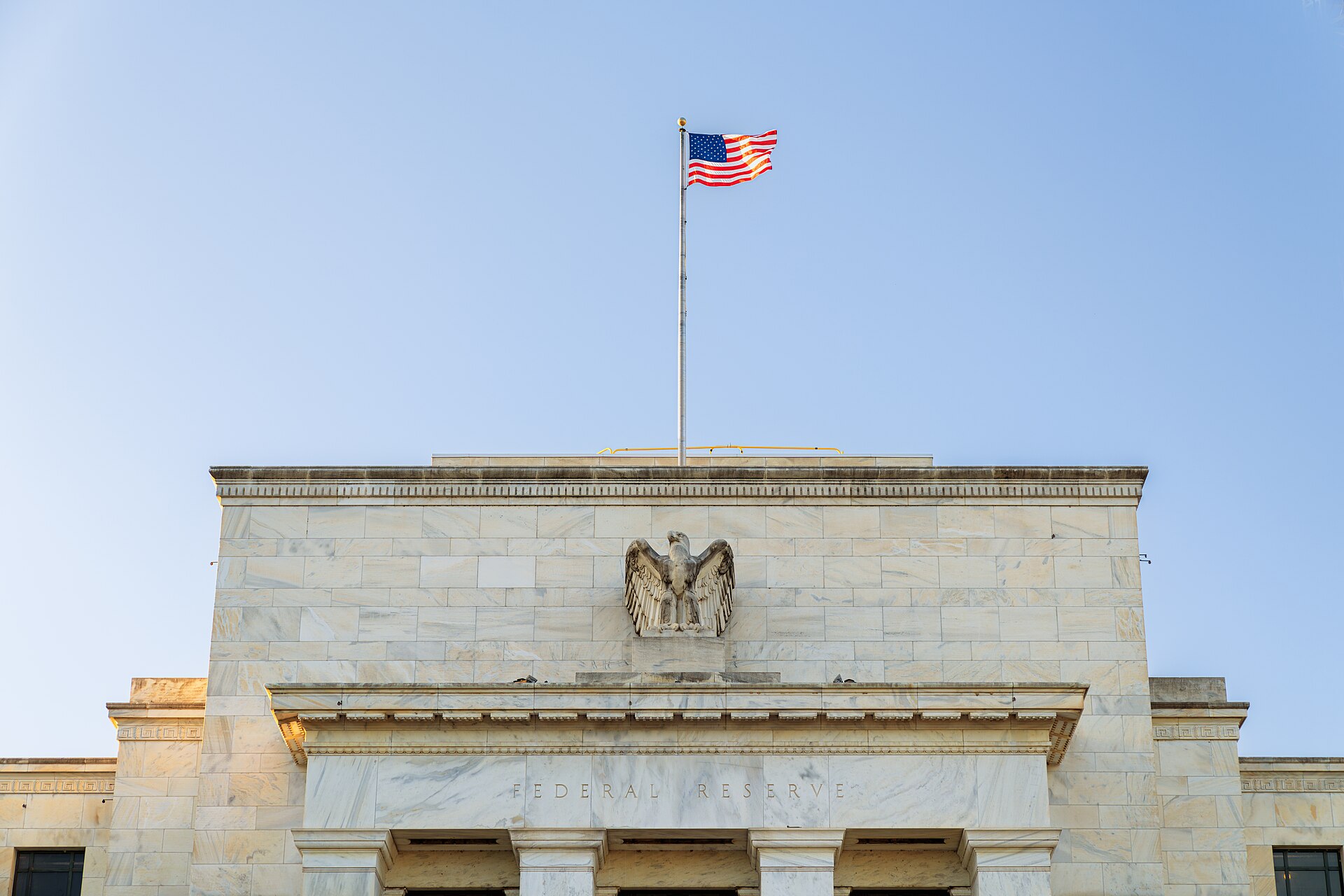
Bond investors had their own split decision. The 10-year Treasury yield slipped to around 4.95 percent by Thursday's close, down from Wednesday's close near 5.04 percent, even after Wednesday's Federal Reserve decision to hold rates steady at 3.75 to 4.00 percent in a 10-2 vote — with Governors Lisa Cook and Beth Hammack dissenting in favor of an immediate increase, and the long end of the curve still elevated after the 30-year yield closed Wednesday at 5.36 percent. Traders now see about an 80 percent likelihood that the Fed raises rates by at least a quarter point at its December meeting, according to CME FedWatch. Thursday's data did little to settle the argument: third-quarter GDP grew at a 3.4 percent annual rate, beating forecasts, while the September PCE price index — the Fed's preferred inflation gauge — rose 3.6 percent from a year earlier, roughly in line with expectations, with monthly price growth matching forecasts. Strong growth plus still-elevated inflation is exactly the combination that keeps a central bank reaching for the brake. (For the full Microsoft-Alphabet earnings contrast behind Thursday's tech split, see our earnings coverage.)
Oil, gold, bitcoin and the dollar
Oil barely moved on Thursday: WTI crude held around $101 a barrel and Brent around $114, little changed on the day, as traders weighed a Wall Street Journal report that Vice President JD Vance had written to Iranian security chief Mohsen Rezaei seeking to restart peace talks — a headline that cuts both ways for energy prices, since any deal could eventually return Iranian barrels while any failure keeps the war premium in place. Gold futures slipped 0.3 percent to $4,041 an ounce, still historically expensive insurance. Bitcoin traded near $80,200, retreating from overnight highs around $81,700, and the U.S. dollar index eased slightly to 101.93.
What it means for your 401(k), your mortgage and your savings
For regular readers, Thursday carried three practical lessons. First, your 401(k): if you own a broad index fund, days like this feel worse than the average stock's day because the fund is weighted toward the giants — one company's earnings miss can move your balance more than two thousand small companies rising. That concentration is the price of the index's long run of gains, not a sign the market as a whole broke. Second, your mortgage and borrowing costs: with the 10-year yield near 5 percent and traders pricing a possible December rate hike, the era of cheap money is not returning soon — mortgage rates, auto loans and credit cards key off those yields, so anyone planning a big purchase should budget for rates staying high even if the Fed pauses. Third, your savings: the flip side of high rates is that cash still pays — money-market funds and high-yield savings accounts continue to offer returns that were unimaginable five years ago, and a December hike would extend that. None of this is a reason to trade on one day's headlines; it is a reason to understand what you own and why one stock could move it.
What to watch next
Amazon's results, released after Thursday's close, will be the next verdict on AI spending, and Exxon and Chevron report Friday, testing whether oil above $100 is turning into energy-sector profits. OPEC+ meets November 1, U.S. midterm elections fall on November 3, and the Bank of Japan decides rates within days. Beyond that, every data print between now and the Fed's December meeting — inflation, jobs, retail sales — moves the hike odds that are now the market's master variable. Thursday's lesson will be tested again quickly: in a market this concentrated, the next mega-cap earnings report is never just one company's news.
Sources: Investopedia, markets coverage of October 29, 2026; Invezz closing report, October 29, 2026; CME FedWatch; LSEG earnings data; Bloomberg (Marvell-Lumentum report); The Wall Street Journal (Vance letter report). Closing levels as of the 4 p.m. Eastern close on Thursday, October 29, 2026. This article is reporting and analysis, not investment advice.