south korea bank cyberattack
South Korea president orders bank data leak probe: Update, October 4
South Korea president orders bank data leak probe: President Lee Jae Myung has moved the widening breach wave out of the banks' technology departments and onto the national agenda. On Sunday, October 4, Lee ordered a thorough investigation and response measures covering personal-data leaks at banks, finance companies and public agencies, according to the presidential office. Presidential spokesperson Kang Yu-jung said Lee directed officials to “take the matter with the utmost seriousness and make every effort to conduct a thorough investigation and draw up countermeasures.” The order, first reported by Reuters, turns a cluster of security failures into a test of government authority over one of the world's most digitized financial systems.
The political escalation was matched by an accelerated regulatory response. Financial Services Commission Chairman Lee Eog-weon convened an emergency Sunday meeting with financial-industry associations, regulators and executives from affected institutions. Financial Supervisory Service Governor Lee Chan-jin joined him. The session had originally been planned for Wednesday, but officials pulled it forward by three days as the number and range of reported incidents grew. Lee Eog-weon warned that the industry had to respond “with the highest level of vigilance,” language that puts boards and chief executives—not only security teams—on notice that the government expects immediate action.
Lee Eog-weon also acknowledged that the possibility of artificial intelligence being used in the attacks “cannot be ruled out.” His answer was an “AI attacks defended by AI” approach: faster machine-led detection, automated analysis of abnormal access and a broader rewrite of the financial sector's cybersecurity framework. That formulation matters. A major economy is no longer treating AI-enabled intrusion as a specialist hypothesis; it is framing financial defense as a policy-level contest between attacking and defending systems. The immediate result is likely to be higher spending on continuous monitoring, behavioral authentication, automated threat hunting and adversarial testing. The longer-term result may be regulation that judges a bank not only by whether it installed security tools, but by whether its defenses can adapt at machine speed.
What the latest disclosures show
The updated tally is broader—and more revealing—than the first wave of notices suggested. Korea JoongAng Daily reports that Shinhan Bank said on Thursday that roughly 25,000 customers had names, phone numbers and annual-income information exposed. A day later, Hana Bank reported 89 affected customers and KB Kookmin Bank reported 119. BNK Busan Bank disclosed on Friday that personal information belonging to 11 outsourced developers had been exposed. Outside the major commercial banks, Yegaram Savings Bank reported roughly 40,000 customers affected, while Hyundai Capital reported information involving 146 mortgage-loan agents.
Woori Bank and NH Nonghyup Bank were targeted but blocked the unauthorized access, and officials say no data leaked from those two institutions. Regulators had found no signs of the same attack pattern at securities firms, insurers, credit-card companies or the state-run Industrial Bank of Korea and Export-Import Bank of Korea at the time of the Sunday meeting. Those clean findings are reassuring, but they are not a declaration that the campaign is over. They are a snapshot of what investigators had confirmed while the inquiry was still widening.
The attack pattern may be more important than any one institution's count. Yonhap reported that regulators believe the intruders may have scanned multiple financial companies broadly for vulnerable, externally reachable systems rather than selecting a single bank and pursuing it alone. Sources also told the news agency that Shinhan was struck by hackers using advanced AI tools. A broad scan changes the risk calculation: every public-facing portal, contractor login and support application becomes part of the attack surface, and a sector built from similar vendor stacks can expose the same weakness repeatedly.
Regulators opened an on-site investigation after Shinhan filed its report on September 30 and expanded their probes as more institutions disclosed incidents. The FSC and FSS have now directed firms to carry out comprehensive security inspections, tighten access controls, minimize external access to systems and strengthen consumer-protection measures. Attack methods, malicious IP addresses and other threat information are to be shared rapidly across the industry. That last step is crucial: if the campaign is scanning many institutions for the same openings, a warning that stays inside one bank arrives too late for the next.
Why a presidential order changes the stakes
A presidential directive elevates the episode from corporate incident response to a national resilience event. South Korea's banking system is unusually digital, fast and deeply integrated into daily life. That sophistication makes the country efficient, but it also makes it a prime target—and a bellwether for other economies that have moved deposits, lending, identity checks and customer service onto interconnected platforms. If broad automated scanning can find weak external systems across Korean finance, executives in Singapore, Japan, Europe and the United States will have to ask whether their own contractor portals and legacy interfaces are any better defended.
Lee's intervention also fits a wider shift in Seoul's security posture. His government is simultaneously managing sensitive regional disputes, including its confrontation with Kyiv over North Korean prisoners transferred from Ukraine, while neighboring Japan is pursuing a more centralized intelligence architecture in its plan to build a CIA-style foreign intelligence service. The financial breach wave is different in kind, but not in strategic significance: data systems are now part of national power, and their failure quickly becomes a problem for the presidency.
“AI attacks defended by AI” becomes doctrine
The phrase “AI attacks defended by AI” risks sounding like a slogan unless regulators define what banks must actually do. At a minimum, it implies moving beyond periodic audits toward continuous monitoring; correlating login, device and network behavior in real time; running automated red-team exercises against externally exposed systems; and requiring human escalation when models detect suspicious access. It also implies that the FSS will need enough technical capacity to inspect the models used by banks rather than accepting vendor assurances.
For compliance departments, the consequence is a new category of recurring cost. Cybersecurity budgets will compete less with discretionary technology projects and more with capital and risk requirements. Banks may be asked to document model performance, false positives, incident-response speed and third-party access in the same disciplined way they document credit or market risk. Korea's technology-heavy export economy—examined in our report on the country's AI-driven semiconductor and export surge—has the expertise to build such defenses. The hard part will be enforcing them consistently across large banks, savings institutions, finance companies and the contractors that connect to them.
Who loses, who benefits
The banks lose first in reputation. Consumers are unlikely to distinguish neatly between a core banking platform and an outsourced recruitment or support system; they entrusted the institution with their information, and the institution owns the relationship. Shinhan's scale makes it the most visible case, but the smaller disclosures at Hana and KB Kookmin still show that narrow systems can yield sensitive records. Every notification reminds customers that a digital bank is only as secure as its least protected interface.
The third-party weak link is even harder to dismiss after the exposure of 11 outsourced developers at BNK Busan Bank and 146 mortgage-loan agents at Hyundai Capital. Contractors and agents often need enough access to do their jobs but do not sit inside the institution's strongest identity controls. They may use separate applications, different device policies and older authentication. Attackers know this. The Sunday response will be judged partly by whether regulators treat third-party access as a core banking risk rather than a procurement issue.
Cybersecurity vendors stand to benefit. Demand will rise for identity governance, endpoint monitoring, managed detection, AI-based anomaly detection and tools that map every externally reachable asset. Yet the opportunity comes with a warning: buying more software is not the same as reducing exposure. Banks that add dashboards without closing abandoned accounts, limiting contractor privileges or isolating vulnerable portals will spend more and remain fragile.
Putting the numbers in perspective
Shinhan's roughly 25,000 customers and Yegaram's roughly 40,000 customers alone amount to about 65,000 disclosed customer records, before the smaller bank cases and the separate contractor and agent groups are counted. That is a serious exposure, but it remains a small share of the tens of millions of bank accounts in South Korea. The immediate numbers should therefore be read with two cautions: incidents can overlap, and a modest confirmed count during an active investigation is not the same as a final count.
Korea has endured far larger data breaches in the past, including incidents measured in millions of records. This wave matters for a different reason: simultaneity and method. Multiple institutions reported related unauthorized access over a compressed period, and regulators suspect broad vulnerability scanning across external-facing systems. The measure of systemic danger is not only how many rows were copied; it is how many doors were tested, how similar those doors were and how quickly defenders recognized a campaign rather than isolated failures.
What happens next
The first milestone will be the on-site investigations. Officials must determine the initial entry points, the duration of access, whether credentials were reused, whether different incidents share infrastructure and whether any institution delayed reporting. Those findings will shape possible penalties, customer remediation and any order to rebuild or retire exposed systems. They will also test the claim that AI tools played a decisive role, separating forensic evidence from an assumption based on attack speed or automation.
The second milestone is policy. The emergency meeting may produce guidance immediately, but the larger question is whether binding rules follow this week: stricter limits on external access, mandatory threat-information sharing, deadlines for breach notification, minimum controls for contractors and perhaps a framework requiring AI-enabled monitoring at systemically important firms. Framework legislation is possible if investigators conclude that current supervisory powers or disclosure duties are too weak. Banks will push for clear standards and time to implement them; consumer advocates will press for speed, transparency and meaningful penalties.
The skeptic's angle: why were regulators caught flat-footed?
The uncomfortable reading is that regulators are now ordering an industry-wide inventory of weaknesses that should already have been visible. Broad vulnerability scanning is not a novel tactic. External-facing systems can be continuously mapped, tested and restricted, and financial supervisors have long known that contractor platforms create a softer perimeter around hardened core systems. If attackers could move across institutions by probing those edges, critics will ask why the sector's shared defenses and threat exchanges did not spot the pattern earlier.
The response timeline will receive scrutiny as well. The FSC held an emergency session on Friday, but the broader meeting was initially set for Wednesday and moved to Sunday only after the damage spread and the president demanded a thorough response. Officials can argue that convening leaders on a weekend shows urgency. Skeptics will ask why a campaign touching major banks, a savings bank and a finance company did not trigger the highest level of coordination from the outset. That Friday-to-Sunday interval may be short in bureaucratic time; in an automated attack, it is long enough for millions of probes.
President Lee's order establishes the standard by which the response will now be judged: not whether officials hold meetings, but whether they identify the common weakness, publish credible findings, protect affected people and impose changes that survive after public attention moves on. South Korea's digital-finance model made it a leader. Its handling of this breach wave will show whether a highly connected economy can also become a leader in accountability.

SEOUL — A South Korea bank cyberattack wave has struck all five of the country's major commercial banks in a series of intrusions that investigators describe as AI-driven — the first time the Korean banking sector has faced AI-powered attacks, and the first time every top lender has been hit simultaneously.
Shinhan Bank disclosed that about 25,000 of its customers had personal information exposed after attackers used AI agents to probe its systems for weaknesses and bypass authentication into a loan-recruiter service system. The exposed data included names, phone numbers, annual income, borrowing limits and credit information — a profile detailed enough to power precision-targeted fraud.
The other majors fell in quick succession. KB Kookmin Bank confirmed that 119 customers' personal information — names, phone numbers, addresses and encrypted resident registration numbers — leaked after abnormal external access to an employee mobile system. Hana Bank said 89 customers were exposed through its Operational Support System, including names, resident registration numbers, addresses, emails, phone numbers and workplace information; the bank said no financial transaction data was taken, and that it had blocked the malicious IP addresses, formed an emergency task force and reported the incident to the Financial Supervisory Service. BNK Financial Group reported a leak involving personal information of 11 outsourced workers at BNK Busan Bank. Woori Bank reported that its systems had been breached, while NH NongHyup said it detected hacking attempts but confirmed no data exposure.
The wave has already spread beyond the banks. Hyundai Capital, a major non-bank lender, was hacked, and Yegaram Savings Bank took emergency steps — suspending services and blocking suspect IP addresses. In total, roughly 40,000 people are estimated to be affected. Regulators moved within days: the Financial Services Commission held an emergency meeting with banks and credit companies on Friday, October 2, ordering system-defense inspections, and on Saturday, October 3, authorities urgently summoned the heads of all financial industry associations and the CEOs of financial firms — including the breached ones — to a meeting on October 4. The FSC, the Financial Supervisory Service and the Financial Security Institute are investigating.
Why this matters: the first AI-driven banking hack wave
Three things make this wave different from every bank breach South Korea has seen before, and each one should worry bankers well beyond Seoul.
First, the weapon. Attackers used AI agents to autonomously probe for vulnerabilities and work around authentication — machines doing the reconnaissance that once required skilled humans. That matters because it collapses the economics of hacking: an AI agent does not sleep, does not get bored, and can iterate through thousands of attack variations in the time a human team tests a handful. Defenses built to rate-limit and out-wait human intruders were designed for the wrong adversary.
Second, the simultaneity. All five major commercial banks were hit at once. That is not opportunistic crime; it is a campaign. Whether the attackers coordinated deliberately or simply ran the same playbook against five similar targets, the result is systemic: the country's entire top tier of lenders is now inside the blast radius, and customer trust in digital banking — the thing South Korea does better than almost any country on earth — takes the hit.
Third, the data. Names plus phone numbers plus income plus borrowing limits plus credit information is not a random grab; it is a fraud kit. South Korea is already plagued by voice-phishing scams, and data this detailed lets criminals call a victim knowing their income, their credit line and which bank they borrow from. The breach may be over, but the fraud wave it enables is just beginning.
The wave: who was hit and how
The intrusions did not strike the banks' core transaction systems — no money moved, by every account so far. They struck the periphery: the recruiter portals, the employee mobile systems, the operational support tools, the outsourced workers. That is the classic shape of a modern breach, and it is worth sitting with, because it tells us where the next ones will land.
Shinhan Bank data breach: 25,000 customers through a loan-recruiter system
Shinhan, one of Korea's big four lenders, disclosed the largest exposure: about 25,000 customers affected after AI-driven attackers probed for vulnerabilities and bypassed authentication into a system used by loan recruiters. The data taken — names, phone numbers, annual income, borrowing limits, credit information — reads like a lender's own underwriting file. Investigators found traces of "ARTEX AI," a Chinese-language open-source AI penetration-testing tool, on a Shinhan server, and said credential stuffing — the automated replay of stolen usernames and passwords — was part of the attack chain.
Hana Bank hack: 89 customers via the operational support system
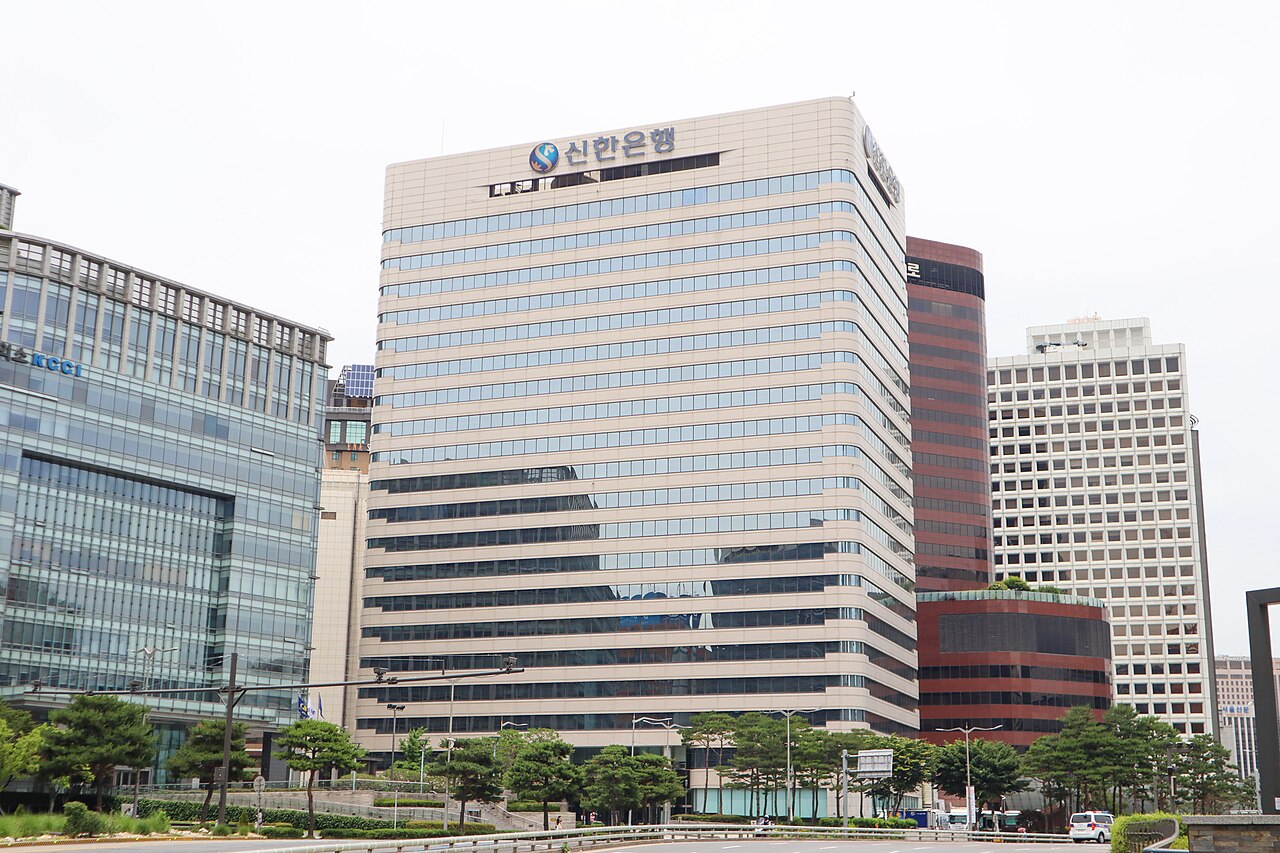
Hana's exposure was smaller — 89 customers — but the entry point is telling: the bank's Operational Support System, the internal plumbing that keeps services running. The exposed data spanned names, resident registration numbers, addresses, emails, phone numbers and workplace information. Hana said no financial transaction data was compromised, and it moved fast: blocking malicious IP addresses, forming an emergency task force and reporting to the Financial Supervisory Service.
KB Kookmin Bank customer leak: 119 through an employee system
At KB Kookmin, the country's largest lender by assets, abnormal external access reached an employee mobile system and exposed 119 customers' data — names, phone numbers, addresses and encrypted resident registration numbers. The encryption on the registration numbers is a small mercy; the access to an employee-facing system is the larger warning.
ARTEX AI and credential stuffing: reading the attack forensics
The most technically interesting detail so far is also the most easily misread. Traces of ARTEX AI — a Chinese-language open-source AI penetration-testing tool — were found on a Shinhan server. That is a fact about the tool, not about the attacker. Open-source attack tooling is available to anyone with an internet connection, and security researchers, criminals and state operators all draw from the same public toolbox. It would be a serious error to treat the language of a tool's interface as evidence of who wielded it.
What the forensics do suggest is a hybrid method: AI agents for the hard, creative work of finding vulnerabilities and defeating authentication, paired with credential stuffing — the brute, industrial work of replaying stolen logins at scale. That combination is the emerging signature of AI-era cybercrime: machine intelligence for the breakthrough, automation for the exploitation. Attribution remains unknown, and the FSC, the Financial Supervisory Service and the Financial Security Institute have investigations underway. Until they report, the honest position is that we know the how better than the who.
Beyond the banks: Hyundai Capital hacked as breaches spread
The campaign is not staying inside the banking perimeter. Hyundai Capital, one of the country's biggest non-bank lenders, was hacked, and Yegaram Savings Bank took the most drastic step of any institution so far — suspending services and blocking IP addresses as an emergency measure. The total estimated exposure across banks and non-banks now stands at roughly 40,000 people. The pattern is familiar from past breach waves: once attackers map one financial institution's defenses, the same techniques propagate across the sector, and smaller firms with thinner security budgets become the softest targets.
South Korea financial security emergency: the regulators respond
The regulatory response has been unusually fast — and unusually public. The Financial Services Commission convened an emergency meeting with banks and credit companies on Friday, October 2, ordering inspections of system defenses across the industry. Then, on Saturday, October 3, authorities took the extraordinary step of urgently summoning the heads of all financial industry associations and the CEOs of financial firms — including those already breached — to a meeting on October 4. That is not a routine supervisory check-in; it is the government telling the entire financial sector that its defenses are now a matter of national urgency. The FSC, the Financial Supervisory Service and the Financial Security Institute are all investigating, and the October 4 meeting is where the industry will learn what comes next: mandatory audits, new security orders, possible sanctions — and almost certainly new rules on how fast breaches must be disclosed.
Who wins, who loses — and what the critics say
The losers are clear. The banks face the immediate costs of incident response, customer notification and likely compensation, plus the slower cost of eroded trust in a country where banking is overwhelmingly digital. The roughly 40,000 exposed customers face months or years of elevated fraud risk — and in Korea, where voice phishing is endemic, that risk is concrete, not theoretical. And South Korea's reputation as a digital-finance leader takes a dent at exactly the moment it is exporting its fintech model abroad.
The winners are the cybersecurity industry. Every major breach wave in history has been followed by a surge in security spending, and an AI-driven wave will accelerate demand for AI-native defenses — the irony being that banks must now fight machine attackers with machine defenders. Vendors selling AI red-teaming, behavioral authentication and automated threat-hunting are about to have their best quarter in years.
The critics, meanwhile, are asking the uncomfortable questions. Why were peripheral systems — a loan-recruiter portal, an employee mobile app, an operational support tool — reachable and data-rich enough to matter? How long did the intrusions run before detection? And were the banks' AI-era defenses funded at anything like the scale of their digital expansion? The banks' disclosures so far describe what was taken and what was blocked; they have said less about how long the attackers were inside. Expect those questions to dominate the October 4 meeting.
What the numbers imply: 25,000 vs 119 vs 89
The lopsided counts are themselves evidence. Shinhan's 25,000 dwarfs KB's 119 and Hana's 89 — which suggests the attackers found a data-rich, weakly guarded system at Shinhan (the loan-recruiter service) and narrower windows elsewhere, whether through faster detection or tougher targets. The lesson for defenders: breach size is determined less by the attacker's ambition than by which system they land in.
Scale the total — roughly 40,000 people — against South Korea's population of about 52 million, and it is under a tenth of one percent. By headcount alone, this is not a national catastrophe. But headcount is the wrong denominator. The right one is systemic: five out of five major banks, plus the non-bank perimeter, in a single wave. A simultaneous strike on every top-tier lender is a stress test of the entire sector's defenses, and the sector failed it. That is what the October 4 summons is really about.
What happens next: three scenarios
Scenario one: the crackdown. The October 4 meeting produces binding orders — industry-wide security inspections, mandatory AI red-team testing, tighter breach-disclosure deadlines, and FSS sanctions or compensation requirements for the breached banks. This is the most likely near-term outcome: Korean regulators have a history of moving from emergency meetings to enforceable rules within weeks.
Scenario two: the copycats. The attack playbook — AI agents for reconnaissance and authentication bypass, credential stuffing for scale, open-source tooling — is replicable by anyone. Other banking sectors in Asia with similar digital architectures should assume they are being probed already. The next wave may not be in Korea at all.
Scenario three: the precedent. This becomes the case study that rewrites bank supervision for the AI era worldwide. If Korea responds with mandatory AI-vs-AI defenses and real-time supervisory monitoring, its framework will be copied by regulators from Singapore to Frankfurt. The country that suffered the first simultaneous AI-driven bank wave may end up writing the rulebook for surviving the next one.
Sources and reporting notes
- Reuters: South Korea calls urgent meeting with financial industry leaders over security (October 3, 2026)
- Reuters: South Korea finance regulator holds emergency meeting over bank hacks (October 2, 2026)
- Seoul Economic Daily: Unprecedented AI hacking hits banks — security overhaul needed (October 3, 2026)
- Aju Press: Hana Bank customer data exposure details (October 2, 2026)
- Seoul Economic Daily: Hyundai Capital hacked as breaches spread to non-bank (October 3, 2026)
Reporting note: Bank-by-bank exposure figures, the ARTEX AI and credential-stuffing details, and the regulatory timeline come from the cited reporting. Attribution of the attacks is not established; the FSC, Financial Supervisory Service and Financial Security Institute investigations are ongoing. The forensics describe attack methods, not the identity of the attackers. Forward-looking scenarios and assessments of the numbers are Signal Post News analysis.