EU renews Russia sanctions
TopicsEU renews Russia sanctionsUsmanov and FridmanEU unanimityLatvia abstainsSeptember 2026 renewal
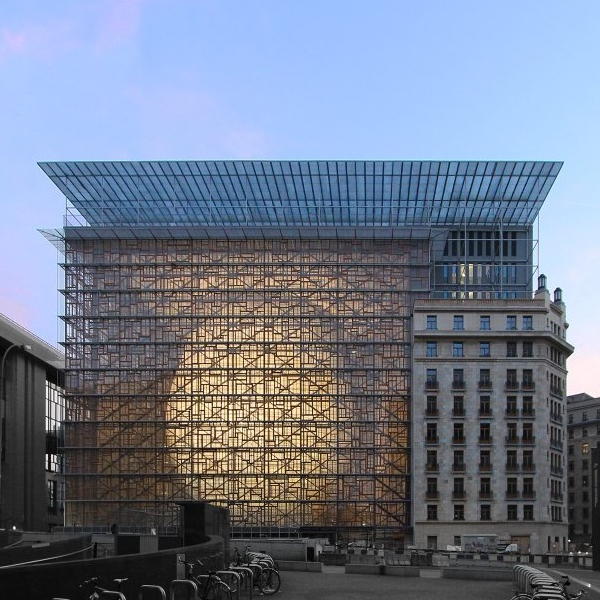
When the EU renews Russia sanctions this week, it will do so for three full years — the longest commitment the bloc has ever made to its economic war on Moscow. But the price of that lock-in was steep: two of the most prominent names on the sanctions list, metals tycoon Alisher Usmanov and Alfa Group co-founder Mikhail Fridman, walked free. The deal, struck by EU envoys in Brussels on September 22 after weeks of fraught negotiation, saved the sanctions regime from a midnight expiry — and handed the Kremlin a propaganda gift on the eve of another winter of war.
What was agreed in Brussels
EU envoys agreed on September 22 to remove Usmanov and Fridman while renewing roughly 2,600–3,000 other individual and entity listings through September 2029. Formal approval followed by written procedure on Tuesday. The deadline had already moved from September 15 to midnight on September 22, leaving little room for another round of bargaining.
The core sanctions remain familiar: listed individuals face asset freezes, bans on receiving funds or economic resources, and travel bans into the European Union. What changed was the calendar. Instead of forcing the bloc to reopen the full package every six months, as it had when the measures were last renewed in March 2026, the agreement gives the regime a three-year horizon.
Fact: the bloc preserved the overwhelming majority of the listings and extended them for an unusually long period. Analysis: the EU bought institutional durability by accepting two conspicuous exceptions. That reduces the number of moments at which one capital can threaten the entire regime, but it also advertises the leverage available to any government willing to hold out.
The two men who walked off the list
Alisher Usmanov — the metals magnate France wanted out
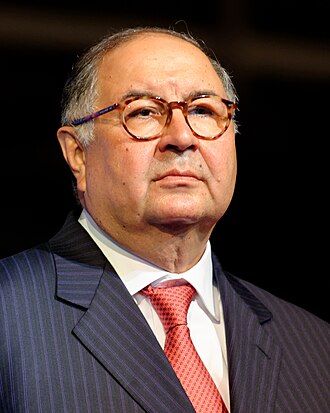
Usmanov is a Russian-Uzbek metals tycoon, the founder of USM Holdings and a billionaire whose fortune is estimated at about $13.6 billion. The EU sanctioned him in 2022 as a “pro-Kremlin oligarch” close to Vladimir Putin. France sought his removal for national-security reasons that it did not publicly explain.
That unexplained rationale is politically combustible. Delisting does not prove that the original designation was wrong, nor does it erase the EU’s 2022 description. It means that, in this negotiation, France made his removal a condition important enough to pursue while the wider regime approached expiry. The opacity is part of the story: other capitals and Ukraine were asked to accept a material concession without a public account of the national-security case behind it.
Mikhail Fridman — the banker who called the war a tragedy
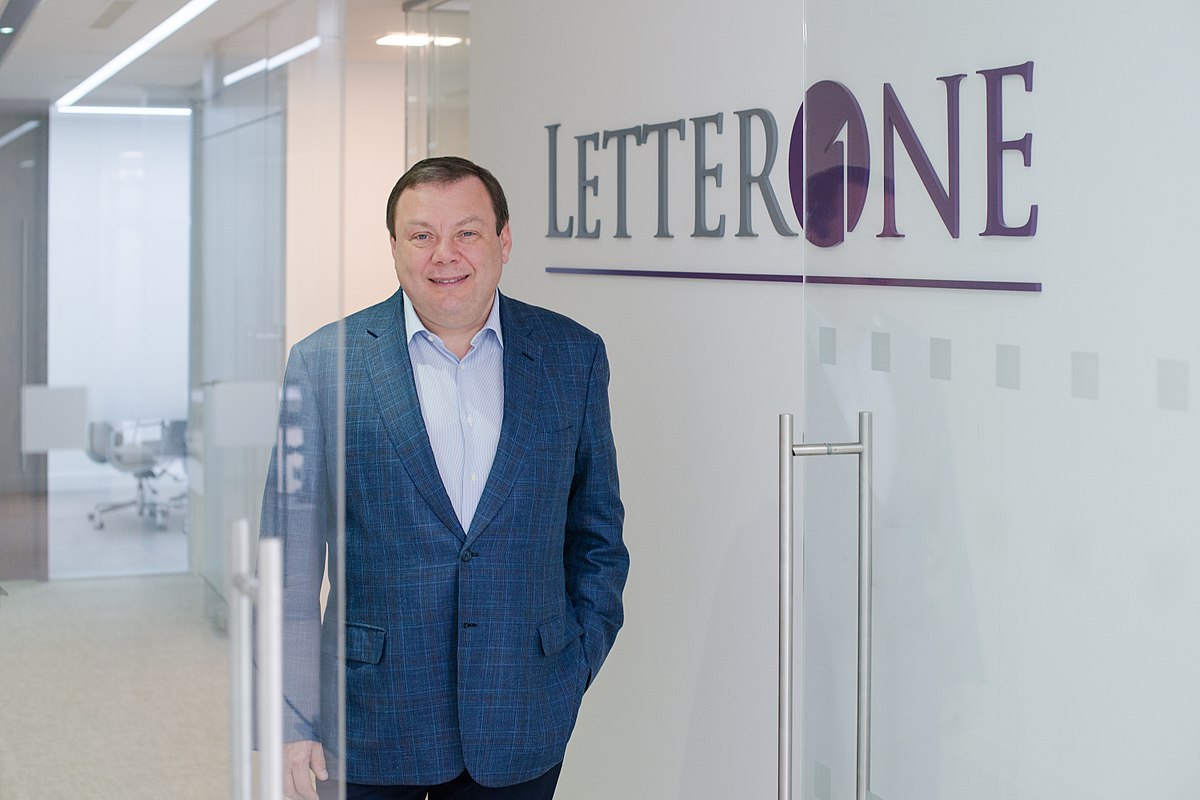
Fridman, a co-founder of Alfa Group, was sanctioned in 2022 as a main financier of Putin’s inner circle. His biography cuts across the political framing: he was born in Ukraine, lived there for his first 17 years and has parents who are Ukrainian citizens living in Lviv. After the full-scale invasion, he called the war a tragedy and wrote that “war can never be the answer.” He left the board of LetterOne in 2022.
Luxembourg sought equivalent treatment for Fridman. He has filed a $16 billion claim against the country, giving the dispute a legal and financial dimension far beyond the symbolism of one name on a list. His public opposition to the war is relevant context, but it does not itself settle the basis for the original designation or the case for removal. Those are separate questions, and the compromise did not publicly resolve their merits.
Why Latvia folded — and what Riga took home
Latvia was the final holdout. It ultimately abstained, a position that allowed the unanimity-based decision to pass without requiring Riga to endorse the delistings. France, in return, agreed to begin talks with Latvia about joining a French nuclear-deterrence initiative and about strengthening the French military presence in Latvia.
Latvian Prime Minister Andris Kulbergs said his government would impose national sanctions on both men. That response preserves Riga’s stated position while acknowledging the limits of what one capital could achieve at EU level as the deadline closed in. Slovakia backed the delistings.
The bargain is stark but not irrational. Latvia opposed relief for the two oligarchs, yet also had an interest in preventing the broader sanctions architecture from lapsing. France gained movement on the two names it and Luxembourg wanted addressed; Latvia gained the start of a security conversation tied directly to deterrence and military presence. Neither side got a clean victory.
Why this matters
The immediate significance lies in the three-year term. The EU regime, created in February 2022 to weaken Russia’s economic base and limit its access to technology and markets, is no longer scheduled for semiannual political jeopardy. Moscow cannot count on the next six-month renewal date as an automatic opportunity to test European cohesion.
That durability matters alongside Washington’s latest move. President Trump has signed the Lindsey Graham Russia sanctions act, reinforcing the wider pressure campaign. It also arrives as President Volodymyr Zelenskyy has warned of a new massive Russian attack and Ukraine has continued striking at Russia’s wartime energy system, including the Bashneft refinery in Ufa.
The political cost is equally real. Ukrainian Foreign Minister Andrii Sybiha called the removals “shameful and unjustifiable,” adding: “Moscow is celebrating.” He urged national restrictions. His criticism identifies the central weakness in Brussels’ claim of success: the regime survives, but two highly visible delistings give Russia a story about sanctions fatigue and selective enforcement.
Who benefits, who loses
The clearest beneficiaries are Usmanov and Fridman. EU-level travel restrictions and the prohibitions attached to their listings fall away. France and Luxembourg also secure the outcomes they sought, while EU institutions gain three years before the next full renewal confrontation.
Latvia leaves with a mixed result. It did not stop the delistings, but it avoided voting for them, promised its own national measures and obtained French commitments to begin security talks. Ukraine loses on the two names and on the message of equal treatment, even as the wider sanctions system remains intact.
Russia’s benefit is mostly rhetorical. Two delistings cannot be equated with the removal of thousands of other restrictions. Still, the Kremlin can point to the concessions as evidence that political bargaining can penetrate the sanctions wall. The EU’s gain is structural; Russia’s gain is narrative. Both have strategic value.
The numbers behind the deal
The arithmetic explains why Brussels compromised. Two names were removed. Roughly 2,600–3,000 other individual and entity listings were renewed. The term grew from the usual six months to three years, carrying the measures to September 2029. Usmanov’s estimated net worth is about $13.6 billion; Fridman’s claim against Luxembourg is $16 billion.
Those figures should not be collapsed into a simple scorecard. The number of listings says little by itself about the economic weight of each target, while a legal claim is not the same as a judgment or a payment. But the scale contrast is important: Brussels exchanged relief for two wealthy, prominent men for continuity across thousands of listings.
What happens next
Attention now shifts from adoption to implementation. Latvia has said it will apply national sanctions to both men, and Sybiha has urged other governments to use national restrictions. How widely that approach spreads will determine whether the practical effect of the EU delistings is narrowed or amplified.
The courts remain another pressure point. The EU General Court recently dismissed Roman Abramovich’s challenge, a reminder that individual listings continue to be tested through legal channels. Fridman’s $16 billion claim against Luxembourg likewise remains part of the surrounding dispute; the compromise does not establish how that claim will end.
Further steps involving frozen assets or an extraordinary review should be treated as scenarios, not settled developments. The confirmed decision is narrower: two removals, thousands of renewals and a new September 2029 horizon. The politics around implementation will show whether the longer term creates stability or merely moves the next major fight farther away.
The bottom line
Europe avoided the worst outcome — expiration of a sanctions system built over more than four years — but it did not do so cleanly. The three-year renewal is a serious strategic commitment that reduces recurring veto risk. The removal of Usmanov and Fridman is a serious political concession that raises questions about opacity, consistency and the price of unanimity.
Kyiv is right that Moscow can exploit the optics. Brussels is right that preserving thousands of listings matters more than losing two. The honest conclusion is not that one side of that argument cancels the other. The deal is both a durable act of pressure and a revealing compromise: stronger in time, weaker in symbolism, and unmistakably European in the way it was made.
Sources
- Reuters: EU renews Russia sanctions, drops Usmanov and Fridman
- EU Today: Russia sanctions coverage
- Demócrata: EU extends sanctions for three years