RBA cash rate 4.60%
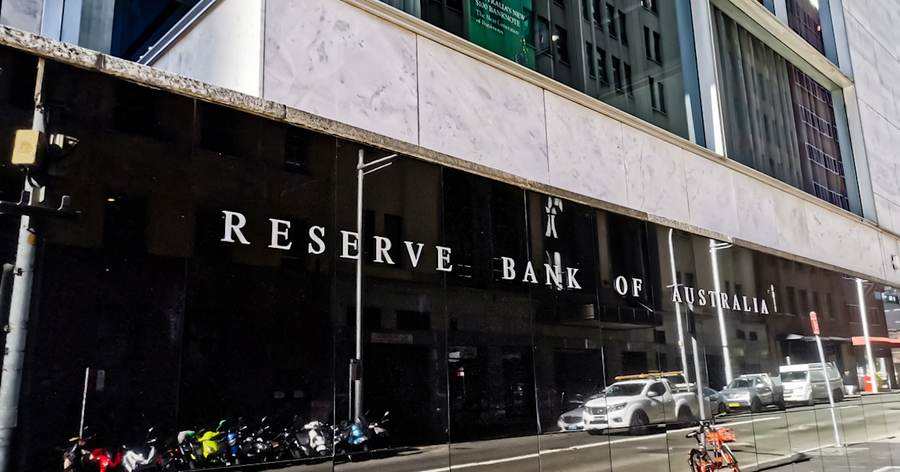
SYDNEY — The RBA cash rate 4.60% decision landed on Tuesday exactly as markets expected and still hit like a thunderclap: the Reserve Bank's Monetary Policy Board voted unanimously to raise the cash rate target by a quarter of a percentage point to 4.60 per cent, the fourth increase of 2026 and the highest the benchmark has stood since November 2011. A full percentage point of tightening in a single year, delivered in four steps — February, March, May and now September — and the Board's statement carried an unmistakable warning that it may not be finished.
"The Board will continue to do what it considers necessary to bring inflation sustainably back to target, including increasing the cash rate target further if needed," the statement said — language that markets read as a live threat of a November follow-up. Governor Michele Bullock was scheduled to face questions at a press conference at 3.30pm AEST, her first opportunity to show how far the Board's modelling now extends into 2027.
For borrowers, the arithmetic is immediate and unforgiving. A typical $600,000 variable mortgage with 25 years remaining will cost roughly $91 more a month once lenders pass the move on, according to ABC News borrower-impact analysis. Across all four of 2026's increases, that same loan is now about $360 a month more expensive than at the start of the year — $4,320 a year. Canstar's figures put the single-hike hit at $122 a month on an $800,000 loan and $152 a month on a $1 million mortgage. Macquarie Bank moved first among the majors, announcing it would pass the full rise on to variable home-loan rates from October 15.
Why this matters
Central banks do not raise rates to 15-year highs by accident, and they do not do it unanimously unless the data has left them no respectable alternative. The September decision is Australia's clearest admission yet that the inflation fight is being lost on a new front — one the RBA did not create and cannot fully control. The Board's statement named three forces pushing prices above its August forecasts: a broadened Middle East conflict that has sent global energy prices "much higher than assumed," AI-related demand driving "rapid growth" in global prices for technology goods, and stubborn pressure on domestic capacity.
That diagnosis is the story beneath the headline number. For two years, the conventional wisdom was that Australian inflation would be tamed the way it was tamed in the 2010s — by patient monetary policy and well-anchored expectations. What the Board is now saying, in the polite language of central banking, is that the price level is being driven by geopolitics and a technological boom, and that domestic policy must lean against both. A war premium in oil and a silicon premium in servers are doing what wage growth could not: forcing a central bank to squeeze its own economy to offset imported inflation.
The unanimity matters too. This is a Board that was expected to be divided — Westpac's chief economist Lucio Ellis had predicted a split vote, reflecting genuine differences of view about trend growth in supply capacity and the state of the labour market. A unanimous vote to a 15-year high means the inflation data since August was persuasive enough to silence the doves. That, more than the number itself, is what borrowers should be watching: it tells you the Board's centre of gravity has shifted, and that the next move is more likely up than down.
The year of 100 basis points
Put 4.60 per cent in its proper context and the scale of 2026's tightening comes into focus. The cash rate began the year at 3.60 per cent. The Board lifted it in February, again in March, and again in May — 75 basis points before the winter — then held through June and August while it watched the data. Tuesday's move completes a full percentage point of tightening in nine months, the most aggressive calendar-year campaign since the RBA began its modern inflation-targeting era.
History puts the level in perspective. The RBA's cash-rate record shows the target at 4.75 per cent through October 2011, before a cut that took effect in November that year. Today's 4.60 per cent therefore exceeds every setting since that November cut — nearly 15 years. But the similarity to 2011 can mislead. Back then, the RBA was cutting from 4.75 per cent as global growth risks mounted; today it is hiking toward a rate last seen when the mining boom was still inflating the economy. Same neighbourhood, opposite direction — and a very different policy problem.
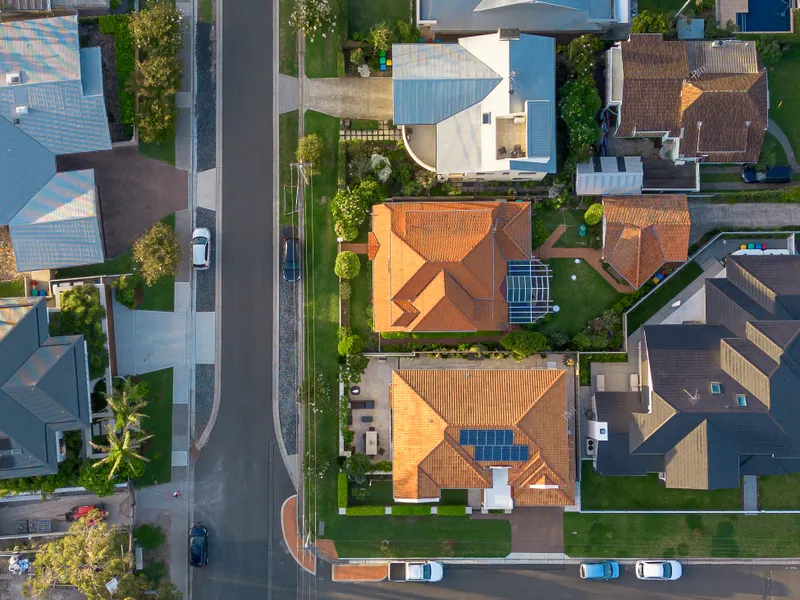
The 2011 comparison also understates the household pain, for a reason the RBA itself tracks closely: loan balances. The average home loan sat at $736,000 in the December quarter of 2025, and a large cohort of borrowers — everyone who bought at the 2020–21 peak — has never experienced mortgage rates in a pre-global-financial-crisis environment. A 4.60 per cent cash rate in 2011 landed on much smaller debts. In 2026, the same rate lands on the largest household debt pile in Australian history.
Where the pressure is coming from
The Board's statement is unusually explicit about what changed since August, and each of its three culprits deserves scrutiny.
Energy. The "broadened" Middle East conflict has pushed global oil prices "much higher" than the RBA assumed six weeks ago — crude has been trading toward $108 a barrel as the costs of the Iran confrontation mount, a dynamic we have been tracking in our live coverage. Oil feeds into everything: fuel, freight, food, the cost base of every business that moves physical things. When the RBA says energy is above forecast, it is saying the economy's thermostat has been reset by events in the Gulf.
AI goods. This is the newer, stranger channel. AI-related demand is driving "rapid growth in global prices for technology-related goods" — servers, chips, the hardware of the data-centre buildout. It is a reminder that the AI boom is not just a stock-market story: it is an inflation story, bidding up the prices of real inputs across the global supply chain. For a central bank, it is the worst kind of inflation — driven by genuine demand and investment, not by an overheating labour market that higher rates can easily cool.
Domestic capacity. Australian growth and inflation have both run stronger than the RBA expected at its previous meeting, businesses continue to report cost pressures and plans to raise prices, and the labour market has only eased, not weakened. In plain terms: the economy is running hotter than the model said it should, and the Board has decided the model, not the economy, must give.

The numbers, in context
100 basis points. The total tightening of 2026 so far — from 3.60 to 4.60 per cent. For comparison, the entire 2022–23 hiking cycle lifted the cash rate from 0.10 to 4.35 per cent over 19 months. This year's campaign is compressed and deliberate: the Board waited through June and August, saw the inflation risks it flagged actually materialise, and moved decisively rather than incrementally.
$90,000. How much typical borrowing capacity has been destroyed by this year's four hikes, according to Cotality estimates reported by ABC News — roughly a 9 per cent hit to what a household can borrow. That is not an abstract statistic for first-home buyers: it is the difference between the house you could afford in January and the one you can afford now, in a market where prices have already been declining in most capital cities as new housing lending falls.
70.18. Where the Australian dollar spiked — in US cents — on the decision, before slipping back to 69.93, down 0.3 per cent on the day. The currency's shrug is itself a data point: a fully priced-in hike moves little, and the market's attention has already shifted to whether the Board follows through on its "further if needed" warning.
5.0 per cent. Roughly where the ASX futures curve sat for mid-2027 at the September 24 settlement — about 40 basis points above the peak most banks forecast. The market, in other words, is priced for the possibility that 4.60 is a waystation, not a destination.
40 per cent. The share of mortgage holders the RBA told a Senate committee have two years' worth of home-loan repayments sitting in offset accounts or similar buffers — the statistic behind the Board's judgment that households are "not under widespread stress." It is also the statistic the critics will attack: averages hide the distribution, and the borrowers without buffers are precisely the ones a fourth hike pushes hardest.
Who wins, who loses — and what the critics say
The winners are the ones who always win from higher rates: savers, finally earning real returns on deposits, and the banks themselves, whose net interest margins fatten as they pass hikes to borrowers faster than to depositors. Macquarie's alacrity in moving first is the tell — the lenders are not exactly suffering.
The losers are layered. At the sharp end: recent buyers with large mortgages and thin buffers, the 2020–21 cohort facing their fourth hike in nine months on the biggest debts in the country's history. Behind them: renters, because higher mortgage costs flow into asking rents; small businesses facing both higher borrowing costs and softer consumer spending; and first-home buyers, whose borrowing capacity has been cut by $90,000 while prices have only partially adjusted.
The critics' case has two strands. The first is distributional: the RBA's own 40-per-cent buffer statistic cuts both ways — if most borrowers are fine, then the policy is punishing a minority of the most stretched households to discipline an economy-wide price level they did not cause. The second is causal: if inflation is being driven by Gulf oil and AI servers, raising the cash rate in Sydney does nothing to the oil price or the chip price. It works only by squeezing domestic demand hard enough to offset imported inflation — a crude instrument for a refined problem, and one that risks overshooting. Westpac's Lucio Ellis, having shifted his call to September, is already warning of a possible "follow-up" hike — the tightening cycle that feeds on itself.
The Board's answer, implicit in its statement, is that it has no better tool. Inflation expectations are the one thing a central bank can still anchor, and letting them drift while blaming the Gulf is how 1970s-style spirals begin. Whether that discipline is wisdom or overkill will be judged by the data — starting with the August CPI figures due Wednesday at 11:30am AEST.
What happens next
The calendar now does the talking. Wednesday brings the August monthly CPI at 11:30am AEST — the first hard read on whether the Board's fears about energy pass-through are showing up in the basket. Then the September-quarter CPI on October 28, the number that will decide the November 3 meeting. Bullock's 3:30pm press conference on Tuesday is the first chance to hear how the Board is weighing the two risks that now define Australian monetary policy: doing too little against imported inflation, or doing too much against an economy that is already slowing — consumer spending easing, new housing lending falling noticeably, house prices declining in most capitals.
Three scenarios frame the next six weeks. In the first, the August and September-quarter data show energy pass-through peaking and domestic demand cooling as the statement describes; the Board holds in November and 4.60 per cent becomes the peak of the cycle. In the second — the one the futures curve is pricing — inflation prints hot again, Bullock's "further if needed" becomes operative, and the cash rate pushes toward 5 per cent by mid-2027, a level Australia has not seen since the mining boom. In the third, the economy breaks first: a sharp deterioration in spending or employment forces the Board to choose between its inflation mandate and a downturn, the classic central-bank dilemma.
For the 3.5 million or so households with a mortgage, the practical advice is unchanged and urgent: check what your lender is doing — Macquarie moves from October 15 and the rest will follow — run the numbers on the $91-a-month figure for your own loan size, and if you are among the 60 per cent without two years of buffer in offset, talk to your bank before the November meeting, not after it. The RBA has told you, in its own careful language, that it is prepared to do this again. Believe it.
Sources and further reading
Reserve Bank of Australia, Statement by the Monetary Policy Board, 29 September 2026 (media release mr-26-27); ABC News borrower-impact analysis via ts2.tech; Bushletter analysis of the Board statement; Mortgage Choice rate coverage; Market7 evening briefing; Michele Bullock's September 18 economics-committee testimony via realestate.com.au. Related Signal Post News coverage: Goldman Sachs succession, Oura IPO postponed, and the Iran/UNGA live blog tracking the energy-price shock.