Goldman Sachs CEO succession

NEW YORK — The board of Goldman Sachs has discussed a plan for David Solomon to step down as chief executive and be replaced by president and chief operating officer John Waldron as soon as next year, The Wall Street Journal reported on Monday, citing people familiar with the matter. Under the blueprint, Waldron would take the top job around the end of 2027 or in 2028, and Solomon — 64, and chief executive since October 2018 — would likely remain as executive chairman of the board for one to two years afterward.
The plan requires formal board approval, which the Journal reported could come in the coming months, though directors stressed the timing is fluid and subject to change. Goldman spokesman Tony Fratto, who initially declined to comment on succession planning, later told Reuters the board regularly discusses succession and there is "no definitive timeline" for a change — calling assertions about timing "just speculation."
Waldron, 57, has long been viewed as the heir apparent. He has served as president and chief operating officer since Solomon took command, joined the bank's board in 2025, and last year received a five-year restricted-stock award initially valued at $80 million — matching an award to Solomon, and worth nearly $120 million at the time of Bloomberg's report — designed to keep him at the firm after outside suitors came calling.
Why this matters
Goldman Sachs is not just another bank changing chief executives. It is the institution that sets the tone for global finance — the firm whose alumni run central banks and treasuries, whose trading desks move markets, whose dealmakers decide which mergers happen and which don't. A succession at Goldman is a succession for Wall Street itself, and the shape of this one tells you a great deal about where the industry thinks it is headed.
The signal is continuity, not rupture. Waldron is the ultimate insider: 26 years at the firm, Solomon's right hand for the entire CEO tenure, a creature of the investment-banking culture that Goldman has now recommitted itself to after its disastrous consumer detour. Choosing him is the board's verdict that the Solomon turnaround — the retreat from retail, the refocus on dealmaking, trading and wealth management, the stock at record highs — was the right strategy, and that the next decade should be more of the same, executed by the man who helped build it.
But there is a sharper question underneath the coronation. The same board that is now anointing Waldron once watched Solomon burn billions on a consumer-banking experiment, preside over partner defections, and spend his weekends DJing while morale sagged — and kept him anyway. The succession plan is also, unavoidably, a referendum on a board that prizes stability over accountability. Whether that instinct serves shareholders in the next downturn is the bet Wall Street is now being asked to price.
The Solomon decade: turbulence, then triumph
To understand the succession, you have to understand the arc of the man being succeeded. Solomon inherited Goldman in October 2018 from Lloyd Blankfein with a mandate to modernize: take the secretive partnership culture public-market friendly, diversify revenue beyond the feast-or-famine of trading, and build a consumer franchise — Marcus, the Apple Card partnership — that would make Goldman look more like JPMorgan and less like a 19th-century merchant bank.
The modernization nearly broke the firm. The retail banking experiment cost Goldman roughly $7 billion before the retreat, according to the New York Post's accounting of the episode. Partners defected in waves. Internal grumbling — about the DJ side gig, about the top-down management style, about a culture that felt increasingly alien to lifers — spilled repeatedly into the press. For a stretch, Solomon looked like a chief executive surviving on the forbearance of a board that disliked the alternative of admitting a mistake even more.
Then came the pivot, and it worked. Solomon ditched the consumer business, doubled down on Goldman's traditional golden geese — dealmaking, trading, wealth management — and rode the rebound. The bank's shares have quadrupled since he took command, trading near record highs. The equity-trading desk has hit record after record, and Goldman's investment bankers have reeled in the highest fees since 2021, according to Bloomberg's reporting on the succession. The man the partnership once grumbled about leaves — if the plan holds — having delivered one of the great shareholder-value runs in modern banking.
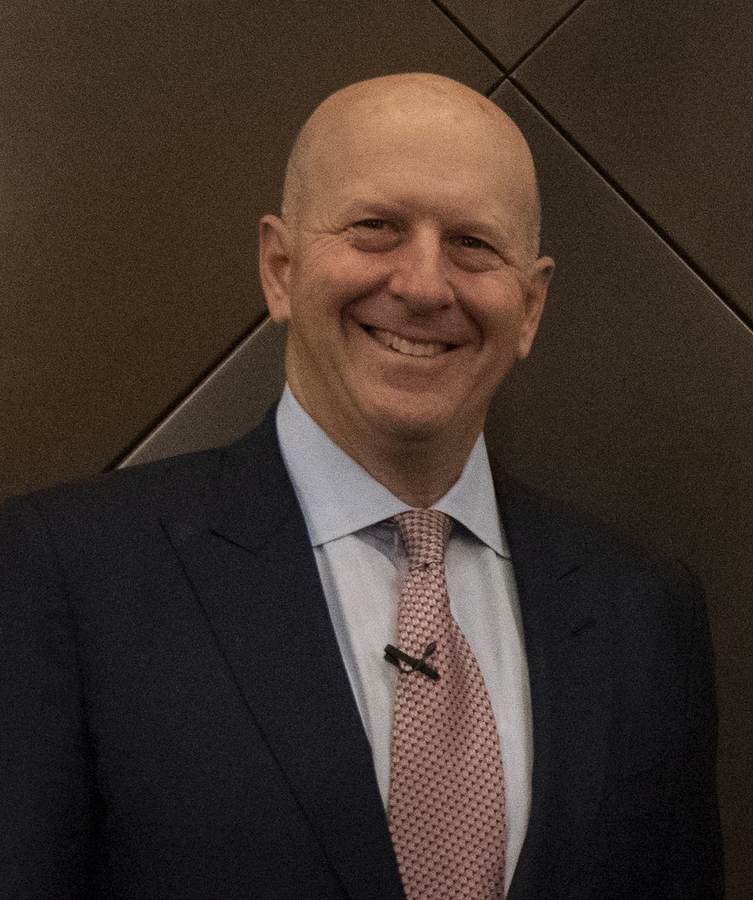
Who is John Waldron
Waldron's résumé reads like a Goldman Sachs archetype. He began his career at Bear Stearns — as did Solomon, who joined Goldman in 1999, a year before Waldron arrived in 2000 — and rose through leveraged finance and investment banking, running the media and entertainment banking group before becoming a head of leveraged finance. In 2014 he was elevated to co-head the investment bank alongside Solomon and Richard Gnodde, and when Solomon became chief executive, Waldron became president and chief operating officer. The two men have worked in lockstep for more than a decade, and partners describe a genuinely close relationship.
What makes Waldron interesting is not just the résumé but the market's revealed preference for him. In recent years he engaged in serious talks to lead Apollo Global Management and Carlyle, two of the most powerful private-equity firms in the world. Goldman responded the way it always responds to a retention crisis at the top: with money. The board's 2025 restricted-stock award — $80 million at grant, matching Solomon's own package, five years of service required — was a public declaration that Waldron was the future. At the time of Bloomberg's report the package was worth nearly $120 million, a figure that tells you both how much the board values him and how richly the market has rewarded the Solomon-era strategy he co-authored.
Waldron has also been the firm's quiet modernizer. He has pushed efforts to improve efficiency through artificial intelligence and to expand the workforce beyond the traditional financial centers. Over the past year, duties associated with his COO role — including human-resources work and an AI transformation Goldman calls "OneGS 3.0," aimed at changing the firm's internal operating model — have been transitioning to finance chief Denis Coleman, with whom Waldron has a close relationship. That handoff is succession planning in plain sight: the COO's portfolio is being redistributed so the heir can focus on becoming chief executive.
The mechanics of the handover
What the Journal described is a plan, not a done deal, and the distinction matters. Board approval could come in the coming months, but the timeline is explicitly fluid — and Fratto's "no definitive timeline" statement is the kind of carefully lawyered non-denial that keeps every option open. In Wall Street succession theater, this is the standard choreography: leak the plan, watch the market's reaction, let the anointed heir begin acting like the chief executive long before the title changes.
The executive-chairman interlude is the most revealing detail. One to two years of Solomon looking over Waldron's shoulder is both a stabilizer and a leash: it reassures clients and regulators that the transition is orderly, while keeping the old chief within arm's reach if the new one stumbles. These arrangements work when the outgoing CEO genuinely lets go — and become slow-motion power struggles when he doesn't. The closeness of the Solomon-Waldron relationship is the market's best reason to believe this one lands in the first category.
The numbers, in context
Four times. The multiple on Goldman's share price since Solomon took command in October 2018 — a run that has far outpaced gains in bank-stock indexes and turned one of the most criticized CEO tenures on Wall Street into one of its most lucrative for shareholders. Succession announcements at market highs are a classic board move: hand over the crown when the kingdom looks strongest.
$120 million. The current value of Waldron's 2025 retention package — the price the board paid to keep its heir from decamping to Apollo or Carlyle. For context, it is a sum that would have been unthinkable as a retention grant a decade ago, and it tells you how the economics of top Wall Street talent have inflated alongside the stock.
57 and 64. Waldron's and Solomon's ages. The seven-year gap is the quiet math of the plan: if Waldron takes over in 2028 at 59, he has a potential decade-long run ahead of him — the kind of tenure that lets a chief executive truly reshape a firm, rather than merely steward someone else's strategy.
Highest fees since 2021. Where Goldman's investment bankers stand right now, per Bloomberg — and the equity-trading desk hitting record after record. Waldron would inherit a machine running at full tilt, which is both a gift and a trap: the easiest time to become CEO is at the top, and the hardest thing to do at the top is avoid the fall.

Who wins, who loses — and what the critics say
The winners are straightforward. Waldron himself, obviously — the capstone of a 26-year climb. Solomon, whose legacy gets a graceful landing: executive chairman is a far softer exit than the defenestration his critics once predicted, and the record stock price lets him leave as a winner. And the board, which gets to present an orderly, insider-led transition to regulators and clients at a moment of market strength.
Denis Coleman is the quiet winner to watch. The finance chief has been absorbing Waldron's COO duties — including the OneGS 3.0 AI transformation — and in every Goldman succession in living memory, the executive who inherits the COO's portfolio becomes the next heir apparent. If you want to know who runs Goldman in 2035, watch Coleman.
The losers are the rival contenders who will now never get the top job, and the senior executives whose upward paths just narrowed — the Journal notes Waldron's expected ascension presents an opening for others to move around, which is the polite way of saying some people will leave. More broadly, anyone hoping for an outsider to shake up Goldman's partnership culture loses: this is the ultimate insider succession, a doubling down on the firm's existing DNA.
The critics' case deserves a hearing. Succession-by-coronation has a poor track record in banking: the heir who never had to win a contest often struggles when the contest comes to him. The $120 million retention package, whatever its market logic, will read to many as the board buying loyalty rather than earning it. And Fratto's "no definitive timeline" hedge means the plan could still unravel — as these plans sometimes do when the outgoing chief executive discovers he enjoys the job more than the chairmanship.
What happens next
Three things to watch. First, the board's formal approval — expected in the coming months, per the Journal's sources. The market will read the timing: a quick approval signals confidence and finality; a drawn-out process suggests dissent behind closed doors.
Second, strategy. Waldron co-authored the refocus on dealmaking, trading and wealth management, so no sharp turn is expected — but every new Goldman CEO eventually makes the firm his own. Watch whether Waldron accelerates the OneGS 3.0 AI overhaul, pushes harder into private credit and alternatives (the businesses Apollo and Carlyle wanted him to run), or reopens the question of businesses Solomon closed. The heir's first big strategic bet, not the succession itself, will define his tenure.
Third, the cycle. Waldron would take over into a market defined by the forces buffeting every bank right now: an IPO window that just slammed shut — Oura postponed its Nasdaq debut on this very Tuesday — volatile oil prices, inflation that won't quit, and central banks hiking again. Solomon's triumph was navigating the rebound; Waldron's test will be navigating whatever comes next. The crown is heaviest at the top of the market.
Sources
- The Wall Street Journal (via The Times): Goldman's Board Has Discussed a Plan to Name John Waldron as Its Next CEO
- Reuters (via Wealth Professional): Goldman Sachs succession plan: John Waldron set to take the top job — includes Goldman spokesman Tony Fratto's statement: "there is no definitive timeline for succession at Goldman Sachs. Any assertions about timing are just speculation."
- Bloomberg (via The Edge Markets): Goldman's John Waldron edges closer to succeeding Solomon as CEO
- New York Post: Goldman Sachs discusses plan to name John Waldron next CEO, succeeding David Solomon: report
- Citybiz: Goldman Sachs Weighs John Waldron for CEO Role as Early as Late 2027