Eight levels, one argument
Prada is preparing to open Pradasphere to the public on September 23 inside its eight-level Prada Galleria store in Milan. The timing, during Milan Fashion Week, makes the building part of the season’s editorial program rather than a quiet retail expansion. Prada also shifted its runway from its familiar Thursday position to Tuesday afternoon, helping open proceedings in a week defined by major second collections from Demna at Gucci and Maria Grazia Chiuri at Fendi.
Why this matters
Luxury e-commerce solved access but flattened atmosphere. A flagship must now justify the trip by offering architecture, archive, hospitality, culture and service that a product page cannot. Pradasphere turns the store into an institution where the brand explains itself. That is expensive, but it can deepen customer relationships and generate tourism, events and media long after a single collection leaves the runway.
Retail as culture—and control
A cultural format lets Prada place clothes, objects and history inside its own narrative. Museums and department stores once mediated that history; a house-owned venue controls selection, pacing and context. Critics will reasonably ask whether brand culture is scholarship or sophisticated salesmanship. The answer can be both. The test is whether visitors learn something that exceeds the immediate collection and whether archival access survives seasonal marketing needs.
The Buckle bag and the return of understatement
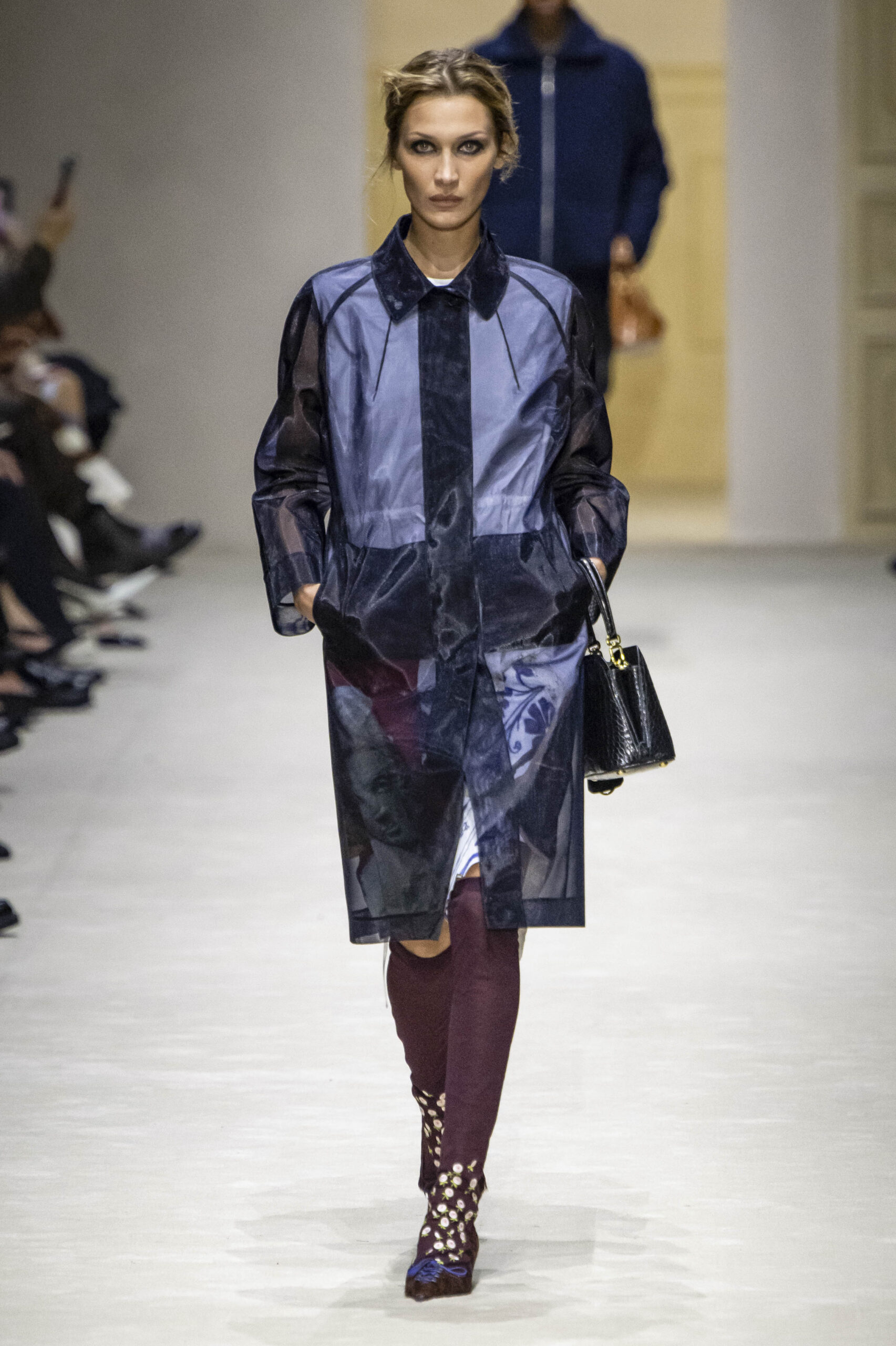
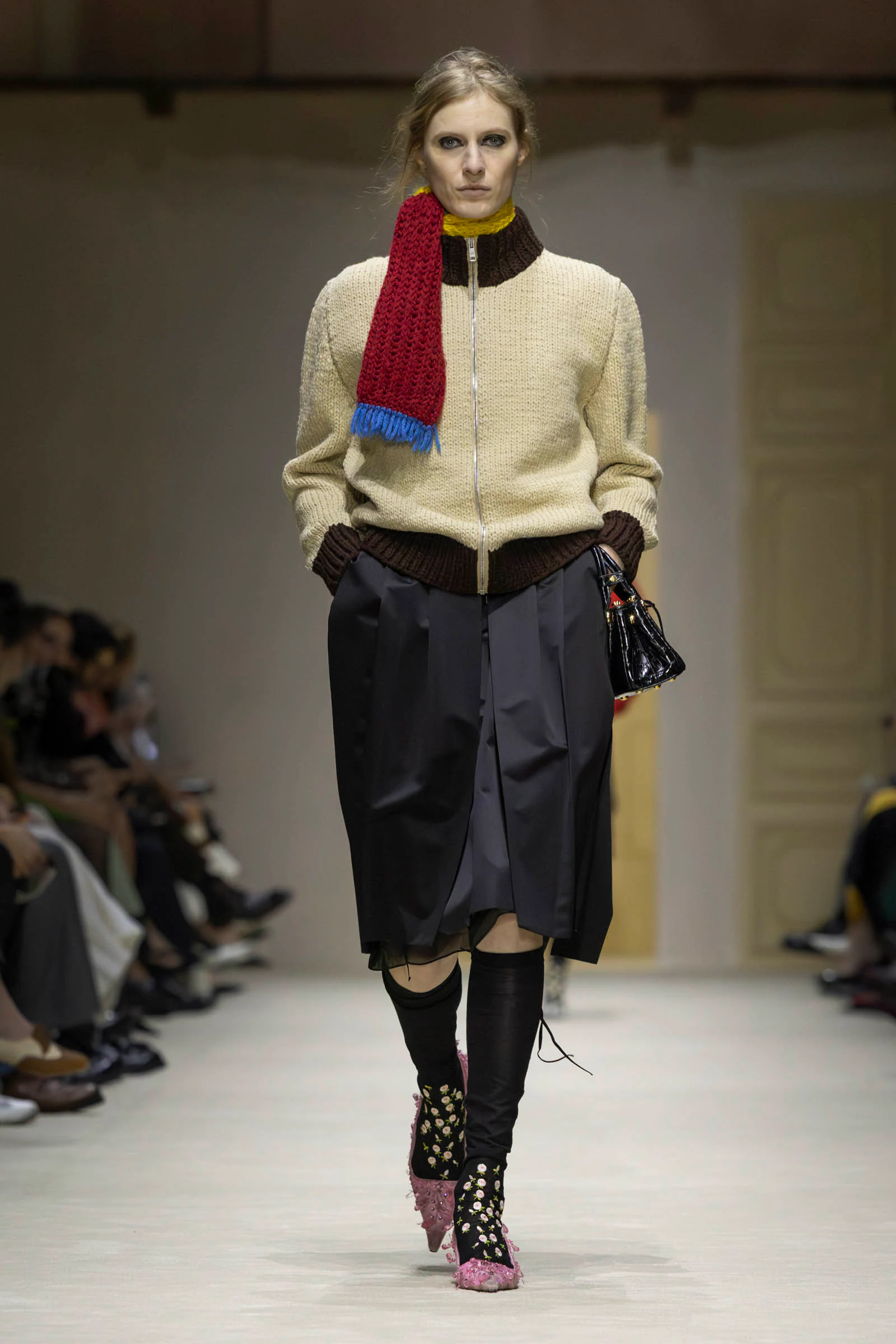
For Fall/Winter 2026, co-creative directors Miuccia Prada and Raf Simons returned to the Prada Buckle bag in a miniature size. The design debuted for Spring/Summer 2024 and has been carried by Emily Ratajkowski, Elsa Hosk, Alexa Chung and Chloë Sevigny. Its persistence fits a broader revival of 1990s understatement: recognizable structure, muted signaling and repetition rather than novelty for novelty’s sake.
What the wallet actually sees
Understatement does not mean affordability. It moves value from overt logos toward materials, proportion and insider recognition. For consumers, the rational question is cost per wear rather than trend status. A smaller bag may carry a lower absolute price than a large one but a higher price per unit of utility. Prada benefits if miniaturization renews demand without retiring the core design; buyers lose when collectability replaces usefulness.
The competitive Milan backdrop
Demna’s second Gucci collection and Maria Grazia Chiuri’s second Fendi outing make this season a test of whether leadership changes produce durable codes rather than launch-day spectacle. Prada’s advantage is continuity: Miuccia Prada and Raf Simons can build a retail institution around an established conversation. The risk is that an eight-level destination feels inward-looking while younger luxury customers expect openness and cross-cultural relevance.
What happens next
Watch foot traffic after fashion week, the balance between exhibition and selling, and whether Pradasphere programming changes often enough to reward return visits. Chanel and Dior have also invested heavily in destination flagships and cultural spaces, so the competitive benchmark is no longer sales per square foot alone. Success will be measured in time spent, repeat attendance and whether the Galleria becomes part of Milan’s cultural itinerary rather than merely its luxury map.
Why flagships are growing while stores close elsewhere
Mid-market retail often reduces space because online ordering makes a broad physical network inefficient. Luxury follows a different logic. The rare customer who travels to Milan expects discovery, service and a sense of access that a standard shop cannot provide. An eight-level flagship concentrates those functions: exhibition can create context, hospitality extends dwell time, archives authenticate the house and private selling supports high-value transactions. The building also becomes media. Every installation can generate imagery and coverage without purchasing a separate campaign location. That makes the capital expense easier to understand, though not automatically wise. If the space is beautiful but does not produce repeat visits, client relationships or cultural relevance, it becomes an expensive monument to a demand cycle that has already moved on.
How to tell institution from showroom
Pradasphere will earn cultural credibility through curatorial behavior. Does it identify objects precisely, acknowledge collaborators and place design in historical context? Are exhibitions accessible to visitors who are not purchasing, and do they change enough to create a public program? Does the archive include uncomfortable or commercially quiet periods, or only a seamless brand mythology? These questions do not require the space to pretend it is a public museum. A company can be transparent about commercial purpose while still producing rigorous exhibitions. The more Prada uses research, documentation and outside voices, the stronger the institution becomes. The more every historical thread terminates at a current handbag, the more visitors will read culture as a sales funnel.
Sources: L’Officiel USA opening report; BRICKS fashion-month preview; Bustle Buckle bag report. Facts and figures are a fixed September 18, 2026 reporting snapshot and do not update live.