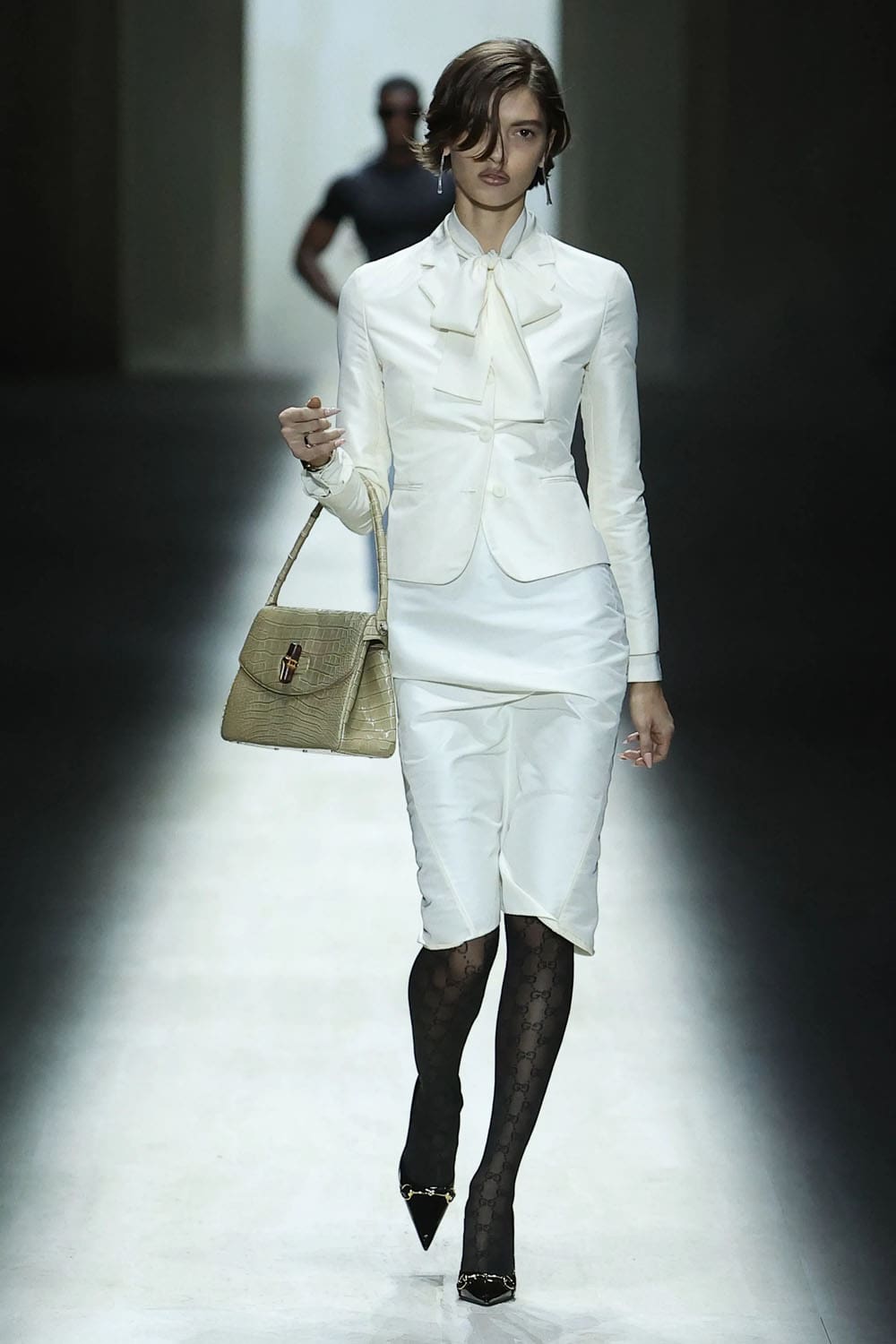
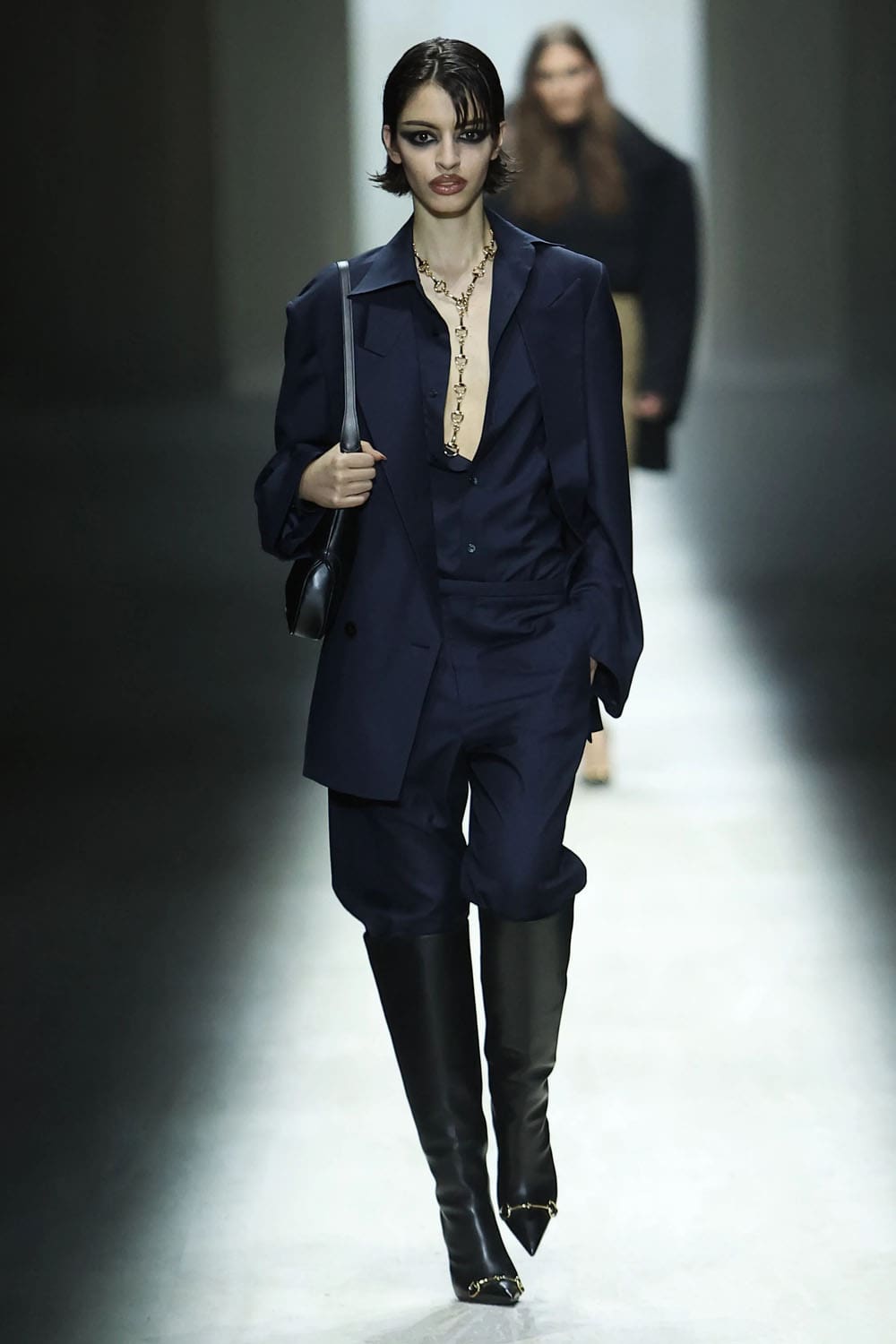
Demna staged his first Gucci runway show on February 27 during Milan Fashion Week, following the “La Famiglia” lookbook and film released in September 2025. The runway clarified that the reset would not be built on one logo or one nostalgic decade. It would work through characters, styling and the friction between polish and provocation.
Reuters reported that selected Primavera pieces were available on show day. That move is commercially significant: the traditional six-month runway wait gives rivals, social media and resale culture time to dilute a collection’s first impact. Immediate availability asks whether excitement can convert before the next feed refresh.
The risk of instant fashion
Speed can create urgency, but it also raises the standard. The product has to survive without months of editorial explanation. For Gucci, that is the useful measure of Demna’s debut: not whether every look shocks, but whether the characters resolve into objects people want to wear.
Primavera’s real wager is that a runway mood can become a retail decision without losing its edge.
Why this matters
Gucci is testing whether the runway can function as a checkout moment rather than a six-month promise. That compresses marketing, merchandising and supply into one event. For a house in reset mode, immediate availability also turns creative excitement into measurable demand before commentary has time to harden into consensus.
How we got here
The traditional runway calendar separated presentation from delivery because wholesale orders and production followed the show. Social media broke that rhythm: images became globally available while the product remained absent, allowing copies and fatigue to arrive first. “See now, buy now” experiments have appeared before; Gucci’s version matters because it is attached to a major creative transition.
Winners, losers and the skeptical case
Core clients and direct retail channels benefit from speed, while wholesale partners and slower production processes can be squeezed. The brand may capture impulse at full price, but it also risks learning from a narrow first audience and overproducing before broader demand is clear. Critics argue immediacy makes luxury resemble fast fashion; supporters counter that controlled availability can reduce the mismatch between attention and inventory.
What the evidence actually says
Selected pieces—not the entire collection—went on sale on show day. That qualifier is decisive: this was a targeted conversion test, not the abolition of the seasonal calendar. The available evidence confirms timing but not units, margins or return rates, so the experiment should be judged by later disclosure and product longevity, not by social volume alone.
What happens next
If the capsule sells through without heavy returns, expect more houses to reserve part of each show for immediate purchase. If it underperforms, the industry may keep instant accessories while restoring longer lead times for complex clothing. Demna’s larger challenge is to make urgency serve a coherent Gucci identity; speed can amplify desire, but it cannot manufacture it.
Sources and photo credits: Reporting via Reuters; runway photographs via Runway Magazine.