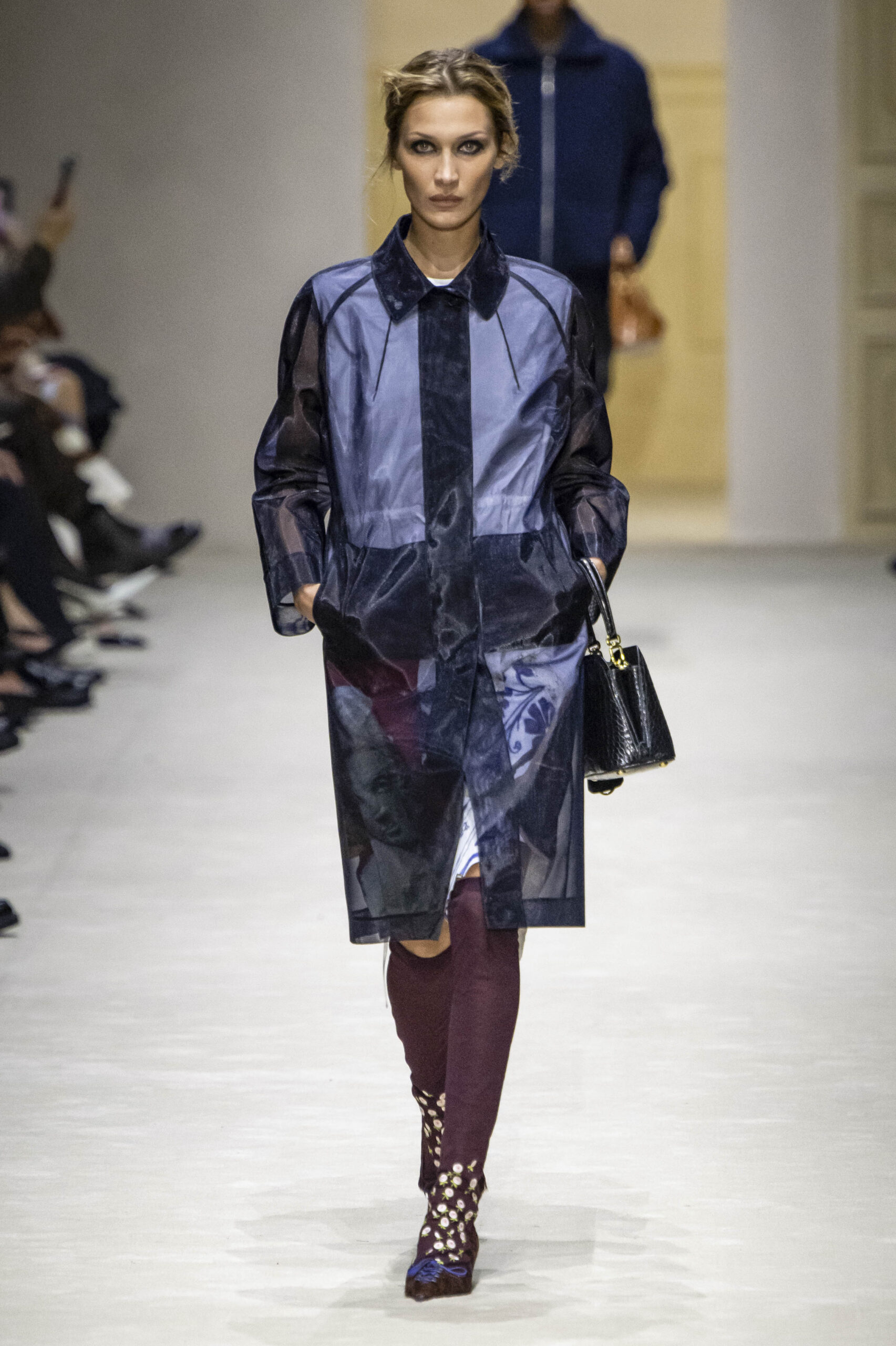
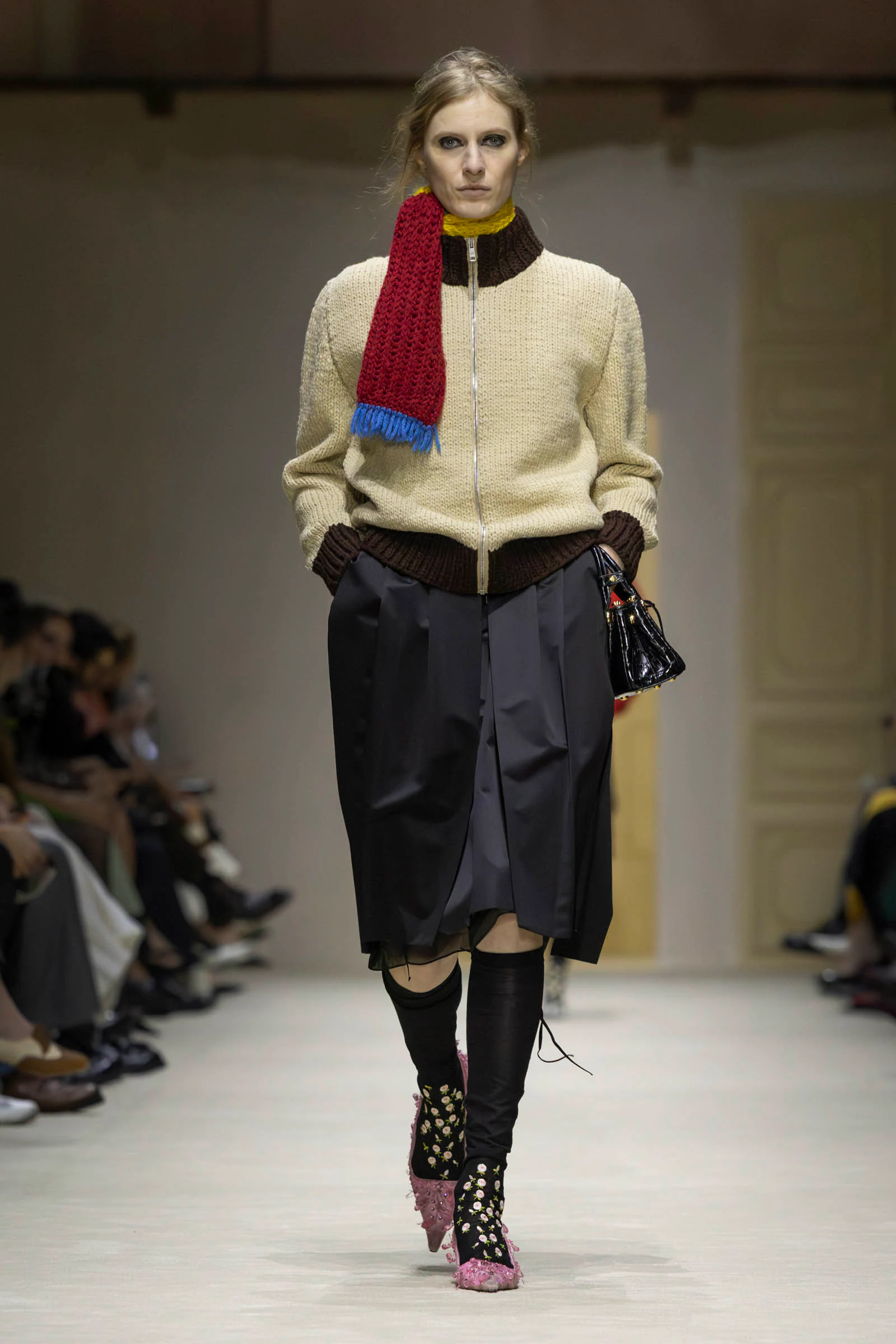
The appeal of Prada’s current work is its refusal to make polish look effortless. Layers collide, proportions hesitate and familiar wardrobe pieces appear slightly displaced. That tension turns getting dressed into the subject rather than hiding the construction behind a perfect finish.
The approach continues the questions in spring 2026 womenswear, “Body of Composition,” and the autumn-winter 2026 menswear show, “Before and Next.” The titles sound theoretical, but the clothes work when they remain readable as garments first: coats, skirts and bags with enough resistance to invite a second look.
The retail object
The miniature Buckle bag introduced for fall 2026 condenses that thinking into a product with immediate clarity. Luxury collections need both an argument and an object capable of carrying it. Prada’s strength is understanding that those are connected but not identical jobs.
The collection looks unfinished only if perfection is defined as the absence of friction.
Why this matters
Prada’s unfinished look is a critique of frictionless luxury. In a market where perfect images can be generated and copied instantly, visible awkwardness becomes evidence of human choice. The commercial paradox is that the house sells difficulty as sophistication while still needing products clear enough to recognize and buy.
How we got here
Prada has long treated ugliness, uniform and displacement as serious design tools. The current work extends that history into a moment dominated by algorithmically optimized taste, where smoothness is rewarded and ambiguity is filtered out. What once looked anti-fashion now functions as resistance to the sameness produced by both luxury merchandising and digital feeds.
Winners, losers and the skeptical case
Fashion-literate clients and editorial culture benefit because the clothes reward interpretation. Casual shoppers may find the argument inaccessible, and mass retailers can strip the tension into random layering. Critics can call the theory a way to intellectualize expensive imperfection; that criticism lands whenever construction quality fails to support the idea.
What the evidence actually says
Continuity across named collections suggests a sustained inquiry rather than an isolated styling trick. The miniature Buckle bag offers the counterpoint: a legible product can carry a complex runway story into retail. Without sales data, the safest conclusion is that Prada is balancing two jobs—provocation and conversion—rather than proving they have equal commercial weight.
What happens next
Expect the most difficult silhouettes to influence styling before they influence mass product. Bags, shoes and compact layers will likely absorb the idea first because they are easier to integrate. The strategy succeeds if “unfinished” develops recognizable rules; it fails if every collision looks arbitrary and the customer can no longer tell intention from accident.
Sources and photo credits: Runway image and review via Grazia; official look via InVoga Magazine / Prada; earlier collection context via Dazed.