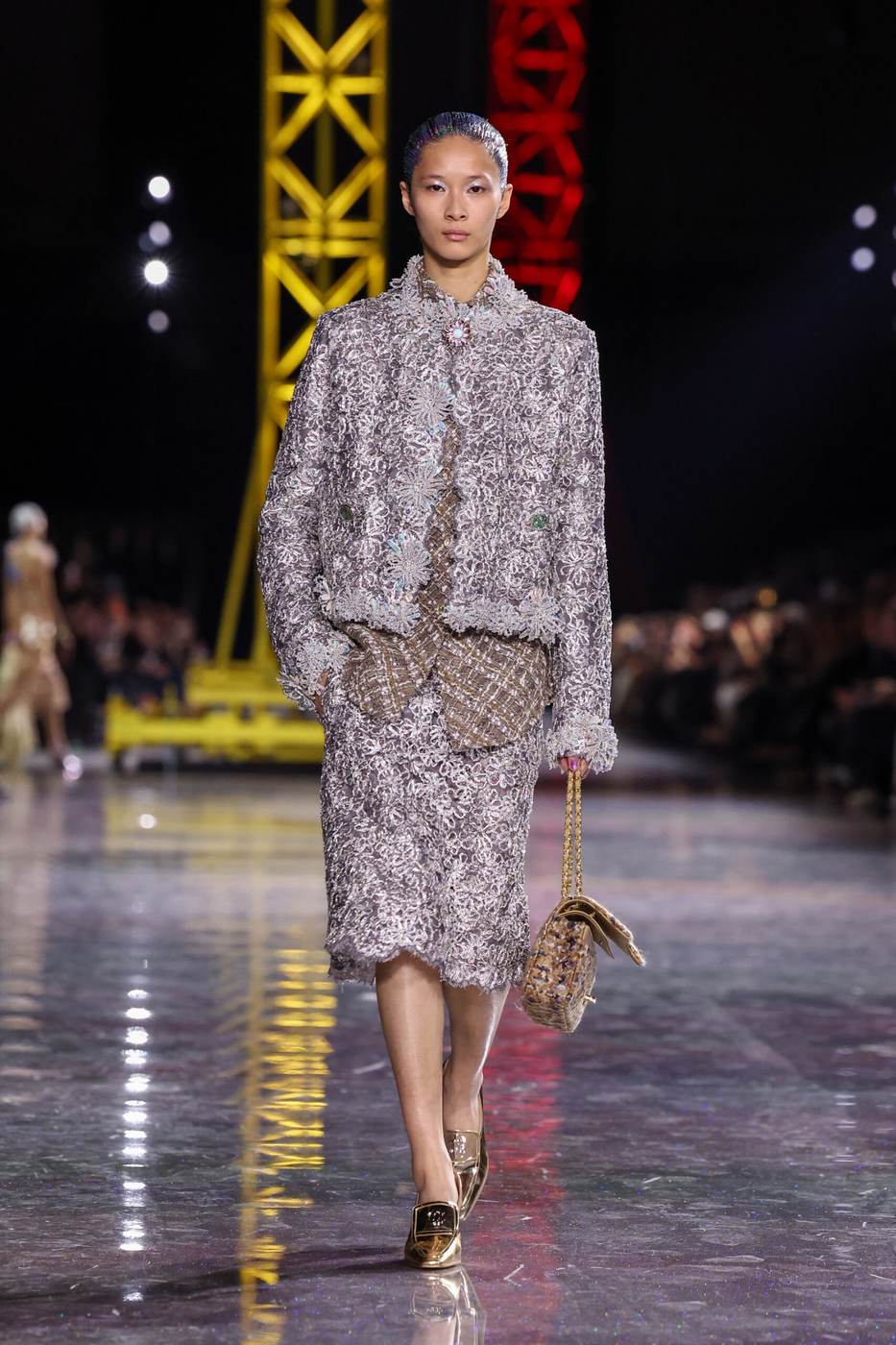
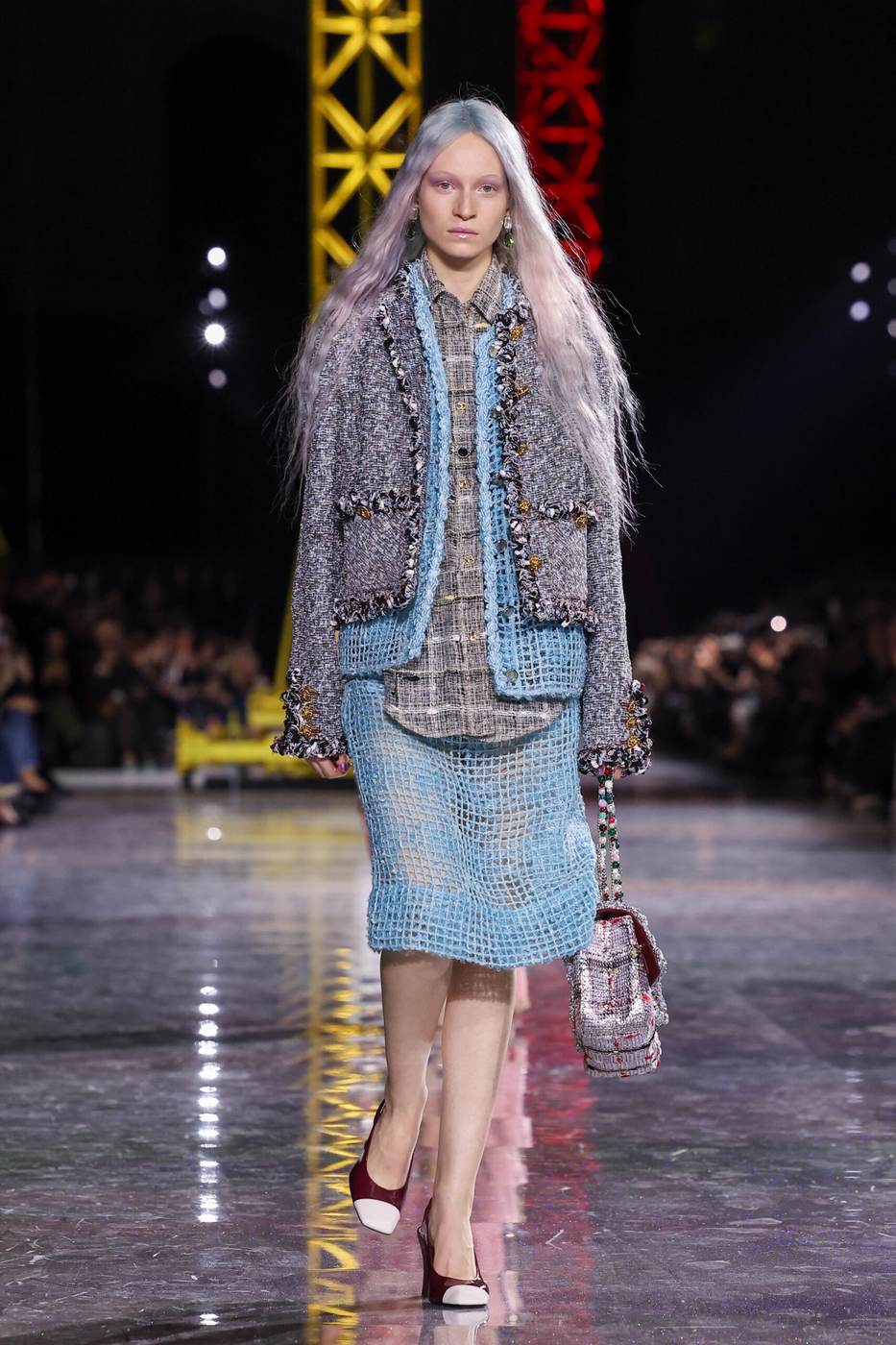
The Grand Palais installation used multicolored cranes to create scale, but the clothes carried the argument. Blazy treated tweed as a flexible material rather than a ceremonial uniform, loosening the relationship between jacket, skirt and body.
That distinction matters at Chanel. The house has one of fashion’s most instantly legible vocabularies, which makes change easy to market and difficult to execute. Remove too many codes and the brand disappears; repeat them too literally and a new creative director can look like a custodian.
Collection and campaign move together
September’s New York launch for Coco Mademoiselle Crush Absolu, fronted by Gracie Abrams, broadened the cultural register around the runway work. A fragrance campaign is not evidence about garment design, but together the moves show Chanel courting a younger audience without pretending its heritage is incidental.
Blazy’s strongest move is not rejection. It is giving the codes enough freedom to look lived in.
Why this matters
Chanel’s problem is unusually delicate: its codes are among fashion’s most valuable assets and among its easiest clichés. Blazy’s task is to create motion without spending the brand recognition accumulated over a century. Success would show that heritage can be edited from inside rather than refreshed through a superficial rejection of the past.
How we got here
Tweed suits, chains, quilting and camellias became visual shorthand through decades of repetition. That continuity built enormous commercial power, but it also made each transition vulnerable to comparison with an idealized archive. Blazy enters after a period in which luxury consumers grew more selective, raising the value of product that feels authored rather than merely recognizable.
Winners, losers and the skeptical case
Existing clients win if familiar pieces become easier to inhabit; younger clients are courted through movement, casting and cultural partnerships. Purists may see loosened proportions as erosion, while critics of luxury may see a youth campaign as demographic maintenance rather than creative change. Both views miss the garment-level question: whether tweed behaves differently on the body.
What the evidence actually says
The runway and fragrance campaign point in the same generational direction, but they are not equivalent evidence. A campaign can shift image quickly; product credibility takes seasons and repeat purchase. The strongest current data are qualitative—the persistence of house codes alongside altered proportion—so claims of a completed turnaround would be premature.
What happens next
The base case is gradual evolution: a few silhouettes become commercial anchors while the archive remains visible. A bolder scenario would allow Blazy’s material experiments to reshape handbags and ready-to-wear together; a defensive scenario would retreat to icons if early sales disappoint. Watch what returns in the next two collections, because repetition will reveal which changes are strategy rather than debut energy.
Sources and photo credits: Collection analysis via Hypebeast; runway photographs via Grazia.