Billie Jean King Cup 2026
Billie Jean King Cup 2026Czechia Ukraine BJK Cup finalBillie Jean King Cup final scoreLinda Noskova Elina Svitolina scoreKarolina Muchova Anhelina KalininaCzechia 12th Billie Jean King Cup titleBillie Jean King Cup winners listShenzhen BJK Cup final 2026Czechia wins BJK Cup since 2018Noskova Muchova Czechia Shenzhen
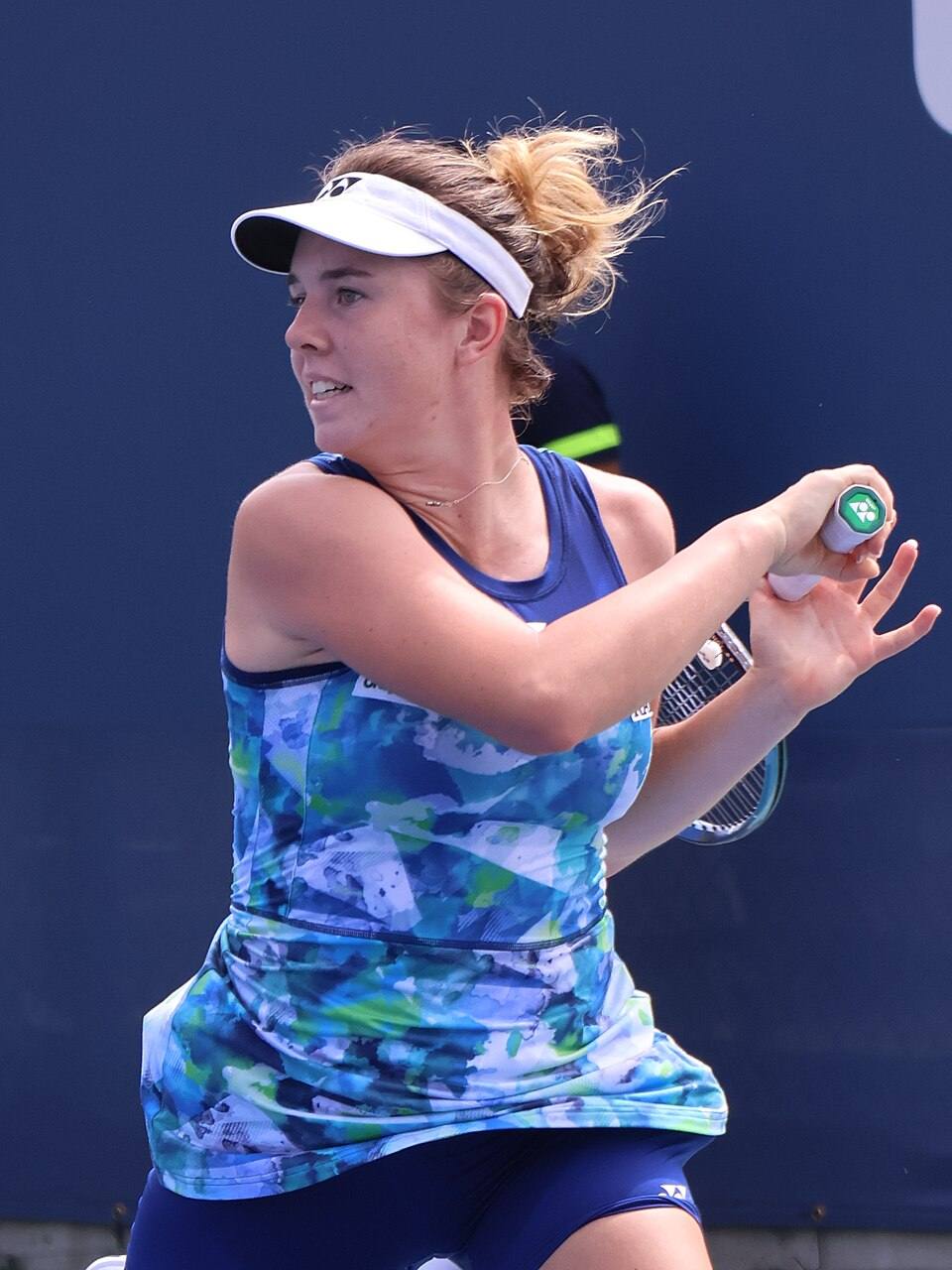
What happened
The Billie Jean King Cup 2026 is over, and the tennis world's deepest bench just reminded everyone what depth looks like. Czechia swept Ukraine 2-0 in the final at the Shenzhen Bay Sports Centre Arena on Sunday, September 27, needing only the two singles rubbers to settle it. Wimbledon champion Linda Noskova and Wimbledon runner-up Karolina Muchova — July's all-Czech Wimbledon final, replayed as a tag team — each won in straight sets, and the Billie Jean King Cup is back in Prague for the first time in eight years.
The scoreline flatters neither the closeness of the tennis nor the scale of the achievement. Ukraine, playing its first final in history, walked into the arena having dethroned two-time defending champion Italy in the semifinals. It walked out with a silver medal and something arguably more valuable: proof it belongs at the summit of the team game. Czechia's triumph is the 12th in program history and the first under rookie captain Barbora Strycova, who, as a player, was on the court for the last Czech title in 2018.
The two rubbers that decided it
Muchova got Czechia rolling, and the way she did it tells you everything about this team's ruthlessness. The world No. 8 dismantled Anhelina Kalinina 6-2, 6-3 in 70 minutes, serving 72 percent, firing eight aces, winning 86 percent of her first-serve points, and — the stat that ends arguments — never facing a single break point. Kalinina managed just five points on Muchova's serve all afternoon. The world No. 8 converted four of her five break chances, and the tie was 1-0 before Ukraine had time to settle.
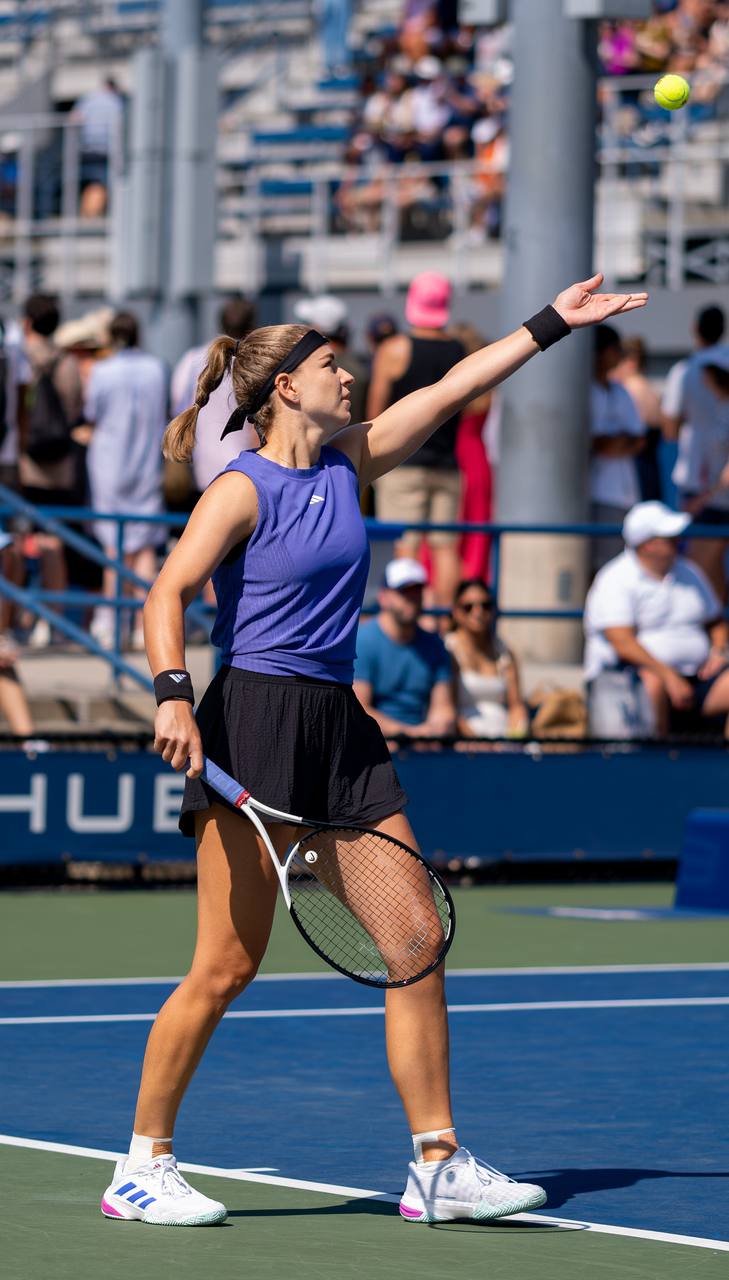
Then came the match that mattered. Noskova, 21 years old and already a Wimbledon champion, against Elina Svitolina, the world No. 7 and Ukraine's spiritual leader. The tennis was genuinely good — Noskova struck 10 aces, Svitolina saved two match points, and the Czech needed a third match point to close out the 6-3, 7-6(5) win in one hour and 33 minutes. "I was not nervous at all before the match, which I thought was kind of weird," Noskova said afterwards. "Obviously as the match started, I was already getting into the rhythm, so I didn't have time to be nervous. But I just kept telling myself it's a match like every other else. Obviously this one mattered a lot. I was not playing just for myself, but for my country as well."
Noskova went 5-0 in the team competition this season — eight consecutive BJK Cup match wins stretching back, if you count the run — and she has now won a Wimbledon singles title and a Billie Jean King Cup in the same summer. At 21. Take a moment to sit with that.
A team that never needed its secret weapon
Here is the detail that should frighten everyone else in the women's game: Czechia did not play a single doubles rubber all week. Not in the final. Not against Great Britain or Spain earlier in the week. All three ties in Shenzhen were settled 2-0 in the singles. That means the greatest doubles player of the modern era — Katerina Siniakova, 12-time Grand Slam women's doubles champion, world No. 1 in doubles — sat unused on the bench through the entire knockout stage. Marie Bouzkova never had to warm up either.
"I don't mind that I had to sit on the bench and just cheer for them. They did amazing job," Siniakova said after the trophy ceremony. That is a Hall of Fame doubles player shrugging off irrelevance with a smile, and it tells you this team wins from surplus, not from scraping by.
Credit the setup, too. Barbora Strycova, in her first year as team captain, inherited a program with a winning culture and steered it to the title. She was part of the 2018 winning squad as a player, so the symmetry is irresistible: she lifted the trophy then, she shepherded the next generation to it now. New captain, same standard.
Why this matters
Team tennis is usually where superteams go to die. The Davis Cup and the Billie Jean King Cup are littered with star-studded squads that never figured out how to be a team — players who spend 50 weeks a year in individual competition, suddenly asked to win for a flag. What Czechia has built is the opposite: a program that turns individual talent into team certainty.
This is bigger than one week in Shenzhen. Czechia won six of its 12 titles in the 2010s, then went quiet for eight years. The 2026 triumph says the pipeline is flowing again — and the pipeline is the story. A nation of 10 million people keeps producing Grand Slam champions: Noskova at Wimbledon this July, and a roster deep enough to park a 12-time doubles major champion on the bench. For perspective, Czechia is now 12-1 in Billie Jean King Cup finals, the second-most successful nation in the competition's history behind the United States' record 18 titles. The Czech Republic treats the team competition as a birthright. Most countries treat it as a calendar inconvenience.
Ukraine's run deserves its own headline
History will remember the winner, but Ukraine's week was remarkable on its own terms. This was the country's first Billie Jean King Cup final — ever. It reached the final four only once before, last year, and it got to Shenzhen's title match by knocking out Italy, the two-time defending champions, in straight sets in the semifinals. That is a legitimate scalp, not a lucky draw.
Context is impossible to ignore: Ukraine has been playing international tennis through a full-scale war since 2022, and its tennis community has carried that weight in public for years. It did all this, moreover, without Marta Kostyuk, the world No. 10. Playing a final against Czechia's two Grand Slam finalists without your No. 1 singles player was always going to be an uphill walk, and Svitolina still pushed Noskova to a second-set tiebreak and saved two match points before bowing out. There is no consolation trophy, but there is a message: Ukraine is no longer a semifinal ceiling — it is a finals program now.
The numbers behind the win
The statistics tell a cleaner story than the adjectives. Czechia is the second-most successful nation in Billie Jean King Cup history: 12 titles, one behind only the United States' 18. The finals record: 12 wins, 1 loss — a 92.3 percent conversion rate in championship matches. The gap between titles: eight years, from Prague 2018 to Shenzhen 2026.
Sunday's margins: Muchova allowed Kalinina zero break points and five points on her serve in 70 minutes. Noskova fired 10 aces against a top-10 opponent. Across the two rubbers, the Czechs struck 18 aces and faced one genuinely dangerous set — the Svitolina tiebreak. Czechia played three ties this week and never needed the doubles rubber, meaning Siniakova's 12 Grand Slam doubles titles bought the team exactly zero courtside minutes. That is not a flaw in the system. It is the flex of the system.
Who benefits, who loses
Beneficiaries: Linda Noskova, whose season now reads "Wimbledon champion + Billie Jean King Cup champion" and whose ranking trajectory is unmistakably toward world No. 1. Karolina Muchova, whose summer went from US Open mixed doubles champion (with Jakub Mensik in August) to an all-Czech Wimbledon final to a title-clinching team week — arguably the best three months of her career. Strycova, vindicated in her first captaincy. And Czech tennis itself, which now has the next era's poster players locked in.
Losers: Nobody at Shenzhen, honestly — but the rest of the women's tour should be nervous. A Czech team that can win a BJK Cup without using its doubles unit and without its No. 1 doubles player being needed is a team with no structural weakness. Italy, the dethroned two-time champions, now know exactly what their ceiling is relative to a Czech program that is reloading, not rebuilding. And the broader field: the last eight years of Czech quiet turned out to be a regroup, not a decline.
The critics' angle: purists will note that the best-of-three, no-doubles-needed format compressed the drama — three 2-0 sweeps and no deciding rubber all week. The format rewards singles depth over team craft, and on that metric this final was decided on paper before the first ball was struck. Fair criticism of the event's design; not a criticism of the winner.
What happens next
The immediate horizon is the offseason ranking shuffle: Noskova's 5-0 team season caps a summer that included a Wimbledon title, and she enters 2027 as a legitimate world No. 1 contender. Muchova's all-court game looks built for longevity, and her partnership chemistry with Noskova — Wimbledon final opponents turned trophy-lifting teammates — is the kind of bond national programs dream about.
The next Billie Jean King Cup qualifying campaign will tell us whether this Czech generation can do what the 2010s squad did: win in clusters. Six titles in a decade is the bar, and this group is younger and deeper than the one that set it. For Ukraine, the task is to prove Shenzhen was the start of something, not the peak — with Kostyuk available and Svitolina still elite, the pieces for a genuine rivalry with Czechia are all there.
One more scenario worth naming: if Czechia's singles keep delivering 2-0 sweeps, the BJK Cup's doubles — long the soul of team tennis — risks becoming ceremonial for the top teams. Tournament organizers will be watching. Winning programs don't change for format nostalgia, though. They win.
Sources
- Reuters: Czechs top Ukraine to win the Billie Jean King Cup
- USA Today: Czechia tops Ukraine for its first title since 2018
- TennisNow: Noskova and Muchova lift Czechia to its 12th championship
- Tennis TourTalk: Czechia powers to its 12th title
- RallyHer: Billie Jean King Cup 2026 results, draw and schedule