Messi final match for Argentina
Sports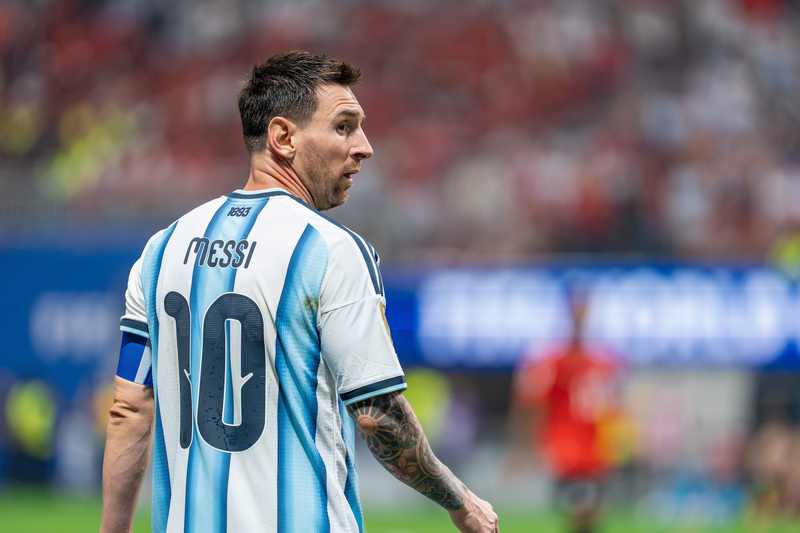
The Messi final match for Argentina ended with one last exhibition of the two gifts that defined his international career: making goals and scoring them. Argentina beat Benin 3-0 on Tuesday, October 6, at the Estadio Monumental in Buenos Aires. Wearing the captain's armband for all 90 minutes, Messi supplied Nicolás Otamendi from a corner in the 48th minute, released 22-year-old Nico Paz for the second in the 61st and drove a 71st-minute penalty into the top corner for his 126th and final international goal.
The Messi last Argentina game was an arranged goodbye, not a competitive test. Benin entered ranked No. 89 by FIFA under coach Gernot Rohr; Argentina were No. 2. Yet the occasion carried its own pressure. Messi had announced his retirement from the national team on August 31, only weeks after leading Argentina to the 2026 World Cup final. The federation called him back once more so the country could say goodbye at home. Roughly 85,000 supporters came to witness what promoters called “The Last Tango.”
The ceremony began inside the game itself. At the 10th minute, the referee stopped play for a standing ovation. Messi wore a special-edition Albiceleste shirt with wider blue-and-white stripes, a giant sun, a golden No. 10 and goat-horn detailing on the back. His three sons had walked onto the pitch with him before kickoff; his mother and wife watched from the stands alongside Ángel Di María and Sergio Agüero.
Why this matters
When the Messi international career ends, Argentina loses more than goals
The score will be filed as Argentina vs Benin 3-0, a friendly in which the stronger side eventually broke through. The meaning lies elsewhere. For two decades, Argentina's attack was organized around the certainty that Messi could rescue a move, a match or an entire tournament. His absence now changes how opponents defend Argentina and how Argentina understand themselves.
The farewell also closes an argument that followed Messi longer than it should have. He was once judged against Diego Maradona not only on skill but on whether he could reproduce the emotional bond between a national hero and a country. The 2021 Copa América and 2022 World Cup settled the trophy question. This night settled the goodbye. A career that had repeatedly seemed destined to end in frustration finished with public gratitude rather than unfinished business.
There is institutional value in that ending. Great national teams often delay succession because moving on from a legend feels like ingratitude. Messi's decision removes the ambiguity. Lionel Scaloni can now design the next team without every squad list becoming a referendum on whether No. 10 will return.
How we got here
From the 2005 debut to the 2014–2016 heartbreaks
Messi debuted for Argentina in 2005, beginning a 21-year run that was never as smooth as the final totals suggest. He reached the 2014 World Cup final and lost to Germany in extra time. Copa América final defeats followed in 2015 and 2016. After the 2016 loss to Chile, he briefly retired from international football, worn down by repeated failure and a public debate that often treated club brilliance as evidence against his national-team commitment.
He returned because the story did not feel finished. That choice is the hinge of the redemption arc. Had the brief retirement held, Messi's Argentina career would have been remembered as technically magnificent but permanently incomplete. Instead, the years after 2016 became a lesson in endurance: stay long enough, adapt enough and the same pressure that once breaks a career can eventually validate it.
The 2021 breakthrough, 2022 coronation and 2026 final run
The 2021 Copa América broke the drought and changed the emotional temperature around him. The 2022 World Cup in Qatar was the coronation, Argentina's first since Maradona's side won in 1986. A second Copa América and the Finalissima deepened the legacy. Then, in 2026, Messi took Argentina to another World Cup final before deciding the national-team cycle had reached its natural end.
That makes the Messi retirement Argentina national team 2026 decision easier to understand as timing rather than retreat. He left after another final, not after elimination at the first sign of decline. Critics will say the farewell was stage-managed and perfectly timed. They are right about the timing, but that does not make it empty. International football rarely offers an exit this clean.
Winners and losers
Nico Paz and the new generation win the Last Tango Messi farewell
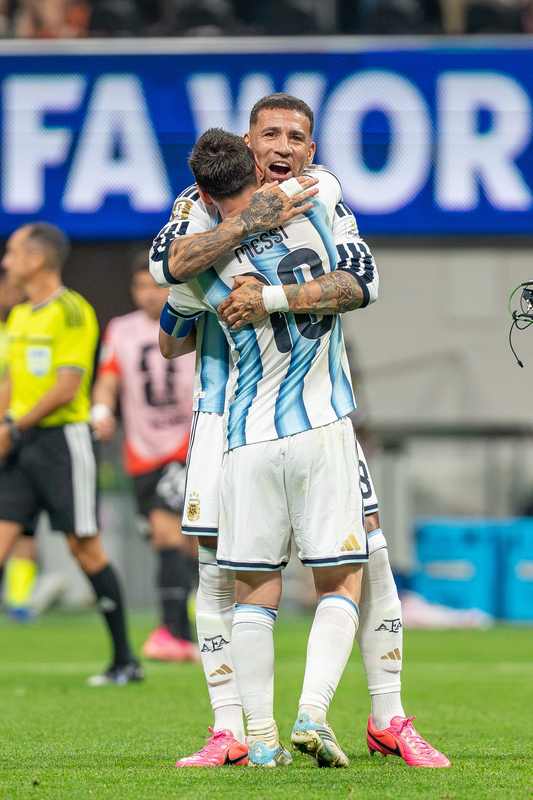
Nico Paz was the clearest beneficiary. At 22, he took Messi's 70th Argentina assist and turned it into the night's second goal. The symbolism was almost too tidy: the retiring No. 10 helping the player many see as a narrative heir. Paz has not inherited the shirt, the role or the burden yet, but he left the Messi farewell match Benin with an image that will follow him into the next cycle.
Otamendi also received a fitting final connection with a teammate who shared 17 years of Argentina duty with him. Messi's corner supplied the opener and his 69th international assist; Otamendi's finish made the past part of the celebration rather than merely a backdrop.
Inter Miami and MLS gain a club-only Messi
Inter Miami and Major League Soccer gain a player no longer interrupted by international windows or transcontinental travel. Messi remains in the MLS MVP race, and a club-only schedule should give Miami a better chance to manage his body and maximize his decisive appearances. The gain is practical, not sentimental: Argentina's loss becomes Miami's availability.
The losers are Argentina's short-term certainty and the romantics who imagined a final chapter at the 2030 World Cup. Some critics argue Messi timed the exit perfectly, after a World Cup final and before the unavoidable physical decline of his early forties. Others wanted one last tournament. Both positions are understandable. Neither changes the central fact that continuing to 2030 would have asked Argentina to delay a transition that must happen sometime.
What the numbers say
Messi 208 caps, 126 goals — and two final assists
The Messi career Argentina records are overwhelming in scale. He leaves with 208 appearances and 126 goals, both national records. The corner to Otamendi was his 69th assist for Argentina; the pass to Paz was his 70th. By that accounting, 196 direct goal contributions across 208 caps make him the most productive international attacker in the country's history.
For scale, Maradona recorded 34 goals in 91 Argentina appearances. Gabriel Batistuta, the dominant scoring reference before Messi, finished with 56 goals. Different eras, roles and match calendars make direct comparisons imperfect, but Messi's totals are not marginal record improvements: his 126 goals are more than twice Batistuta's tally, while his creative output adds another elite career on top of the scoring record.
The Messi last goal Argentina supporters will remember was a penalty, but the two assists explain the player more completely. He ended not as a ceremonial passenger waiting for a final touch, but as the central creator of every goal. The last statistical line — one goal, two assists — was a compressed version of the previous 21 years.
What happens next
What is next for Messi after Argentina — and who inherits No. 10?
Messi returns to Inter Miami, where his club career continues and the MLS MVP race remains active. The Argentina question belongs to Scaloni. He must replace a playmaker, a scorer, a captain and the team's emotional reference at once. No single player can perform all four jobs, so the rebuild is more likely to distribute responsibility among Paz, Julián Álvarez, the midfield leadership group and the next captain.
The No. 10 shirt will attract the most attention. Paz is the narrative heir because Messi assisted his goal on the farewell night, but symbolism should not pre-empt competition. The shirt can be inherited immediately; Messi's function cannot. Scaloni's more important task is to establish a system that does not ask one young player to imitate an irreplaceable predecessor.
Argentina begin the post-Messi road ranked No. 2 by FIFA, which is evidence of a strong team rather than a guarantee of a painless transition. The next major tests will show whether the world champions can preserve their defensive structure and tournament temperament without the player who solved so many attacking problems. The horizon is 2030, but the work starts with the next squad.
After the final whistle, fireworks and a drone show lit the sky, including an image of Messi holding the World Cup. He told the crowd that he had never stopped fighting for the shirt and was proud to be Argentinian. Then he left the field with his family. The Messi farewell jersey golden 10, the goat-horn detail and the choreography will become memorabilia. The more durable legacy is harder to package: a player who once walked away in despair came back, won everything and was finally allowed to choose the ending.