North Korea Fires Multiple Missiles Past 900 km, Then Claims an Upgrade Breakthrough
Track it live: Live wars and conflicts tracker
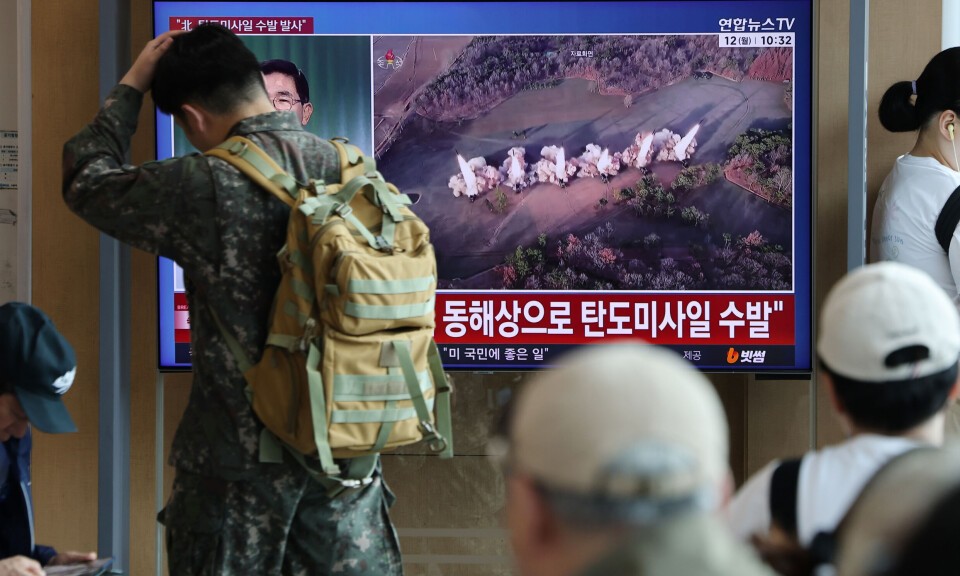
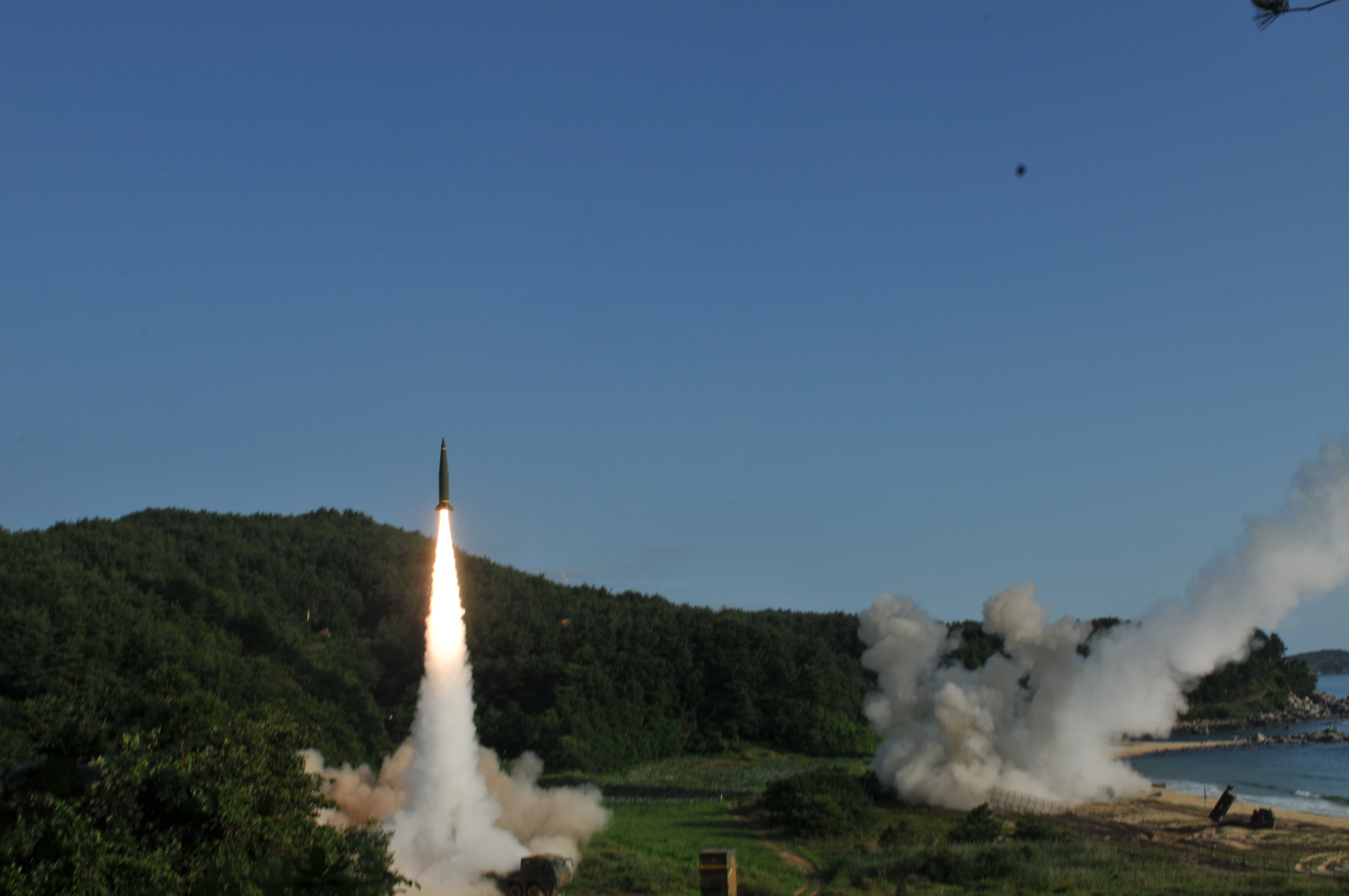
The latest North Korea missile launch began at about 9:20 a.m. Korea time on Monday, October 12, when South Korea's Joint Chiefs of Staff (JCS) detected multiple ballistic missiles lifting off from the area around Pyongyang and arcing east toward the sea between the Korean Peninsula and Japan — the waters Seoul calls the East Sea and Tokyo calls the Sea of Japan. The missiles were not one weapon fired several times. South Korean officials said they appeared to be of different types, and one type flew more than 900 kilometres (about 560 miles) before coming down. Japan's defence ministry tracked at least two missiles, launched roughly 17 minutes apart: a shorter flight of about 220 kilometres and a longer one of more than 910 kilometres that reached an altitude of around 70 kilometres. Both fell outside Japan's exclusive economic zone, and no damage to ships or aircraft was reported.
By the standards of North Korean testing, the salvo was mid-sized — and that is precisely what makes it worth reading carefully. This was Pyongyang's fourth launch in about a month and, by Seoul's count, its 16th ballistic missile launch of 2026. It came nine days after the North's October 3 launch from Wonsan, which its state media described as training for a hypersonic strategic weapon system, and four days after South Korea publicly test-fired its first domestically developed hypersonic glide vehicle in an event attended by President Lee Jae Myung. Two Koreas are now test-firing advanced missiles at each other on something close to a weekly rhythm, and Monday's launch is the clearest sign yet that the rhythm is deliberate on both sides.
What Pyongyang says it was testing
North Korea usually lets its tactical missile tests pass without comment, saving state-media announcements for strategic systems and for launches supervised by Kim Jong Un. This time it spoke. On Tuesday, the Korean Central News Agency (KCNA) reported that the North's Missile Administration had test-fired a tactical ballistic missile on October 12 to confirm research into the technical upgrading of what it called an important core element of its weapons systems. The administration described the result, in KCNA's telling, as a big success that heralds an important change in the performance and sophistication of all of the North's offensive weapon systems, and framed the test as part of the regular work of putting its arsenal on a more advanced technological footing. It gave no further details — no missile name, no range figure, no photograph count beyond the imagery released with the report.
The gap between the two accounts is itself information. KCNA described a single tactical missile; Seoul and Tokyo tracked multiple missiles of more than one type. The most plausible reading — and it is a reading, not an established fact — is that Monday's event bundled several tests into one morning: a tactical system carrying the upgraded component Pyongyang wanted to validate, flown alongside at least one longer-range missile that travelled beyond 900 kilometres. South Korean analysts have also raised the possibility that the long flight was a medium-range missile deliberately flown on a shortened profile. South Korean and U.S. intelligence authorities are still analysing the specifications, and until that analysis is published, the honest position is that the salvo's exact composition is not yet publicly known.
How Seoul, Tokyo and Washington responded
South Korea's National Security Office convened an emergency meeting on Monday and condemned the launches as violations of United Nations Security Council resolutions, which have barred North Korea from ballistic missile activity since 2006. The foreign ministry in Seoul issued a similar condemnation, calling the launches a grave threat to peace on the peninsula and beyond. A JCS spokesman offered the South's working interpretation: that the salvo looked like a show of force answering South Korea's successful hypersonic test, combined with an intentional demonstration of the North's own missile capabilities. The JCS said South Korea had stepped up surveillance for further launches and was sharing information closely with the United States and Japan, whose security officials also spoke by telephone after the detections.
Japan lodged a protest through diplomatic channels and said its prime minister, Sanae Takaichi, had directed officials to gather and assess information and keep the public informed. The United States answered in its standard register: U.S. Pacific Command confirmed it was aware of two ballistic missile launches on October 12 Korea time, said the event posed no immediate threat to U.S. personnel, territory or allies, and restated the U.S. commitment to defending its regional allies. Notably, none of the three capitals described the launch as a strategic provocation on the scale of an intercontinental test — the reaction was condemnation and analysis, not crisis.
Why this matters
It would be easy to file Monday's launch under routine — North Korea fires missiles, neighbours condemn, nothing changes. That filing misses three things. First, the cadence. Sixteen ballistic launches in a year, four in a month, and a test nine days after the previous one describe a programme in a production-and-validation phase, not a signalling phase. States fire for headlines occasionally; they fire this often to qualify components, train crews and build stockpiles they trust. KCNA's emphasis on a core element upgrade points the same way: the news in Monday's test, if Pyongyang's account is even partly accurate, is not the flight itself but an improvement intended to propagate across its whole offensive inventory.
Second, the action-reaction loop with the South is now explicit and acknowledged on both sides. Seoul chose to make its first hypersonic glide-vehicle test a public, presidential event — itself a response, South Korean officials have said, to a September 21 land-mine explosion in the Demilitarized Zone that injured three South Korean soldiers and that a joint investigation blamed on the North, a finding Pyongyang denies. The JCS then publicly read Monday's salvo as an answer to the hypersonic test. When each side names the other's test as the reason for its own, testing stops being background noise and becomes a conversation conducted in hardware — one in which a misread flight profile or a missile landing in the wrong waters can escalate faster than diplomacy can move.
Third, the geometry is unforgiving. A missile that flies 900-plus kilometres from the Pyongyang area covers the whole of South Korea many times over and reaches well into the sea lanes and airspace around Japan; a tactical missile flying from Pyongyang toward Seoul covers the roughly 195 kilometres between the capitals in minutes. The systems tested on Monday sit at both ends of that problem at once — battlefield weapons meant to strike quickly and accurately close in, and longer legs meant to hold regional targets at risk. Defence planning in Seoul and Tokyo has to solve for both simultaneously, which is one reason irregular or manoeuvring flight profiles, of the kind Japan said it was analysing in the longer flight, draw such close attention: a missile that does not fly a clean arc is harder to track, harder to intercept and harder to be sure about in the first confused minutes.
Context: a five-year plan, executed on schedule
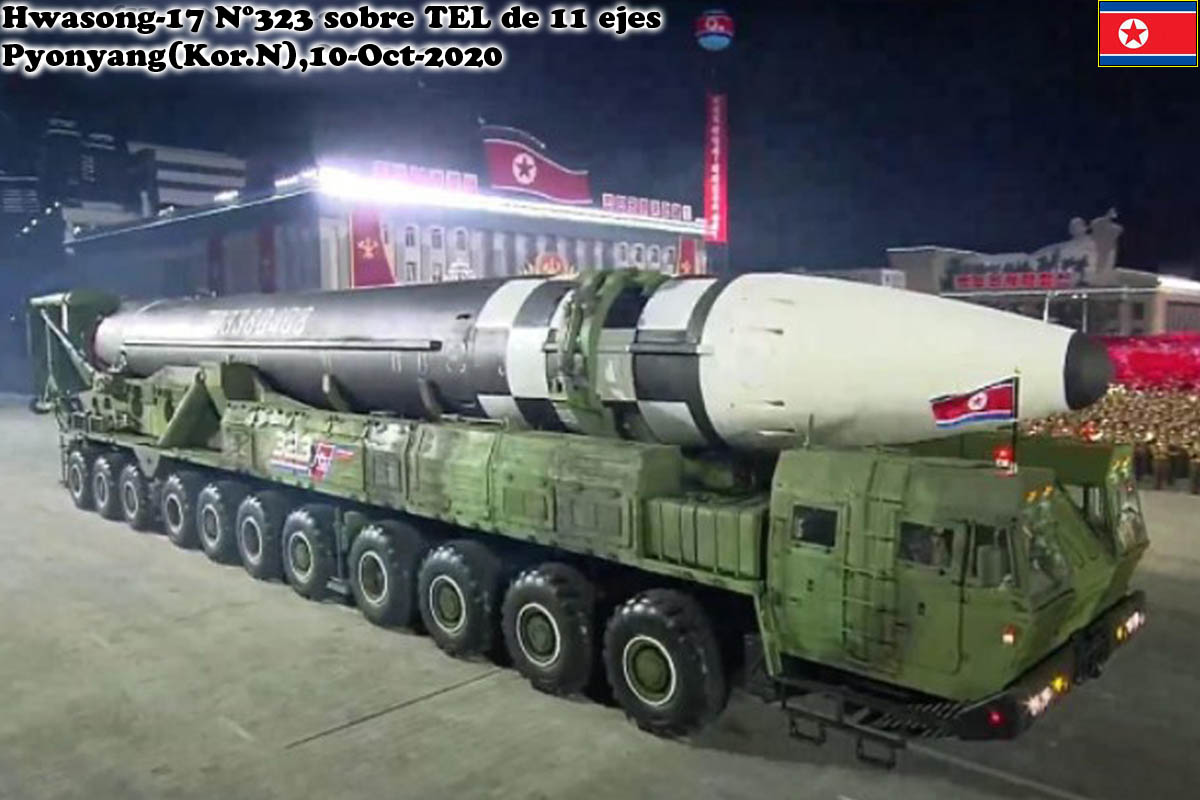
North Korea's current testing tempo traces to the five-year defence development plan Kim Jong Un unveiled in 2021, which listed tactical nuclear weapons, hypersonic systems, solid-fuel intercontinental missiles and reconnaissance satellites among its goals. Much of that list has since been test-flown. The past month fits the pattern of a programme working through its checklist in public view of the neighbours it is meant to deter: a hypersonic-associated launch on October 3, South Korea's answering hypersonic glide test on October 8, and Monday's mixed salvo with an upgraded tactical component. Our earlier coverage followed the October 3 launch and South Korea's first hypersonic test; Monday's event is best read as the next move in that exchange, not as an isolated incident.
Diplomacy, meanwhile, is frozen. There are no active denuclearisation talks, sanctions remain in place, and the Security Council resolutions the launches violate carry no new enforcement. That leaves deterrence and demonstration as the peninsula's working language — which is why a test that changes no borders still changes calculations in three capitals.
Who gains, who pays
Pyongyang gains validated hardware and a demonstrated ability to answer a South Korean showcase test within four days. Seoul gains a public case for its own accelerated programmes — hypersonic glide vehicles, missile defence and strike systems — but pays in public anxiety each time station televisions lead with launch graphics. Tokyo gains further justification for its defence build-up while absorbing the reminder that missiles fired from the Korean Peninsula cross its neighbourhood without asking. Washington gains little and risks little in a single tactical test, which is why its statement was the calmest of the three — but a steady drumbeat of allied tests and counter-tests raises the premium on the U.S. alliance guarantees that both Seoul and Tokyo ultimately rely on.
What happens next
Expect, first, the technical verdicts: the U.S.–South Korea analysis of the missile types, and any Japanese assessment of whether the longer flight manoeuvred. Expect, second, the rhetorical round — allied statements, possibly a Security Council discussion that produces no new measures. The variable that matters is the calendar. If the four-days-later pattern holds, the next move belongs to whichever capital has a test ready, and both Koreas have shown this month that they do. A programme validating upgrades across its offensive inventory, as KCNA claims, also tends to test again soon — upgrades are confirmed in series, not in singles. The launches to watch for are therefore not necessarily bigger ones, but a repeat tactical test in the coming weeks: that would confirm Monday was engineering, not theatre.
Sources
Reuters (Seoul, Oct 12, 2026); Yonhap News Agency via Korea JoongAng Daily (Oct 12–13, 2026); Associated Press reporting on Japan's defence ministry detections; Aju Press (Seoul, Oct 12, 2026); U.S. Pacific Command statement (Oct 12, 2026); Korean Central News Agency (Oct 13, 2026), as reported by Yonhap.