Michigan vs Minnesota score

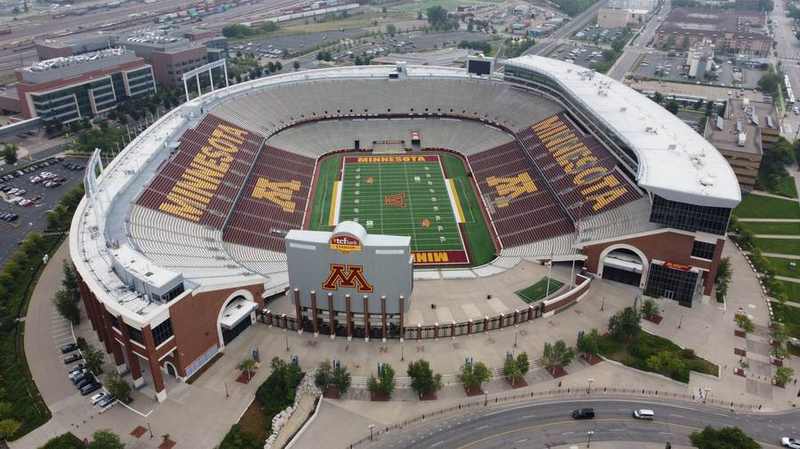
MINNEAPOLIS — The Michigan vs Minnesota score was 20-14, but the order of those points explains the damage. Michigan led 14-7 at halftime Saturday at Huntington Bank Stadium, carried momentum built by two takeaways, and then disappeared on offense. Minnesota scored the final 13 points, intercepted Bryce Underwood on consecutive Michigan plays and reclaimed the Little Brown Jug for the first time since 2014.
The defeat drops No. 24 Michigan to 3-2 overall and 0-2 in the Big Ten after last week's loss to Iowa. Minnesota moves to 4-1 and 2-0 under P.J. Fleck, whose team turned a disciplined defensive second half into one of the defining wins of his tenure. The Gophers did not overwhelm Michigan with explosive offense. They won by accepting every short field, forcing every difficult throw and refusing to waste the opportunities Michigan gave them.
The quarter line was an exact picture of the reversal: Minnesota scored 7, 0, 3 and 10; Michigan scored 0, 14, 0 and 0. As the Detroit Free Press reported, it was Minnesota's first home victory over Michigan since 1977. It was also the Gophers' first win in the rivalry since 2014, in the 100th edition of the trophy game.
The collapse in Minneapolis
First half: the Nathaniel Staehling pick six changed the game
Minnesota opened the scoring, but Michigan's defense controlled the middle of the afternoon. Troy Bowles attacked from the edge on a blitz and forced quarterback Drake Lindsey into an errant throw. Cornerback Smith Snowden intercepted it, giving the Wolverines the short field that produced their only offensive touchdown.
Late in the second quarter, linebacker Nathaniel Staehling read Lindsey, stepped into the passing lane and returned the interception 79 yards for a touchdown. The play did more than put Michigan ahead 14-7. It suggested a defense that had forced only three turnovers in its first four games had found a sustainable answer: pressure Lindsey, compress his reads and let the back seven attack the ball.
Those first-half takeaways deserve to be remembered separately from what followed. Defensive coordinator Jay Hill's group created 14 points of leverage against a rival on the road. Michigan's offense converted one short field; the defense supplied the other touchdown itself. If the Wolverines had protected the ball after halftime, that work might have been enough.
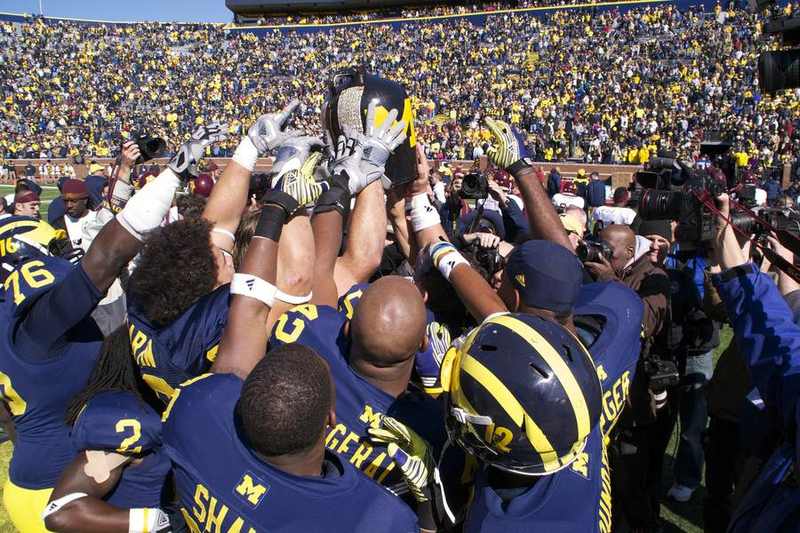
Third quarter: two snaps, a muffed punt and a shrinking lead
Then the field tilted. Andrew Marsh muffed a punt, and Minnesota turned the recovery into a field goal. Michigan still led, but its offense barely participated in the quarter. The Wolverines ran only two offensive snaps in the third, a statistic that sounds like a typographical error until the possession sequence is reconstructed.
On Underwood's next opportunity, he stared down J.J. Buchanan near the sideline. Minnesota broke on the throw and intercepted it. The Gophers again settled for a field goal, cutting the margin to 14-13. That red-zone resistance kept Michigan alive; it also disguised how completely the game had changed. A seven-point cushion had become one without Minnesota needing a long touchdown drive.
The first interception was not a spectacular defensive gamble. It was a calculated read against a young quarterback who gave the coverage time to declare its intention. Minnesota trusted its eyes, closed on the route and made the ordinary play. That discipline became the defining difference between the teams.
Fourth quarter: Bryce Underwood interceptions become the turning point
Underwood's next Michigan snap produced the second interception. On a run-pass option, he was hit as he threw, and Zack Harden came away with the ball. The contact matters when assigning responsibility, but it does not erase the result: two consecutive Michigan offensive plays ended with Minnesota possession.
This time the Gophers finished the job. Noah Jennings took an end-around 31 yards, stretching Michigan horizontally and delivering the explosive play Minnesota had lacked. Lindsey then found Darius Taylor for a 3-yard touchdown early in the fourth quarter. Taylor scored twice in the game, and that second Darius Taylor touchdown supplied the 20-14 lead that held.
Michigan had one final chance. Starting at its own 13 with 1:45 remaining, the offense moved to midfield and created a fourth-and-4. Underwood had Buchanan beyond the sticks but overthrew him. The ball fell incomplete, Minnesota took possession, and the crowd spilled onto the field around a trophy that had been away for 12 years.
Why this matters
Michigan football playoff hopes now have almost no margin
A two-loss team can still argue its way into a national postseason conversation when the résumé is strong, the conference record recovers and the finish is exceptional. An 0-2 Big Ten start makes that theoretical path much narrower. Michigan has not merely lost twice; it has lost consecutive conference games by one score while its offense failed in the decisive quarter of each test.
The practical problem comes before any selection debate. Michigan must climb from the bottom of the league race while other contenders accumulate tiebreakers and ranked wins. Even if the expanded playoff permits some two-loss teams, it does not guarantee a place to a team without a conference résumé. At 3-2 overall and 0-2 in league play, every remaining Big Ten Saturday now carries elimination-level pressure.
The schedule has already revealed the pattern. Michigan edged Western Michigan 13-12 and Oklahoma 17-10, overwhelmed UTEP 52-17, then lost 20-19 to Iowa and 20-14 at Minnesota. Four of five games have been decided by seven points or fewer. That can be evidence of toughness. It can also mean the offense has never built enough separation to survive a special-teams mistake or a quarterback turnover.
Minnesota upsets Michigan by winning the situational game
Calling this only a Michigan collapse would deny Minnesota the central fact of the afternoon. The Gophers created the conditions for the collapse. Their coverage punished locked-in reads, their front hit Underwood on the RPO that produced the second interception, and their offense converted just enough short fields to keep pressure on the Wolverines.
Minnesota also showed patience when Michigan's defense stiffened. Two field goals after turnovers were not failures; they were six points that reduced a seven-point deficit to one and forced Michigan to keep playing without a margin for error. Then Jennings supplied the perimeter burst and Lindsey delivered the touchdown throw when the chance finally reached the goal line.
Fleck called it one of the best days of his life after the win, a measure of what the Jug and the history mean inside the program. Emotion did not substitute for execution. It followed it.
Context: a rivalry measured in decades
Little Brown Jug 2026: why one small trophy carries a century of weight
The Jug's value comes from accumulation. The story reaches back to 1903, when Michigan brought a water jug to Minneapolis and left it behind after a bruising tie. Minnesota kept it, and the object became the physical record of a rivalry: plain, slightly absurd and impossible to confuse with a modern corporate trophy.
That history can make long stretches of dominance feel even heavier. Minnesota had not beaten Michigan anywhere since 2014 and had not done it in Minneapolis since 1977. The current players were carrying dates from before their parents were born. Saturday converted them from trivia into a field-level celebration.
The 100th trophy game sharpened the symbolism. Michigan arrived as the ranked favorite, holding the Jug and trying to stabilize a season. Minnesota left with a 2-0 conference record, a signature victory and proof that a rivalry's competitive balance can change in one afternoon even after decades of frustration.
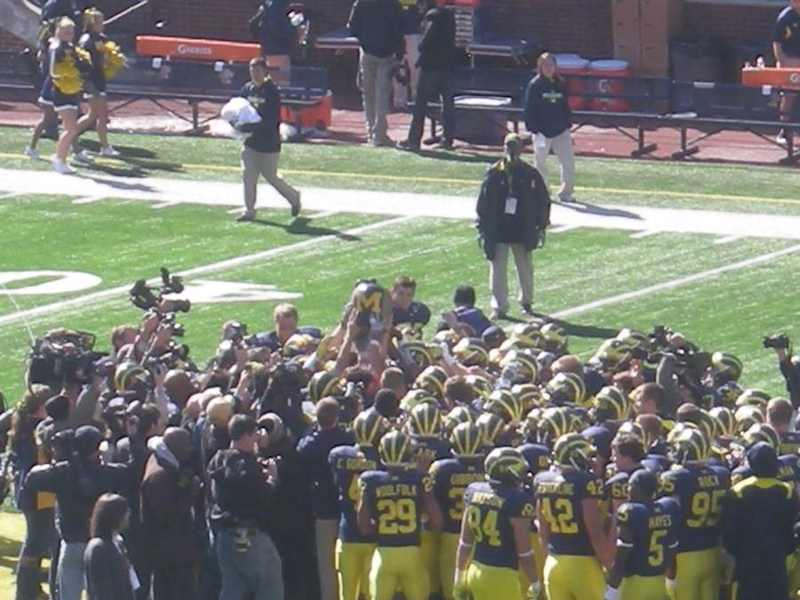
First loss in Minneapolis since 1977 changes the emotional scale
For Michigan, the first loss in Minneapolis since 1977 is not merely a historical footnote. It removes the idea that this was a place where the Wolverines could expect the rivalry's weight to work for them. Minnesota's players were not defending the past. They were reading routes, covering kicks and attacking short fields in the present.
For the Gophers, the win gives Fleck a result that can organize an entire season. Minnesota is 4-1 overall and 2-0 in the Big Ten. The conference position matters more than the trophy in the standings, but the trophy can matter more in recruiting rooms, alumni gatherings and the internal belief that close games against ranked opponents are winnable.
Winners and losers
Winner: the PJ Fleck Little Brown Jug breakthrough
Fleck had never beaten Michigan as Minnesota's coach. Now he has done it by building the kind of game his program is designed to win: low possession count, contested field position, sturdy coverage and composure after falling behind. The result is not a referendum on every season of his tenure, but it is the cleanest answer to a criticism that his teams had lacked a victory of this historical and emotional scale.
The win also keeps Minnesota unbeaten in Big Ten play. That status will be tested, but it gives the Gophers control over their own conference argument entering the next phase of the schedule. At 2-0, Minnesota is accumulating possibility rather than trying to recover it.
Winner: Minnesota's defense and red-zone opportunism
The Gophers won the turnover phase after halftime and refused to chase a knockout when points were available. Harden's interception was the decisive takeaway, but the earlier sideline pick showed the preparation behind the result. Minnesota recognized where Underwood wanted to go and made him pay before the ball arrived.
On offense, settling for field goals after the muff and first interception could have become a regret. Instead, those scores made the touchdown drive decisive. Situational football is often described as avoiding mistakes; Minnesota used it more actively, converting each Michigan error into a smaller game.
Loser: Michigan's offense and its crisis of trust
Underwood finished with 96 passing yards, no touchdowns and two interceptions, according to theScore's game report. The line is poor, but the deeper concern is how the offense functioned around it. Michigan could not stay on the field in the third quarter, could not create an explosive answer after losing the lead and could not complete the one throw that would have extended the final drive.
A young quarterback needs room to recover from a mistake. Michigan's structure offered none. The run-pass option exposed Underwood to contact, the passing game did not generate easy completions in sequence, and the special-teams turnover forced the offense back onto the field under immediate pressure. None of that absolves the interceptions. It explains why each one carried so much weight.
Loser: the pressure moves to Kyle Whittingham and Jay Hill
Head coach Kyle Whittingham enters the bye with a decision larger than whether Underwood remains the starter. He has to decide what kind of offense can protect the quarterback without reducing Michigan to predictable calls. That means evaluating route spacing, protection, option decisions and how quickly the ball can reach playmakers.
Hill's defense should not be treated as the primary reason Michigan lost. It scored a touchdown and created another short field. Yet the staff as a whole must solve the complementary-football problem: a defense cannot spend nearly an entire quarter on the field, defend repeated short fields and still be expected to preserve every point of a narrow lead.
The numbers that tell the story
96 passing yards and zero second-half points
The passing total describes a constrained offense; the scoring split describes one that stopped. Michigan's 14 points all came in the second quarter. Seven followed Snowden's interception, and seven came directly from Staehling's 79-yard return. The offense did not produce a point after halftime and did not lead a conventional scoring drive that began without a defensive gift.
That distinction matters when evaluating the 14-7 lead. The scoreboard said Michigan controlled the game. The possession quality said the advantage depended heavily on takeaways. Once Minnesota stopped providing them, Michigan had no independent scoring answer.
Three second-half turnovers, including the muff
“Michigan turnovers Minnesota” is the blunt search phrase for a sequence that included different kinds of failure. Marsh's muff was a special-teams mistake. Underwood's first interception came from telegraphing a route. The second came under contact on an option decision. Different causes produced the same strategic effect: Minnesota started with favorable position and Michigan's defense returned to the field before it could rest.
Back-to-back interceptions on Michigan's offensive snaps did not mean the passes occurred seconds apart. Minnesota possessed the ball between them and kicked a field goal. But from the Wolverines' perspective, consecutive attempts to run offense ended before the unit could establish a drive. That is how a quarter can contain only two snaps.
Two third-quarter snaps, six red-zone points and one surviving chance
The two-snap quarter is the number that should occupy the bye-week review. No offense can find rhythm without possession, and Michigan compounded the special-teams mistake by giving away the next opportunity. Minnesota's time with the ball limited the Wolverines' chances even before the turnovers were considered.
Michigan's red-zone defense kept the game from ending earlier. Holding the Gophers to two field goals after short fields preserved a 14-13 lead and gave the offense a final chance after Taylor's touchdown. That work deserves credit. It also demonstrates the thinness of the margin: Michigan needed near-perfect damage control just to remain one completion away from extending the game.
What happens next
The bye week is a quarterback development week
Michigan does not need to pretend the interceptions were random. The sideline throw can be corrected through eye discipline and progression timing. The RPO interception requires a clearer rule for when the ball comes out, when the quarterback protects himself and when Michigan simply lives with the run. Both are coachable, which is different from saying they will fix themselves.
Whittingham's staff also has to manufacture easier completions. Underwood cannot be asked to solve every long-yardage snap from a static pocket, especially when opponents now have Minnesota's film. Expect future defenses to squat on boundary routes, disguise underneath help and attack the mesh point until Michigan proves it can punish those choices.
Michigan 3-2, Big Ten 0-2: the remaining path
The record is stark but not terminal in a mathematical sense. Michigan has a bye, time to rework its offense and enough season left to build a résumé. The Wolverines' route back to relevance, however, no longer allows another passive second half. They must win conference games, generate offense without short fields and show that close finishes are a strength rather than a recurring warning.
The immediate measure should be simpler than playoff projections: can Michigan play a complete offensive quarter? Can it protect a lead without asking the defense to create points? Can Underwood respond to a mistake with a routine completion rather than another high-leverage decision? If those answers improve, the season can stabilize. If they do not, Minnesota's win will look less like an isolated upset than the day Michigan's structural problems became impossible to hide.
For Minnesota, the next step is to carry the same discipline into games without the emotional lift of the Jug. The Gophers earned Saturday's celebration. Sustaining a Big Ten race requires proving the habits behind it—coverage leverage, ball security, short-field scoring and fourth-quarter execution—travel beyond one rivalry.
Sources and reporting notes
- Detroit Free Press: Michigan football vs. Minnesota score and game updates, October 3, 2026
- Detroit Free Press: Bryce Underwood's second-half interceptions, October 3, 2026
- theScore: Minnesota takes down turnover-prone Michigan, October 3, 2026
- NBC Sports: Michigan-Minnesota recap and second-half possession breakdown, October 3, 2026
Reporting note: scoring, turnovers, records and game sequence are presented as reported facts. Playoff implications, roster pressure and future adjustments are Signal Post News analysis.