Indiana Fever exit interviews
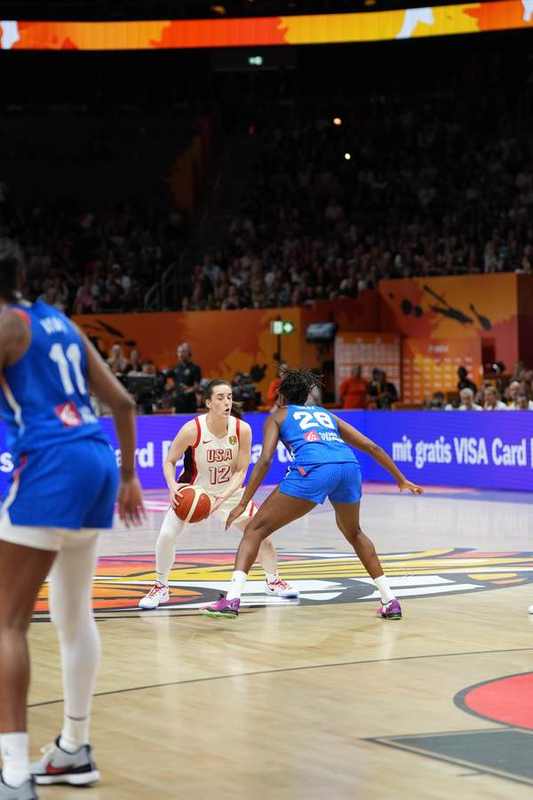
The Indiana Fever exit interviews began around 9:30 a.m. ET Saturday in Indianapolis and ran for roughly two hours, but the loudest questions came from two people who were not in the room. Caitlin Clark was at her alma mater as ESPN College GameDay's guest picker before No. 14 Iowa hosted No. 5 Ohio State. Sophie Cunningham had a conflict. Both are expected to speak later.
What was said Saturday still set the stakes. Stephanie White said she wants to coach the Fever in 2027. Kelsey Mitchell reached an offseason in which she will be one of the league's marquee free agents. And president and general manager Kelly Krauskopf must judge a roster that arrived with championship expectations but again finished sixth before Las Vegas eliminated Indiana in Game 3 of the first round Thursday night, Oct. 1.
The central question is not whether Indiana has star power. Clark, Mitchell and Aliyah Boston form three All-Star starters. The question is whether the Fever can turn that concentration of offense and attention into a roster with enough size, wing depth and defensive balance to survive a championship series. The best recent sports turnarounds have paired recognizable stars with less glamorous structural fixes; Indiana's next move will show whether its front office sees continuity or rebalancing as the missing ingredient.
Why this matters: the Indiana Fever championship window is open now
The Fever are not rebuilding in the ordinary sense. They have a foundational guard under contract, an All-Star center and a veteran scorer entering free agency. The new collective bargaining agreement was signed earlier in 2026, and the league's new $200 million-a-year media deal starts next season. That changing financial era raises both opportunity and pressure: teams can think bigger, players can negotiate from a stronger market, and every roster mistake becomes more expensive in competitive terms.
Clark's prime seasons are the scarce resource. Indiana exercised her fourth-year option in April, so she is under contract through 2027. Her 2026 salary was $528,846, according to Her Hoops Stats, and her expected 2027 salary is about $597,596. The new CBA's Exceptional Performance on Initial Contract provision—EPIC—allows a qualifying player to negotiate a three-year extension during the final year of her rookie contract. Clark qualifies through her 2024 first-team All-WNBA selection.
That makes a Caitlin Clark contract extension a likely pillar of the 2027 plan, although no agreement has been announced. It also means the Fever should not treat another sixth-place finish as a neutral outcome. Indiana has now finished sixth in both seasons under White. The same seed can describe stability; in a title window, it can also describe a ceiling.
The Fever Aces playoff exit changed the offseason's tone
The Thursday loss did more than end a series. It sharpened the contrast between 2025 and 2026. Indiana reached a decisive Game 5 of the 2025 semifinals despite six season-ending injuries. That run naturally encouraged the belief that a healthier roster—especially one with Clark available—could vault the Fever into the championship tier.
Instead, the healthy 2026 group produced minimal improvement in the standings. The Fever again landed in sixth, then lost the deciding first-round game to the Aces. With the league's MVP award most likely headed to Las Vegas star A'ja Wilson, the gap between Indiana's ambitions and the standard set by its playoff opponent is not difficult to see.
Roster construction is therefore part of the season autopsy. Indiana entered light on wing depth and asked Monique Billings to learn a new position. Those choices did not doom the season by themselves, but they matter because playoff basketball keeps finding the weakest matchup. If a lineup cannot switch, defend size or cover elite perimeter creation, opponents will return to that pressure point until the series is over.
Kelsey Mitchell free agency 2027: keep elite scoring or rebalance?
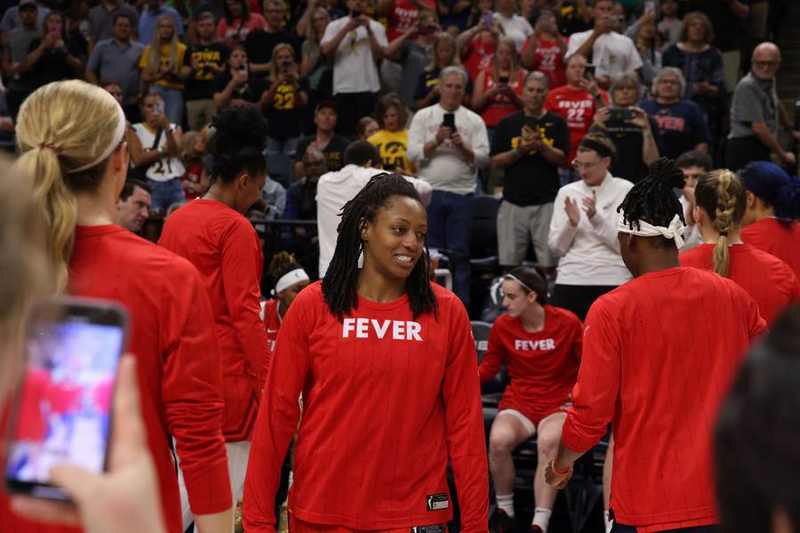
Mitchell enters the market beside Napheesa Collier of Minnesota and Jackie Young of Las Vegas as one of 2027's headline free agents. Indiana has the cap space to re-sign her. That makes the decision more complicated, not less: the Fever can keep their All-Star backcourt, but they also have the freedom to consider a different construction.
The case for re-signing Mitchell is continuity, proven scoring and a partnership Clark already knows. Letting a marquee player leave creates its own risk. Cap space is useful only if the replacement is available, willing to sign and better suited to the roster. A team that gives up high-level offense in search of theoretical balance can finish with neither.
The case for change begins at the defensive end. Keeping Clark and Mitchell together commits major minutes to an offense-first backcourt. That does not predetermine a poor defensive rating, and no single pairing owns a team's defensive performance. It does, however, narrow the front office's margin: the wings and frontcourt around them must absorb difficult perimeter assignments, rebound and protect the paint without shrinking the offense.
This is where analysis must remain separate from fact. No decision on Mitchell has been announced. The Fever may re-sign her; they may let her walk and pursue a two-way starter. The actual test is comparative: whether an attainable replacement can preserve enough creation while improving point-of-attack defense and lineup flexibility. Mitchell's market value gives her leverage, while Indiana's cap space gives Krauskopf options.
Aliyah Boston Fever role: the quiet center of the roster
Boston can be overlooked when attention concentrates on the Clark-Mitchell question, but her role should guide the answer. She is the third All-Star starter in the core and the interior connector between Indiana's guards and the rest of the lineup. Any 2027 roster plan should ask not only who plays beside Clark, but what kind of perimeter defense and spacing allows Boston to influence both ends.
A more two-way wing could reduce the number of perimeter breakdowns reaching the paint. Keeping Mitchell could preserve offensive familiarity and place a premium on finding that defender elsewhere. Either route makes wing depth a priority. The Fever cannot solve every possession by adding another scorer; nor can they strip away creation and assume defense alone will carry a playoff offense.
Stephanie White Fever coach 2027: the case for continuity
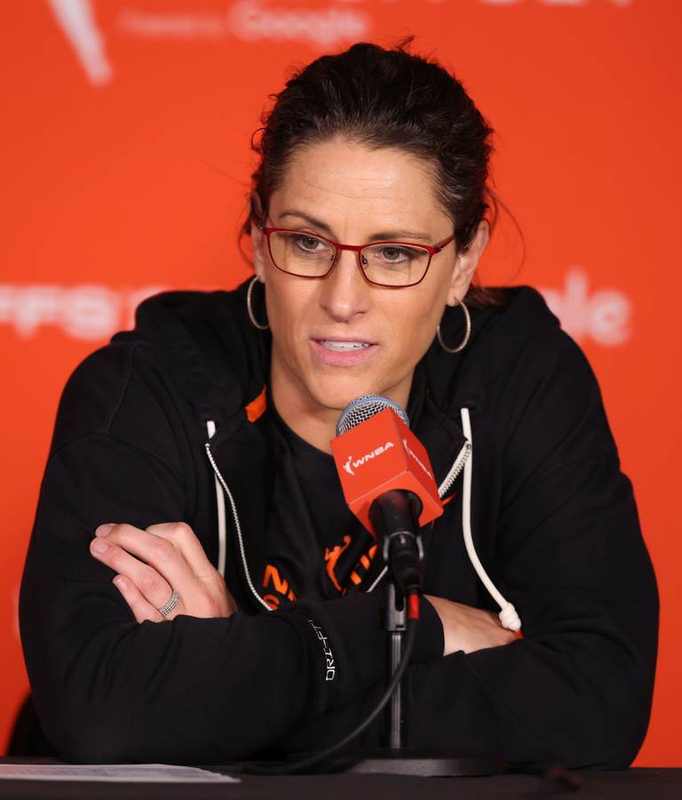
White made her preference clear Saturday. “I feel support from the organization, no doubt about that,” she said. “At the end of the day, it's their decision whether I return or not. I'd love the opportunity, I love this franchise.”
The straightforward criticism is the standings: two seasons, two sixth-place finishes, and a healthy 2026 roster that did not make the expected leap. A front office with championship expectations has to examine the coach, especially when the roster's weaknesses persisted into the playoffs.
But there is a substantial case for continuity. White guided Indiana through an injury-ravaged 2025 run that reached Game 5 of the semifinals. She also managed a season in which basketball decisions repeatedly collided with public controversy. Krauskopf publicly backed her, important evidence that the support White described is not merely rhetorical.
White defended her relationship with Clark after cameras captured a fiery argument in Portland in May. She navigated attention around Sophie Cunningham Fever comments on transgender girls' participation in sports. In August, Indiana's lieutenant governor called for White to be fired after the coach said DiJonai Carrington had not intentionally committed a Flagrant 2 on Cunningham in Chicago. None of that settles the tactical evaluation. It does show that her season cannot be reduced to a playoff box score.
What Caitlin Clark College GameDay says about her reach
Clark's absence from Saturday's interviews was not a withdrawal from public view. She was announced as the guest picker for ESPN College GameDay at Iowa, where the No. 14 Hawkeyes hosted No. 5 Ohio State. That placement, on a major college-football broadcast at her alma mater, illustrates a cultural footprint that extends beyond the WNBA schedule.
The distinction matters for Indiana. Clark is not simply the Fever's lead guard; she is a public figure who carries attention across sports. In the first season of the league's $200 million annual media deal, that reach adds urgency to building a contender around her. The commercial opportunity and the basketball opportunity move together, but they are not identical. GameDay visibility can expand the audience. It cannot defend a playoff possession or deepen the wing rotation.
Indiana Fever roster 2027: three plausible paths
Scenario one: run it back with targeted reinforcement. Indiana re-signs Mitchell, retains White and uses remaining flexibility on defensive wings and versatile frontcourt depth. This path protects chemistry and gives the current core another season, but it requires the front office to be precise. The Fever cannot again enter the year asking thin wing depth to survive a long playoff run.
Scenario two: exchange scoring certainty for two-way balance. Mitchell departs, and Indiana redirects its cap room toward a larger guard or wing who can handle elite defensive assignments while contributing enough offense to keep pressure off Clark and Boston. This has the clearest structural upside and the greatest execution risk. The target must actually be an upgrade for the role, not merely a different name.
Scenario three: change the coach while preserving the stars. Krauskopf could decide that the roster deserves a new system even while keeping Clark, Mitchell and Boston together. The argument would be that the two sixth-place finishes show stagnation. The counterargument is that White already demonstrated playoff resilience in 2025, has the front office's public backing and deserves a chance to apply lessons from a healthier but disappointing season.
Across all three scenarios, a Clark EPIC extension is the stabilizing move. Because the provision permits a three-year negotiation in her final rookie season and she qualifies through her 2024 All-WNBA honor, Indiana can offer a longer runway just as the new media-money era begins. That would not decide the Mitchell or White questions, but it would clarify the franchise's center of gravity.
The WNBA offseason 2026 belongs to the front office
Exit interviews are useful, but they are not roster building. The decisive work comes next: determine whether Mitchell's offense is more valuable than the defensive flexibility a replacement might provide; define Boston's role before shopping for complementary pieces; decide whether White's continuity outweighs the disappointment of another sixth seed; and pursue the Clark extension window without treating her expected return as permission to wait.
The Fever's challenge is not a lack of assets. It is turning prominent assets into a coherent five-player unit and a playoff-ready rotation. Indiana has cap space, three All-Star starters, a coach who wants to stay and a transcendent guard under contract through 2027. That is enough to make the championship window real. The next choices will decide whether it remains open—or merely visible.
Sources and reporting notes
- IndyStar: Indiana Fever exit interviews and offseason questions, October 3, 2026
- IndyStar: Stephanie White hopes to return in 2027, October 3, 2026
- USA Today: Caitlin Clark's contract and the Fever offseason, October 2, 2026
- For The Win / USA Today: Kelsey Mitchell's 2027 free agency, October 2, 2026
Reporting note: announced contracts, salaries, standings and interview remarks are presented as facts. Roster fits, defensive implications and future scenarios are Signal Post News analysis, not reports of decisions already made.