Texas Tennessee football score
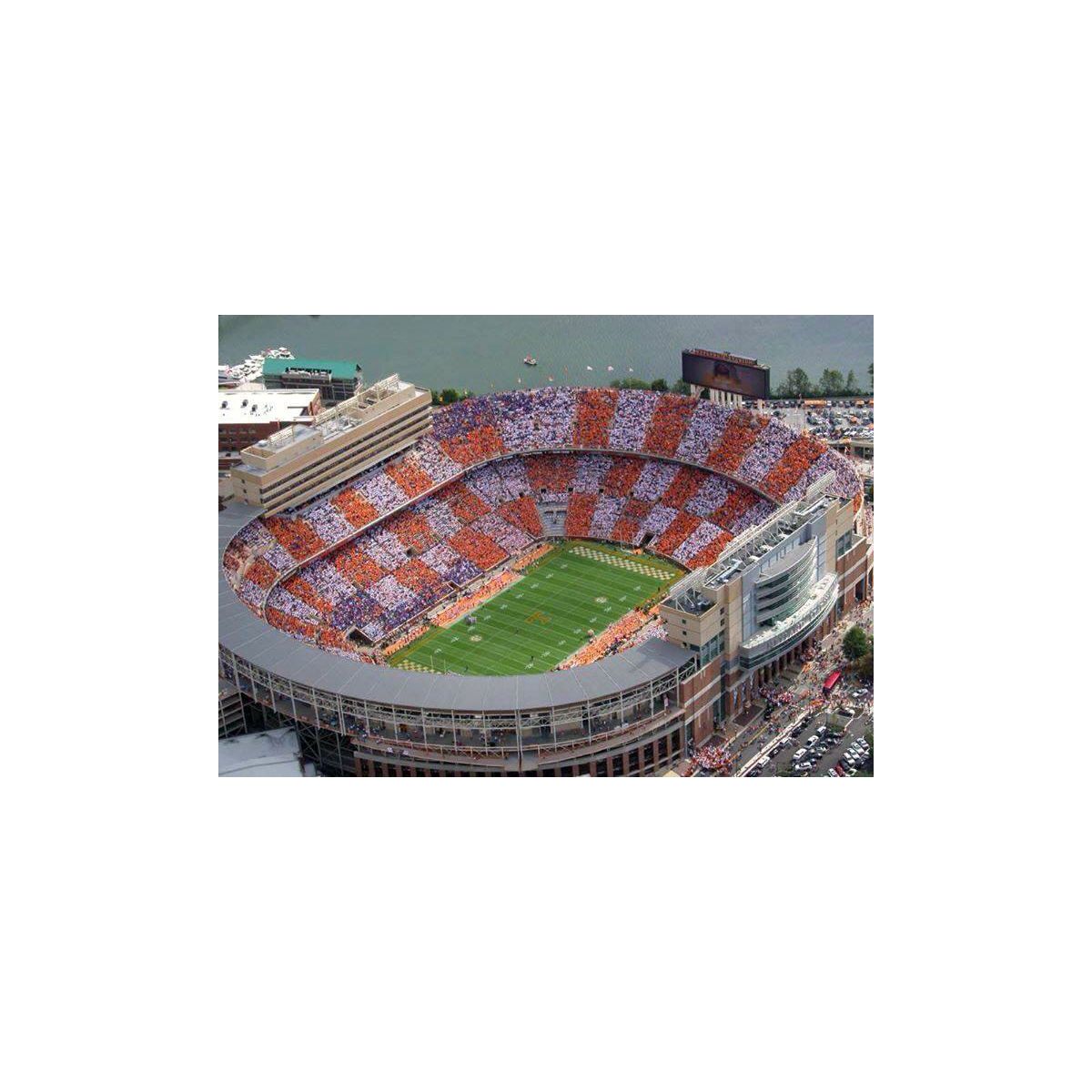
KNOXVILLE, Tennessee — The Texas Tennessee football score was 20-17, and the three-point margin tells the truth better than any highlight reel. No. 1 Texas earned its first victory at Neyland Stadium on Saturday, September 26, but only after a fourth quarter that tested the Longhorns' identity from both directions: Arch Manning guided the drive that created a ten-point cushion, the defense briefly surrendered its attacking posture, and then that same defense reclaimed the game after Tennessee recovered an onside kick with 1:22 left.
Texas improved to 4-0 after entering the weekend 3-0. Tennessee took its first loss and fell to 3-1. The Vols were No. 13 in the US LBM Coaches Poll used by some reports; other outlets listed Tennessee at No. 14, reflecting a different ranking set. The distinction changes the label, not the substance: the nation's top-ranked team walked into a 101,915-seat orange-and-white spectacle and survived an opponent whose defense made every yard expensive.
The setting was unusually dense with theater. ESPN's College GameDay broadcast from Ayres Hall. President Donald Trump attended after University of Tennessee police confirmed his visit; Trump posted about the trip on Truth Social at 2:58 p.m. EDT. A viral screenshot that appeared to show him predicting a Tennessee upset was not authentic, however. It was a manufactured image, a distinction worth stating plainly because the fake post traveled widely before kickoff.
The scoreline came down to one last defensive stand
Manning opened with seven consecutive completions for 120 yards, a crisp start that suggested Texas might quiet the building early. Raleek Brown supplied both Longhorn touchdowns, while Garrett Spetic added a 22-yard field goal. But the game tightened when Manning tried to force a downfield throw and Kaleb Lee intercepted him at the Tennessee 4. Two illegal forward-pass penalties later added to an afternoon that was composed more often than it was clean.
The box score left no room for mythology. Manning finished 14-of-19 for 201 yards, no touchdown passes and one interception. Texas produced only 262 total yards. Tennessee managed even less: 221 yards, after the Longhorns' pass rush held the Vols to 88 in the first half. Freshman quarterback Faizon Brandon completed 17 of 29 passes for 145 yards and one touchdown, a 30-yard strike to Mike Matthews that became Tennessee's only offensive touchdown.
That score nearly changed the meaning of the afternoon. Texas led 20-10 when it softened into a passive prevent look. Brandon took the invitation, directing an 80-yard, 10-play drive and finding Matthews with 1:22 remaining. On the ensuing onside kick, the ball slipped through Ryan Wingo's hands and Tennessee recovered with one last chance to tie or win.
Defensive coordinator Will Muschamp abandoned the cushion and re-dialed the pressure. The Vols went backward, and Brandon's final Hail Mary fell incomplete. The ending was both a warning and a reassurance for Texas: passive football almost squandered what aggression had built, but the defense was able to correct the mistake before the clock ran out.
Why this matters
Analysis: playoff committees say they evaluate a full résumé, but road survival against a ranked conference opponent remains one of the most durable forms of evidence. It shows that a team can function when communication is harder, momentum is hostile and an imperfect offensive day cannot be edited out. Texas now owns two marquee wins in four games — the comeback over Ohio State and this escape at Neyland — and they reveal different strengths.
The Ohio State result demonstrated recovery. Tennessee demonstrated resistance. A defense that can win while its offense produces 262 yards has a championship profile because the formula travels: pass rush, field position and red-zone discipline do not depend on weather, crowd noise or a quarterback finding a rhythm. That does not make Texas complete, but it raises the floor beneath every future game.
For the SEC race, the win protects Texas from the early loss that can turn every October matchup into an elimination game. For playoff seeding, it gives the Longhorns a second result that can survive later re-ranking. Even if Tennessee drifts from No. 13 or No. 14, a true road victory in this environment will retain contextual value. The committee may debate style points; it will not have to imagine whether Texas can win ugly away from Austin.
A defense, not a quarterback, won the day
Colin Simmons' five sacks tied the Texas single-game record. The Longhorns recorded ten sacks as a team, repeatedly collapsing Tennessee's protections before Brandon could test the secondary downfield. Simmons was not merely productive; he distorted the offense. Tennessee had to account for his alignment before the snap and still could not keep him from deciding plays after it.
Set that against Manning's line — 14 completions, 201 yards, an interception and no passing scores — and the identity is hard to miss. Texas is a defensive team first. That is not an insult to Manning. It is the most useful correction to the celebrity narrative around him. On Saturday, his job was not to become the reason Texas won every possession. It was to avoid becoming the reason the defense's work was wasted, then deliver the fourth-quarter sequence the game required.
He did that on an eight-play, 60-yard drive that ended with Brown's second touchdown. For evaluators tracking Manning after his decision to return to Texas for 2026 rather than enter the draft, the performance adds complexity rather than certainty. The arm talent and early timing were visible. So were the interception, penalties and long quiet stretches. Draft narratives tend to reward volume; winning football often rewards restraint.
October opponents will study the same contrast. They will crowd protections toward Simmons, use quicker throws and screens to slow the rush, and force Texas to prove it can win when the defense is moved sideways rather than allowed to charge downhill. Offensively, opponents will test whether Manning can create sustained scoring without the game being held in place for him. That is the next layer of this team's championship argument.
The Manning moment
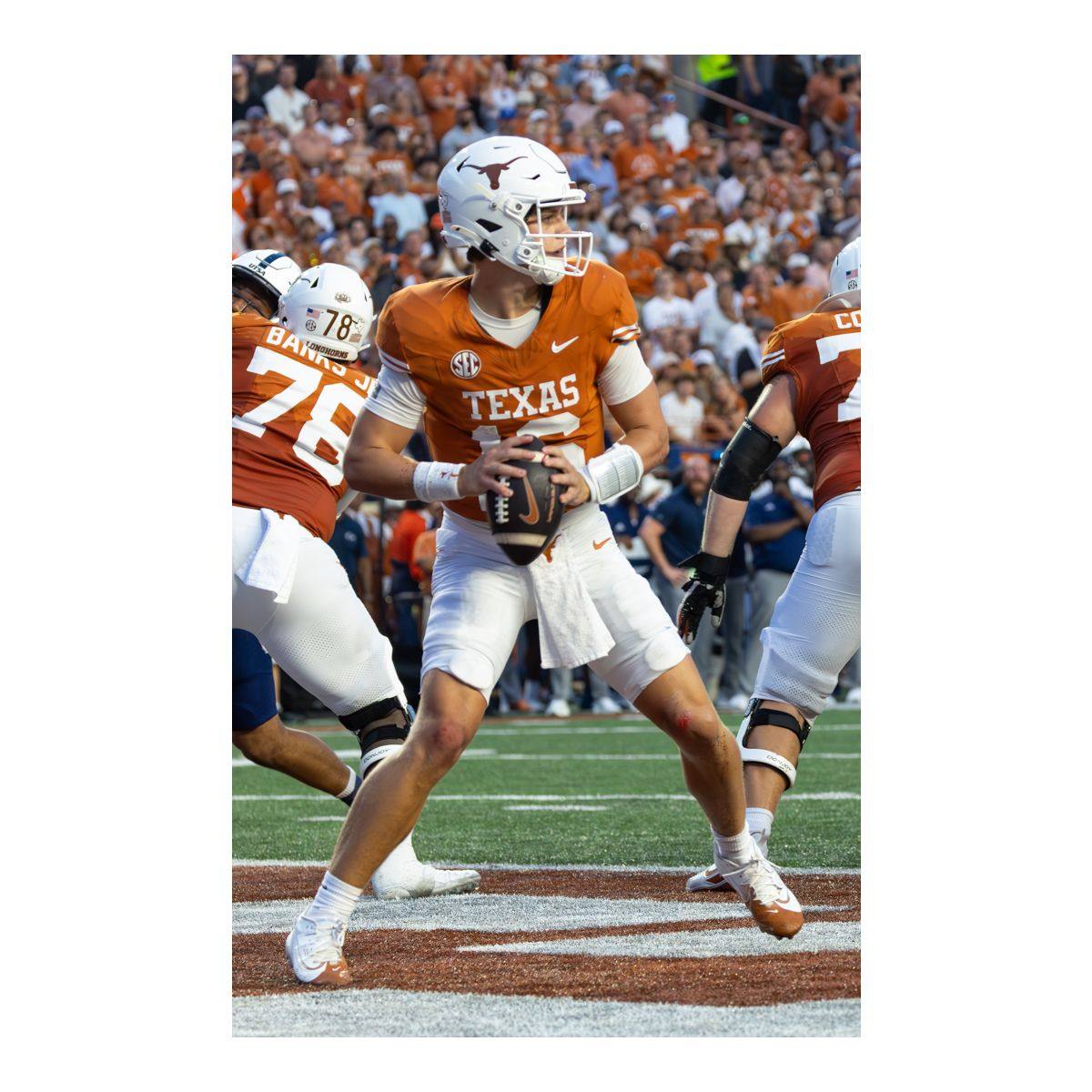
Peyton Manning starred at Tennessee from 1994 through 1997, and Neyland remains one of the central stages of his football life. Arch arrived carrying that family history despite saying before the game that he had never been to Knoxville. Peyton appeared on GameDay; Arch's father, Cooper, and grandfather, Archie, were also in the stadium. The visual placed three generations of the family around a quarterback trying to create a memory that belonged to him.
There was no statistical coronation. That is precisely why the moment may endure. Arch did not reproduce one of Peyton's sweeping Tennessee afternoons. He absorbed six sacks, made mistakes, and still answered with the decisive drive. Quarterback legend is built as much from the games a player refuses to lose as from the ones he dominates, especially on a day when every family comparison is unavoidable.
Texas had never previously played at Neyland. The three earlier meetings all took place in the Cotton Bowl: Tennessee won 20-14 in 1951, while Texas won 16-0 in 1953 and 36-13 in 1969. The first Knoxville chapter therefore belonged to the younger Manning's Longhorns, not because he overwhelmed Tennessee but because he managed the moment well enough for the best unit on the field to finish the work.
Checker Neyland was more than a backdrop
The checkerboard crowd began as a fan movement in September 2014. Tennessee supporter Spencer Barnett created the concept after seeing Oklahoma stripe its stadium, and a coordinated website helped turn the edited image into an orange-and-white seating plan. The first Checker Neyland game came against Florida on October 4, 2014; what began as a social-media idea became an annual ritual.
Saturday's attendance of 101,915 made that ritual a recruiting message as much as a visual one. Tennessee lost, but a freshman quarterback and future prospects saw a stadium organized around the team before noon. Programs sell development and opportunity; crowds like this sell belonging. The Vols can use the atmosphere as evidence that their rebuild has scale even when the result exposes how far the offensive line still has to go.
What happens next
Texas gets a week before the schedule tightens: Oklahoma on October 10, Florida on October 17, Ole Miss on October 24, Mississippi State on October 31 and a trip to Missouri on November 7. The order matters. Oklahoma will test the emotional recovery from a bye, Florida and Ole Miss will change the playoff traffic inside the SEC, and Missouri supplies another true road environment. A 4-0 start creates margin; that run can consume it quickly.
Tennessee hosts Auburn on October 3 and continues a rebuild centered on Brandon. The freshman's final touchdown drive showed poise after a punishing afternoon, but the ten sacks cannot be normalized as growing pains. Protection, faster answers and more help from the run game must arrive together. The hopeful reading is that Brandon produced the game's most dangerous late sequence after spending three quarters under siege.
The conference picture is already volatile. Florida's 52-28 rout of Ole Miss in another SEC upset on the same Saturday showed how quickly a top-ten résumé can change. Texas avoided that trap by three points. The Longhorns leave Knoxville with a playoff-strength result, a defense capable of carrying a title chase and an offense with enough unresolved questions to keep every October opponent interested.
- USA Today: Texas survives Tennessee at Neyland
- Knox News: Arch Manning's first visit to Knoxville
- Vols Wire: final score, attendance and quarterback statistics
- Longhorns Wire: Texas' defensive stand and fourth-quarter finish
- SEC Rant: Texas-Tennessee game recap
- Sportradar: game result, scoring by quarter and player statistics
- On3: Checker Neyland history and section-color site
- Heavy: fact check of the manufactured Trump screenshot