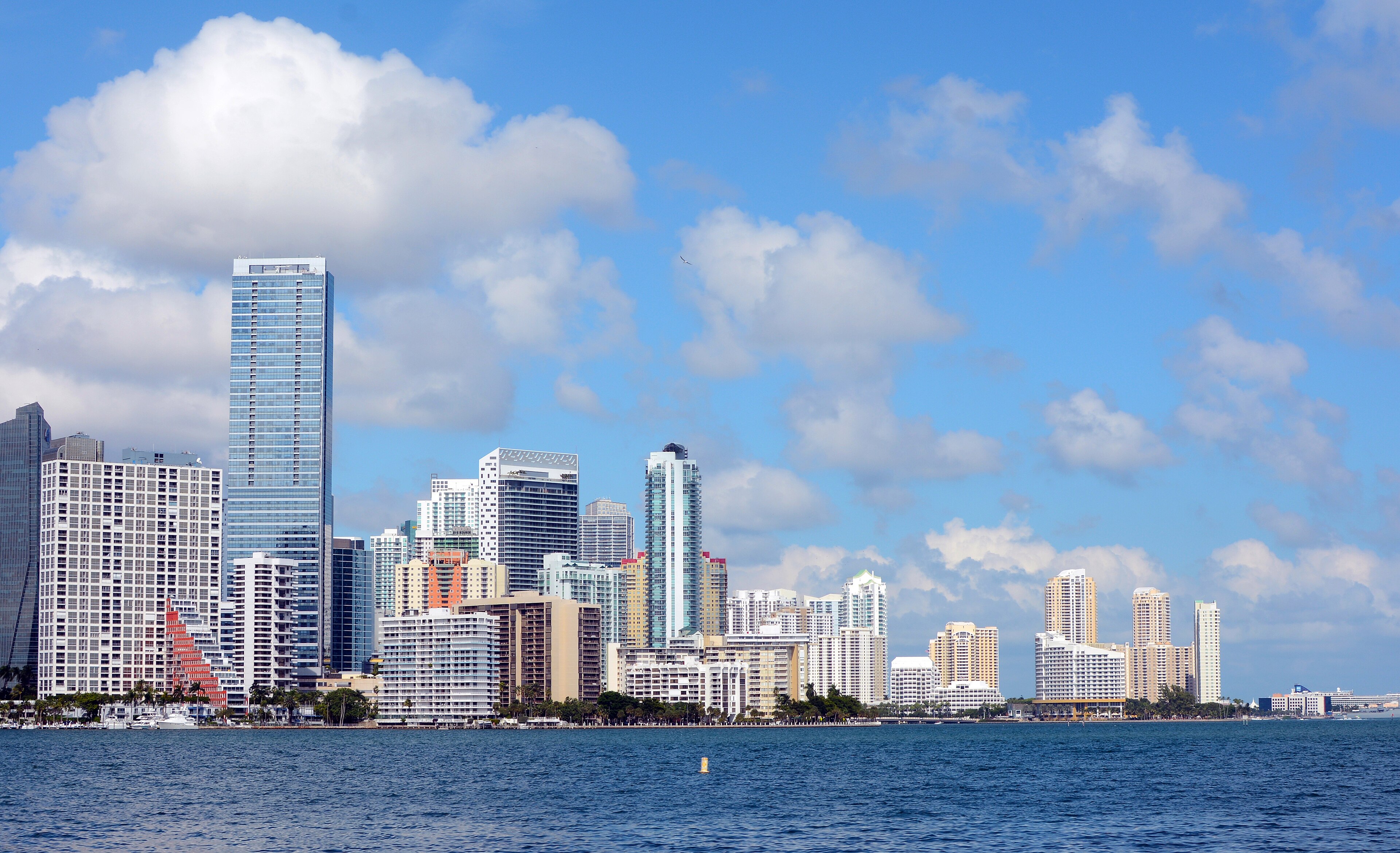
Miami Ukraine peace talks: Negotiators for the United States, Ukraine and Europe spent six hours Friday trying to build a unified proposal for ending the war, according to a person familiar with the session who spoke to Reuters on condition of anonymity. The target is not an immediate treaty. It is a common Western package, completed in the coming weeks and then presented to Russia in search of a breakthrough before winter.
That careful sequence collided with a much less coordinated day outside the room. President Donald Trump announced after a call with Vladimir Putin that Russia would supply diesel to U.S. and global markets as Washington lifted sanctions on Russian fuel. Ukrainian President Volodymyr Zelenskyy said the revenue would sustain Russia's war effort and argued that his delegation was being used as a “smokescreen.” Putin, meanwhile, said an immediate return to peace talks was unlikely, citing Ukrainian drone attacks on Moscow.
Track it live: Follow the Ukraine war map and latest battlefield developments.
What the Miami session actually produced
Witkoff, Kushner and a broad allied table
The American side was led by envoys Steve Witkoff and Jared Kushner. An October 8 preview of the meeting identified Ukraine's delegation as chief of staff Kyrylo Budanov, intelligence chief Rustem Umerov and top negotiator David Arakhamia. White House National Security Council and U.S. Treasury officials joined them, alongside national security advisers from Britain, France and Germany and representatives of NATO and the European Union.
The breadth matters. A proposal cannot credibly promise U.S. security support, European financing and an EU pathway if those institutions enter only after the text is written. Miami was designed to reduce that coordination risk before Russia receives anything formal. Still, the account of Friday's result comes from an anonymous source familiar with the talks; no joint text was released, and no participant announced agreement on final terms.
A Ukraine security guarantees proposal, prosperity plan and territory
The agenda covered a postwar package rather than a ceasefire alone: security guarantees from the United States and Europe, a reconstruction and prosperity plan, and a pathway toward European Union membership. On territory—the question most likely to stop any agreement—the source said negotiators discussed “some ideas” but gave no details.
That omission is the central limit on what can be claimed. Security guarantees can deter renewed fighting only if their triggers and enforcement are credible. A prosperity plan depends on security, capital and governance. EU accession requires a long institutional process. Territory connects all three, because Ukraine rejects legitimizing seizure by force while Russia claims control over occupied areas and says battlefield realities must be recognized.
Why this matters
Diplomacy and warfare are running on parallel tracks
Secretary of State Marco Rubio described the conflict Thursday as a “dangerous stalemate.” That is not the same as military inactivity. Russian forces say they retain the battlefield initiative, and Russian strikes have intensified against Ukrainian energy and civilian infrastructure. Reported attacks this week killed 22 people in Pryluky and 30 in a bus attack in Kramatorsk. Those tolls and the parties' damage claims remain subject to wartime verification.
Ukraine is simultaneously conducting deep strikes against Russian refineries and military-industrial targets. Its recent claim that it hit three Russian missile-production facilities illustrates Kyiv's effort to raise the cost of continued war. Each side can therefore see negotiation as insurance while still using force to improve its position.
Winter changes the bargaining geometry
Winter is a physical deadline and a political one. Damage to electricity, gas and heating systems becomes more dangerous as temperatures fall. Energy prices impose costs across Europe, while the November 3 U.S. midterm elections create an incentive for the Trump administration to show progress. None of those pressures guarantees compromise; they can also encourage each side to wait for the other to weaken.
A unified Western proposal would change the geometry before Russia is formally engaged. Instead of Moscow testing separate U.S., Ukrainian and European positions, it would face one package whose trade-offs had already been negotiated among the backers most capable of underwriting it. The risk is that unity becomes cosmetic if allies postpone the hardest choices—territory, enforcement and sanctions relief—until the Russian phase.
The partial ceasefire idea
Energy infrastructure and grain shipments offer a narrower test
Axios, in reporting carried by Newsmax, said one option would halt attacks on energy infrastructure and grain shipments. Ukraine has indicated willingness to consider that step, while Russia has shown little willingness to accept it. A limited arrangement is more plausible than an immediate comprehensive settlement because it is measurable: strikes can be tracked, shipping routes monitored and violations attributed, albeit imperfectly.
It also addresses civilian exposure without requiring either side to settle borders first. Protecting power systems would reduce the humanitarian leverage of winter; protecting grain flows would lower risks to export revenue and food-importing countries. But the same narrowness creates military objections. Russia can argue Ukrainian refinery attacks constrain its economy and war effort; Ukraine can argue Russian energy strikes are part of a broader campaign against civilian resilience. Both may fear that restraint gives the other side time to repair.
Zelenskyy's reciprocal energy-truce offer
Zelenskyy separately proposed a reciprocal formula: Ukraine would stop attacks on Russian oil refineries if Russia stopped destroying Ukrainian energy infrastructure. That offer reframes restraint as an exchange rather than a unilateral concession. Its credibility would depend on definitions—what counts as energy infrastructure, how dual-use sites are treated, and which mechanism investigates alleged breaches.
The diesel decision made that discussion harder. Zelenskyy called sanctions relief a weak decision by strong partners and said Russian fuel income would finance further war. Trump framed the imports as relief for consumers, farmers and truckers. Our analysis of the Trump-Putin diesel deal examines the supply and sanctions trade-off in detail.

Who benefits, who loses
U.S. consumers and farmers versus sanctions credibility
Additional diesel can ease pressure on transport, agriculture and heating markets, even when cargoes do not arrive directly at every affected port. That is the administration's economic case. The counterargument is strategic: if sanctions are relaxed whenever prices rise, future restrictions may carry less deterrent value and Russia may secure revenue without first changing military behavior.
Ukraine's leverage versus its fear of being sidelined
Ukraine benefits from a package that locks in security commitments and reconstruction support before talks with Russia. It loses if those incentives are used to pressure Kyiv into territorial terms it cannot accept or if economic deals with Moscow advance while the Ukrainian delegation negotiates elsewhere. Zelenskyy's “smokescreen” complaint reflects that fear, not proof that the Miami process lacks substance.
Europe's costs and Russia's calculations
European governments want the war ended and energy costs reduced, but they also have an interest in preserving the credibility of borders and sanctions they helped enforce. Russia can point to battlefield momentum and argue that immediate talks would reward Ukrainian drone strikes. Yet it also faces economic pressure, refinery vulnerability and the cost of sustaining a war now more than four and a half years old. Those cross-pressures help explain why Moscow may reject the opening package publicly while still testing its terms privately.
Energy and asset negotiations are already entwined with diplomacy. A separate U.S.-Russia Lukoil deal proposal shows how reconstruction, sanctions and commercial access can become bargaining instruments rather than side issues.
The numbers
Six hours, several weeks and one winter deadline
Six hours is long enough to work through an agenda but not to resolve a war. The coming weeks are the stated window for allied agreement. Before winter is the strategic goal, while November 3 is the U.S. political marker. These are planning horizons, not guaranteed deadlines.
Markets registered the separate diesel move quickly. Reuters reported Brent crude around $103.53 a barrel and U.S. West Texas Intermediate near $90.97 Friday as supply fears eased. A price reaction can signal changed expectations, but it does not establish that fuel will arrive on schedule or that sanctions relief will improve the odds of a peace deal.
What happens next
Scenario one: the unified proposal reaches Russia
This is the most plausible near-term outcome because it requires agreement among participants already engaged, not Russian acceptance. The package could reopen talks by combining security, economic and political incentives. Its weakness is that any unresolved territorial language may merely transfer the disagreement from Miami to Moscow.
Scenario two: a partial energy ceasefire becomes the interim step
This is plausible but harder. It offers visible civilian benefits and a test of compliance without demanding a full settlement. Russia's reported reluctance, the dual-use nature of energy assets and mutual distrust all weigh against it. A reciprocal, monitored arrangement would be more durable than parallel political promises.
Scenario three: territory stalls the talks and winter becomes a weapon
This remains a substantial risk. If neither side accepts the other's territorial baseline, attacks on grids, refineries and logistics could intensify as each tries to improve leverage. That path would deepen humanitarian costs and make later diplomacy more difficult, though even stalled talks can preserve channels for prisoner exchanges or narrower safety measures.
Conclusion
The Miami meeting did not produce peace, and its most important claims rest on anonymous sourcing rather than a published accord. What it produced was a sequence and a test: align the United States, Ukraine and Europe; put a package in front of Russia; then see whether winter pressure creates negotiation or escalation. The diesel deal, Zelenskyy's backlash and Putin's dismissal show why unity is necessary—and why it may still be insufficient.
Sources
- Reuters: U.S., Ukrainian and European negotiators meet in Miami
- Reuters via The Business Standard: Russia diesel supply and sanctions decision
- Newsmax citing Axios: partial ceasefire proposal ahead of Miami talks