India Ukraine ceasefire proposal
KYIV — The India Ukraine ceasefire proposal is the broadest of four plans now before Kyiv, Ukrainian Foreign Minister Andrii Sybiha told reporters, because it joins a pause in attacks on energy infrastructure with security for Black Sea shipping and food supply. Turkey, Egypt and the United States have advanced narrower formats of their own. None has produced an agreement with Russia.
“We have four proposals. The most comprehensive is India's proposal,” Sybiha said in a Friday, October 2 briefing, according to Haldia Live's account. A News18 report likewise described the Indian plan as spanning an energy truce and the Black Sea. The distinction matters: Kyiv is not describing a comprehensive peace settlement, but an attempt to bind together several partial ceasefires that would otherwise be negotiated separately.
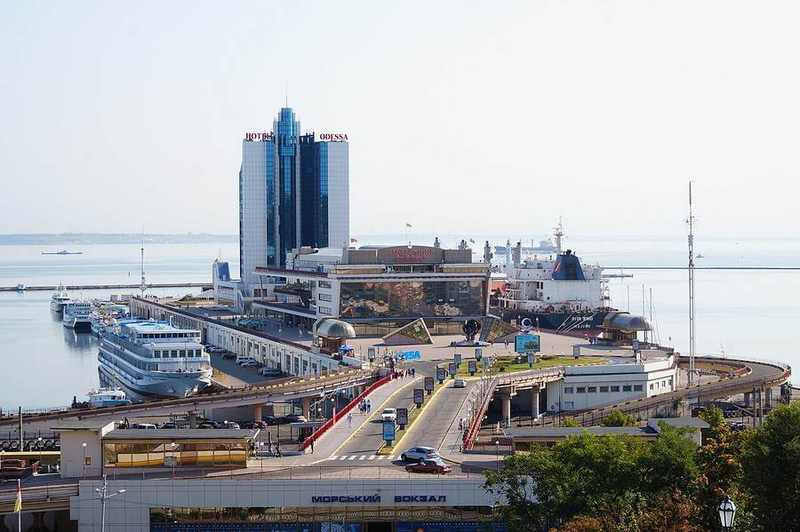
That bundle arrives amid immediate danger. On the same day the proposals were reported, Russia struck a Liberian-flagged merchant vessel in an Odesa-region port, killing one crew member, according to Ukrainian authorities. Signal Post News separately examined the Odesa port ship strike. The episode is a blunt reminder that “safe navigation” is not diplomatic abstraction: commercial shipping, port labor and food cargoes remain within the battlespace.
Why this matters: India moves from balancing to brokering
For New Delhi, the important change is not that it favors peace. Indian leaders have said that repeatedly. It is that India is now associated with a defined mechanism. UkrAgroConsult reported that Sybiha described this as the first time India had proposed taking a distinct role in developing such a framework. India's external affairs minister, S. Jaishankar, has affirmed a possible mediation role, according to Indian reporting.
That is a meaningful diplomatic step for a country that has tried to preserve strategic autonomy throughout the war. India buys Russian oil, maintains long-standing defense ties with Moscow and resists Western pressure to align completely. At the same time, it has expanded trade, technology and security relationships with the United States and Europe, deepened ties with Kyiv and repeatedly defended sovereignty and territorial integrity in general terms. Mediation lets New Delhi present that balance as leverage rather than ambiguity.
The plan also targets the war's two most globally transmissible chokepoints. Energy attacks threaten electricity, heating and industrial output inside Ukraine and Russia. Black Sea insecurity raises risks for vessels, ports, insurers and import-dependent countries far from the front. A ceasefire that covers both would not end ground combat by itself, but it could reduce civilian exposure and remove part of the war premium embedded in transport and food supply.
Timing adds urgency. Russian President Vladimir Putin had just praised Prime Minister Narendra Modi's ideas for a “peaceful and mutually acceptable solution” at the Valdai forum. Signal Post News detailed Putin's public endorsement of Modi's approach. Meanwhile, Russian missiles and drones crossed Moldovan airspace during attacks on southern Ukraine, Moldovan officials said. Diplomacy is therefore being tested against a widening security perimeter, not a cooling war.
Background: India's wartime posture
India's posture since February 2022 has been deliberately dual-track. It has avoided joining Western sanctions, increased discounted Russian crude purchases and kept senior-level contact with Moscow. Yet it has also supplied humanitarian assistance to Ukraine, engaged Ukrainian officials and argued that the conflict should end through dialogue and diplomacy. Modi's public message to Putin that this is not an era of war became shorthand for that careful middle position.
The commercial side of that balance is unavoidable. Russian oil has helped India manage import costs and refine crude for a large domestic market. Western partners, however, matter to India's technology ambitions, capital flows and strategic competition with China. A credible mediation role would show that India can retain access to Moscow without sacrificing influence in Washington, Brussels or Kyiv. A failed or transparently one-sided initiative would do the opposite.
Putin's praise at Valdai gave New Delhi an opening, but not proof of Russian consent to the proposed terms. Moscow often welcomes states that question Western sanctions while rejecting ceasefire formulas it views as temporary or strategically disadvantageous. That difference—between praising a mediator and accepting its plan—is the central gap in the story.
The India proposal: energy, shipping and food security
India's framework is broader because it connects three layers. First, an energy-infrastructure truce would seek to stop strikes on power generation, grids, fuel systems and related facilities. Second, a maritime component would address routes and safety in the Black Sea. Third, a food-security component would connect navigation to the movement of grain and other agricultural exports.
UkrAgroConsult's account says the plan covers food security, maritime routes and a possible energy ceasefire. The breadth is politically useful because neither side can easily claim that only the other's economic lifeline is protected. Ukraine gets ports, shipping and its electricity system in the frame; Russia could seek reciprocal protection for energy assets and commercial navigation.
But breadth creates verification problems. Negotiators would have to define what counts as energy infrastructure, whether fuel depots serving military units are covered, how port facilities with civilian and military functions are treated, and who decides whether a vessel carries legitimate commercial cargo. Without monitoring and a violation mechanism, the same ambiguity that makes agreement possible can make it collapse.
Turkey and Egypt: a grain ceasefire in the Black Sea
Turkey and Egypt have advanced similar food or grain ceasefire formats focused on safe navigation and more stable exports, according to the agricultural consultancy's report. The logic is narrower than India's package: ring-fence commercial sea lanes and port access so food can move even if the land war continues.
Turkey brings geography, naval weight and experience. Ankara helped broker the earlier Black Sea Grain Initiative and controls access between the Black Sea and Mediterranean through the Turkish straits. Egypt brings the pressure of demand. Sybiha said Egypt receives around one-third of its grain needs from Ukraine while also buying substantial volumes from Russia. For Cairo, reliable exports are not a diplomatic side issue; they bear directly on bread supply, prices and political stability.
The earlier grain arrangement showed both the value and fragility of a compartmentalized deal. It moved food despite a continuing war, but enforcement depended on sustained political consent. A revived mechanism would need inspection rules, protected routes, port definitions and a response when either side alleges that civilian trade is masking military use.
The United States: an energy ceasefire on its own track
Washington's proposal is narrower still: stop attacks on energy infrastructure. Haldia Live reported that the United States separately urged both Russia and Ukraine to halt such strikes.
An energy-only truce has obvious humanitarian appeal as colder weather approaches. It could reduce outages and damage to heating and power systems. It also runs directly into military strategy. Ukraine has increasingly treated strikes on Russian refineries and fuel networks as a way to pressure Moscow's war economy, while Russia has repeatedly attacked Ukraine's grid and generation capacity. The related Signal Post News analysis of Ukraine's refinery-strike doctrine explains why neither side sees energy as purely civilian terrain.
Separating energy from the Black Sea could also produce an asymmetric bargain. Kyiv fears being asked to halt a campaign against Russian fuel capacity while merchant ships and Ukrainian ports remain exposed. Moscow could make the reverse argument if Ukrainian maritime attacks continue while Russian energy sites gain protection. That is why linkage has become Kyiv's condition.
Kyiv's conditions: energy and the Black Sea must move together
Kyiv is open to an energy and Black Sea ceasefire “but only in this combination,” Sybiha said, according to Hindusthan Samachar, citing European Pravda. Ukraine's formulation says a deal must cover combat operations as well as attacks on energy and port infrastructure and the situation in the Black Sea.
That linkage is bargaining strategy. If each sector is negotiated separately, the side that gains relief in one arena can refuse concessions in another. Bundling the sectors makes implementation harder, but it also creates reciprocal stakes: energy restraint is exchanged for maritime restraint, and commercial access is tied to protection of ports.
Sybiha also said Kyiv was considering an unconditional ceasefire along the line of contact. That would be broader than any infrastructure accord because it would directly halt frontline combat. Ukraine has already given partners its own vision of how possible agreements could operate, according to the reports. What has not appeared publicly is the text that would define monitoring, duration, geography, prohibited targets or consequences for violations.
Markets and data: a truce has to change risk, not just rhetoric
The clearest hard number in the proposals is Egypt's exposure: roughly one-third of its grain needs comes from Ukraine, Sybiha said. That does not mean one ceasefire would instantly lower food prices. It means interruptions in Ukrainian exports can transmit quickly to a large importing state, especially when alternative supply is also linked to Russia.
For grain markets, reliable sailing windows can reduce delay, rerouting and storage pressure. For shipowners, the key questions are whether a corridor is monitored, whether ports are protected and whether both belligerents recognize the same rules. Insurance costs respond to demonstrated risk. A declaration without compliance is unlikely to change premiums; repeated safe voyages under an enforceable arrangement could.
Energy markets present a different equation. An infrastructure pause could reduce the chance of sudden refinery outages, fuel shortages and grid emergencies, but it may also restrict the pressure each side has chosen to impose. Kyiv's long-range campaign seeks to make the war economically costly for Russia. Moscow's attacks seek to strain Ukrainian production, logistics and civilian resilience. An energy truce would therefore redistribute leverage as well as protect assets.
Who benefits—and who could lose leverage
Kyiv benefits if the three elements remain linked. Protection for ports and the grid would strengthen civilian resilience and export capacity, while a combined bargain would make it harder for Russia to select only the terms it prefers. Ukraine also gains diplomatic leverage from having four partners place proposals on the table.
India benefits if it can translate access to Moscow and working ties with Kyiv into a verifiable framework. Success would reinforce New Delhi's claim to be an independent power capable of brokering outcomes across geopolitical blocs. Even limited progress could give Jaishankar's diplomacy a concrete agenda rather than a general appeal for dialogue.
Turkey, Egypt and grain importers benefit from safer navigation and more predictable shipments. Turkey would recover a central coordinating role; Egypt would gain supply assurance; importers would face fewer disruptions. Ship crews and port workers would receive the most immediate benefit if protection were real.
The losers are actors relying on ambiguity or attrition. A monitored arrangement narrows the ability to strike dual-use infrastructure while denying responsibility or disputing definitions after the fact. It could also reduce battlefield pressure that one side believes is improving its negotiating position. That is why a seemingly humanitarian package can still face military resistance.
The strongest objections from Moscow and Kyiv
Russian Foreign Minister Sergei Lavrov's long-standing line is that Moscow is not interested in temporary ceasefires that merely give Ukraine time to rearm; Russia says it wants terms addressing what it calls the conflict's root causes. That skepticism does not amount to a formal response to India's proposal, but it sets a high bar. Moscow could praise Modi while insisting that only a wider political settlement is acceptable.
Kyiv has the mirror-image fear: a pause could let Russia repair equipment, reorganize forces and resume attacks from a stronger position. Ukrainian officials therefore seek enforceable scope and reciprocity rather than a symbolic interruption. If port protection leaves cities exposed, or if an energy halt constrains Ukraine more than Russia, the ceasefire could preserve rather than reduce coercive leverage.
Critics may also question whether four parallel initiatives clarify or fragment diplomacy. Overlap can create a menu from which negotiators build common terms. It can also create forum shopping, with each side supporting the proposal that protects its preferred targets. The Indian plan's value will be measured by whether it becomes a bridge among tracks rather than simply a fifth diplomatic label.
What happens next: converge, narrow—or stall
Convergence would begin with publicly overlapping terms from India, Turkey, Egypt, the United States and Ukraine: common definitions of energy sites, ports, vessels, inspection, monitoring and response to violations. Russia would then need to indicate that it is prepared to negotiate those terms. Even a limited pilot—specified routes and a defined energy-protection period—would show movement beyond statements.
A narrower outcome could revive a grain-shipping arrangement without an energy ceasefire, or produce informal restraint around certain infrastructure. That might deliver practical relief faster, but it would fall short of Kyiv's linkage demand and India's broader framework.
Stalemate remains the baseline risk. No concrete agreement has been reached, and UkrAgroConsult stressed that any maritime ceasefire depends on Russia's position. Continued strikes on ships, ports, grids or refineries would harden the argument that neither side sees restraint as advantageous.
Watch three things through October 10: whether any mediator publishes terms that overlap with another proposal; whether Moscow answers the linked energy-and-Black-Sea formula rather than speaking generally about peace; and whether Jaishankar or another senior Indian official moves from endorsing mediation to describing verification, sequencing or guarantees. Until then, “the broadest” means the most ambitious framework on Kyiv's table—not a ceasefire in hand.