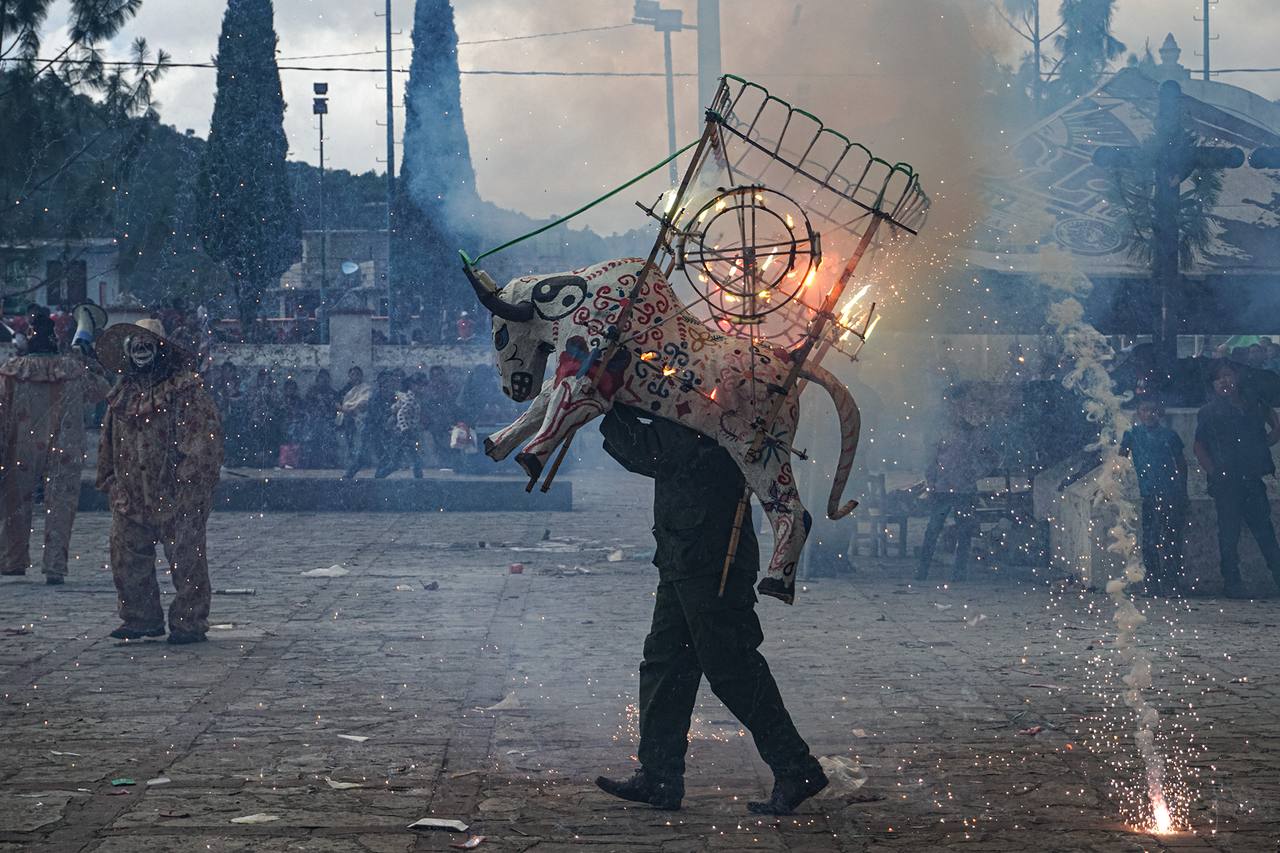
CUAUTITLÁN IZCALLI, Mexico — A Mexico fireworks explosion in Cuautitlán Izcalli tore through a patron-saint procession on Thursday, September 24, killing a 15-year-old and injuring at least 12 people, including minors. The blast occurred on Calle Juan Aldama in San Francisco Tepojaco, about 21 miles from Mexico City, after a vehicle carrying pyrotechnics caught fire and detonated amid annual festivities honoring San Francisco de Asís.
Video circulating after the blast shows the person filming knocked to the ground before fireworks begin discharging around the street. Emergency crews from Cuautitlán Izcalli Civil Protection and the fire service responded, joined by ambulances from Tepotzotlán and Nicolás Romero. The burned vehicle became the center of an investigation into how the load ignited and who was responsible for packing and transporting it.
Alejandro González, 15, died while receiving treatment at the Lomas Verdes Trauma and Orthopedics Hospital in Naucalpan. He was laid to rest Friday afternoon. Among those reported injured was Federico Ruiz, who was found Friday morning roughly three miles from the blast site with burns. The available reporting does not establish how he came to be separated from the main scene.
Why this matters
The death is not only a festival accident. It is a test of whether safety rules apply when dangerous materials move through a crowded public ritual. Fireworks concentrate explosive force in compact loads; a single ignition can become a chain reaction before spectators have time to move. Putting that load on a vehicle inside a procession combines ignition risk, uncertain separation distances and a moving crowd.
The case also turns on public authority. Mayor Daniel Serrano's administration said no permit had been issued for the procession. Its statement was explicit: “The procession held this Thursday was not included in the authorization process currently being handled by the San Francisco Tepojaco delegation for the festivities scheduled to begin on October 2.” That distinction matters because a pending authorization for later festivities did not amount to approval for the September 24 event.
What happened, and what investigators still need to establish
The verified sequence is limited but consequential: a procession was moving through San Francisco Tepojaco; a vehicle in the event was carrying pyrotechnics; the vehicle caught fire or the cargo ignited; and multiple fireworks discharged after the initial blast. Local authorities then coordinated medical transfers and secured the scene.
Investigators are examining the ignition source and responsibility for loading, storing and transporting the fireworks. One local account raised two possibilities — that an ignited rocket entered the vehicle or that an electrical short started the fire — but neither theory had been confirmed by expert findings at publication. Treating either as established would get ahead of the evidence.
The legal inquiry should therefore ask more than what produced the first spark. It must identify who supplied the pyrotechnics, whether the vehicle was suitable for explosives, who controlled the route, what separation was maintained from participants and whether organizers sought any safety review. A permit is not a guarantee against disaster, but the absence of one removes a formal checkpoint where those questions should be answered.
Casualty counts vary across local reports
This article uses a reporting snapshot of at least 12 injured, consistent with the active brief available on September 26. Earlier municipal and local accounts reported 10 people still hospitalized or 11 injured, while another later local tally described as many as 24 people affected. Reports also differed over whether the teenager was 15 or 16. Multiple accounts, including the hospital reporting cited by the New York Post, identify him as 15.
Those differences do not necessarily mean any one outlet fabricated a number. Disaster totals often change as people reach hospitals independently, are discharged, or are classified as treated rather than injured. The responsible approach is to preserve the timestamp and category behind each figure, not blend them into false precision. The confirmed bottom line is one teenager dead and a group of injured residents that included children.
Background: fireworks, faith and informal risk
Pyrotechnics are embedded in many religious and civic celebrations across Mexico. They provide sound, light and a visible link between communal identity and patron-saint observance. The custom also supports artisans, vendors and event workers. That cultural role explains why calls for a blanket prohibition meet resistance and why informal use can persist even where permits are required.
The tradition argument, however, does not erase the physics. A festival can preserve ritual while changing transport, storage, launch zones and crowd control. Critics of weak enforcement argue that authorities too often react after a blast instead of checking routes and pyrotechnic plans beforehand. Defenders of local tradition answer that overbroad restrictions can push activity farther underground and punish careful practitioners alongside reckless ones. The practical middle ground is enforceable licensing, trained handlers, physical separation and clear accountability.
Winners and losers
The immediate losers are the González family, the injured and the wider community. Their costs extend beyond emergency care to rehabilitation, missed work, trauma and a religious celebration now associated with a preventable death. Minors among the injured sharpen the duty organizers had to anticipate crowd vulnerability.
Responsible pyrotechnic operators also lose when an unpermitted event damages trust in the entire trade. Licensed producers and handlers have an interest in rules that distinguish controlled practice from improvised transport. Municipal authorities gain a narrow enforcement argument because they say the event lacked authorization, but they do not escape scrutiny: investigators must still ask whether the procession was visible in advance and whether prevention or intervention was possible.
Public-safety agencies gain a mandate for tighter oversight, yet enforcement without community cooperation will be brittle. Religious organizers, neighborhood leaders and emergency planners are the actors best positioned to build a system that residents will actually follow.
Numerical analysis: a small load can create a wide casualty field
The central figures are one death and at least 12 injuries. That is a ratio of at least 12 injured people for every fatality, evidence that the blast's harmful radius extended well beyond the vehicle. The three-mile distance at which Federico Ruiz was found the next morning is not a blast radius; it indicates the difficulty of accounting for people after a chaotic event and the need for coordinated hospital and missing-person records.
The date gap is also instructive. The procession took place September 24, while the delegation's permit process covered festivities scheduled to begin October 2 — eight days later. If the municipal statement is accurate, the problem was not a technical lapse within an approved event but a procession outside the stated authorization window. That should make the documentary chain comparatively straightforward to examine.
Historical comparison: San Pablito's warning
The region has seen the catastrophic end of the same risk chain. In December 2016, explosions at the San Pablito fireworks market in Tultepec killed 42 people and injured dozens. The scale was far greater than the San Francisco Tepojaco blast, but the comparison is relevant because both incidents involved densely concentrated pyrotechnics near civilians.
San Pablito showed that one ignition can propagate through adjacent stock faster than conventional crowd movement or firefighting can contain it. The policy lesson is not that every festival load equals a market-sized hazard; it is that quantity, proximity and compartmentalization determine how quickly a localized fire becomes a mass-casualty event. The Cuautitlán Izcalli case should be evaluated against that known history, not as an unforeseeable anomaly.
What happens next
First, forensic findings: experts will test the vehicle, wiring, residue and recovered fireworks to identify the likely ignition sequence. Second, responsibility: investigators will trace who owned the vehicle and pyrotechnics, who authorized their use and whether criminal or administrative charges follow. Third, medical accounting: officials should reconcile hospital lists so the public has one dated count of injured, treated and discharged patients.
A stronger outcome would extend beyond punishment. Cuautitlán Izcalli can require advance route notices, approved pyrotechnic handlers, separate transport from crowds, inspection records and a unified emergency command for festivities. A weaker outcome would treat the absent permit as the end of the inquiry, leaving the same informal incentives in place for the next procession.
Related Signal Post News reporting has examined the wider cost of disasters, including the deadly Plaka explosion in Athens, the Virgo Transport 8 ferry disaster and Hurricane Polo's threat to Mexico. Across different hazards, the recurring question is the same: whether known risks were translated into preventive action before people entered harm's way.
- New York Post: casualty snapshot, Federico Ruiz, video and municipal permit statement
- Particle: overview of reporting on the procession explosion
- Times NG: incident account and response
- Por Esto: municipal figures, hospital transfers and permit context
- AD Noticias: permit status and later casualty accounting
- Desde la Silla: initial official figures and investigation
- Epígrafe Noticias: hospital status
- El Mexiquense: local response reporting
- Guillermo Ortega: street location, responders and unconfirmed ignition theories
- Global Press Journal: contextual photograph of a Mexican patron-saint fireworks tradition
- Wikidata and Wikimedia Commons: 2016 San Pablito market explosion context image and record