Kumkum Mohod archery gold Asian Games
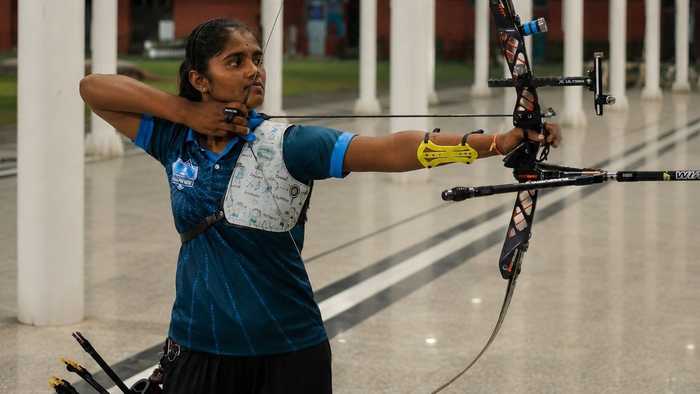
OKAZAKI, Japan — The Kumkum Mohod archery gold Asian Games final came down to one arrow on Saturday, October 3, 2026. South Korea's Oh Yejin shot an eight. Mohod, 17 years old and facing the most consequential shot of her life, put hers in the 10-ring. That made the final 6-5 after five sets had finished 5-5, delivered India's first Asian Games gold in the women's individual recurve, and secured a women's recurve quota place for India at the Los Angeles 2028 Olympics.
The finish was dramatic, but it was not a lucky interruption of the sport's hierarchy. Mohod had already beaten reigning world champion Kang Chaeyoung of South Korea 6-4 in the quarterfinal and China's Jingyi Zhu 6-2 in the semifinal. Her road to gold ran through the strongest recurve system in history and a world championship silver medallist. The last arrow only made the pattern impossible to miss.
When the Indian flag rose and the national anthem played, Mohod broke down in tears. The moment condensed a career that began in Amravati, Maharashtra, with a wooden Indian bow costing about ₹3,000, bought with money from her grandmother, and later continued with second-hand equipment. It also completed a three-medal Games: individual gold, women's team gold alongside Ankita Bhakat and Kirti Sharma, and mixed recurve silver with Dhiraj Bommadevara on Friday.
Oh Yejin vs Kumkum Mohod final shoot-off, arrow by arrow
The score line explains the tension better than any adjective: 27-29, 29-29, 30-29, 27-28, 30-28. Oh took the opening set after Mohod started with an eight, moving 2-0 ahead. The second was shared at 29-29, so the Korean led 3-1. Mohod then answered with three consecutive 10s for a perfect 30 in the third, taking the set against Oh's 29 and leveling the match at 3-3.
Oh regained control in the fourth, 28-27. At 5-3, Mohod could not afford another lost set or even a tie. Her response was another perfect 30. Oh's 28 sent the match to 5-5 and into the one-arrow decider. Oh shot first and scored eight; Mohod needed nine to win and produced 10. The official result reads 6-5, but the decisive numerical fact is that Mohod answered two separate moments of near-elimination with six arrows totaling 60 points.
That sequence matters because recurve match play is designed to prevent a strong aggregate score from insulating an archer against pressure. Each three-arrow set is scored independently: two set points for a win, one each for a tie. A competitor can dominate one set and still have to begin again. Mohod did precisely that after losing the fourth. The shoot-off then removed even the three-arrow margin for correction. One release, one result.
Why this matters
India has produced elite archers for decades, yet Olympic recurve has repeatedly turned promise into near-misses. Deepika Kumari reached world No. 1 and collected World Cup titles but has not won an Olympic medal. Indian teams have arrived at Games with credible rankings and left after early knockout losses, often to Korean opposition. The national conversation has consequently treated archery as both a medal possibility and a recurring psychological burden.
Mohod's gold does not erase that history, and an Asian Games title is not an Olympic medal. It changes the evidence, however. The result was not earned through a favorable draw. She eliminated the reigning world champion, then a recent world silver medallist, then held her nerve against another Korean finalist. That is a competitive chain strong enough to support a larger conclusion: India is no longer merely close to the established powers on its best day; its emerging women can beat them repeatedly across rounds and formats.
The direct beneficiary is India's LA 2028 planning. Both finalists earned quota places for their countries, not personal tickets for themselves. India now holds one women's individual recurve place, but Mohod must still qualify through domestic selection — normally held around six months before the Olympics — and India can still pursue a full team quota. The distinction is important. Saturday secured national access, not a guarantee that Mohod herself will stand on the Olympic line in Los Angeles.
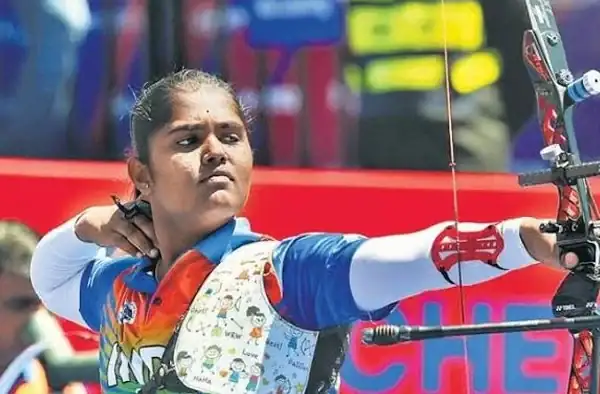
The road from Amravati to the 10-ring
Mohod began archery in 2018 after her mother, Rupali, encouraged her to try the sport at coach Prafull Dange's Radhey Archery Academy in Amravati. Dange saw upper-body strength, sound shoulder position and an appetite to learn. Within six months, she won silver at the sub-junior national championships. During the COVID-19 period she trained at short distances, work that helped refine the back-muscle engagement central to a repeatable recurve release.
The equipment story has become shorthand for her rise, but it deserves precision rather than sentimentality. Her first wooden bow cost around ₹3,000. Her father, Anil Manohar Mohod, makes cardboard boxes for sweet shops. When shared transport to training became too expensive, he drove her on a motorcycle. The bow she used at the 2026 Shanghai World Cup was second-hand and roughly five years old. Those facts illuminate family sacrifice; they should not be romanticized into an argument that elite athletes need less support.
Mohod entered the Target Asian Games Group and broke through internationally in 2026. At World Cup Stage 2 in Shanghai, she helped India's women's recurve team win gold. She then earned her Asian Games place through selection trials in Sonepat alongside Kirti Sharma and Ankita Bhakat, with four-time Olympian Deepika Kumari finishing fourth.
Antalya showed the gap was closing
The strongest warning came at World Cup Stage 3 in Antalya. Mohod and Dhiraj Bommadevara defeated South Korea's Olympic champion pairing in mixed recurve, a result that foreshadowed Aichi-Nagoya in two ways. First, Indian archers were no longer treating Korean names as a reason to shoot defensively. Second, the mixed partnership could perform when one poor arrow could swing an entire contest.
At the Asian Games, Mohod and Bommadevara took mixed silver, then split into separate individual stories. Mohod won gold; Bommadevara later lost the all-Indian bronze-medal match to Neeraj Chauhan 6-4. The Neeraj Chauhan bronze archery result was more than consolation. Putting two Indian men into the medal contest, while the women won team and individual golds, showed depth across the recurve program.
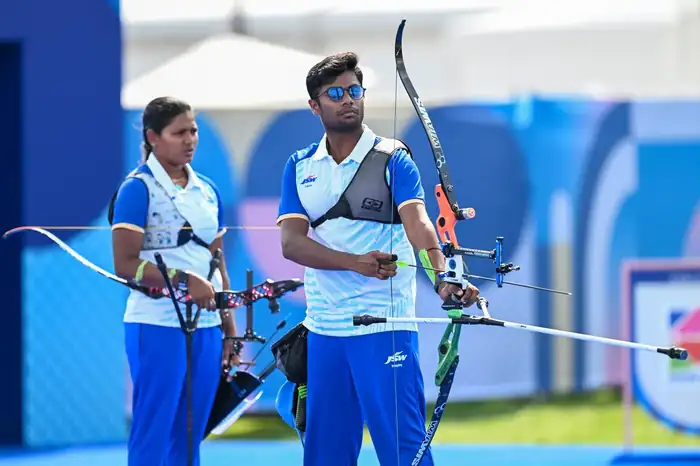
India archery team gold women: a breakthrough with depth
The individual title should be read beside the women's team result. Mohod, Ankita Bhakat and Kirti Sharma beat South Korea 5-3 for India's first Asian Games women's recurve team gold. That achievement came after the Indian compound squads had already swept the team titles earlier in the Games, part of a broader archery surge covered in our report on India's Asian Games archery gold sweep.
South Korea remains the reference standard. Korean women have dominated Olympic recurve since women's team archery entered the Games in 1988, and the country's selection trials are often described as harder than international tournaments. That history makes India's wins significant, not definitive. A tournament can announce a challenger; sustained Olympic cycles decide whether the order has actually changed.
The useful lesson is that India's improvement is distributed. Mohod brought a teenage breakthrough. Bhakat and Sharma supplied team resilience. Bommadevara and Chauhan gave the men's side internal competition. Compound success supplied medals but, because compound is not on the Olympic program, recurve remains the essential test for LA 2028.
Who benefits — and what funding critics will ask
Mohod benefits first, through profile, sponsorship leverage and a stronger case for sustained high-performance backing. Her academy in Amravati gains proof that talent can be developed outside India's largest sporting centers. Younger archers gain a visible route from modest equipment to international competition. The federation and public programs such as Khelo India and the Target Asian Games Group gain a result they can point to when defending investment.
Critics of India's sports-funding system will make the opposite point from the same biography. Why did a future continental champion depend on a low-cost wooden bow, second-hand equipment and family motorcycle rides before structured support caught up? Funding often arrives after results reveal an athlete, while development requires coaching, equipment, nutrition, travel and sports science years before the podium. Mohod's success validates the people who found and backed her; it does not validate every gap she had to cross.
There is also a selection-policy benefit. Deep domestic competition can prevent reputation from becoming entitlement. Mohod earned her Asian Games place ahead of an established star, then justified the decision with three medals. For LA 2028, the same principle must remain: the quota belongs to India, and selection should reward current performance under transparent rules rather than turn Saturday's gold into a permanent claim.
Asian Games 2026 medal tally India: the number in context
At the reporting cutoff immediately after Mohod's gold, India's Day 15 tally stood at 80 medals: 18 gold, 26 silver and 36 bronze, fifth behind China, Japan, South Korea and Uzbekistan. The count was moving through Saturday as later events concluded, so this is a time-stamped snapshot rather than a final table.
India won a record 107 medals at the delayed Hangzhou 2022 Games, held in 2023: 28 gold, 38 silver and 41 bronze. Aichi-Nagoya's 80 at this point leaves that record beyond easy reach with the Games near their close. But raw total is only one measure. First-ever titles in women's recurve and women's golf identify events where the ceiling has moved, while a medal tally can rise through repeated strength in already productive disciplines.
Saturday offered both. Pranavi Urs became the first Indian woman to win individual Asian Games golf gold, holding a one-stroke advantage in the final round. Aditi Ashok, Urs and Diksha Dagar also won silver — India's first women's team golf medal. In archery, Chauhan beat Bommadevara 6-4 for men's recurve bronze. Then India's men's cricket team beat Pakistan in the T20 final for back-to-back golds, a match covered in our full India-Pakistan Asian Games cricket final analysis.
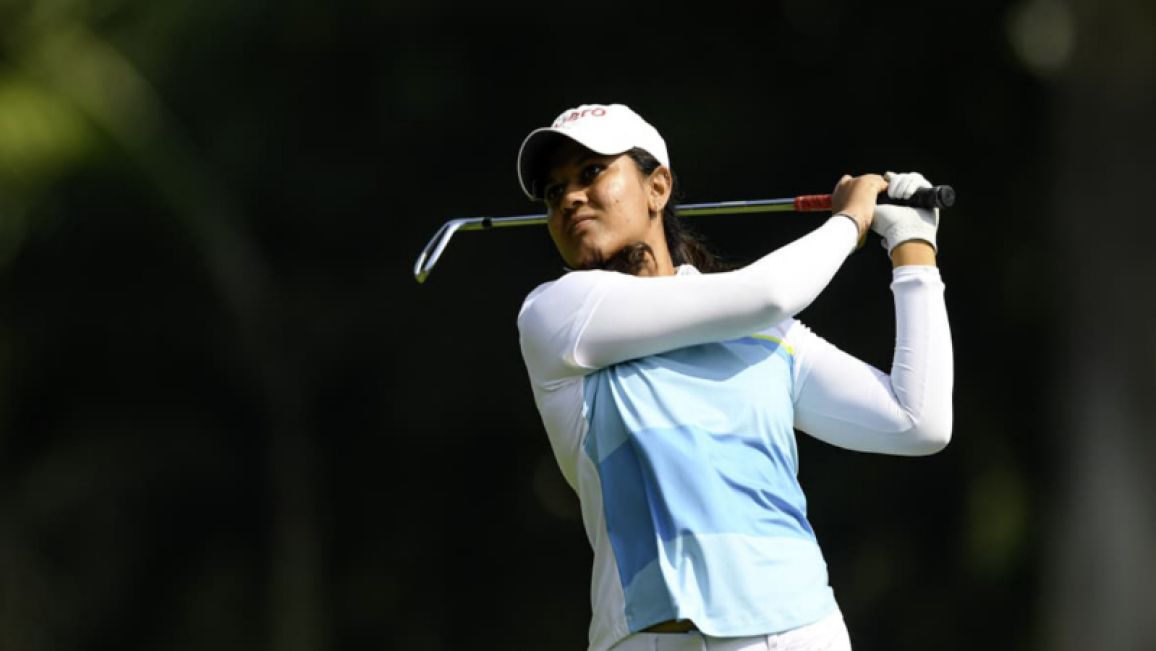
Pranavi Urs golf gold Asian Games result widens the story
Urs's win matters beside Mohod's because both converted women's events with limited Indian Asian Games precedent into gold. Urs entered the final round with a lead and survived pressure to finish one stroke clear; Mohod twice answered elimination with perfect sets. Their sports ask different technical questions, yet the common thread is composure under a national spotlight.
The team silver for Ashok, Urs and Dagar further demonstrates how individual excellence can lift a program. It was India's first women's team golf medal at the Asian Games. Like the archery results, it gives administrators a reason to broaden investment rather than concentrate only on one established medal route.
Kumkum Mohod LA Olympics 2028 quota: what it does and does not mean
The quota means India is entitled to enter a woman in the Olympic individual recurve competition, subject to qualification rules and its own selection. It does not mean Mohod has personally qualified. If India later wins a team quota, it could send three women and contest both team and individual events. The larger strategic target therefore remains a full team place.
For Mohod, the next 22 months should be treated as development time rather than a victory lap. She needs repeated exposure to knockout pressure, access to equipment tuned to her physiology, recovery support, and coaching that protects rather than remodels the technique that produced Saturday's two perfect sets. Her youth is an advantage only if expectations do not become noise.
For India, the selection window will be the hard part. The federation must balance the athlete who won the quota with whoever is shooting best in 2028. Transparent trials, published criteria and enough international competition to compare form are essential. The fairest recognition of Mohod's contribution is to preserve the system that gave her a chance to beat more famous names.
What happens next
Three tests will determine whether Aichi-Nagoya becomes a turning point. The first is repeatability: can the women's recurve team continue beating Korea, China and Chinese Taipei across World Cup stages and world championships? The second is qualification: can India turn one individual place into a full Olympic team quota? The third is conversion: can the program carry World Cup and Asian Games composure into the distinct pressure of an Olympic elimination bracket?
Korea is not retreating. Its coaching depth, domestic competition and technical culture remain formidable. The gap closes when opponents can beat Korean archers without treating the outcome as an upset that suspends normal expectations. Mohod's quarterfinal and final were two such wins in one day; Antalya was an earlier one. The pattern is not dominance, but it is more persuasive than a single medal.
The final image is still the right one: Oh's eight, Mohod's 10, then tears during the anthem. Yet the deepest meaning lies before and after that arrow — in the second-hand bow, the selection trials, the Korean champions she defeated, and the quota that now belongs to a country rather than an individual. The shot made history. The system's next job is to make history repeatable.
Sources
- Mint, October 3, 2026: final score, quota, three-medal campaign and Mohod's Amravati background.
- The Bridge, October 3, 2026: set-by-set final, knockout path and country-quota rules.
- IANS, October 3, 2026: shoot-off, semifinal and quarterfinal reporting.
- IANS via hi INDiA, October 3, 2026: match sequence and Olympic quota.
- Jagran Josh, October 3, 2026: Day 15 medal-table snapshot and companion results.
Reporting cutoff: October 3, 2026 at 3:15 a.m. PDT. The 80-medal tally is the specified Day 15 snapshot; later Saturday results may increase the running total. Analysis and forward-looking judgments are Signal Post News's.