Jyothi Surekha Vennam's women's team beat China 238–234 to match a 12-year-old world record, Chikitha Taniparthi and Sahil Jadhav edged South Korea in a 20–19 shoot-off, and the men roared back past China 238–237 — with a Los Angeles 2028 quota already in the bag.
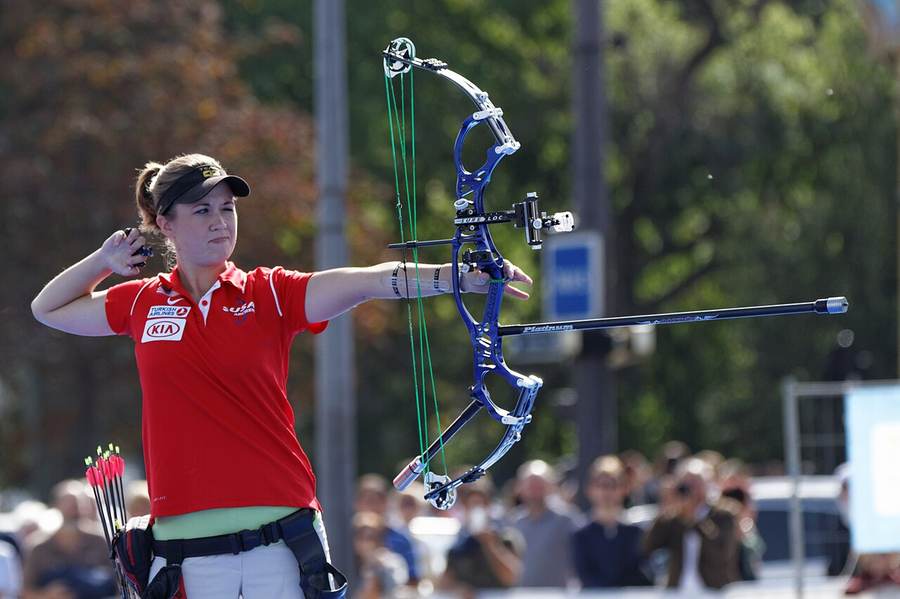
OKAZAKI, Japan — Three finals, three gold medals, one world record. On Wednesday, September 30, 2026, at Okazaki Chuo Sogo Park in Aichi-Nagoya, India's compound archers produced the single greatest day in the nation's archery history: a clean sweep of every compound team title on offer at the Asian Games 2026. The story of India archery gold at Asian Games 2026 is really three stories in one — a record-equalling masterclass by the women's team, a nerve-shredding shoot-off won by the mixed pair, and a comeback for the ages by the men.
The numbers alone are staggering. India won the women's team final 238–234 over China — equalling the world record of 238 set by South Korea at Incheon 2014. The mixed team of Chikitha Taniparthi and Sahil Jadhav tied South Korea 157–157 and then won the shoot-off 20–19. And the men's trio of Kushal Dalal, Sahil Jadhav and Ganesh Mani Ratnam Thirumuru came from behind to edge China 238–237. It was an unprecedented single-day haul — and it made India the first nation on earth to qualify for compound archery's Olympic debut at Los Angeles 2028.
How the sweep unfolded
Women's final: the 238 that matched a world record
The day began with the defending champions — Jyothi Surekha Vennam, Chikitha Taniparthi and Prithika Pradeep — walking onto the range as the team to beat, and they shot like it from the first arrow. Against China's Wunier, Yue Wang and Fangyao Wei, India took the opening end 60–58 behind a flurry of perfect 10s, then did it again in the second end to stretch the lead. At 178–176 going into the final end, the pressure was entirely on China — and China blinked, dropping two 9s. India responded with the most cold-blooded passage of archery seen at these Games: six consecutive 10s, a perfect 60, and a 238–234 victory that both retained the Hangzhou 2023 title and equalled a world record that had stood for twelve years.
Getting to the final had been the harder part. In the semifinal, India edged South Korea 234–233 in a contest that was level at 175 midway through, sealed by crucial late arrows from Chikitha and Prithika. For Jyothi, the 30-year-old veteran, the gold was the latest chapter of an extraordinary Asian Games record: she has now been part of all four of India's medal-winning women's compound teams since the event's introduction — bronze in 2014, silver in 2018, gold in 2023, and now gold again with a world record in 2026.
Mixed final: an India–Korea shoot-off for the ages
If the women's final was a masterclass, the mixed final was pure theatre. Chikitha Taniparthi and Sahil Jadhav, who had reached the gold-medal match by beating Thailand 156–155 in the semifinal, found themselves locked at 157–157 with South Korea's Park Jungyoon and Choi Yonghee (per the IANS roundup) after regulation. One shoot-off, two arrows each, everything on the line.
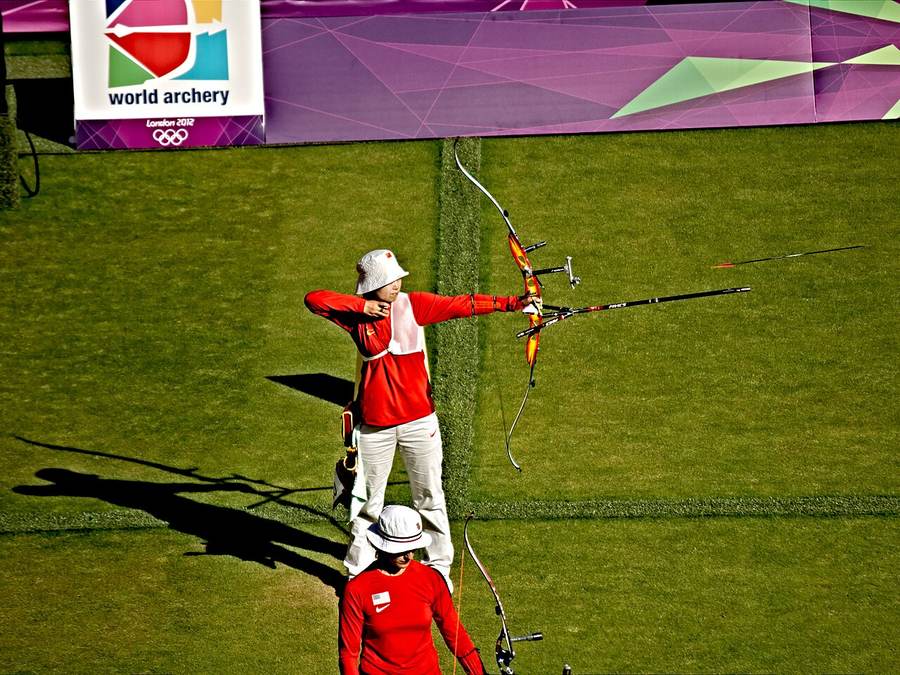
Both Indians found the 10-ring. Choi could manage only a 9. India won the shoot-off 20–19 — and with it the gold, the successful defense of the Hangzhou mixed title, and something even bigger: a quota place for the mixed team event at the Los Angeles 2028 Olympics, where compound archery makes its Olympic debut. India is the first nation to qualify. For Chikitha, it was a second gold of the day; for Sahil, the first of what would become two.
Men's final: the comeback that completed the sweep
The sweep was completed the hard way. Kushal Dalal, Sahil Jadhav and Ganesh Mani Ratnam Thirumuru trailed China's Jiahao Liao, Jinyi Liu and Jingyu Shi 58–60 after the opening end and were still two points adrift at the halfway mark. What followed was a slow, relentless squeeze: India clawed back end by end and held its nerve in the decider to win 238–237 — one point, the width of an arrow's fletching, between glory and silver.
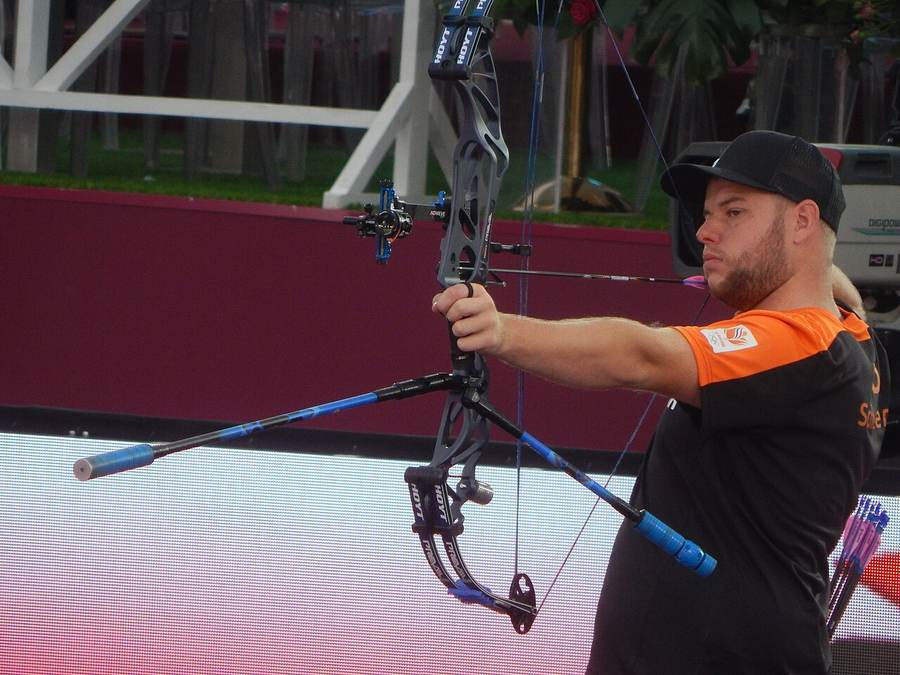
For Sahil Jadhav, the men's gold made him a double champion on the day, alongside Chikitha Taniparthi — two athletes, four gold medals between them. It is the kind of individual haul that defines careers.
Why this matters
Start with the obvious: no nation had ever swept all three compound team golds at a single Asian Games. India didn't just win — it beat China twice and South Korea once, the two programs that have owned Asian archery for a generation, and it did so in three completely different ways: a record-equalling procession, a shoot-off knife-fight, and a comeback. That versatility is the real headline, because it suggests this was not a hot streak. It was a system working.
Jyothi Surekha Vennam and the making of a dynasty
Dynasties in sport are built on continuity, and India's women's compound team is now the textbook case. The medal progression — bronze in 2014, silver in 2018, gold in 2023, gold plus a world record in 2026 — reads like a program's strategic plan executed to the letter. Jyothi Surekha Vennam's presence on all four of those podiums gives the story its human spine: the veteran who was there for the lean years now anchors a team shooting world-record scores. Around her, Chikitha Taniparthi and Prithika Pradeep represent the pipeline working — young archers arriving into a winning culture rather than having to invent one.
There is a second, quieter significance. Compound archery has lived in the shadow of the Olympic recurve discipline in India for decades — the recurve program produced the heartbreaks, the near-misses, the what-ifs. The compound program, freed from that baggage and from Olympic pressure until now, built itself into the best in Asia. With compound's Olympic debut confirmed for Los Angeles 2028, that investment is about to pay off on the biggest stage of all — and India has already banked its ticket.
Compound vs recurve: the discipline India chose to conquer
For readers new to the sport: compound and recurve are different bows, different games. The compound bow uses cams, pulleys and magnified sights; it rewards repeatable mechanics and ice-cold execution under pressure. The recurve — the Olympic discipline until 2028 — is the traditional bow, more exposed to the elements and to nerves. Asia's archery powers, South Korea and China, built their empires on recurve. India's compound rise is, in a real sense, an end-run around that empire: while the giants perfected the old game, India quietly became unbeatable at the new one.
The timing could not be better. When compound makes its Olympic debut at Los Angeles 2028, India will arrive not as a hopeful but as the first qualified nation and the reigning Asian Games champion in all three team events. That is the difference between chasing the sport and defining it.
Who benefits, who loses
The winners are obvious. Chikitha Taniparthi and Sahil Jadhav — double gold medallists in a single day — have become the faces of Indian archery overnight, and in Indian sport, faces attract sponsors, government awards and the kind of financial security that lets athletes train without distraction. Jyothi Surekha Vennam cements a legacy as one of India's greatest archers, full stop. The Archery Association of India gets the strongest possible argument for funding: not promise, but a world record and a full set of golds.
The losers are the old certainties. South Korea's aura in Asian archery — the program every other nation measured itself against — took two direct hits in one day, in the women's semifinal and the mixed final. China's men's and women's teams both lost finals they were in position to win. Neither program is in decline; both will be back. But the psychological map of Asian archery has been redrawn: India is no longer the plucky challenger. It is the standard.
What the numbers actually say
The Asian Games 2026 archery results deserve a closer look, because the scores tell a story the medals only summarize. A 238 in the women's team event means dropping just two points across 24 arrows — 22 tens and two nines — and doing it in a final, against China, is a different achievement from doing it in qualification. That India closed with six consecutive 10s, the maximum possible final end, while China leaked two 9s, is the statistical fingerprint of a team that gets better as pressure rises. Most teams regress to the mean in finals. India improved on it.
The men's 238–237 is arguably even more revealing: winning a final by a single point after trailing at halfway requires not just skill but emotional regulation across a full match — the exact quality Olympic finals demand. And the mixed 20–19 shoot-off? Both Indians hitting 10 when one 9 would have lost the gold is the smallest possible sample with the largest possible stakes. Three finals, three different pressure profiles, three golds. Each India compound archery gold medal on Wednesday told a different story, and all three ended the same way. That is not luck. That is depth.
The day's work also transformed India's Asian Games 2026 medal tally: with the shooting golds added, India climbed to eighth in the standings with 10 golds among 60 medals (21 silver, 29 bronze) — a two-place jump powered almost entirely by Wednesday's golden run.
The road to Los Angeles 2028
The most consequential arrows of the day may have been the two 10s in the mixed shoot-off, because they secured India's archery quota for the LA 2028 mixed team event — making India the first nation qualified for compound archery's Olympic debut in 2028. Quotas are the currency of Olympic archery: nations spend four-year cycles chasing them, and India has its first one banked nearly two years out.
What happens next? The immediate targets are the individual compound events still to come at these Games, then the World Cups and the 2027 World Championships, where more quota places will be decided. The strategic question for India's coaches is how to convert Asian dominance into Olympic gold — the Olympic field will include the Americans and Europeans who don't contest the Asian Games, and the pressure of a debut event is uncharted territory for everyone. But India will prepare as the hunted, not the hunter, and in sport that is the better problem to have.
Also on a golden Wednesday
The archers were not alone. At the shooting range, Neeru Dhanda and Kynan Chenai won the trap mixed team gold with 34 points — a new Asian Games record, surpassing the 30 set by Qatar earlier this year — for India's first-ever trap mixed team gold at the Games. Neeru had already won the women's individual trap gold the previous day, making it a remarkable 48 hours for the shooter. Qatar took silver (32), China bronze (23).
The women's hockey team beat South Korea 2–0 in the semifinal to book a place in the gold-medal match, and Lovlina Borgohain became the first Indian woman boxer to reach back-to-back Asian Games finals. Prime Minister Narendra Modi led the congratulations on X, with President Droupadi Murmu and several Union ministers joining in — the country's highest offices recognizing what the archery range had already made clear.
Sources
- Mint — “Asian Games 2026: Indian women's compound archery team win gold, defeat China in final”
- IANS roundup — “Asian Games: India sweep all three compound archery team golds in dominant display”
- Devdiscourse — “Asian Games 2026: India rises to eighth with 10 golds after golden sweep in Compound Archery on Day 11”
- Nation Press — “Asian Games 2026: India women's compound archery trio defends gold, equals world record in 238-234 win over China”
Related coverage from Signal Post News
- India vs Pakistan: Asian Games 2026 cricket semifinal — more from India's Asian Games 2026 campaign.
- Virat Kohli's 2027 World Cup: the last dance — Indian sport's biggest star plots his farewell.