Jon Rahm leaves LIV Golf
Sports / Golf
Jon Rahm has walked out of LIV Golf. On Wednesday, the two-time major champion's lawyer told a United States bankruptcy court in New Jersey that Rahm had reviewed the terms of the league's planned relaunch and found them 'unacceptable,' ending a three-year partnership that once came with a reported $350 million signing deal and was supposed to give the entire Saudi-backed breakaway project its stamp of legitimacy.
"Mr. Rahm has independently reviewed the proposed terms of LIV 2.0 and has determined that those terms are unacceptable to him, and he will not be participating going forward in LIV 2.0," his attorney John Beck told the court, according to The Athletic, which first reported the news. Beck added that Rahm and the league are in advanced discussions toward a consensual separation agreement, with a target of finalizing it by October 15; court filings set a November 5 deadline in the bankruptcy case.
Why this matters
Rahm was never just another signing — he was the prize that was supposed to prove LIV was a serious sporting enterprise rather than a retirement fund for fading stars. The league's early rosters drew exactly that criticism: aging names, journeymen, and figures with baggage. Rahm was different: a 31-year-old superstar in his prime, a former world No. 1, universally respected by fans and peers — one of the few players whose arrival could give LIV competitive weight. His exit lands at the worst possible moment: Saudi Arabia's Public Investment Fund announced in April it would withdraw funding at the end of the 2026 season, LIV filed for Chapter 11 bankruptcy last month, and the entire LIV 2.0 rescue plan asks players to take ownership stakes in the relaunched league. When the league's largest creditor and three-time reigning individual champion refuses the equity on offer, the equity pitch is effectively dead. Golf's civil war may not end with a merger — it may end with one side's bankroll quietly leaving the room.
How we got here
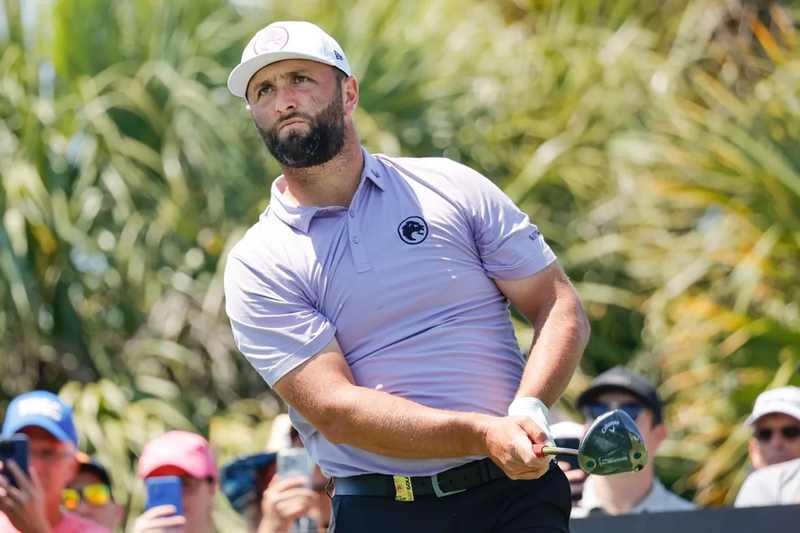
The $350 million U-turn
Rahm's LIV story began with a reversal that damaged his standing with fans. When the league launched in 2022 he publicly declared his fealty to the PGA Tour and insisted he did not need the money — then in December 2023 he signed a multiyear deal reported at $300-350 million and unveiled the move wearing a LIV letterman jacket. The timing could hardly have been worse: the PGA Tour and the PIF were in the middle of framework-agreement talks, and Rahm's defection reignited the sport's civil war at the exact moment a truce seemed possible.
Three titles, one problem
On the course, Rahm dominated the league he is now leaving — three consecutive individual titles, four wins, and $105,645,125 in event earnings, the only player to clear $100 million in LIV prize money. But the majors told a different story: 11 major starts in LIV colors produced four top-10s, no wins, and two missed cuts. In his final 12 major starts before joining, he had seven top-10s, zero missed cuts, and two major championships — the 2021 U.S. Open and the 2023 Masters. The numbers suggest what critics argued all along: 54-hole, no-cut exhibition golf does not sharpen a player for the hardest tests.
The money leaves first
The PIF's April announcement that it would pull funding after the 2026 season forced LIV into Chapter 11 last month. This week LIV and BC Partners unveiled a restructuring support agreement: a $300 million investment, a shortened schedule, smaller purses, and a 52.5 percent equity share for players — with the commitment deadline pushed to October 25. Note the symmetry: the rescue package for the entire league is smaller than the signing bonus paid to one player three years ago. Rahm was listed as LIV's largest individual creditor, owed more than $100 million. He is not the only departure: Brooks Koepka used an early rejoin clause to return to the PGA Tour orbit earlier this year — a clause Rahm also held but declined — Patrick Reed left in recent months, and Sergio Garcia was just granted a release by the same New Jersey bankruptcy court. Cam Smith, Joaquin Niemann, and Tyrrell Hatton have all been weighing their futures.
Who benefits, who loses
The winners start with the PGA Tour, which may soon welcome back a generational talent and can sell reunification as the market's verdict rather than a negotiated surrender — though the Tour declined to comment on Rahm's situation while he was under LIV contract, and any return would likely come with fines or conditions under the Koepka precedent. The DP World Tour is the probable waystation: Rahm withdrew from this week's Spanish Open for the birth of his fourth child, but a year on the European circuit is the natural bridge home. The losers start with LIV itself and BC Partners, whose recruitment pitch just lost its marquee asset — every remaining player now negotiates against the knowledge that the best of them walked. Bryson DeChambeau, LIV's other great draw, is left carrying a league alone. And Rahm himself takes a short-term financial hit: no more guaranteed LIV money, smaller purses wherever he lands, and a creditor's uncertain recovery in bankruptcy court. The critics' case deserves airtime too: Rahm took generational wealth from a project dogged by sportswashing criticism, then exited the moment the money dried up. That sequence will follow him, fairly or not, into every press conference for a year.
Data context: the arithmetic of a collapse
Put the figures side by side and the story tells itself. One player's 2023 signing bonus (~$350M) exceeds the entire 2026 rescue investment ($300M). The league asks players to accept 52.5% equity in LIV 2.0 — to buy into the thing they were once paid nine figures to join. Rahm's major record: before LIV, a 58% top-10 rate with no missed cuts across 12 starts; during LIV, 36% with two missed cuts across 11. Correlation is not proof of causation — form, age, and fatherhood all matter — but the direction is unambiguous, and it is the number Rahm's camp will have stared at hardest. Deadlines now compress everything: October 15 for the separation agreement, October 25 for players to commit to LIV 2.0, November 5 in the court filings. Three dates, one league's future.
What happens next
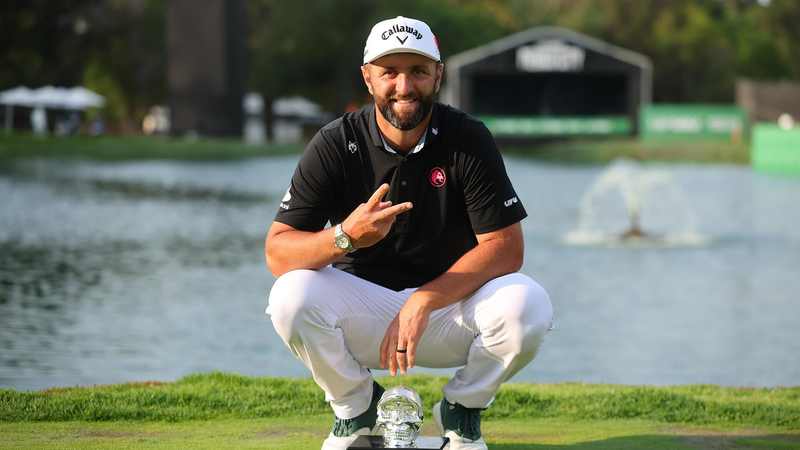
The road home runs through Europe
The Koepka precedent is the template: use the DP World Tour as the bridge, negotiate re-entry terms with the PGA Tour, absorb whatever penalties protect the incumbent circuit's leverage. Rahm's Spanish base and Ryder Cup eligibility make the European route natural — and Europe's Ryder Cup team would welcome its anchor back with open arms.
LIV 2.0 without its sun
A player-owned, team-focused league built around DeChambeau, Smith, and Niemann is conceivable; a global rival to the PGA Tour without Rahm is not. Watch the October 25 commitment deadline: every additional refusal compounds the signal Rahm just sent.
The courtroom epilogue
The separation agreement will decide how much of the $100M+ creditor claim Rahm actually recovers and what, if anything, constrains where he plays next. Bankruptcy courts have a way of converting sporting drama into payment schedules.
Sources
- The Times, “Jon Rahm quits LIV Golf in serious blow to rebel tour's revival plan”
- Golf Channel, “Jon Rahm's lawyer says client will not return to LIV Golf”
- Golf Digest, “Jon Rahm to leave LIV Golf, dealing massive blow to league's future”
- USA Today, “Jon Rahm rejects LIV Golf 2.0 in bombshell bankruptcy court revelation”
- theScore, “Rahm done with LIV Golf”
Allegations and figures attributed to court statements and outlet reporting; the separation agreement is not yet finalized and LIV Golf's restructuring remains subject to bankruptcy court approval.