Pranavi Urs Asian Games gold
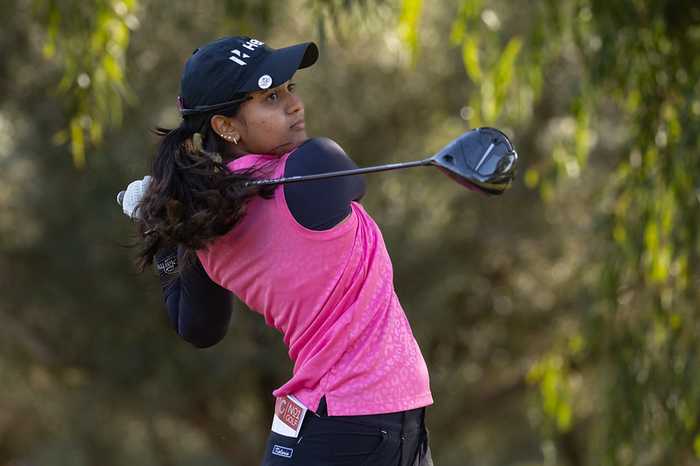
KASUGAI, Japan — The Pranavi Urs Asian Games gold was won twice on Saturday, October 3, 2026: first across the opening three rounds that gave her a three-shot cushion, and then again after a triple bogey at the third hole erased it. The 23-year-old from Mysuru recovered with birdies at the sixth, 10th and 13th, made the pars she needed down the closing stretch and finished the four-day individual stroke-play event at 15-under 265. Her even-par 70 left her one stroke clear and made her the first Indian woman to win individual golf gold at an Asian Games.
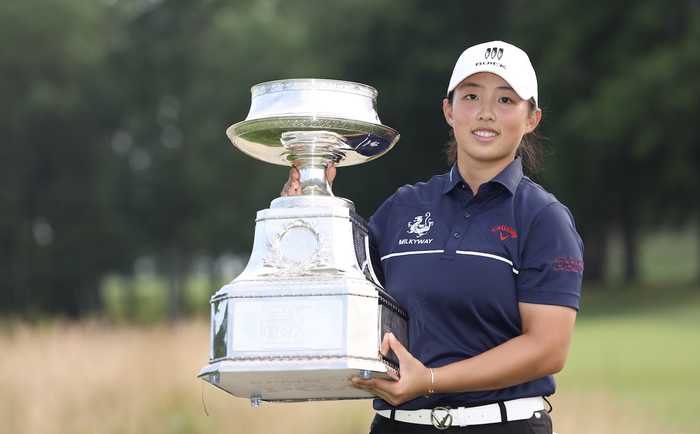
China's Yin Ruoning and Singapore's Shannon Xuan Yin Tan tied for second at 14-under 266. Yin, a six-time LPGA winner and the 2023 Women's PGA Championship major champion, took silver after beating Tan in a playoff. That pedigree sharpens the result: Urs did not merely survive the final round. She protected one shot against a major champion who knew exactly how to close.
The individual victory also carried India to women's team silver. Urs, Aditi Ashok and Diksha Dagar combined for 14-under 546 under the format that counted the best two scores each round. China won at 22-under 538. The eight-shot team gap was clear; so was the Indian breakthrough. It was the country's first Asian Games medal in women's team golf.
Pranavi Urs triple bogey comeback: the final round, hole by hole
The third hole erased the margin, not the plan
Urs began the day three ahead, the sort of advantage that invites a conservative reading of the course. The third hole changed the arithmetic immediately. A triple bogey costs three shots against par; in one entry on the card, her overnight lead was gone. In stroke play there is no set to reset, no quarter to expire and no opponent's error that restores a point. Every shot stays in the total.
The revealing part is what did not follow. Urs did not compound the damage by chasing an instant correction. She reached the sixth and made birdie, the first evidence that the swing and decision-making had survived the shock. That birdie did not settle the tournament, but it re-established a score-building rhythm before the turn.
Birdies at 10 and 13 rebuilt control
At the 10th, Urs made another birdie and moved the contest back toward her terms. The 13th supplied the third. Together, the birdies at six, 10 and 13 canceled the triple bogey mathematically. More important, they restored agency: instead of waiting for Yin or Tan to falter, Urs made enough of her own chances to retake the lead.
The final holes asked a different question. With the score at 15-under and two pursuers one behind, attacking for another birdie carried risk. Urs instead holed crucial par putts, including at the 18th. The final-round 70 looks ordinary beside the low totals accumulated earlier in the week. Under pressure, it was exactly sufficient — a round that absorbed a seven, found three birdies and refused another leak.

What Pranavi Urs 15-under 265 means
Fifteen under across 72 holes is an average of 3.75 strokes below par per round on the par-70 East Course. Urs opened the week by placing herself close enough to contend, then produced the scoring that put her ahead. By Sunday morning's final round, the target was no longer abstract: protect three shots against an international field for 18 holes.
The one-stroke margin matters more than it first appears. Yin's résumé includes six LPGA victories and a major championship; a player of that level makes any late mistake expensive. Tan also reached 14-under, which meant the pressure was not attached to one match-up alone. Urs had to finish ahead of two players, with no playoff safety net if either found one more shot.
The 15-under total also resists a simplistic story about one heroic par at the last. Golf tournaments are won by accumulated advantage. The opening three rounds created a buffer large enough to survive the worst hole of Urs's final day. Her comeback then prevented that buffer from becoming merely a story about what might have been. Both phases — low scoring and damage control — belong in the explanation.
Yin Ruoning, Pranavi Urs and a breach in expected dominance
China still won the women's team event by eight shots, and Yin still took individual silver. It would be careless to turn one result into proof that the regional order has been reversed. But the individual leaderboard did puncture an expectation: the strongest program and the most decorated player did not automatically own the top step.
That is particularly meaningful because India did not need an off-day from its rivals to manufacture a tie. Urs finished at 15-under; Yin and Tan were 14-under. The gold was earned by the only player who finished the tournament with that number. In a sport where professional pathways, coaching access and international schedules can reinforce existing advantages, a continental title gives Indian golf a piece of evidence that investment committees and young players can use.
India golf Asian Games history, from 1982 to 2026
New Delhi 1982 established the first benchmark
India's first Asian Games golf titles arrived at home in New Delhi in 1982. Lakshman Singh won the men's individual gold and India also took the men's team title. Those two victories established a high-water mark before professional tours and Olympic pathways reshaped the sport's international landscape.
Shiv Kapur in 2002, then a 24-year wait
Shiv Kapur won the men's individual title at Busan in 2002. No Indian golfer returned to the top step for the next 24 years. Urs's victory is therefore India's fourth Asian Games golf title overall, but the first in a generation and the first won by an Indian woman.
Aditi Ashok, Diksha Dagar and the Hangzhou bridge
Aditi Ashok delivered India's first women's individual golf medal when she took silver at Hangzhou 2023. Urs finished fourth there, close enough to understand both the scale of the opportunity and the finality of missing the podium. At Aichi-Nagoya, Ashok finished 14th at 2-over 282 after a final-round 67, while Diksha Dagar finished joint 23rd at 12-over after a closing 77.
Those individual positions do not diminish the team medal. The format rewarded collective depth by counting two scores per round. Urs supplied the championship total; Ashok's closing 67 helped protect silver; Dagar's presence completed a three-player unit capable of absorbing variation across four days. The result joined individual brilliance to institutional progress.
India women's golf team silver: who benefits
Urs benefits immediately in professional terms. A continental title strengthens her case for sponsorship, tournament invitations and resources that can make a global schedule less financially punishing. Yet the larger value belongs to the system around her. Coaches can point to a champion developed from Mysuru. Sponsors can see an Indian women's golf property with two recent individual medalists and a team podium. Federations can argue for deeper travel, sports-science and junior-development budgets.
Girls entering golf gain something less measurable but just as important: a reference point that is Indian, female and current. Ashok's 2023 silver showed the event could yield a medal. Urs's 2026 gold moved the ceiling. Inspiration alone does not pay green fees or build public practice facilities, but it can change which athletes families support and which programs sponsors consider investable.
The result should also sharpen scrutiny. A medal is not a substitute for a pipeline. India's task is to make elite coaching, competitive rounds and international exposure available to more players before they become famous, rather than concentrating support after a breakthrough. The proper institutional response to Urs is not simply celebration. It is replication.
Asian Games 2026 golf results in the wider medal day
Golf was part of a fast-moving penultimate day. Seventeen-year-old Kumkum Mohod won women's individual recurve archery gold after beating South Korea's Oh Yejin in a shoot-off. At the reported snapshot, India's Asian Games 2026 medal tally stood at about 79: 18 gold, 26 silver and 35 bronze. Later results were still capable of changing the running count.
The pairing of Mohod and Urs is significant. Both won first-ever Indian women's titles in their events; both did so against established Asian powers; both needed precision under elimination-level pressure. Read our full analysis of Kumkum Mohod's shoot-off gold. India later added men's cricket gold against Pakistan, covered in our India-Pakistan Asian Games cricket final report.
From Kasugai Country Club to LA 2028
Golf qualification for the Los Angeles Olympics will be decided through the sport's global ranking pathway, not by this Asian Games result alone. Urs has therefore gained momentum, visibility and evidence, not an automatic Olympic place. The next step is converting a continental peak into sustained professional results strong enough to move her through that ranking system.
The ingredients are visible. She scored low enough over four rounds to lead an international field; she recovered from a severe final-round mistake; she closed out a one-shot victory against a major champion. Those are transferable skills. The challenge is repeatability across different courses, travel schedules and the deeper fields of professional golf.
For Indian golf, LA 2028 is the horizon rather than the only measure. A first women's gold can help widen the junior base, make sponsors look beyond a single star and give emerging players a more ambitious model. If those effects last, the most important shot may not be the par putt Urs made on 18. It may be the first shot taken by a girl who saw the medal and decided the game belonged to her too.
Sources
- The Bridge with PTI inputs, October 3, 2026 — final-round sequence, scores, team format and historical context.
- Mint, October 3, 2026 — individual gold, 15-under total, comeback and team silver.
- Mint, October 3, 2026 — women's team result and time-stamped India medal tally.
- ANI, October 3, 2026 — closing pars, pursuers and medal-day context.
- IANS, October 1, 2026 — Kasugai venue, early-round scores and team-scoring format.
Reporting cutoff: October 3, 2026 at 4:05 a.m. PDT. The medal tally is a time-stamped snapshot, not the final Asian Games count. Forward-looking assessments about sponsorship, development and LA 2028 are Signal Post News analysis.