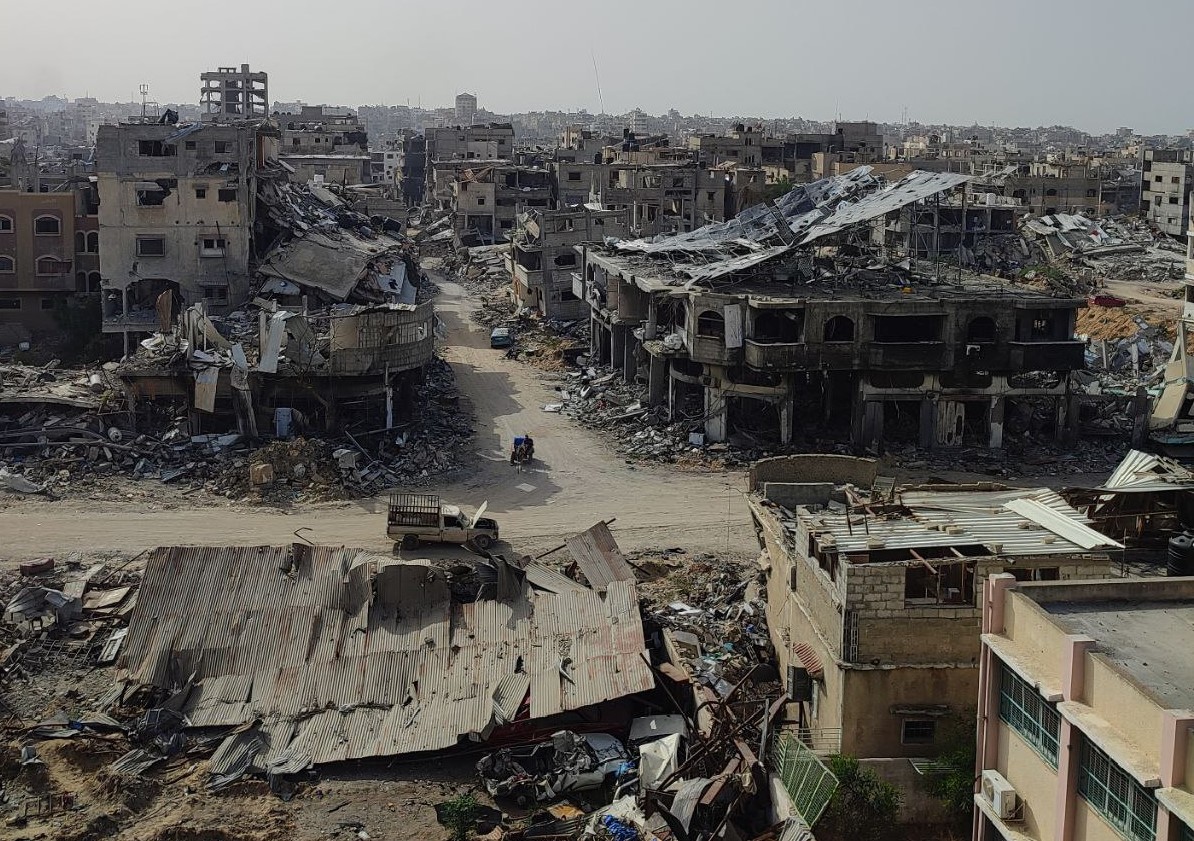
An Israeli airstrike hit a vehicle in western Khan Younis on Wednesday, September 23, killing two men whom medics named as Osama Abu Khater and Muhammad Abu Alwan and wounding two other people. Prime Minister Benjamin Netanyahu and Defense Minister Israel Katz then said Abu Alwan headed Hamas’s finance department and described the attack as a joint operation by the Israel Defense Forces and the Israel Security Agency, also known as Shin Bet.
Later Wednesday, Palestinian health officials reported that two more people were killed in separate Israeli airstrikes in Gaza City and Deir Al-Balah in central Gaza. That brought the day’s reported death toll to at least four. The Israeli military did not immediately comment on those later strikes. Hamas had not commented on Israel’s identification of Abu Alwan by the reporting cutoff.
The distinction is essential: the deaths and locations were reported by medics and Palestinian health officials, while Abu Alwan’s alleged Hamas role is an Israeli government claim. Public reporting available at publication did not include independent evidence of his position in the organization.
Why this matters
The operation is a significant escalation in how Israel is presenting its ceasefire-era campaign. Previous strikes have often been described as responses to immediate threats or attacks on individual militants. Naming a finance-department chief signals a broader objective: preventing Hamas from rebuilding the networks that move money, pay personnel and restore operational capacity, not merely removing fighters from the battlefield.
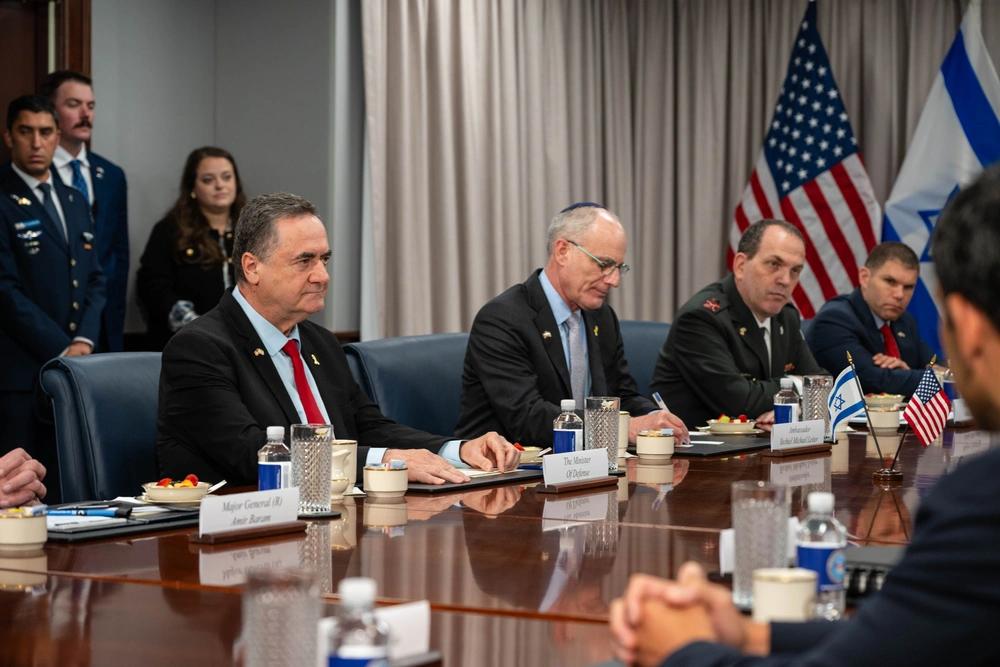
Netanyahu and Katz made that purpose explicit. Their joint statement praised the IDF and Shin Bet for what it called a “precise operation” and “offensive activity to thwart our enemies,” then declared: “We will not allow Hamas to rebuild its strength, and we will not stop until Hamas no longer exists in Gaza.”
That language narrows the space for treating the truce as a quiet consolidation period. If Israel’s objective remains the disappearance of Hamas from Gaza, and if it reserves the right to strike the organization’s financial as well as military apparatus, then the ceasefire is functioning less as a halt to conflict than as a lower-intensity framework in which lethal operations continue.
What happened Wednesday
The day began with the vehicle strike in western Khan Younis, a southern Gaza city where Israeli forces have repeatedly operated during the war. Medics named Abu Khater and Abu Alwan as the two men killed and said two others were wounded. An earlier version of the military account said a militant had been targeted without naming him. Read our earlier report on the Khan Younis vehicle strike for what was known before Israel identified Abu Alwan.
The Netanyahu-Katz statement subsequently supplied a name and alleged role. It called Abu Alwan a senior Hamas finance official and, in other reports of the statement, the head of Hamas’s finance department. The government did not publish the evidence behind that designation in the reports reviewed for this article. Hamas did not immediately confirm or deny the claim.
Two more fatal strikes were reported later in the day, one in Gaza City and one in Deir Al-Balah. Palestinian health officials said each killed one person. Reuters reported that the Israeli military had not immediately commented on those attacks. With limited information about the targets and circumstances, it is not possible to assess who was struck or why.
Background: a ceasefire that stopped neither the bombs nor the counting
The United States brokered the ceasefire agreed in October 2025. Its longer-term promise included reconstruction, but the central political bargain remains unfinished. Negotiators have not agreed on terms for Hamas to disarm or for Israeli troops to withdraw, leaving each side to accuse the other of violating the agreement while airstrikes and other lethal incidents continue.
Palestinian authorities say more than 73,000 people have been killed in Israel’s assault since October 2023, which began after Hamas-led fighters killed about 1,200 people in southern Israel. Gaza health officials say at least 1,400 Palestinians, mostly civilians, have been killed since the ceasefire took effect. The Israeli military says four Israeli soldiers have been killed during that period.
Those figures come from parties to the conflict or authorities operating under them. Gaza’s Health Ministry operates under Hamas authority and does not distinguish civilians from combatants in its aggregate totals. Israel disputes Palestinian casualty accounting and identifies people it says were militants. International reporting therefore attributes the numbers and treats precise classifications as contested even as the overall scale of death is clear.
The diplomatic alternative is laid out in the eight-nation Gaza road map, which links aid, withdrawal, an international stabilization force, Palestinian administration and reconstruction. King Abdullah II and Recep Tayyip Erdoğan also used UN General Assembly speeches to intensify pressure on Israel; our analysis of their Gaza statements examines the widening gap between diplomatic demands and events on the ground.
Who gains and who loses
Israel: A successful strike on a senior finance official would let Israel impose costs on Hamas without reopening a large ground campaign. It also signals to mediators that Jerusalem considers Hamas’s institutional rebuilding—not only imminent battlefield threats—a legitimate target. The operational gain depends on whether Israel’s description of Abu Alwan’s role is accurate and whether his removal actually disrupts financial flows.
Hamas: The absence of an immediate response allows the group to withhold confirmation and limit Israel’s information advantage. But if Abu Alwan held the role Israel claims, his loss could disrupt relationships and knowledge that are harder to replace than cash itself. Financial networks rely on trusted people, intermediaries and procedures; removing a manager may matter even when the underlying sources of funds survive.
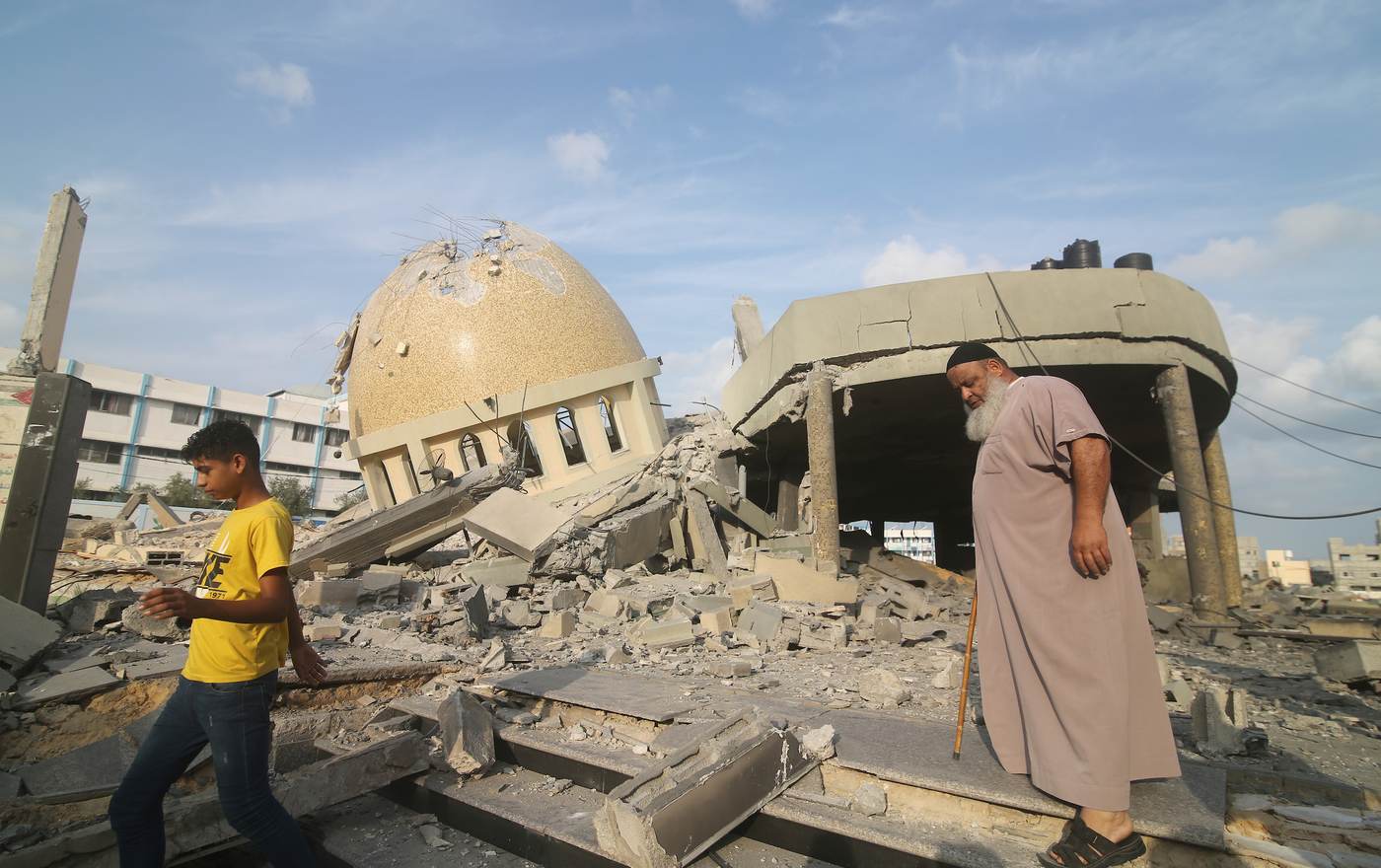
Gaza’s civilians: They lose most clearly. Four reported deaths in one day add to a post-ceasefire toll already above 1,400, while repeated strikes keep movement dangerous and reconstruction uncertain. Even a narrowly targeted operation can impose wider costs through fear, road closures, damaged property and delayed aid.
Mediators and reconstruction planners: Every new strike makes sequencing harder. Donors are unlikely to commit at the scale Gaza requires while military action can destroy rebuilt infrastructure, and neither disarmament nor withdrawal is likely to advance when each side expects the other to exploit restraint.
What the numbers actually mean
The rounded totals provide perspective, not precision. From October 11, 2025, to September 23, 2026, a figure of 1,400 deaths works out to roughly four reported Palestinian deaths per day. By comparison, subtracting that post-ceasefire total from the more than 73,000 deaths reported since October 2023 produces a rough pre-ceasefire pace near 97 per day. On those rounded figures, the rate fell by more than 95% after the truce.
That is a major reduction in lethal intensity. It is also not zero. Wednesday’s four reported deaths are close to the post-ceasefire daily average, showing how a single day can look ordinary statistically while remaining devastating for the people involved. Four is about 0.3% of the reported post-ceasefire total; repeated often enough, incidents of that size produce the larger number.
These calculations are not a substitute for verified case-by-case records. They use reported aggregate totals, rounded dates and figures that do not consistently separate combatants from civilians. They are best read as an order-of-magnitude comparison: the ceasefire sharply reduced the pace of killing but did not end it.
What happens next
Continued strikes framed as enforcement: The most immediate path is more of the current pattern. Israel carries out limited operations against people or infrastructure it says are tied to Hamas rebuilding; Palestinian officials report additional casualties; both sides accuse the other of violating the agreement while preserving the ceasefire’s formal structure.
Renewed pressure on disarmament talks: Mediators could use the strike and Israel’s rhetoric to push for verifiable rules around Hamas financing, weapons and Israeli military action. That would require reciprocal steps and monitoring credible to both sides—precisely what has been missing from the stalled second phase.
A wider breakdown: A high-casualty strike, an attack on Israeli forces or a political decision to broaden operations could collapse the remaining restraint. Netanyahu and Katz’s vow does not prove that such a decision has been made, but it establishes a maximalist endpoint that can justify continued escalation.
The confirmed facts stop short of predicting which path will prevail. Israel says it killed a Hamas finance chief; Hamas has not responded; Palestinian health officials report at least four deaths on Wednesday. What comes next depends on whether the parties and mediators treat this as another contained violation—or evidence that containment itself is failing.
Sources
- Reuters, September 23, 2026: Khan Younis strike, reported casualties, ceasefire context and Israel’s identification of Abu Alwan
- Business Day / Reuters, September 23, 2026: four reported deaths in Wednesday’s Gaza strikes and the Netanyahu-Katz statement
- JFeed, September 23, 2026: wording of the Netanyahu-Katz statement and Abu Alwan’s alleged finance role
Reporting cutoff: September 23, 2026 at 6:40 a.m. PDT. Abu Alwan’s alleged position is attributed to the Israeli government and had not been independently verified; Hamas had not immediately commented. Casualty totals are attributed to Palestinian or Gaza health authorities. All photographs are clearly identified file images and do not depict Wednesday’s strike.