Hamas commander killed in Gaza
Hamas commander killed in GazaIzz al-Din Al-BeikGaza ceasefire violationsNetanyahu Hamas commander killednorthern Gaza Hamas armed wingGaza City Nasr airstrikeQassam Brigades northern GazaIsrael Hamas truce collapsingGaza death toll since ceasefireTrump Gaza plan disarmament deadlock
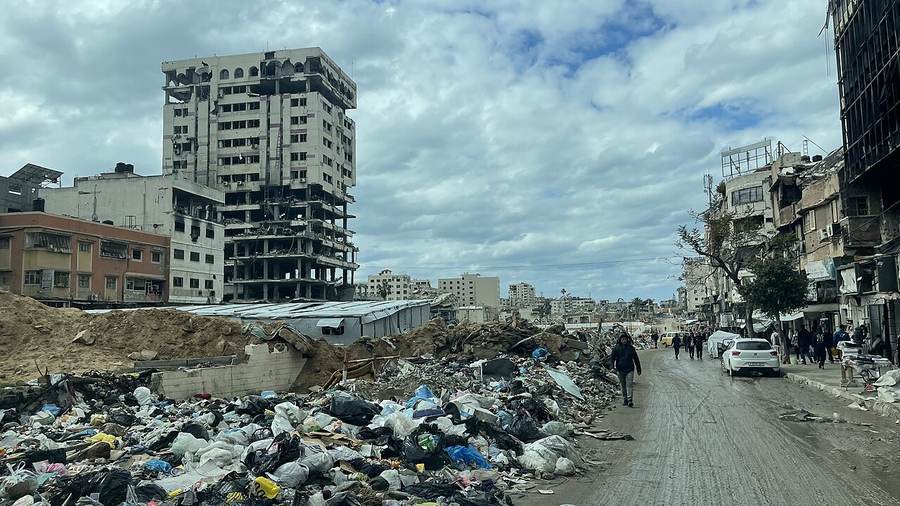
GAZA CITY — Israel killed Izz al-Din Al-Beik, the commander of Hamas' armed wing in the northern Gaza Strip, in a dawn airstrike on an apartment building in Gaza City's Nasr neighbourhood on Tuesday, September 29, Israeli officials, Hamas and Palestinian medics said. The unusually broad confirmation — from the government that ordered the strike and the organisation that lost the commander — leaves less dispute over the death than over what it means for a ceasefire already being tested by repeated attacks.
Prime Minister Benjamin Netanyahu and Defence Minister Israel Katz said in a joint statement posted on X that the military had targeted and killed Al-Beik. They accused him of helping plan attacks and recruit militants. Hamas separately confirmed his death. Medics said another person later died from wounds sustained in the same attack, according to Reuters.
What happened in the Gaza City Nasr airstrike
The strike hit around dawn, when an apartment building can contain both the intended target and families who have no role in the conflict. Israeli officials described Al-Beik as the target but did not immediately publish a full operational account identifying the munition, the intelligence used or the precautions taken. Palestinian medics described the building and the casualties; Reuters reported that Hamas sources also confirmed Al-Beik was there.
That distinction matters. Confirmation that a commander was present does not by itself settle whether the attack complied with international humanitarian law, which turns on military necessity, distinction, proportionality and feasible precautions. Nor does the death of another person establish that the strike was unlawful without more information about that person's identity and the anticipated military advantage. The available record supports a firm conclusion about the target's death, but not every legal or tactical claim surrounding it.
Who was Izz al-Din Al-Beik?
Al-Beik led the Qassam Brigades in northern Gaza, the part of the Hamas military structure responsible for territory that includes Gaza City and the approaches to Israel's border. Hamas sources said he had succeeded Ahmed al-Ghandour, a senior commander killed earlier in the war. That succession places Al-Beik inside the organisation's attempt to rebuild regional command after repeated Israeli strikes on its senior ranks.
For Israel, removing the head of the northern Gaza Hamas armed wing fits a long-running strategy: identify commanders, disrupt replacement chains and force surviving leaders to spend more time protecting themselves than organising attacks. For Hamas, every replacement demonstrates institutional endurance, but every confirmed loss also exposes how difficult it is to reconstruct command networks under persistent surveillance.
Why this matters: a targeted killing during a nominal ceasefire
The central significance is not simply that a commander died. It is that Israel carried out another targeted killing during a ceasefire that has never fully stopped the violence. A truce can survive isolated violations when both sides treat them as exceptions. It becomes something else when strikes, counter-claims and casualty reports form a recurring pattern.
Israel says Hamas has been rearming and launching attacks in breach of the October 2025 agreement. Hamas denies trying to rebuild its arsenal or mount new attacks and says Israel is undermining the deal. Both claims are consequential and contested. What can be observed is the operational trend: Israel says it has killed at least 20 Hamas figures this month, including people it links to the October 7, 2023 attacks or to holding Israeli hostages. That tempo looks less like emergency enforcement around the edge of a settlement and more like an active decapitation campaign conducted beneath the language of truce.
Decapitation strategies can produce short-term disruption without delivering political resolution. Regional commanders are replaced; intelligence networks adapt; civilian harm can deepen recruitment grievances. The strike may reduce Hamas' capacity in northern Gaza in the near term, but it also illustrates why a military tactic cannot substitute for an agreed postwar order.
Context: October 2023 to the October 2025 ceasefire
The war began after Hamas-led fighters killed about 1,200 people in southern Israel on October 7, 2023, according to Israeli figures, and took hostages into Gaza. Israel's campaign has since killed more than 73,000 Palestinians, according to Palestinian authorities. Those figures come from parties to the conflict and carry different political arguments, but they describe the scale against which every new strike is judged.
A U.S.-brokered ceasefire agreed in October 2025 was supposed to move from reduced fighting toward reconstruction and a durable security arrangement. Instead, negotiators remain deadlocked over the sequence and enforcement of two core demands: Hamas disarmament and Israeli troop withdrawal. Airstrikes have continued while reconstruction has lagged.
President Donald Trump's comprehensive Gaza plan, backed by eight nations, offers a broader roadmap, but the same sequencing problem sits at its centre. The United Arab Emirates used the U.N. General Assembly this week to press for full implementation, including Israeli withdrawal and Hamas disarmament. Each side treats the other's step as the necessary first move; neither trusts that moving first will be reciprocated.
Multiple angles: who benefits, who loses
Israel's government gains a tactical and political result. Netanyahu and Katz can present Al-Beik's death as proof that senior Hamas figures remain reachable and that violations will carry a price. Critics in Israel may still ask whether repeated targeted killings advance the return of any remaining hostages or a sustainable exit strategy, rather than extending an open-ended campaign.
Hamas loses a regional commander but retains the argument that the truce is being hollowed out. The group can use the strike to support its accusation that Israel is sabotaging the agreement. Its critics counter that Hamas cannot demand the protections of a ceasefire while, as Israel alleges, rebuilding military networks. Hamas denies that allegation.
Palestinian civilians and mediators bear the widest costs. Every strike inside a residential area adds danger for families and further complicates aid, reconstruction and governance. Egypt, Qatar, the United States and regional governments face a shrinking middle ground: pressing Israel to limit strikes while demanding that Hamas accept disarmament conditions it has resisted.
What the numbers imply about the Gaza death toll since ceasefire
Gaza health officials say at least 1,400 Palestinians have been killed since the ceasefire took effect. The Israeli military says four Israeli soldiers have been killed over the same period. These figures measure different populations and come from different authorities, so they should not be treated as a direct battlefield ratio. They do, however, show that the agreement has not produced an absence of lethal force.
The post-ceasefire Palestinian toll is roughly 2 percent of the more than 73,000 deaths Palestinian authorities report since October 2023. That share may look small against the entire war, but it is large for a period formally described as a ceasefire. Israel's claim of at least 20 Hamas figures killed in September adds a second trend line: targeted operations are accelerating, not winding down.
Together, the numbers point to ceasefire erosion. The agreement still has diplomatic value because neither side has formally abandoned it and negotiators continue to use it as the legal and political frame. On the ground, however, the distinction between “ceasefire enforcement” and resumed conflict is becoming harder to sustain.
What happens next
An escalation spiral: Hamas or another armed group could respond to Al-Beik's killing, prompting additional Israeli strikes and more civilian casualties. Repeated retaliation would make the ceasefire's label increasingly nominal.
A formal collapse: One side could declare the other in material breach and resume large-scale operations. That would end what remains of the restraint mechanism and likely freeze reconstruction talks.
Renewed disarmament talks: Mediators could use the strike and this month's casualty trend as leverage for a sequenced deal — verified limits on Hamas' weapons and recruitment paired with phased Israeli withdrawal, monitoring and reconstruction guarantees. This is the least dramatic scenario and the most difficult, because it requires both sides to accept outside verification and political risk.
The decisive question is no longer whether individual strikes violate a perfectly calm ceasefire; there is no such calm. It is whether the parties and mediators still regard the October 2025 agreement as a path out of war, or merely as language used to manage a conflict that has already resumed in slow motion.
Sources and reporting notes
- Reuters: Israel kills senior Hamas commander in Gaza, officials say — reporting by Nidal al-Mughrabi, with additional reporting by Maayan Lubell in Jerusalem; includes the Netanyahu–Katz joint statement, Hamas' confirmation and accounts from medics.
- Wikimedia Commons: photographs by Jaber Jehad Badwen — source and reuse record for the Gaza City file image.
Source note: Claims by Israel and Hamas are attributed to the side making them. Casualty totals from Gaza health officials, Palestinian authorities and the Israeli military are identified by source and may change as records are updated.
Tuesday update: Jabalia clinic strike raises the day's toll
Updated September 29, 2026
Later on Tuesday, an Israeli airstrike near a medical clinic in the Jabalia refugee camp killed one person, taking the day's death toll in Gaza to at least three, medics said. The Israeli military said it had targeted a militant in the area. The strike followed the dawn airstrike in Gaza City's Nasr neighbourhood that killed Hamas's northern Gaza commander Izz al-Din Al-Beik and a second person who later died of wounds.
Hamas issued a statement confirming Beik's killing and saying he was one of those who led the October 7, 2023 attack on Israel that precipitated the Gaza war — a rare explicit acknowledgment of a commander's role in the cross-border assault. Israel says it has killed at least 20 Hamas figures this month and accuses Hamas of rearming in violation of the October ceasefire; Hamas denies trying to carry out attacks or rebuild its arsenal and accuses Israel of undermining the Gaza deal. Reporting by Reuters.