Iran mediate Saudi Yemen conflict became the diplomatic headline of the Baghdad weekend on Saturday, when Iranian Foreign Minister Abbas Araghchi told the Organisation of Islamic Cooperation that Tehran supports an inclusive political process to end the war between Saudi Arabia and Yemen's Houthi movement — and offered Iran's own help to get one started.
The Mediator's Problem: Iran Offers Peace Talks for a War It Is Accused of Feeding
Track it live: Live war tracker · Middle East tracker · Iran war tracker
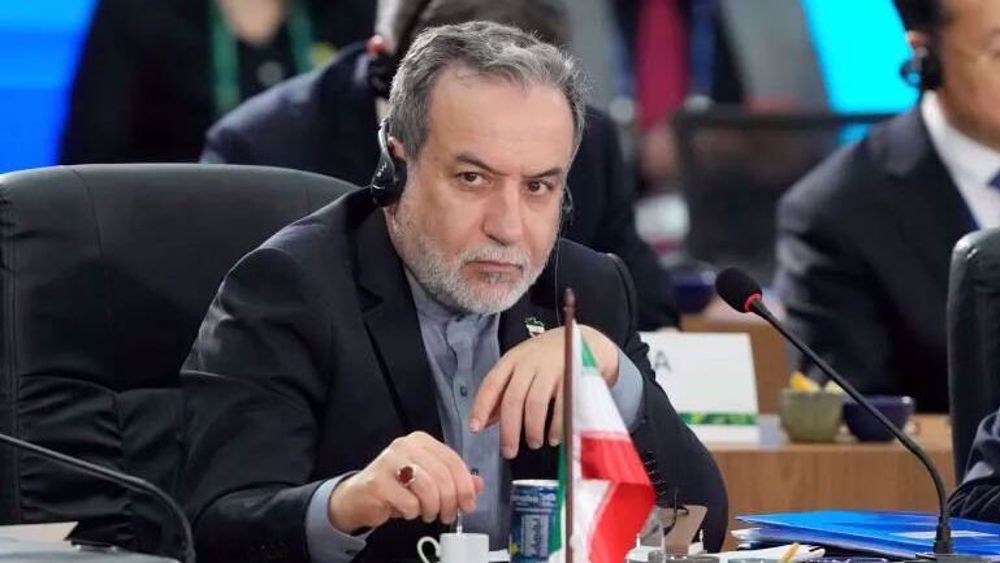
Iranian Foreign Minister Abbas Araghchi said on Saturday that Tehran supports a political settlement to the conflict between Saudi Arabia and Yemen's Iran-backed Houthi rebels, telling the 52nd session of the Council of Foreign Ministers of the Organisation of Islamic Cooperation (OIC), meeting in Baghdad, that "we support an inclusive and comprehensive political process as the only practical and sustainable way to resolve the issue," according to AFP's reporting of his speech.
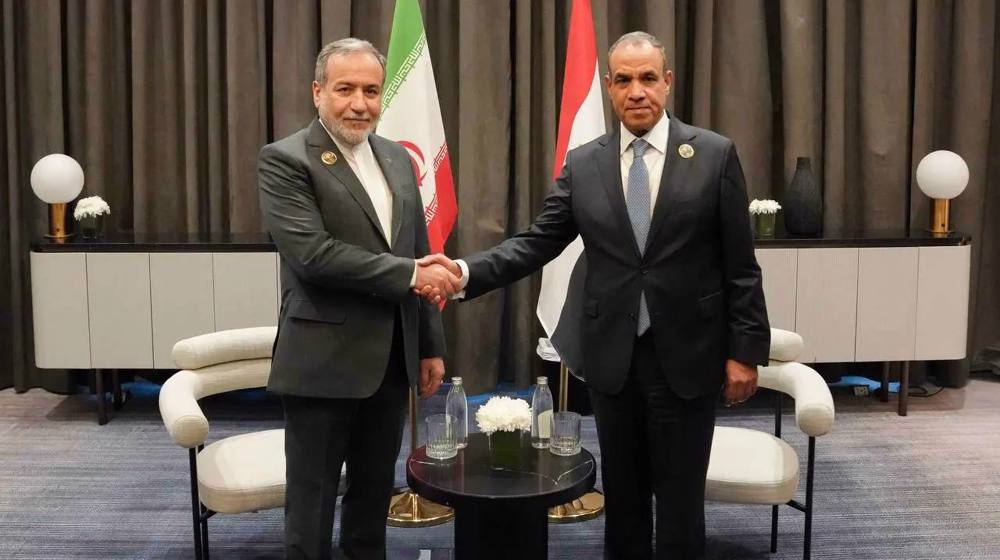
He went further in private. In separate meetings on the sidelines with Egyptian Foreign Minister Badr Abdelatty and his Libyan counterpart, Araghchi said Tehran was ready to provide any assistance to halt the conflict between Riyadh and Sana'a, and argued that twelve years of tensions and fighting had demonstrated that there was no military solution to the Yemen crisis, according to a statement by Iran's Foreign Ministry reported by Press TV. In a meeting with the OIC's new secretary-general, Ismail Ould Cheikh Ahmed, he repeated that Iran is willing to help create opportunities for dialogue between Saudi Arabia and Yemen, and — in a separate summary of his remarks — that Iran is ready to help facilitate dialogue based on a previously agreed peace roadmap.
No Saudi response to the offer was reported in the coverage reviewed for this article, and Araghchi named no format, venue or timetable for any mediation. What he offered in Baghdad was a posture, not a process: Iran presenting itself, in front of the Islamic world's foreign ministers, as part of the solution to the region's longest war.
What Araghchi actually said in Baghdad
The Yemen offer: assistance, not a plan
The Yemen remarks came in two registers. In his formal address, the language was multilateral and general — support for an "inclusive and comprehensive political process." In his bilateral meetings, it became an offer of Iranian help, delivered not to the Saudis directly but to the foreign ministers of Egypt and Libya, two Arab states with their own channels to Riyadh. The distinction matters. A mediator normally needs the consent of both parties; Iran was, in effect, recruiting witnesses and intermediaries for an offer that its intended recipient has not publicly acknowledged.
Araghchi framed the offer around exhaustion: twelve years of conflict, in Tehran's telling, have proved that neither side can win the Yemen war militarily. That assessment is widely shared outside Iran as well — the war that began with the Houthi takeover of Sana'a and the Saudi-led intervention that followed has settled into a grinding stalemate punctuated by cross-border missile and drone campaigns, of which this week's attacks on Aden and Saudi airports, covered in our reporting on the second Aden airport attack and the Yanbu intercept, are only the latest round.
The Hormuz plan, restated: seven days, if Washington moves
Araghchi also used the Baghdad podium to restate — not launch — the proposal Signal Post News first covered in September, when Tehran conveyed it through Qatar: a concrete seven-day plan under which, if the necessary conditions are met, the Strait of Hormuz can be reopened and normal maritime passage restored within seven days. "The choice now rests with the United States," he said. The plan itself is analysed in our earlier article on Iran's seven-day Hormuz plan; what changed in Baghdad was the context around it.
He anchored the plan in the June 17 understanding between Iran and the United States reached in Islamabad, with Pakistan facilitating and Qatar supporting. After that memorandum, he said, maritime traffic through the strait recovered to about 60 percent of its pre-war level within two weeks — before implementation stalled. Iran has since held technical discussions with Oman on safe passage. Briefing Abdelatty, Araghchi accused Washington of repeatedly breaking its commitments, including, in Tehran's account, violating the Islamabad memorandum two weeks after it was signed — a claim the United States has not accepted, and one this article reports as Iran's position, not as established fact.
The condition for Washington: guarantees before talks
The third message was the hardest-edged. Iran, Araghchi told the session, does not accept coercion, threats or intimidation and will not relinquish its sovereign rights under pressure — but it remains ready for dialogue based on mutual respect and credible guarantees, according to Iran's state news agency IRNA. He said Tehran had negotiated in good faith over the past two years, but that diplomatic efforts were repeatedly followed by military attacks, creating deep mistrust about restarting negotiations without guarantees against a recurrence. On Hormuz, his formulation was blunt: "One cannot bomb a country, threaten its annihilation and impose a blockade, and then expect the security of navigation to return to normal."
Why this matters
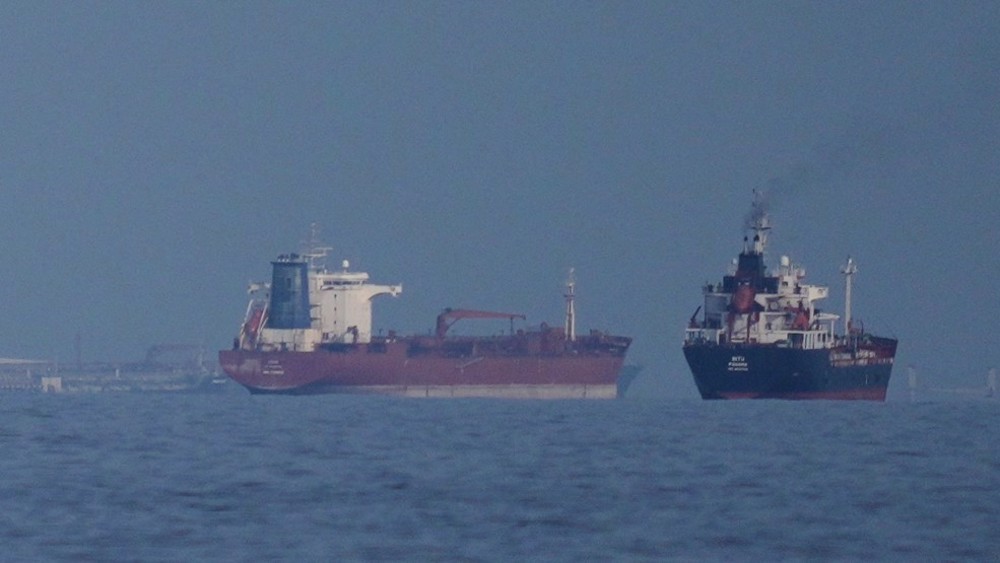
Diplomatic offers are cheap; their timing is information. Araghchi made this one on the same Saturday that Iran's Revolutionary Guards were claiming two supertankers had struck mines in the Strait of Hormuz — a claim with no independent confirmation, examined in our coverage of the Jubail tanker attacks and the documented shipping incidents around them — and in the same week that Egypt's president was rallying parliamentary support for defending Saudi Arabia, as we reported in the Egypt-Sisi story. Read together, Tehran is running pressure and diplomacy on parallel tracks: escalation at sea and over Yemen, conciliation in the conference hall.
That is not hypocrisy unique to Iran — it is how coercive diplomacy usually works — but it defines the credibility question hanging over the Baghdad offer. Iran is the Houthis' principal external backer. A mediator is supposed to be acceptable to both sides; a patron of one side offering to mediate is asking the other side to accept its patron as an honest broker. Analysts and Arab commentators made exactly that point in response coverage: Tehran's longstanding support for the Houthi movement complicates its credibility as a neutral mediator, even as its influence over the Houthis is precisely what could make its involvement useful. Both things are true at once, and the tension between them is the story.
The guarantees condition matters for a different reason. It converts the Hormuz file and the US-talks file into one negotiation: no safe shipping without a political settlement, and no political settlement without security guarantees for Iran. That linkage raises the price of reopening the strait — but it also gives Washington a single address for the whole package, which is sometimes how frozen conflicts begin to move.
Background: how the mediation offer got here
Iran and Saudi Arabia were regional rivals who broke relations in 2016 and spent years fighting by proxy across Yemen, Syria, Lebanon and Iraq. In 2023, in a deal brokered by China, they restored diplomatic ties — the rapprochement that made a Baghdad stage plausible: Iraq, which assumed the OIC's rotating presidency from Türkiye for this session, has repeatedly hosted Saudi-Iranian contacts precisely because it talks to both.
Yemen's war is older than the rapprochement and has outlasted every previous mediation format: UN envoys, Omani channels, direct Saudi-Houthi talks and a fragile truce that reduced front-line fighting without producing a settlement. The "previously agreed peace roadmap" Araghchi referenced is the product of those Omani-mediated Saudi-Houthi contacts — a staged plan involving a ceasefire, economic measures and an inclusive Yemeni political process. It has been agreed in outline and unimplemented in practice, and it was negotiated without Iran at the table. Tehran's Baghdad pitch is, in part, a bid to be written into a process from which it has so far been excluded.
The Hormuz strand has its own history on this site: the seven-day plan first surfaced in September, the Islamabad memorandum in June briefly restored roughly three-fifths of normal traffic on Araghchi's own figures, and the strait has since become the region's central pressure point, with Brent crude touching $110 this week for the first time since May.
The numbers, in context
Three figures from the Baghdad remarks deserve scrutiny rather than repetition. Twelve years is Tehran's count of the Yemen conflict — from the Houthi takeover of Sana'a in 2014, rather than from the Saudi-led intervention of 2015; either count makes it one of the longest wars in the region, and the humanitarian toll is not in dispute between the parties, only its apportionment. Sixty percent is Araghchi's figure for how far Hormuz traffic recovered under the Islamabad memorandum — an Iranian official's number, offered to argue that agreements with Tehran work when implemented; shipping data published at the time showed a substantial but incomplete recovery, and transits today remain far below pre-war norms. And seven days is a political number, not a nautical one: reopening a mined and contested strait requires mine clearance, insurance markets willing to underwrite transit, and shipowners willing to sail — none of which a signature alone delivers in a week.
What happens next
Three tracks will show whether Baghdad was theatre or a beginning. First, Riyadh: a Saudi acknowledgment — even a noncommittal welcome of "all efforts" — would signal the offer is being processed rather than ignored; silence sustained over days is also an answer. Second, the OIC itself: Araghchi asked the secretariat to stay impartial and build trust among members, and Iraq's presidency gives Baghdad both the motive and the machinery to convene a Yemen contact format if one is wanted. Third, Washington: the seven-day plan's restatement, with the guarantees condition now attached publicly, sets up a US response as the next move — Araghchi said so explicitly. If Washington engages the plan, the technical channel with Oman is where a reopening would first become visible, in transit counts rather than communiqués.
The sceptical scenario is at least as plausible: that the offer was made for the Baghdad audience — Muslim-world foreign ministers Iran is courting while it is under blockade and sanctions pressure — and that its real product was the image of a reasonable Iran contrasted with an unreasonable America, on the weekend its Guards were claiming burning tankers. Both readings can be pursued by Tehran simultaneously, and probably are. What would separate them is a follow-up with names, dates and a venue. None was offered on Saturday.
Sources
AFP, October 17, 2026 (via Pakistan TV Middle East live coverage): Araghchi in Baghdad — Tehran backs an "inclusive and comprehensive political process" to resolve the Saudi-Houthi conflict. pakistantv.com
Press TV, October 17, 2026: "Araghchi offers Iran's assistance to end Saudi-Yemen conflict" — meetings with Egyptian and Libyan counterparts; Iranian Foreign Ministry statement; twelve years, no military solution. presstv.co.uk
Press TV, October 17, 2026: "Iran FM: 'Choice now rests with US' whether Hormuz traffic returns to normal" — the seven-day plan through Qatar, restated in Baghdad. presstv.co.uk
Tasnim News Agency, October 17, 2026: "Iran Offers 7-Day Plan to Reopen Hormuz" — full text of Araghchi's address to the 52nd OIC Council of Foreign Ministers. tasnimnews.ir
IRNA, October 17, 2026 (syndicated): Iran says renewed talks with the US require "credible guarantees" against new attacks. Al Jazeera English, October 17, 2026: reporting of Araghchi's Baghdad remarks on the seven-day proposal and the US decision.