Indonesia stocks plunge MSCI: the Jakarta Composite Index fell 11.1 percent on Friday, October 16, 2026 — its heaviest fall since early 1998 and its lowest level since 2020 — after index provider MSCI proposed stripping Indonesia of its emerging-market status and reclassifying the country's roughly $570 billion stock market as a Standalone Market, citing opaque shareholding structures, suspected coordinated trading and weak enforcement.
Jakarta / The worst day since 1998 — and this time the index itself is on trial
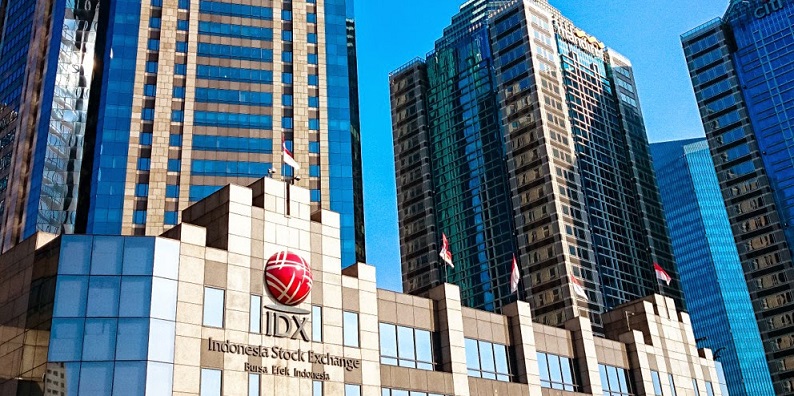
JAKARTA, Indonesia — Indonesia's stock market suffered its worst day in more than a quarter of a century on Friday, October 16, after MSCI — the index provider whose classifications steer trillions of dollars of global investment — proposed removing the country from its emerging-markets universe altogether. The Jakarta Composite Index closed down 11.1 percent, its heaviest fall since early 1998, during the Asian financial crisis, and its lowest level since 2020. The index had opened 8 percent lower, a drop steep enough to trigger a trading halt, and it never recovered. The fall extended a brutal year: the Composite is now down more than 40 percent year to date.
Track it live: Live stock market tracker
The trigger was not an economic data release but a classification review. MSCI said Indonesia's emerging-market status is "no longer appropriate" and opened a formal consultation on reclassifying the market as a Standalone Market — a category reserved for markets that sit outside MSCI's emerging and frontier index families entirely. In a line that landed hard in Jakarta, MSCI said a frontier-market downgrade — the outcome investors had previously braced for — "would not properly recognise the depth of the market problems." In other words, the proposal on the table is harsher than the downgrade the market thought it had already priced in.
What MSCI actually proposed — and the two dates that now govern Jakarta
MSCI's concerns, as set out in its consultation, are about how the Indonesian market functions rather than how the Indonesian economy performs. The index provider cited opacity in shareholding structures — difficulty establishing who really owns listed companies — suspected coordinated trading, and a lack of meaningful enforcement against both. It said that "sufficient progress has not been observed consistently" on reforms it had previously pressed for. The proposal escalates an earlier warning, reported through this year, that Indonesia risked being cut from emerging to frontier status; Friday's document skips that step and goes straight to standalone.
Two dates now frame everything. Consultation on the proposal runs until April 30, 2027, and MSCI expects to announce a final decision by June 30, 2027. MSCI said it expects to proceed unless the consultation produces clear evidence of material improvements. In the meantime, the existing restrictions stay in force: MSCI is keeping curbs on adding Indonesian stocks to its indexes and on increases to the foreign inclusion factors that determine how much of each company index funds must hold. For a market of roughly $570 billion — tracked, directly or indirectly, by about $1.4 trillion of funds benchmarked to the MSCI Emerging Markets Index, which itself spans more than $10 trillion of market capitalisation across some 1,200 companies — the classification is not a label. It is plumbing.
The rupiah slid too — and Bank Indonesia's week just got harder
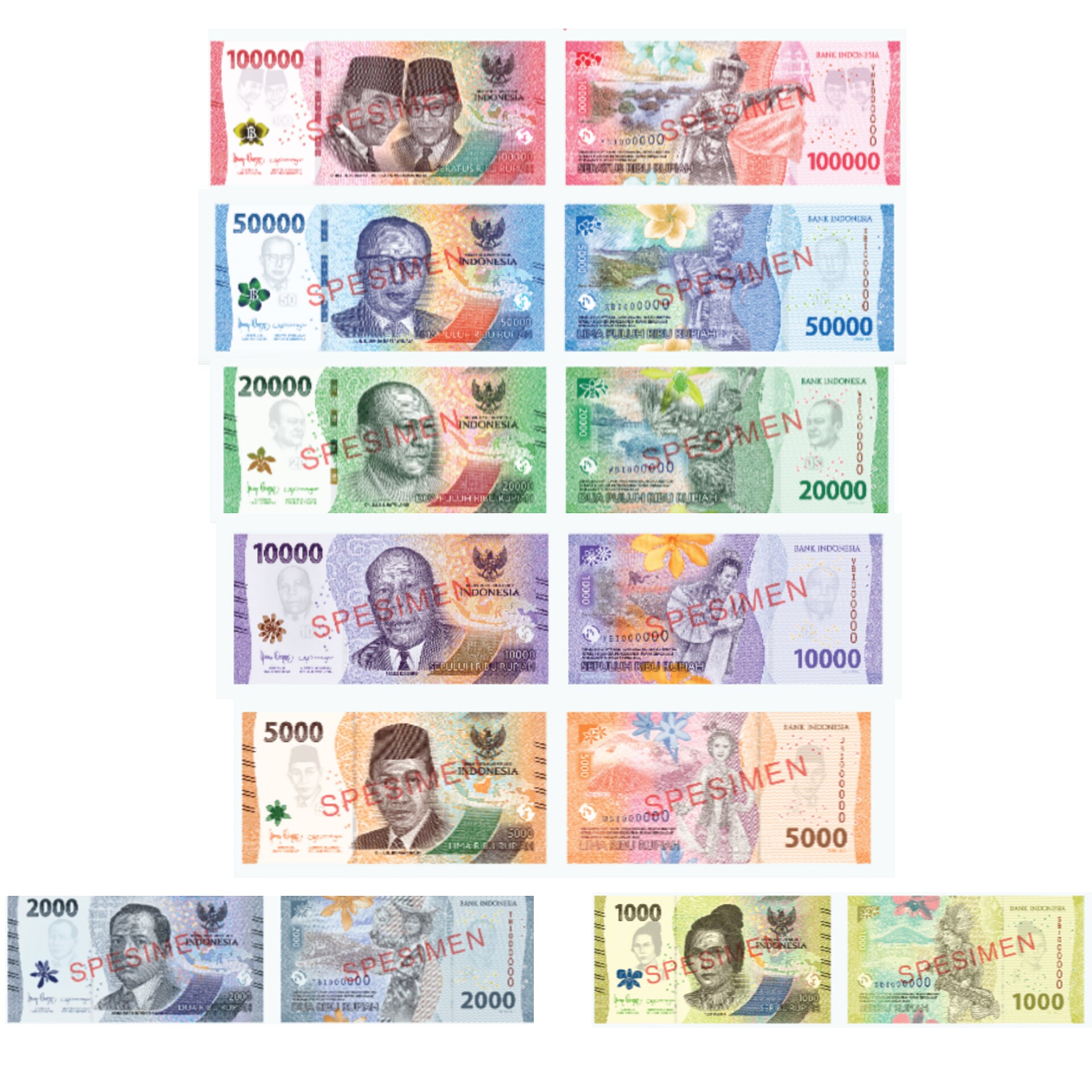
Stocks were not the only thing falling. The rupiah dropped 0.8 percent on Friday to about 18,060 per US dollar, within sight of the record low of 18,209 it touched in June, and is down roughly 8 percent this year. Bank Indonesia official Erwin Gunawan Hutapea said the central bank will act to maintain rupiah stability and acknowledged that capital outflows are expected to continue. Bank Indonesia had already raised interest rates earlier in 2026, and its governor, Destry Damayanti, said in an interview on Thursday — before Friday's plunge — that stability is the bank's top priority and that its decisions will remain data-dependent.
The timing gives the central bank an immediate test: its next policy meeting falls on Wednesday, October 21, five days after the selloff. A rate decision cannot answer MSCI's governance complaints — no interest rate fixes shareholding opacity — but it can speak to the currency, and the currency is where an equity rout becomes a broader financial-stability question. What Bank Indonesia can do on Wednesday is signal how much rupiah weakness it will tolerate and how much of its reserves and rate firepower it is prepared to spend defending the level. What it cannot do is change the consultation calendar in New York and London, where the decision that matters most for Indonesian stocks will actually be taken.
Jakarta's answer: the consultation is not a verdict
The Indonesia Stock Exchange responded on Friday by stressing process. The exchange said it respects MSCI's independence, that it will request clarification of the proposal, and — the point Jakarta's officials returned to repeatedly — that a consultation is not a final decision, with input accepted until April 30, 2027. Indonesian authorities can point to a reform programme announced earlier in the year: new shareholder disclosure requirements and a roadmap to raise the minimum free float — the share of a company genuinely available to public investors — to 15 percent. In April, authorities said those reforms were complete.
MSCI's document is, in effect, a reply to that claim: the index provider says progress has not been observed consistently, and it has kept its restrictions on Indonesian index additions in place throughout. The gap between the two accounts — reforms declared finished in Jakarta, reforms judged insufficient by the index provider — is the substantive dispute. It is also not Indonesia's only external judgement problem this year: both Moody's and Fitch cut their outlooks on Indonesia to negative earlier in 2026. Friday's proposal means the country's market plumbing, its sovereign outlooks and its currency are now all being marked down in the same year, by different referees, for related reasons.
Why 'standalone' is worse than the downgrade investors feared
To understand Friday's violence, it helps to understand the mechanical difference between the two bad outcomes. A downgrade to frontier status — the scenario markets had contemplated since MSCI's earlier warning — would have forced emerging-market funds to sell Indonesian stocks, but it would also have made Indonesia a large fish in the frontier indexes, attracting offsetting inflows from frontier-benchmarked funds. Standalone status offers no such offset. As Citi put it in analysis reported by Dow Jones, standalone is "unambiguously worse" than frontier: there is no frontier-index inflow on the other side, and every emerging-market-benchmarked passive dollar must eventually exit.
The scale of the potential exit is an estimate, not a fact, and should be read as one: UBS has estimated potential outflows of up to about $19 billion if the reclassification proceeds — roughly $4 billion of it passive money that would have to sell mechanically, and about $15 billion of active money that could choose to leave. The current standalone peer group underlines how far outside the mainstream the category sits: per Bloomberg's reporting via AFP, MSCI's standalone markets include Argentina, Lebanon and Palestine — and none in Asia. There is a counter-view among analysts. Kok Jun Yong of iFAST argued the downgrade was largely a base case already, priced in after this year's sustained selling — the Composite was down heavily long before Friday — and noted that Indonesia's problems are governance problems, distinct from the capital controls or sanctions that have driven other markets out of the index system. Both readings can be true at once: the direction may have been priced, but Friday's 11.1 percent says the destination — standalone rather than frontier — was not.
Why this matters
Index classification is the invisible plumbing of global capital, and Friday showed what happens when the plumbing is re-routed. Pension funds and passive vehicles do not hold Indonesian stocks because a manager in New York or London formed a view on Jakarta; they hold them because an index says Indonesia is in the emerging-markets basket. Remove the country from the basket and the selling is not a judgement call — it is an instruction, executed regardless of price. That is why a consultation document from an index provider can do what no earnings miss could: erase more than a tenth of a $570 billion market in a day, in a week when the same global market was capable of moving the other way — Wall Street's Thursday session, covered in the October 16 market close, sent the Dow up 556 points.
The deeper contest is between two stories about Indonesia. The growth story is real: Southeast Asia's largest economy, a huge domestic market and a listed sector that had been expanding. The governance story is what MSCI's document is about — who owns what, whether trading is genuinely arms-length, and whether the rules are enforced when it matters. Friday's message is that, for the gatekeepers of global capital, the second story now outranks the first. The costs land unevenly. Passive funds become forced sellers. Indonesian companies face a higher cost of capital precisely when their share prices have already fallen more than 40 percent this year. Importers and anyone holding rupiah debt face a currency near record lows. And by comparison — this is analysis, not announcement — regional rivals such as Vietnam, which has spent years campaigning for index upgrades, look better to allocators re-weighting Southeast Asia without Indonesia in the basket. The selling pressure visible across the region earlier this week, in the Asian stocks selloff, had an inflation cause; Jakarta's Friday was homegrown.
The 1998 comparison demands care. An 11 percent daily fall inevitably echoes the Asian financial crisis, when Indonesia's markets and currency collapsed together and the country entered an IMF programme. Friday was not that. This is a governance repricing — an index provider questioning market integrity, not a run on the currency forcing a peg to break — and Bank Indonesia today has tools, reserves and a floating exchange rate that did not exist in the same form in 1998. But the echo is not empty either: a currency within sight of its record low, negative outlooks from two rating agencies, and a stock market down more than 40 percent in a year is a combination that tests confidence in ways that can feed on themselves if the authorities' response is judged as slowly as MSCI judged the reforms.
What happens next
Three tracks now run in parallel. In Jakarta, the exchange's request for clarification and the authorities' consultation submission are the formal channels; the substantive question is whether Indonesia can produce what MSCI asked for — clear evidence of material improvement in ownership transparency and enforcement — before April 30, 2027, rather than asserting that reforms already announced should suffice. In Frankfurt, New York and London, active managers will decide how much of UBS's $15 billion active-outflow scenario becomes real selling on Monday and in the weeks ahead; Friday's close, at the lowest level since 2020, sets the starting point. And on Wednesday, Bank Indonesia's policy meeting gives the first official read on how the central bank intends to handle a currency at 18,060 with outflows, by its own official's admission, expected to continue.
The final decision lands by June 30, 2027. Between now and then, Indonesia is in the unusual position of being on probation in public: every disclosure rule enforced, every coordinated-trading case pursued — or not — is evidence in a consultation whose default outcome, on MSCI's own wording, is reclassification. Jakarta's officials are right that a consultation is not a verdict. Friday's market is evidence of what investors think the verdict will be unless the record changes.
Sources
- AFP — "Indonesia stocks plunge 11.1% after MSCI proposes standalone reclassification," October 16, 2026 (Jakarta Composite fall, trading halt, MSCI concerns, IDX response, rupiah, standalone peer group via Bloomberg).
- Reuters Breakingviews — context on the MSCI standalone proposal, October 16, 2026 (consultation and June 2027 decision timeline, $570 billion market, $1.4 trillion of funds tracking the MSCI Emerging Markets Index).
- Dow Jones via Morningstar — Amanda Lee and Ying Xian Wong, October 16, 2026 (Citi "unambiguously worse" analysis, Moody's and Fitch negative outlooks, Bank Indonesia Governor Destry Damayanti interview, iFAST analyst Kok Jun Yong).
- Finance Monthly — October 16, 2026 (UBS estimate of up to $19 billion in potential outflows, presented as a UBS scenario).