India New Zealand FTA duty free access is now live: from October 20, every Indian export line enters New Zealand at zero tariff, in a deal paired with a $20 billion investment pledge and new work visas.
Economy / Trade — a pact negotiated on and off since 2010 became law on Vijayadashami, and its real test is not the tariff schedule but whether small exporters can afford to use it
What changed on October 20
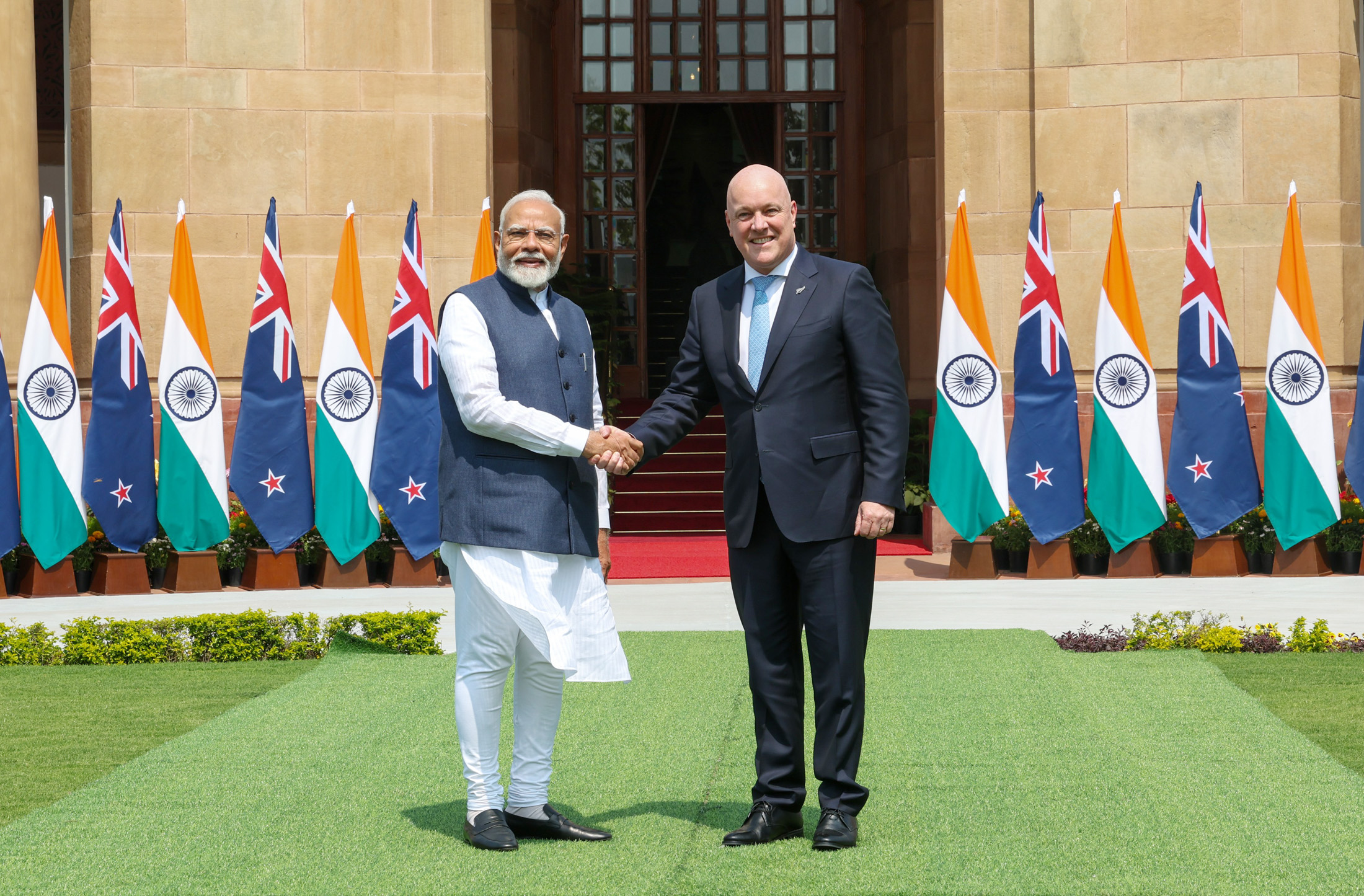
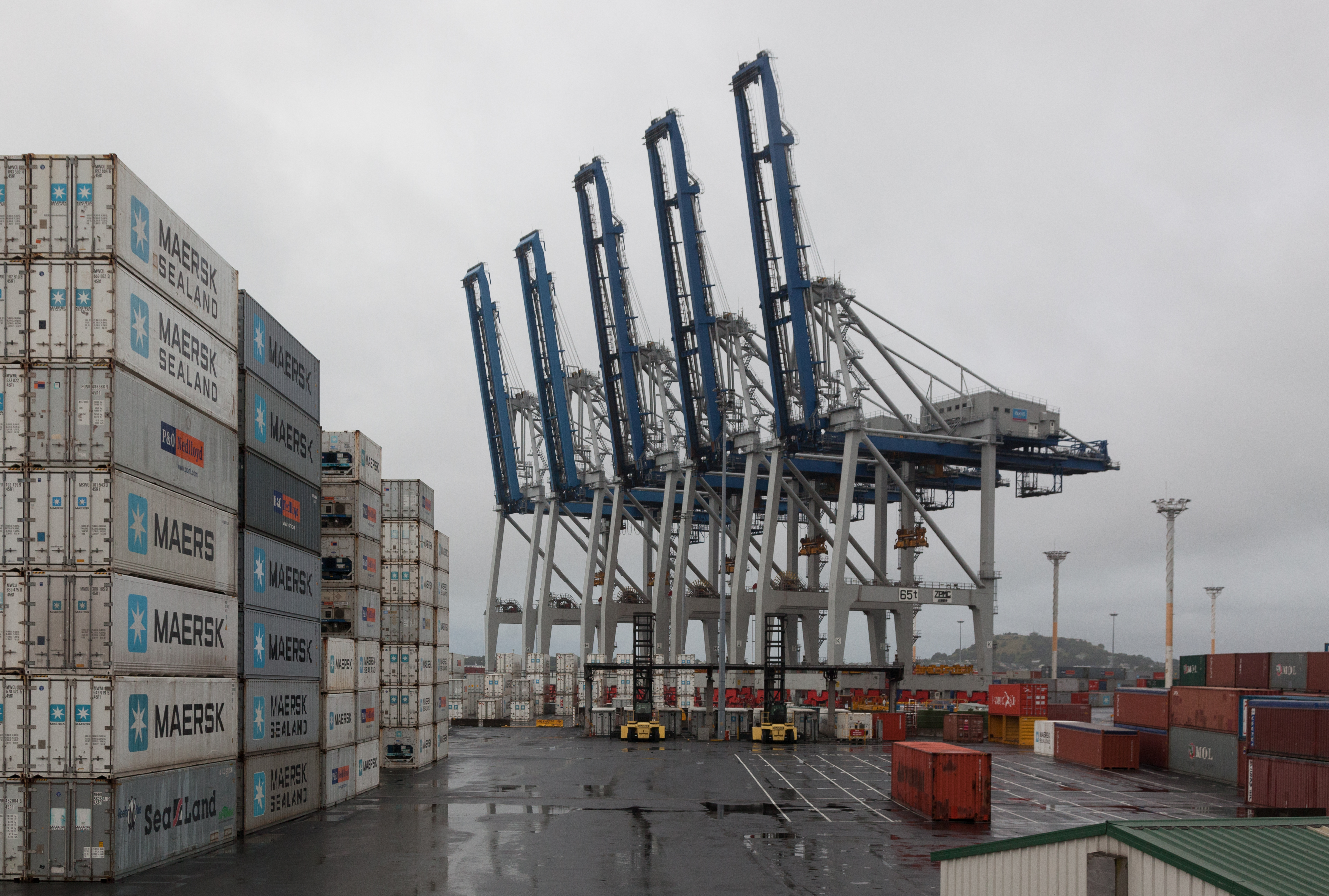
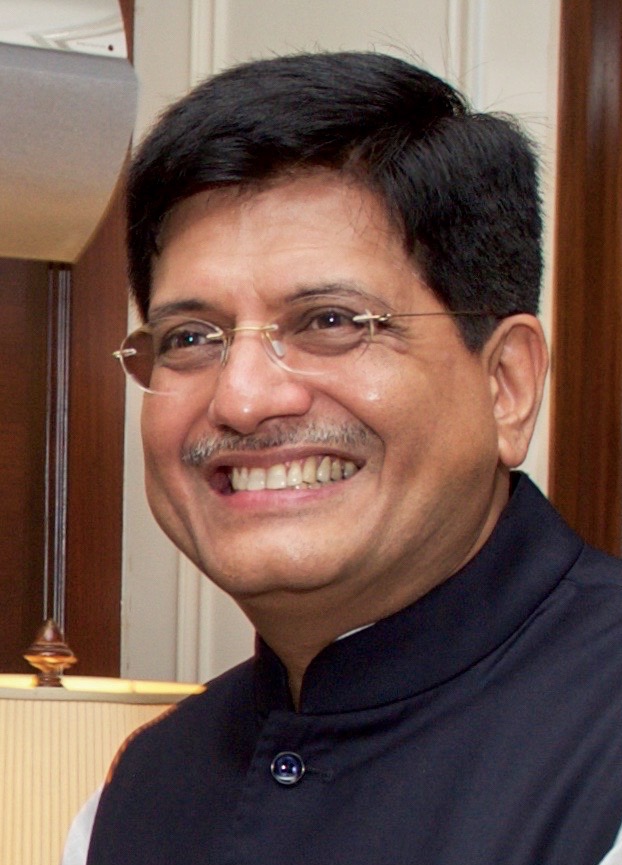
The operational facts are unusually clean for a trade deal. As the Press Information Bureau (PIB) release (No. 2325235) summarised it, and as ANI’s October 20 report carried by Latestly confirmed, New Zealand’s zero-duty commitment is immediate and total on its side: textiles, apparel, leather, footwear, gems and jewellery, engineering goods, automobiles and auto components, chemicals, pharmaceuticals and processed agricultural products all enter duty-free from the first day, with no phase-in. To mark the start, Commerce Minister Piyush Goyal flagged off the first export of an Indian-manufactured JCB machine to New Zealand.
India’s side is deliberately asymmetric. Reuters reported on October 20 that more than half of New Zealand’s exports to India are tariff-free from Tuesday, rising to 82 per cent over time, with tariffs removed on sheep meat, wool and coal, and preferential quota access for apples, kiwifruit and milk albumins. India keeps its sensitive farm sectors out of the concessions — dairy, sugar and edible oils are excluded — and applies tariff-rate quotas, minimum import prices and seasonal windows to the farm goods it does open. Wine illustrates the caution: duties on higher-priced bottles fall in steps over a decade, while the cheapest wine keeps its full duty.
The deal was announced as ready on October 19 in a virtual conference between Goyal and New Zealand Trade and Investment Minister Todd McClay. It was signed on April 27, 2026, after negotiations relaunched on March 16, 2025 and concluded on December 22, 2025 — the end of a process first launched in 2010 and stalled in 2015. New Zealand’s parliament passed the implementing legislation in September, and Reuters noted the pact is India’s seventeenth operational free trade agreement.
The money and mobility clauses
Two numbers will be quoted most, and both need their qualifiers attached. The first is the NZ$7 billion trade target by 2030: Reuters put current bilateral trade at about $2.3 billion in the twelve months through June, so the target is roughly a doubling from that base — ambitious, but from a small base, in a relationship where trade has swung between about $1.15 billion and $2.4 billion in recent years. The second is New Zealand’s commitment to facilitate $20 billion of investment into India over 15 years. As Goyal himself framed it, that is facilitation — a framework aimed at infrastructure, manufacturing, start-ups and agriculture — not $20 billion already invested or a sum either government will spend.
Mobility may matter as much as tariffs. Immigration New Zealand’s summary of the agreement provides two Temporary Employment Entry categories capped at 5,000 visa holders in New Zealand at any one time, mostly in Green List skilled occupations, on three-year visas with no pathway to residence; a working-holiday scheme for 1,000 Indians aged 18 to 30 a year, to start within two years; a locked-in 20 hours a week of in-study work for Indian students; and, from November 16, up to four years of post-study work for Indian PhD graduates, a year more than the standard setting. Services commitments cover 118 sectors on the New Zealand side, including information technology, healthcare, education and financial services.
Why this matters
Context is what turns a small trade deal into a significant one. Reuters placed the pact squarely in India’s accelerated push to diversify export markets as United States tariff pressure rises — including new American authority to levy tariffs of up to 100 per cent on countries buying Russian oil — alongside India’s recent agreements with Britain and the European Union. New Zealand is not a substitute for the American market, and nobody in Delhi or Wellington claims it is. It is a hedge: one more market where an Indian exporter’s price no longer starts 10 per cent behind.
For New Zealand, the logic runs the other way and is openly electoral. Reuters reported the entry into force landed weeks before New Zealand’s closely fought November 7 election, with McClay presenting the India pact — and new trade dialogues with Brazil and Canada announced the same week — as part of a target to double the value of New Zealand’s exports by 2034. “The gains go well beyond exports. They reach suppliers, local businesses and the towns that depend on them,” McClay said. An agreement with the world’s most populous country, in force days before voters decide, is both trade policy and campaign evidence.
The catch: can a small exporter afford free trade?
The sharpest analysis of the deal’s first week came not from its cheerleaders but from an October 21 examination of whether micro, small and medium enterprises can actually claim its benefits. Products associated with MSMEs account for 50.60 per cent of India’s merchandise exports, the analysis noted, citing official product data — yet claiming a tariff preference is not free. Rules-of-origin proof, record-keeping and certification carry fixed costs that a large exporter spreads across hundreds of shipments and a small firm must carry on one low-value order. A 10 per cent tariff saving on a small consignment can be smaller than the cost of proving you are entitled to it.
That is the honest uncertainty in this story, and both sides of it deserve stating. Supporters answer that the headline sectors — textiles, leather, gems, engineering goods — are precisely India’s labour-intensive, MSME-heavy exporters, that 58.3 per cent of New Zealand’s tariff lines were already duty-free so the paperwork only matters where a real saving exists, and that streamlined regulatory clearance for pharmaceuticals and medical devices cuts a different, larger cost. Critics answer that a preference nobody small can afford to claim is a press release, not market access. The first year’s utilisation rate — how many eligible shipments actually enter under the FTA — will settle that argument with data rather than speeches.
Who gains, who is exposed
The clearest gainers are Indian exporters of labour-intensive manufactures, who gain an immediate price edge of up to 10 per cent in a high-income market, and Indian skilled professionals and students, who gain the visa and post-study provisions. New Zealand’s sheep-meat, wool, coal, wine, apple and kiwifruit exporters gain staged access to 1.4 billion consumers. The exposed are just as identifiable: apple growers in Kashmir and Himachal Pradesh, who will meet quota-limited New Zealand competition in the April–August window at a minimum import price of $1.25 a kilogram, and any exporter on either side whose margins depended on the old tariff wall rather than on being competitive behind it. India’s dairy sector — politically untouchable in every negotiation Delhi conducts — was protected outright, which is itself information about where the deal’s limits were drawn.
The wider trade context is moving at the same time: trade ministers meeting at the G20 have been publicly divided over American industrial policy (the G20 trade ministers’ split), and Delhi’s own tariff diplomacy with Washington remains unresolved (the Modi–Trump interim trade talks). Read together, the pattern is a deliberate portfolio strategy, of the kind also visible in the extended US–China truce (the Busan trade truce): no single market, including the largest, gets to be a single point of failure.
What happens next
Three dates will test the deal. First, November 7: New Zealand’s election, where the pact is now part of the incumbent government’s record — trade agreements survive elections in Wellington as a rule, but implementation energy is a political variable. Second, November 16: the PhD post-study extension takes effect, the first mobility clause ordinary people will actually use. Third, the two-year deadline for the working-holiday scheme, and the first full year of customs data, which will show whether eligible trade is claiming the preference or quietly paying the old duty because the paperwork was not worth it.
Goyal called it “a winning partnership, both on and off the field,” and said its success “will be measured by the opportunities it creates.” That is the right test, and for once it is a measurable one. The tariffs are gone. What remains is the harder, less photogenic work of making a free-trade agreement usable by the smallest firm it was written for.
Sources
Reuters, “New Zealand adds Brazil, Canada talks as India pact starts” (October 20, 2026) — https://www.reuters.com/world/americas/new-zealand-adds-brazil-canada-talks-india-pact-starts-2026-10-19/; Reuters, “India-New Zealand free trade pact to come into force on October 20” (September 21, 2026) — https://www.reuters.com/world/india/india-new-zealand-free-trade-pact-come-into-force-october-20-2026-09-21/; Press Information Bureau, Government of India, release No. 2325235 on the FTA’s entry into force (October 19–20, 2026), via PIB summaries and India Shipping News’ full text; ANI via Latestly, “India-New Zealand FTA takes effect today” (October 20, 2026); Immigration New Zealand, FTA visa commitments summary (October 2026); ABC Live Research Team, “India–New Zealand FTA: Can MSMEs Afford to Claim Its Benefits?” (October 21, 2026). Figures are as reported by those sources; the $20 billion figure is an investment-facilitation commitment over 15 years, not funds already invested.