Bassam al-Hassan protected in Beirut
World News / Investigation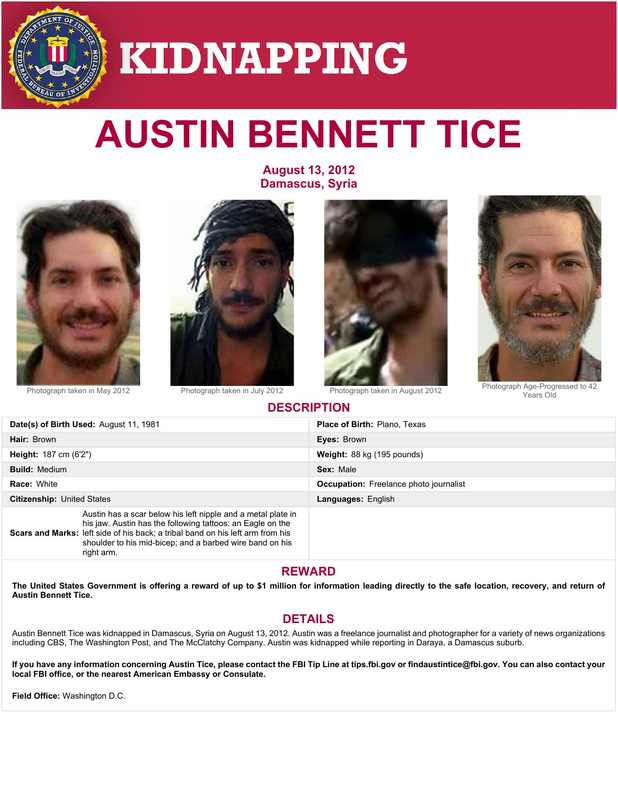
Bassam al-Hassan protected in Beirut: that is the finding of a years-long joint investigation by the BBC and NPR, published today as part of their Where is Austin Tice? series, and it lands Washington in one of the most uncomfortable bargains in the history of American intelligence work. Hassan ran Bashar al-Assad's chemical weapons program, served as one of the dictator's senior advisers, and today sits under U.S. Treasury sanctions while wanted internationally for crimes against humanity. According to four people familiar with the arrangement, he is living quietly in the Lebanese capital under a deal involving the FBI, the CIA, and Lebanese authorities — offered residency, protection, and help with his living needs, with money routed through an intermediary — at least partly in exchange for information about the 2012 abduction of American journalist Austin Tice.
What the BBC-NPR investigation found
The investigation, a collaboration between NPR's Embedded and the BBC, rests on years of reporting and documents the BBC says it reviewed directly — including a detailed record of a meeting between Hassan, FBI and CIA representatives, and Lebanese security officials at which Tice's case was discussed. In that meeting, Hassan was offered residency, protection, and help securing his living needs.
Four sources familiar with the arrangement — all speaking anonymously, citing threats to their livelihoods and safety — told the BBC and NPR that the deal is at least partly because of Hassan's willingness to provide information about Tice's abduction, plus additional intelligence drawing on his knowledge of Syria's chemical weapons program and Syria's military relationship with Iran. The money, the sources said, reaches Hassan through an intermediary, making it harder to trace.
The arrangement was not exactly a secret from Hassan himself. When BBC reporters phoned him last year seeking an interview, he directed them to seek permission from FBI and CIA officials at the U.S. embassy. The CIA and Lebanon's General Directorate of General Security did not respond to requests for comment. The FBI declined to comment, pointing instead to a past statement that its focus remained on establishing the facts around the Tice case and securing his return.
Who is Bassam al-Hassan
To understand why this deal matters, it helps to understand who Hassan is. A former general of the Syrian army, he oversaw the country's chemical weapons program — the machinery behind some of the Assad regime's most notorious atrocities — and served as a senior adviser to Bashar al-Assad himself. He commanded the Republican Guards and was chief of staff of the National Defence Forces, the paramilitary network that did much of the regime's dirty work on the ground.
He is under U.S. Treasury sanctions and wanted internationally for crimes against humanity. When the Assad regime collapsed in December 2024, Hassan fled Syria — first to Iran, according to the investigation, and then to Beirut, Lebanon, after negotiations that a Syrian businessman with ties to the former regime and Lebanese authorities described to the BBC. France, meanwhile, has issued arrest warrants related to Assad-era chemical attacks, a sign that the legal net around the old regime's leadership is tightening even as Hassan sits beyond its reach.

The Austin Tice connection
Austin Tice is the reason the American intelligence apparatus is in the room. A former U.S. Marine Corps captain who served in Iraq and Afghanistan, a 2002 Georgetown University graduate born August 11, 1981, in Plano, Texas, Tice became a freelance journalist reporting for the Washington Post, CBS, and McClatchy. He was kidnapped on August 13, 2012, near Darayya, a suburb of Damascus, while covering the Syrian civil war — and has not been seen since, apart from a video that surfaced weeks after his capture showing him blindfolded.
The case has been cold for fourteen years, but a separate BBC installment in September 2026 reframed what happened: the abduction, it found, was not a chance checkpoint encounter but a planned, weeks-long operation. Tice's own driver — who had been passing the regime information — tipped off Sakr Rustom, an NDF leader and Hassan's nephew; the chain of command ran up to Assad himself, who allegedly ordered that Tice be brought in.
What Hassan knows — or claims to know — is the explosive part. He told U.S. investigators in 2025 meetings, including at least one at the U.S. embassy in Beirut, that Tice was executed in 2013 on Assad's orders, and he gave a possible location for his remains. The site was searched. Nothing was found. That execution claim is unverified: Western intelligence sources are skeptical of his account, and Tice's mother Debra believes her son is alive — she has said Hassan may simply have told investigators what they wanted to hear. Debra Tice flew to Lebanon in May 2025 to try to meet Hassan herself; the trip was unsuccessful. Her purpose, she said, was simple: “I want to know about my son.”
The FBI's public commitment to the case is measurable: it offers a reward of up to $1 million for information leading to Tice's safe return, and the case has been discussed publicly by Presidents Biden and Trump.
Why this matters
This is the classic bargain of intelligence work laid bare, and it is worth sitting with the discomfort. On one side of the ledger sits a missing American — a Marine, a journalist, a son — whose family has waited fourteen years for an answer, and an intelligence community that will tell you, not unreasonably, that you do not find answers like that without talking to the people who were in the room. Hassan was in the room. His nephew helped run the abduction chain. The people who know what happened to Austin Tice are, almost by definition, the people who did it.
On the other side sits the justice argument, and it is not abstract. Tice family spokesperson Phil Elwood said that, if the investigation is accurate, using public money to support someone associated with chemical attacks on Syrian civilians is offensive and amounts to helping a wanted war-crimes suspect evade justice. He argued that Syrians deserve accountability and Hassan should be returned to stand trial.
There is also a third problem, and it is the one that should worry even the deal's defenders: the credibility problem of the paid informant. One former regime member told the BBC and NPR that he had received FBI money multiple times — and acknowledged that holding information back could extend the flow of payments. Another ex-regime figure, living in Lebanon under American patronage, cited that arrangement as the reason he could not discuss Tice at all. When the money flows as long as the mystery lasts, every lead arrives with a discount rate attached — including Hassan's unverified claim that Tice was executed in 2013, a claim Western intelligence already doubts, the family rejects, and a searched site failed to corroborate.
A former senior Lebanese intelligence official confirmed to the investigation that U.S.-Lebanese intelligence arrangements and payments happen generally when agencies' cases overlap — though he said he had no knowledge of payments in the Tice case specifically. That is the system working as designed. The question is whether the design is serving the truth.
The mechanics of the deal
How does a sanctioned, internationally wanted general live under American protection in practice? According to the investigation: quietly, and through cutouts. The money moves through an intermediary. The Lebanese security apparatus provides the local scaffolding. And Hassan himself appears to treat the Americans as his handlers — when the BBC called, he deferred to the FBI and CIA at the U.S. embassy.
The human details cut through the tradecraft. Debra Tice's May 2025 trip to Lebanon — a mother flying across the world to ask the man who may know what happened to her son — ended without a meeting. And Hassan is not alone in this gray economy of exiled regime knowledge. Mohammad Makhlouf, a senior officer at the facility where Tice was detained who took part in a staged abduction video, is in Lebanon. Sakr Rustom — the NDF leader tied to the abduction, Hassan's nephew — is in the United Arab Emirates and told the BBC he wanted to concentrate on the future. Ghassan Nassour, a former Republican Guard general said by ex-NDF members to have presided over the jail where Tice was held, is in the UAE with his family. The network of people who know is scattered across the region. Washington appears to be buying access to it piece by piece.
Who wins, who loses
Start with the winners, such as they are. American intelligence gets a live source inside the Assad regime's inner circle — not just on Tice, but on the chemical weapons program and the Syria-Iran military relationship, subjects of enduring interest. The FBI's Tice investigation gets leads it could not get any other way.
Now the losers. Syria's new government wants Hassan returned for trial; officials from two branches of the new government told the BBC and NPR they want him back — but U.S. authorities want him kept in Beirut, and Damascus, the officials conceded, can do little about it. That is a remarkable sentence: an American intelligence preference overriding the justice demands of the country whose civilians were gassed. The Tice family, meanwhile, gets the worst of both worlds — tax dollars funding the comfortable exile of a man associated with the regime that took their son, in exchange for an execution claim that remains unverified, is doubted by Western intelligence, and is rejected by his mother.
And then there is the precedent. Every wanted figure watching this story — every Makhlouf, every Rustom, every Nassour — now knows the market price of regime secrets: protection, residency, and a stipend, paid as long as the information drips. That is either a shrewd way to empty the region's vaults of secrets, or a standing invitation for every atrocity suspect to monetize what they know. It can be both.
What happens next
Several threads are live. The remains site Hassan identified was searched and yielded nothing — will it be searched again, with better information or better technology? Will Syria's new government escalate its demand for Hassan's return, and what leverage does it actually have against an American intelligence equities decision? The BBC and NPR's Where is Austin Tice? series continues, which means more of this arrangement is likely to surface. And the $1 million FBI reward still stands, a standing bet that someone, somewhere, knows where Austin Tice is.
The deeper question is the one Washington has been answering quietly for years and is now being asked to answer in public: when accountability and intelligence collide, which one wins? For now, in a quiet corner of Beirut, intelligence is winning.
Sources
- NPR/MTPR — joint BBC-NPR investigation, October 8, 2026
- FBI — Austin Bennett Tice wanted page and $1 million reward
- The Geneva Times — BBC kidnap-planning installment, September 2026
- Wikipedia — Austin Tice background
- Wikipedia — Bassam al-Hassan background
- BBC News, October 8, 2026 — “US and Lebanon protecting wanted Syrian general, BBC finds.”
- The Washington Post, June 15, 2025 — Hassan's unverified execution claim to FBI and CIA investigators.
- Al Jazeera, October 2026 — France and Assad-era chemical-attack warrants.