US — About 1,300 people who said they were sexually abused by clergy have unanimously approved an $800 million settlement with the Archdiocese of New York, their attorneys announced on Saturday, October 24, 2026 — the second-largest clergy abuse settlement ever reached by a Catholic archdiocese in the United States, behind only Los Angeles. Archbishop Ronald Hicks confirmed the agreement in an email to clergy the same day. The deal, which would end more than seven years of litigation, is scheduled to be signed the week of November 6.
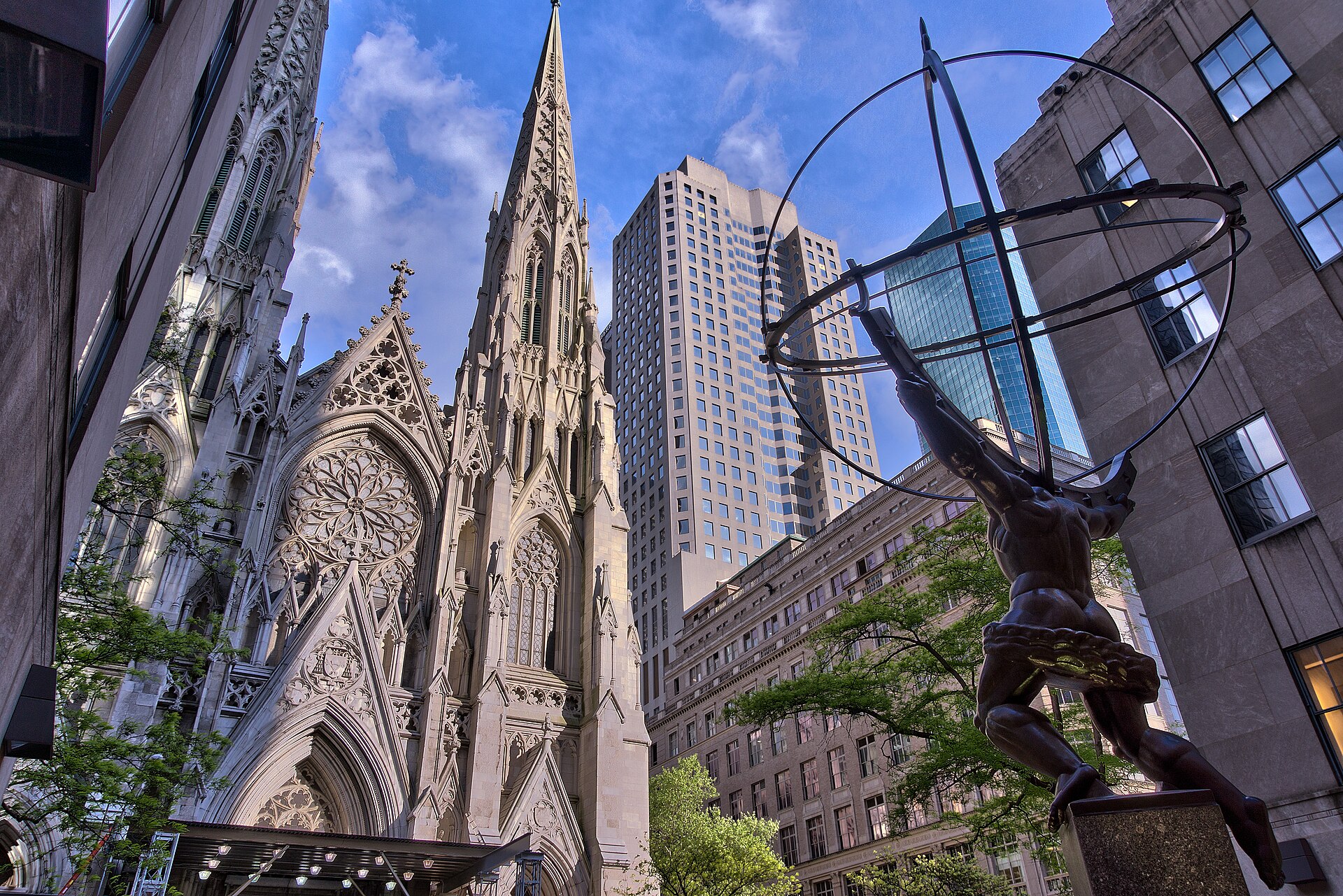
The Archdiocese of New York settlement turned on a single demanding condition: everybody had to say yes. When the framework of the $800 million deal was agreed in May, it required every one of the roughly 1,300 people who had filed clergy abuse claims to sign off — a unanimity clause that gave any single holdout the power to stall a settlement seven years in the making. On Saturday, attorneys for the survivors announced that the last objections had been resolved and the agreement was unanimous. Archbishop Ronald Hicks, who announced the proposed settlement on May 1 and was installed as archbishop in February, confirmed it in an email to clergy, writing that the archdiocese is “on the verge of being able to, please God, bring some measure of healing and reconciliation to all victim-survivors.”
What was agreed on Saturday
The settlement resolves the claims of approximately 1,300 people who said they were sexually abused by clergy, most of them as children, in cases reaching back decades. In addition to the $800 million payment, Reuters reported that the archdiocese agreed to release documents pertaining to sexual offenders in the Church, that survivors keep the right to pursue the Church’s insurers for additional payouts, and that the structure allows the archdiocese to avoid filing for bankruptcy — the route several other American dioceses have taken under the weight of abuse claims.
“The unanimous agreement of survivors who filed claims against the Archdiocese of New York marks a powerful moment in the pursuit of justice,” said Jeff Anderson, whose firm represents hundreds of the claimants and more than 1,000 people with claims against the Catholic Church across New York state. “Through their courage, sacrifice, and determination, survivors have helped bring about a reckoning and a meaningful step toward accountability.” Trusha Goffe, an attorney in Anderson’s firm, called it “an extraordinary achievement for the survivors,” saying they “remained resolute through years of litigation.” Paul Mones, whose firm represents 33 plaintiffs, told the New York Times that the survivors had shown “an amazing amount of perseverance and patience.”
Hicks, for his part, framed the agreement as a turning point for the institution as well as for survivors. The settlement, he wrote, “will also allow the archdiocese to turn its full attention once again to its mission of preaching the Gospel, healing the sick, caring for the poor and needy, welcoming the stranger, and educating our children.” The agreement is not final until it is signed; both sides are scheduled to sign during the week of November 6.
How we got here: a law, a window, and seven years of lawsuits
None of this litigation would have existed under the old rules. For decades, New York’s statute of limitations barred most childhood abuse claims long before survivors were ready to file them. The Child Victims Act, enacted in 2019, changed the arithmetic: survivors can now sue over abuse until they turn 55, and for those already past that age the law opened a temporary lookback window — ultimately running until August 2021 — during which claims could be filed no matter how long ago the alleged abuse occurred. Roughly 1,300 claims were filed against the Archdiocese of New York alone, and thousands more against dioceses, schools, and other institutions across the state.
The financial reckoning built slowly and then all at once. In December 2025, Hicks’s predecessor, Cardinal Timothy Dolan, announced that the archdiocese would enter mediation and was raising more than $300 million toward a resolution — a figure some survivors and their lawyers publicly dismissed as far too small. The archdiocese cut staff, sold property, and trimmed budgets to assemble the fund. In May 2026, Hicks and a committee representing survivors announced the proposed $800 million global settlement, explicitly conditional on final documentation and the agreement of every survivor. According to New York Times reporting on the earlier proposal, the structure contemplated an initial payment of roughly $615 million, with a further $185 million to follow within about 15 months, and the final holdouts were resolved after the archdiocese negotiated additional insurer money for a separate fund. The terms of the final signed text have not yet been published.
The numbers in context
Put the $800 million figure next to its peers and the scale of the American Church’s abuse liability comes into focus. The only larger archdiocesan settlement is Los Angeles, which agreed in 2024 to pay $880 million to about 1,000 victims — on top of $740 million it had already paid, taking its total past $1.5 billion. In June, the Archdiocese of San Francisco agreed to $395 million covering roughly 500 lawsuits. Last December, a federal judge approved a settlement of at least $230 million for the Archdiocese of New Orleans, which resolved its claims through bankruptcy court. Across New York state, the other dioceses — Rockville Centre, Buffalo, Rochester, Syracuse, Albany, Ogdensburg — have each reached their own nine-figure or near-nine-figure resolutions, and nationally the Church has paid billions of dollars in settlements in the past several years.
Divided evenly, $800 million across 1,300 claimants works out to roughly $615,000 per person before legal fees and costs — but abuse settlements are never divided evenly. Allocations in cases like this are typically weighted by the severity and duration of the abuse and the strength of each claim, assessed through a trust process after signing, so individual amounts will vary widely and will not be public. What the headline number really measures is not compensation per person; it is the institutional cost of decades of alleged abuse and of the decisions that kept it hidden.
Why this matters
The unanimity requirement is what makes the New York deal different from most mass settlements, and it cuts both ways. For survivors, it was leverage: the archdiocese could not buy peace cheaply by settling with a majority and leaving a sceptical minority to litigate alone, so the final fund had to be large enough to persuade the last holdout. For the archdiocese, unanimity buys something bankruptcy cannot — a complete, negotiated end to the Child Victims Act docket without a court-supervised dismantling of its finances, and without the years of disclosure fights that bankruptcy proceedings have produced elsewhere. The document-release commitment matters for the same reason accountability advocates have always demanded records rather than cheques alone: payments compensate individuals, but files establish patterns — who was accused, who knew, and who was moved instead of removed.
There is also a harder question underneath the celebration, and survivors’ advocates themselves raise it: a settlement ends litigation, not memory, and no allocation formula prices a childhood. Hicks’s language of “healing and reconciliation” and Anderson’s language of “reckoning” describe the same event from opposite ends of a courtroom. Both can be true. What is not in dispute is the mechanism that made Saturday possible — a legislature deciding, in 2019, that the passage of time would no longer be the Church’s strongest defence.
What happens next
The signing, scheduled for the week of November 6, converts Saturday’s agreement into a binding settlement. After that comes the unglamorous machinery that decides what the deal actually means for individuals: a claims trust, an allocation process weighing each survivor’s circumstances, and a payment schedule. The fight with insurers is not over — survivors retain the right to litigate against the Church’s carriers for additional money, and the archdiocese’s own funding depends in part on insurance and on asset sales already under way. Parishioners, meanwhile, will feel the deal in the background of ordinary church life: an institution that has sold buildings, cut staff, and committed $800 million does not return to its previous financial shape, whatever its renewed mission statements say.
Readers following the Church’s wider reckoning with abuse and accountability may also want our coverage of the Vatican’s shifting global centre of gravity, as Catholics in Africa outnumber those in Europe, and of Pope Leo XIV’s meetings with clergy abuse survivors and his teaching on protecting the vulnerable.
Sources
Reuters, “Abuse survivors approve $800 million settlement with Archdiocese of New York” (October 24, 2026); CNN, “New York’s archdiocese and survivors of clergy abuse agree to $800 million legal settlement” (October 24, 2026); Associated Press reporting via FOX 5 New York, “Archdiocese of New York agrees to $800M settlement with victims of clergy sexual abuse” (October 24, 2026); New York Times reporting on the settlement structure and holdout fund, via Newsmax (October 24, 2026); Jeff Anderson & Associates statements (October 24, 2026).