Pope Leo XIV Lourdes assisted dying
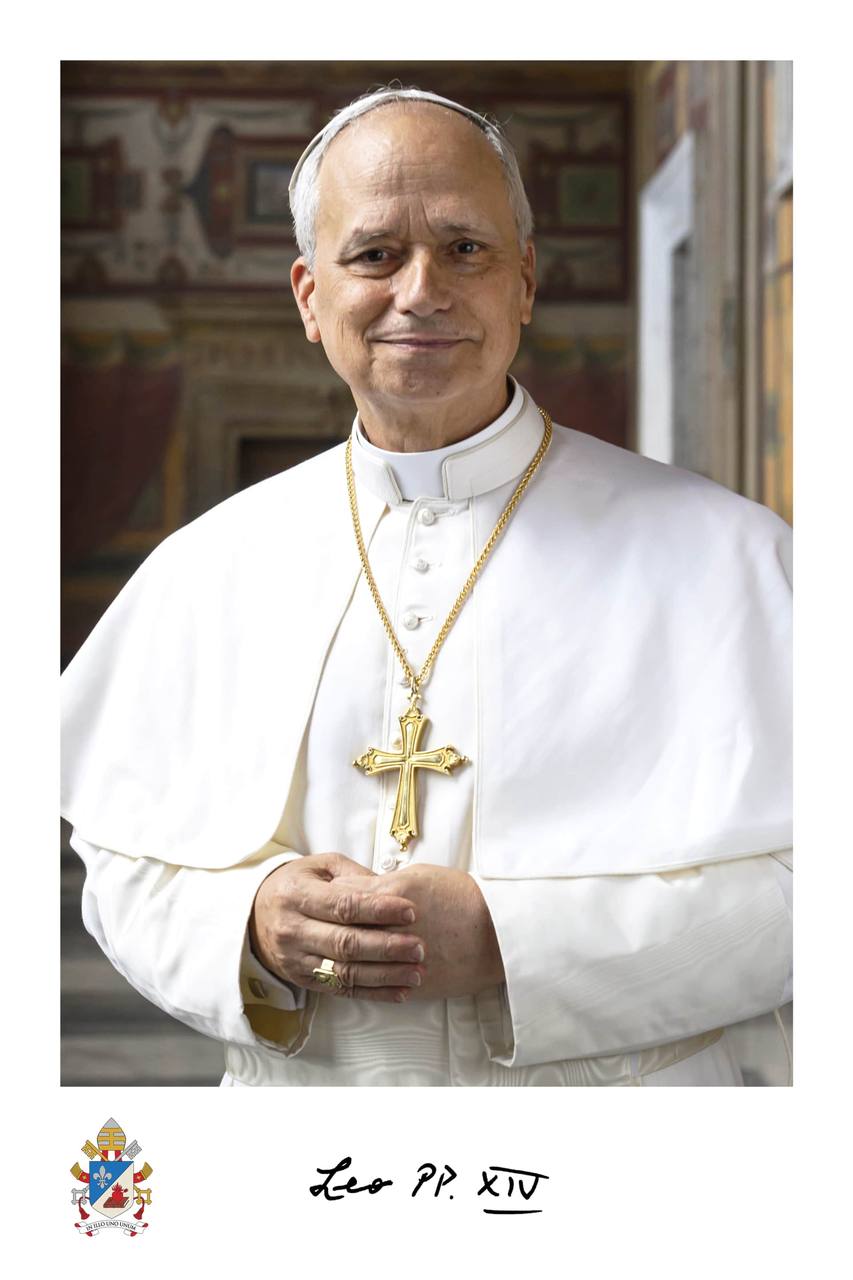
The Pope Leo XIV Lourdes assisted dying address turned a pilgrimage into a direct intervention in one of France's hardest political arguments. Speaking Sunday, September 27, to sick and disabled people, caregivers and health workers, Leo said human dignity does not disappear under pain, prognosis or statute. He rejected what he called the temptation to cause death under the cover of “false compassion,” then drew the sharpest line of the visit: “What is legal is not necessarily moral.”
The setting did much of the argument's work. Lourdes is where Catholic hope is organized around bodies that medicine cannot always cure. Wheelchairs filled the front rows at a Mass attended by about 150,000 people; later, roughly 5,000 sick pilgrims and caregivers gathered at the Accueil Notre-Dame care complex. Leo's case was not that suffering is abstract or easily endured. It was that a society answers suffering by accompanying the person, not by defining death as treatment.
What happened at Lourdes
Leo celebrated Mass on the prairie beside the sanctuary's main basilica, with many disabled and seriously ill pilgrims closest to the altar. He called Lourdes “a place for professing the beauty and sanctity of life,” language that connected the shrine's devotional identity to a public-policy dispute France had just settled in law.
The more pointed remarks came at the Accueil Notre-Dame, the residential healthcare facility that receives sick, frail and disabled pilgrims. Leo acknowledged that severe illness and “terrible pain” can make the horizon look dark. But he told those listening that no human law should make them doubt their dignity. Applause and cries of “Bravo” followed his assertion that causing death cannot be made normal by legislation.
He addressed clinicians as well as patients. The vocation of medicine, he said, is “to care for a suffering person, not to eliminate that person,” and he urged greater provision of palliative care. That qualification matters. The speech was not only a prohibition; it was a demand that institutions fund the difficult alternative — pain relief, accompaniment and long-term care — rather than invoke dignity while leaving families and health workers alone.
The Lourdes day also carried a separate test of the Church's own credibility. Leo met seven survivors of clergy sexual abuse in a session the Vatican said lasted nearly two hours, including group and individual conversations. Survivor Jean-Marie Delbos later described the encounter as extraordinary. The pope's message about protecting the vulnerable therefore landed beside evidence of how gravely the Church itself had failed to do so.
Why this matters
This was the most politically charged speech of Leo's four-day trip through France. In Paris, the pope had worked through ceremony, diplomacy and scale: vespers at Notre-Dame, meetings with public authorities and a Place de la Concorde Mass that drew 800,000 people. Lourdes was different. Here he named the moral issue, rejected the direction of French law and asked bishops to keep speaking even when the Church's position is not understood.
It also offered an early definition of the first American pope's political style. Leo did not present himself as a party combatant or draft an alternative statute from the altar. He spoke in the vocabulary of human dignity, medical vocation and moral limits. Yet the timing and venue made the target unmistakable. A pope can avoid endorsing a party while still contesting the premise of a law.
That distinction will matter beyond France. Assisted dying is being debated across Europe and North America, and Leo has already criticized the medical-aid-in-dying law that took effect September 12 in his home state of Illinois. His Lourdes intervention shows that end-of-life policy will not sit at the edge of this papacy. It is becoming one of its defining public arguments.
The French law he was answering
France gave final approval this summer to legislation allowing eligible adults with incurable, painful illnesses to receive life-ending medication. The measure followed years of political argument in a country whose existing end-of-life framework permitted deep, continuous sedation in limited circumstances but stopped short of authorizing a person to obtain a lethal drug.
Supporters describe the new law as a tightly controlled answer to unbearable suffering and a means of preserving autonomy at the end of life. Catholic bishops and other opponents say the shift changes the healer's role and can place subtle pressure on people who already fear becoming dependent, expensive or burdensome. The dispute is therefore not only about individual choice. It is about what choices look like when disability services, hospice access, family resources and medical staffing are unequal.
Terminology can obscure as much as it clarifies. In assisted dying, the patient generally takes the life-ending medication supplied under medical supervision; in euthanasia, a clinician administers it. Laws and news organizations group those practices differently, which is why international country counts vary. Catholic teaching opposes both while permitting patients to refuse disproportionate or excessively burdensome treatment and insisting on pain relief and ordinary care.
Leo's phrase “false compassion” compresses that whole distinction into two words. His argument is that compassion becomes counterfeit when it answers the person by ending the person's life. The law's defenders reverse the charge: they argue that forcing someone through intolerable, irreversible suffering can itself become a failure of compassion. The policy fight endures because both sides claim the same moral vocabulary while assigning dignity to different acts.

Who hears this — and who pushes back
For the French bishops, Leo supplied the clearest possible reinforcement. They had opposed the legislation while it moved through Parliament, and the pope praised that effort before urging them to continue with “all people of good will” who share their concerns. Catholic hospitals, hospices and clinicians now have a firmer signal that conscience protections and palliative-care investment will be central to the Church's response.
For sick and disabled people, the reception is more complicated. Many in Lourdes welcomed the insistence that they are not burdens; Leo called them “the beating heart of our humanity.” Disability-rights critics of assisted dying often warn that a legal right can be experienced as an expectation when housing, home care or symptom management are inadequate. Other patients and advocates answer that disability should not erase adult agency, and that rigorous safeguards can coexist with respect.
Secular supporters of the French law are also unlikely to accept a religious authority's moral veto over legislation adopted by elected institutions. France's tradition of laïcité sharply separates church authority from the state. But separation does not require silence. The pope's claim was precisely that legality and morality are different categories — one decided by institutions, the other argued in public.
The abuse-survivor meeting prevents the Church from occupying an uncomplicated moral high ground. A 2021 independent inquiry estimated that 330,000 children were abused over seven decades by priests, religious personnel and other people associated with the French Church. Leo can credibly demand that the vulnerable be heard only if his institution demonstrates the same principle through transparency, accountability and concrete reform.
What the numbers say
150,000 people attended the Lourdes Mass, following the 800,000 reported at the Paris celebration. The figures give Leo's message national reach and underline the scale of a trip that began with a return to Notre-Dame and a public Catholic revival.
About 5,000 sick people and caregivers heard the end-of-life address at Accueil Notre-Dame. Lourdes receives more than 3 million pilgrims in a typical year. Since 1858, more than 7,000 healings have been reported there, while the Catholic Church has formally recognized 72 as miraculous after investigation. The gap between reports and recognitions is instructive: Lourdes trades in hope, but its institutional standard for a miracle is deliberately narrow.
Seven abuse survivors met Leo. That is a small number beside the magnitude of France's abuse reckoning, but the nearly two-hour meeting gave the encounter more weight than a ceremonial greeting. Scale and intimacy worked in opposite directions throughout the trip: hundreds of thousands in public squares, then individual testimony behind closed doors.
Thirteen U.S. states now have medical-aid-in-dying laws after Illinois' measure took effect, according to Associated Press reporting. The American connection ensures Leo's argument will not remain a European one. Legislatures, courts, doctors and voters will keep confronting the same question under different legal language: whether control over dying belongs principally to the individual or whether the state must place an absolute boundary around intentional death.
What happens next
In France, implementation now becomes the real arena. Eligibility standards, medical review, conscience protections and access to palliative care will determine whether the statute operates as its supporters promise and whether its critics' fears materialize. The first contested cases will matter more than the slogans because they will expose where choice, coercion, cost and clinical judgment actually meet.
For Leo, the next step is consistency. He has asked governments not to solve suffering by making death available; he must also press Catholic institutions to expand hospice care, support exhausted families and make accompaniment more than a homiletic word. Opposition without that infrastructure would leave the hardest burden where it already sits.
The Church's abuse crisis presents the same test in another form. Listening to survivors at Lourdes was meaningful, but the measure will be what bishops and the Vatican do with what they heard — including oversight, compensation, discipline and the treatment of contested religious art at the sanctuary. A moral argument becomes persuasive when an institution accepts its costs.
Lourdes gave Leo an unusually coherent stage: a shrine built around illness, a crowd filled with wheelchairs, a new French law and a care center where suffering is daily work. His closing proposition was simple but demanding. A person's value is not graded by independence, prognosis or usefulness. The enduring political question is whether France — and every jurisdiction moving toward assisted dying — can protect autonomy without teaching the vulnerable that death is the easiest form of care, and whether the Church can defend life while repairing the damage it inflicted on lives entrusted to it.
Sources and further reading
- Associated Press via LA Post — Lourdes address, Mass attendance and survivor meeting
- National Catholic Reporter — political context and France's assisted-dying law
- Catholic News Agency via National Catholic Register — the Accueil Notre-Dame remarks
- Catholic World Report — palliative care appeal and Lourdes background
Reporting basis: Fixed September 28, 2026 snapshot of reporting from Lourdes. Crowd figures are organizer or press estimates; legal comparisons depend on how jurisdictions classify euthanasia and assisted suicide.