Apple used the second day of its launch week to do the least surprising, most consequential thing it does every year: it put a faster chip in the machines professionals actually buy. The M6 MacBook Pro price starts at $1,999 for the 14-inch model, and the new M6 iMac starts at $1,499 — in both cases, the same starting prices as the machines they replace. Pre-orders open Wednesday, October 28, at 10:10 a.m. Pacific Time in 35 countries and regions including the United States, and both machines reach customers and stores on Friday, November 6.
The headline numbers are about artificial intelligence running on the machine itself, not in a data centre. Apple says the M6 MacBook Pro delivers up to 30 percent faster graphics and up to 25 percent faster AI performance than the M5 model it replaces, with up to 24 hours of battery life — the longest Apple has ever claimed for a Mac. The iMac, which skips the M5 generation entirely and jumps straight from M4, is claimed to run on-device AI workloads up to five times faster than the model it replaces.
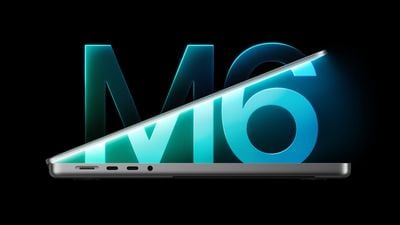
What is actually new in the M6 MacBook Pro
The M6 chip in the 14-inch MacBook Pro pairs a 12-core central processor — two super cores, four performance cores and six efficiency cores — with a 12-core graphics processor, up from the M5's 10 cores on each side. The part Apple is proudest of is the Neural Engine: it doubles, from a single 16-core unit to a dual 16-core system with 32 cores in total, with additional neural accelerators built into the graphics cores. Memory bandwidth rises to 170GB/s on the 24GB and 32GB memory configurations, up from 153GB/s.
Around the chip, the changes are the quiet, practical kind. Wi-Fi 7 and Bluetooth 6 arrive via Apple's own N1 wireless chip. The laptop can now drive two external 4K displays at up to 165Hz, up from 144Hz. Storage starts at 1TB — the 512GB option was dropped back in March — with 16GB of unified memory as standard and configurations running to 32GB of memory and 4TB of storage. The colours are unchanged: Space Black and Silver. Nothing about the case, screen or keyboard has been redesigned, and Apple is not pretending otherwise.
M6 iMac: the two-year wait ends
The iMac had not been updated in two years, and Apple skipped a generation to fix that — there was never an M5 iMac, just as there was never an M2 one. The new 24-inch, 4.5K Retina machine comes in two flavours: a 10-core CPU and 10-core GPU model from $1,499 with two Thunderbolt ports, and a 12-core CPU and 12-core GPU model from $1,699 with four Thunderbolt 4 ports. Education pricing trims those to $1,449 and $1,599. Both start with 16GB of memory and 256GB of storage, and both come in the same seven colours as before — blue, green, pink, yellow, purple, orange and silver.

Apple's own comparisons for the iMac are against the M4 model, because that is who owns the machine it replaces: up to 40 percent faster CPU performance, twice the graphics performance, storage up to twice as fast, and — in the test Apple chose to headline, prompt processing in LM Studio — up to five times faster AI performance than M4 and up to twelve times faster than the M1 iMac from 2021. Connectivity steps up to Wi-Fi 7 and Bluetooth 6, with optional 2.5-gigabit Ethernet. The 12-megapixel Center Stage camera, six-speaker sound and colour-matched accessories carry over.
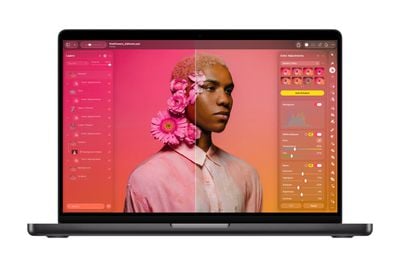
Why this matters
Strip away the launch-week choreography and this is a story about where AI is going to live. For two years the industry's default answer has been a distant data centre you rent by the query. Apple's pitch — and it is now the pitch behind every chip it ships — is that a growing share of that work should happen on the desk in front of you: faster, private by default, and with no subscription attached. A doubled Neural Engine is not a spec-sheet trophy; it is Apple arguing that the laptop, not the cloud, is the AI computer most people will actually own.
The pricing tells the same story. Holding the MacBook Pro at $1,999 and the iMac at $1,499, in a year when memory and components have not got cheaper, is a decision to defend volume and the upgrade cycle rather than test how much professionals will absorb. It also puts pressure on Windows PC makers, whose own AI laptops have struggled to match Apple's battery life claims — 24 hours, if it holds up in independent testing, is the number rivals have to answer, not the chip name.
There is a timing story too. These two machines are deliberately not the headline act. They land a day before Apple's October 28 “Pro and tell” event in Los Angeles, where Bloomberg has reported the company is expected to show its first touchscreen OLED MacBook Pro — a redesign Apple itself has not confirmed. Announcing the straightforward chip updates a day early clears the stage, and it splits the MacBook Pro line in an interesting way: a familiar, powerful M6 workhorse you can order tomorrow, and — if the reports are right — a redesigned flagship a day later for buyers willing to wait and pay more.
Who wins, who should wait
Intel Mac owners remain the clearest winners here. Apple's comparisons against Intel machines run into double-digit multiples, and for anyone still on a pre-2020 Mac, either of these machines is a transformation rather than an upgrade. M1 owners are the second group: the iMac's claimed twelve-fold AI gain over M1 and the MacBook Pro's battery and display support make a real case. Owners of M4 and M5 machines have the weakest case — the gains are genuine but incremental, and both groups may reasonably wait for the redesigned models the October 28 event is expected to preview.
Critics will make two fair points. First, every performance figure in this article is Apple's own, measured on Apple's chosen tests; independent reviews after November 6 will decide how much of the 25-to-40 percent survives contact with real workloads. Second, the base iMac still starts with 256GB of storage in 2026, which many buyers will find tight, and stepping up Apple's storage ladder remains expensive. Both points belong in any honest buying decision.
What happens next
Pre-orders open at 10:10 a.m. Pacific on Wednesday, October 28, minutes before the Los Angeles event begins, with delivery and store availability on Friday, November 6 — the same Friday Apple's new OLED iPad mini is due, closing out a three-day launch sequence that began on Monday. Attention then shifts to what the touchscreen MacBook Pro, if it appears as reported, does to the value of the M6 model announced today: if the redesign is real and priced close, some of today's pre-orders may be cancelled by Friday; if it is a premium flagship, the M6 MacBook Pro becomes the sensible professional default for another year. Either way, Apple has now refreshed the core of the Mac line in a single week — and made its bet plain: the next era of personal computing runs on the machine in front of you.
Sources
Reuters, “Apple launches M6 MacBook Pro and iMac, pitches faster on-device AI,” October 27, 2026. MacRumors, “Apple Announces New 14-Inch MacBook Pro With M6 Chip” and “M6 iMac Pre-Orders and Release Date Announced,” October 27, 2026. Apple official announcement via BusinessWire, “Apple unveils new iMac with M6,” October 27, 2026. AppleInsider and 9to5Mac launch coverage, October 27, 2026. Related Signal Post News coverage: iPhone Duo sell-out and resale prices and iPhone Duo launch-day lines.