Sold out in minutes / Apple's $1,999 foldable is already a $5,000 resale ticket
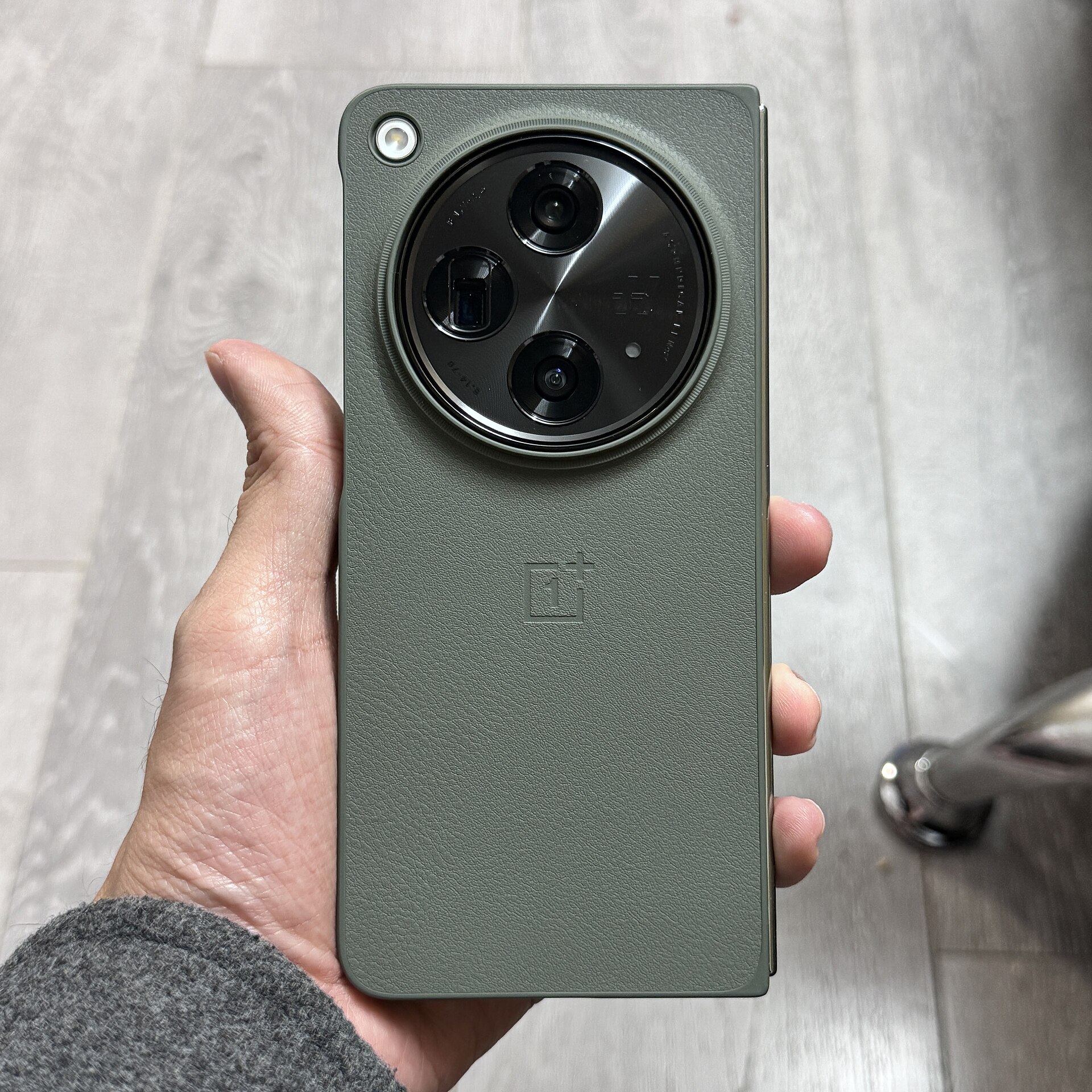
There are two ways to read a sellout, and Friday produced evidence for both. The generous reading is that Apple, under new chief executive John Ternus, has built the first foldable the mainstream buyer actually wants, seven years after Samsung's first Galaxy Fold. The sceptical reading is that Apple shipped a deliberately small first batch of a difficult, low-yield device, and scarcity did the marketing. What is not in dispute is the sequence: preorders opened, the October 23 launch-day window closed within minutes, and by about 8:30 a.m. every configuration was quoting delivery in late January 2027. Barron's, via MacDailyNews, put the later Apple estimate at January 29, 2027 — more than three months after launch day.
Sold out by 8:30: how the iPhone Duo preorder morning unfolded
Apple launches are usually a study in controlled abundance. The iPhone 18 Pro and Pro Max, announced alongside the Duo last month, opened preorders on September 12 and reached stores on September 18 without this kind of rupture; our iPhone Duo launch guide set out the staggered schedule, with the foldable separated from the Pro line by five weeks. That separation now looks like an admission: folding displays are produced in far smaller volumes than conventional panels, yields are lower, and a hinge adds a failure-prone mechanical part that must be built and tested at scale. A half-hour to a three-month slip is the signature of a constrained first run meeting demand larger than that run.
The full price list: $1,999 to $3,199 before any resale markup
The price ladder explains much of the resale arithmetic below. The range runs from $1,999 for 256GB, to $2,199 for 512GB, $2,599 for 1TB and $3,199 for the 2TB model, in colours including Night Sky and Star White. Set against the iPhone 18 Pro's $1,199 starting price, the base Duo carries an $800 premium — a 67 percent uplift for the fold. Set against its direct rivals, the pricing is aggressive rather than timid: book-style foldables from Samsung and Google have clustered around $1,800 to $2,000, so Apple has priced at the top of the established band rather than above it, betting that the fold itself is the product. Friday suggests Apple can sell every one it can make at that price — which is not the same as selling tens of millions.
iPhone Duo eBay resale prices: $4,999.99 for a preorder, not a phone
The secondary market priced the scarcity within hours. MacDailyNews' tracking of completed eBay sales found a confirmed preorder for the 2TB Night Sky model selling for $4,999.99 — roughly an $1,800 premium over its $3,199 retail price, with at least one such listing adding about $200 in shipping on top. A 1TB confirmed preorder sold for $4,400, again about $1,800 over retail, and even the base 256GB models, retailing at $1,999, changed hands between about $2,699 and $3,800. Active listings commonly ask $2,800 to $3,750. Three cautions belong with those numbers. First, nobody is buying a phone: every transaction is a preorder slot for a device that does not ship until October 23 at the earliest, making the market a bet on delivery dates rather than hardware. Second, sellers' true margins are thinner than the headlines, because eBay fees, taxes and shipping lift the break-even point on a base model into the mid-to-high $2,000s. Third, preorder-transfer markets carry real scam risk, as MacDailyNews itself flagged. Even so, a roughly 56 percent premium on the top model is a signal Apple cannot manufacture: people with January delivery dates are paying October prices to skip the queue.
What $1,999 buys: 7.6 inches inside, 5.4 outside, titanium and eSIM only
The hardware under the frenzy is a book-style foldable with a 7.6-inch inner display — close to a small tablet — and a 5.4-inch outer screen for closed use, in a titanium body. It is eSIM-only, and Apple rates battery life at up to 31 hours of video playback on the inner display and up to 44 hours using the outer screen, which draws far less power. That puts the Duo against Samsung's mature Fold line: the foldable segment has existed since 2019 without a defining mainstream product, and the question has always been whether the format was waiting for better engineering or for Apple's distribution and brand. Friday does not settle it — launch buyers are the easiest customers any foldable will ever have — but it removes the weakest doubt, that ordinary buyers simply do not want a phone that opens.
Malaysia sold out too, and buyers on X are furious about January
The sellout was not an American artefact. In Malaysia, the Duo sold out within an hour, a useful control case because Malaysian buyers are not driven by US carrier promotions or trade-in subsidies. The backlash has a precise shape: the New York Post described fans who set alarms, ordered within the window and still watched their delivery estimates land in 2027, venting on X about a launch they experienced as a lottery rather than a purchase. Apple's defenders reply that a slipped estimate is not a broken promise — the site showed January dates before those buyers paid. Both the anger and the defence point at the same fact: Apple chose a launch date its supply chain could satisfy only for a first tranche of buyers, and accepted the marketing value of a sellout against the customer-relations cost of a three-month wait — a wait that also pushes many orders past the holiday gift season.
The iPhone 18 Pro question the Duo sellout may answer
Wall Street's interest is less about foldables than about a worry trailing Apple for a month. Some analysts had noted that wait times for the iPhone 18 Pro line were shortening, which can mean either healthy supply or softening demand. The bullish interpretation, which Barron's advanced, is that buyers were not skipping this year's iPhone; they were waiting for the Duo. Friday's stampede is consistent with that story, and it matters financially: a $1,999-to-$3,199 Duo instead of a $1,199 Pro is an extra $800 to $2,000 of revenue per customer. Capacity is the shared constraint — the record results at TSMC, which fabricates Apple's processors, and Samsung's record quarter show an industry whose advanced production is spoken for. If folding panels are the bottleneck, money alone cannot fix Apple's January problem quickly.
Why this matters
This matters because a sellout is the least informative success metric in consumer technology, and the Duo will be misread in both directions until Apple discloses volume. MacDailyNews put the unknown plainly: nobody outside Apple knows whether the company had one million, five million or ten million units ready when preorders opened, and a sellout of one million units is a supply story while a sellout of ten million is a demand phenomenon. The honest analysis sits between the camps. The eBay premium — real money, at roughly $1,800 over retail on two separate storage tiers — is harder to fake than a delivery-date screenshot, and it indicates genuine excess demand in the $2,000-to-$3,200 band, at least among early adopters. The January slip, equally, indicates supply Apple either could not or would not expand. For the wider industry, the deeper significance is that the smartphone's first real form-factor change in a decade now has an Apple-scale demand test attached to it. If Duo owners keep the device and use the inner screen, every rival's foldable roadmap gets validated. If the January cohort cancels, or the hinge generates a repair story, Friday will be remembered as the peak of a scarcity bubble rather than the start of a category.
What happens next
Four signals will resolve the argument. First, October 23: launch day will show real devices, durability reports and whether in-store stock exists for walk-in buyers shut out online. Second, the delivery estimates: if January dates pull forward in November, Apple had a logistics problem; if they slip further, it has a production problem. Third, the eBay premium's half-life — prices that collapse once January units ship were scarcity rent, while prices holding into December would suggest demand still unmet at retail. Fourth, Apple's next earnings call, where the discussion will have to engage with how many Duos actually existed. Until then, the fairest summary is the simplest: Apple's most expensive phone sold out in minutes, the market immediately priced it at $5,000, and nobody can yet prove how much of that was desire and how much was arithmetic.
Sources: MacDailyNews, Oct. 16, 2026, reporting Barron's (Angela Palumbo) on the sellout, the January 29, 2027 delivery estimate and iPhone 18 Pro wait times; MacDailyNews (Substack), Oct. 16, 2026 (eBay sold prices, listing ranges, official pricing and display specifications); New York Post, Oct. 16, 2026 (buyer reaction to backorders into 2027). Related on Signal Post News: iPhone Duo launch guide: price, release date and rivals · TSMC's record quarter · Samsung's record profit.