Business / Airlines — The American Airlines 2026 loss forecast turned a record $16.3 billion quarter into a warning about the whole industry: passengers are paying more than ever, and the airline is still losing money, because jet fuel is rising faster than fares.
American Airlines forecast a deeper loss for 2026 on Thursday, October 22, abandoning a guidance range that had still allowed for a profit, even as it reported the highest third-quarter revenue in its history. The American Airlines 2026 loss forecast — an adjusted loss of $1.00 to $1.60 per share for the full year, against a previous range from a 65-cent profit to a 65-cent loss — is the clearest statement yet from a major carrier that the fuel shock set off by the Iran war has outrun even a historic rise in air fares. American is the fourth major U.S. carrier to cut its 2026 outlook this month, after Delta Air Lines, United Airlines and Southwest Airlines, according to Reuters reporting of the announcement.
Track it live: Oil prices — live global tracker · Stock markets — live global tracker
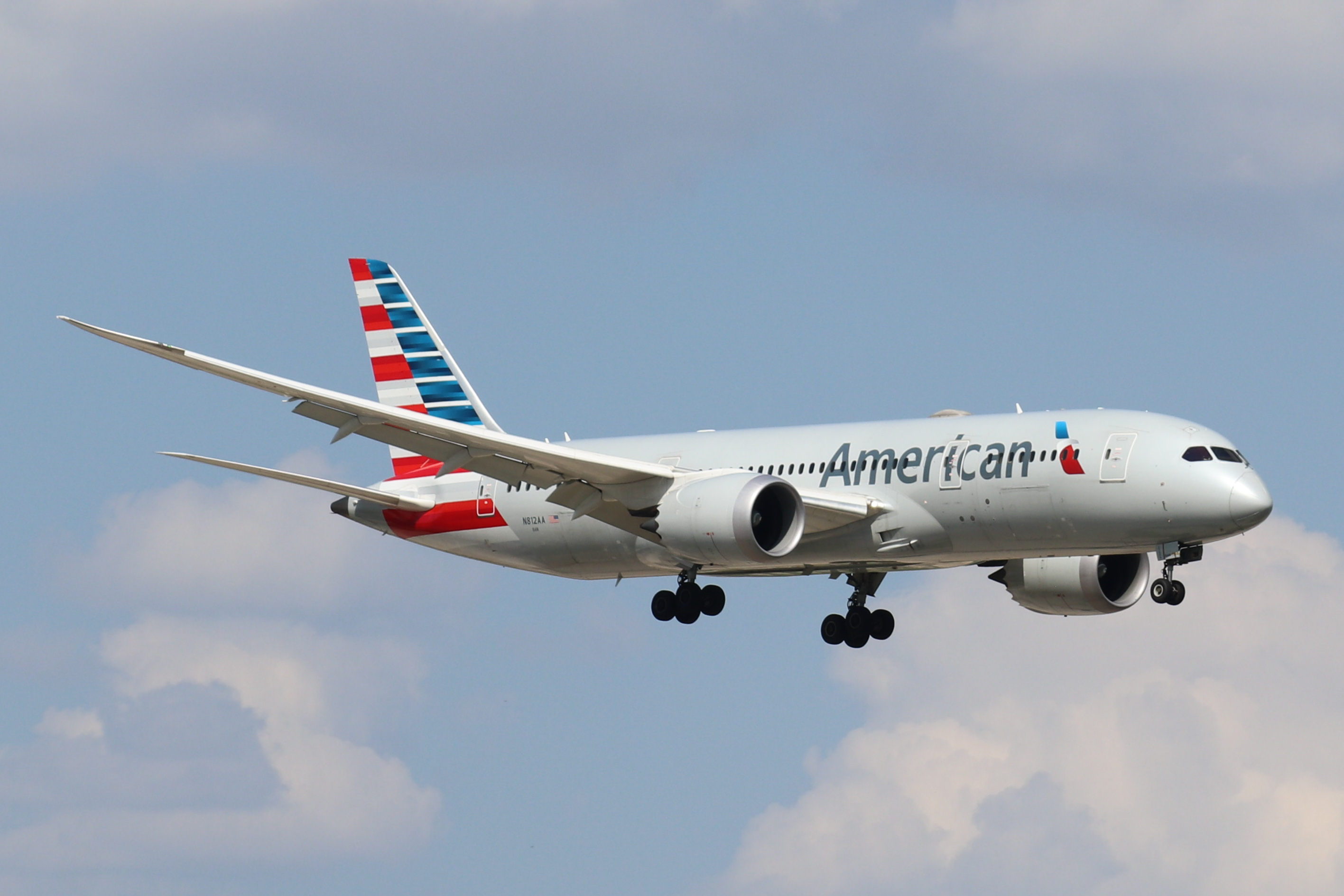
What American actually reported on Thursday
The numbers contain two stories at once, and both are true. On revenue, the quarter was exceptional. Total revenue rose 19.3% year over year to $16.3 billion — $16.34 billion in the detailed tables — above the high end of the company's own guidance and above the $16.20–$16.22 billion analysts had expected, according to LSEG estimates cited by Reuters and Zacks. Premium revenue rose 22.9%, Main Cabin revenue 19.5%, and managed corporate revenue 27.6% — its sixth consecutive quarter of double-digit growth. Total unit revenue rose 14.5%, domestic passenger unit revenue 13.6% and international unit revenue 16.4%, led by Latin America at 21.1%. Chief Executive Robert Isom called it "record third-quarter revenue and the strongest year-over-year revenue growth in my career, with premium performance leading the way."
On profit, the same quarter was a loss, and a wider one than a year ago. American posted a GAAP net loss of $269 million, or $0.41 per share, against a $114 million loss, or $0.17, in the third quarter of 2025. Excluding $87 million of net special items after tax, the adjusted loss was $182 million, or $0.28 per share — in line with consensus, and, as the company pointed out, only $71 million worse than a year earlier despite the fuel hit. The reason is one line: fuel expense rose $1.9 billion, or 67.5%, year over year, to $4.64 billion, at an average price of $3.85 per gallon, up 62.7% on the year in the Zacks breakdown of the release. Total operating expenses rose 19.8% to $16.22 billion, operating margin narrowed to 0.7% from 1.1%, and unit cost excluding fuel, special items and profit sharing — CASM-ex — rose a comparatively disciplined 3.0%, which Chief Financial Officer Devon May said was the best unit-cost performance among the network carriers.
The guidance cut is the story, not the quarter
What moved the shares — down about 3.5% to 4% in premarket trading, according to Reuters and Stocktwits coverage of the release — was not the quarter that just ended but the two that follow. For the fourth quarter, American expects revenue to rise another 19.5% to 22.5% and capacity, measured in available seat miles, to grow 5.5% to 6.5%, yet it still expects an adjusted loss of $0.50 to $1.10 per share. The bridge between record revenue growth and a loss that large is, again, fuel: based on the forward curve as of October 19, American assumes an average fourth-quarter fuel price of about $4.70 per gallon — nearly double what it paid in the fourth quarter of 2025 — which would lift its fuel bill by roughly $2.8 billion year over year in a single quarter. Put the two quarters side by side and the arithmetic of 2026 comes into focus: a $1.9 billion fuel headwind in the third quarter, a projected $2.8 billion headwind in the fourth, against an airline whose entire operating income in the third quarter was $115 million on a GAAP basis.
American also said, in a single sentence of the release that may matter most for travellers in 2027, that "given elevated fuel prices, American expects network growth in 2027 to slow from 2026 levels." It is the same conclusion Delta's chief executive Ed Bastian reached earlier this month, in remarks reported by Reuters: that airlines may need to curb flight growth next year to sustain higher fares and protect profitability. Capacity discipline is the industry's only reliable lever when a cost it cannot control rises this fast — fewer seats chasing the same demand keeps fares high — and Thursday's release puts the world's largest airline, with more than 6,000 daily flights to more than 350 destinations, formally on that path.
Why this matters
American's release matters beyond one airline's earnings because it prices, in public, what the energy shock is doing to the broader economy — and who is paying for it. Start with the passenger. U.S. air fares rose an average of nearly 23% year on year in the seven months through September, according to Labor Department data cited by Reuters. That is not airlines profiteering: American raised its revenue 19.3%, charged premium passengers 22.9% more in aggregate, filled its cabins at an 83.4% load factor — and still lost money, because its fuel bill rose 67.5%. The fare rise is a pass-through that is failing to keep pace, which means the travelling public is absorbing a large share of the war's energy cost while shareholders absorb the rest. When both sides of that equation are losing, the pressure does not disappear; it moves — into 2027 capacity cuts, thinner routes to smaller cities, and fares that stay high long after any single quarter's fuel spike, because an industry that shrinks its growth to defend pricing rarely expands it back quickly.
Second, the split inside the cabin tells a story about the economy itself. The growth is concentrated where money is: premium revenue up 22.9%, premium unit revenue up 18.5% against Main Cabin's 14.4%, corporate managed revenue up 27.6%, AAdvantage enrollments up 27.4%, co-brand card spend with Citi up nearly 10%, and a six-point rise in the rate at which Basic Economy passengers paid to upgrade. American says premium products already generate roughly half its ticket revenue from about 30% of seats, and its narrowbody retrofit programme aims to lift premium seats to 40%. In other words, the part of demand that is holding up best is the part least sensitive to price — which is precisely why every network carrier is racing to sell more of the front of the plane, and why the squeeze falls hardest on the price-sensitive leisure traveller at the back, whose fares are rising fastest relative to what the seat used to cost.
Third, compare American with its closest rival, covered in our reporting on Delta's third-quarter miss and guidance cut. Delta still earned a profit in the quarter — $1.72 per share adjusted, on Zacks' account — while American lost money on stronger revenue growth. The difference is not demand; it is structure and starting position. American carries the industry's heaviest debt load from its fleet renewal, ended the quarter targeting 3.0x net debt to EBITDAR, and holds $11.8 billion of liquidity and more than $26 billion of unencumbered assets against that burden. A fuel shock hits a leveraged carrier's equity story harder than a less indebted rival's, even when their operations perform similarly — American's 3.0% CASM-ex rise was, on its own account, the best among network carriers. That is the uncomfortable core of Thursday's release: operationally, this was a good quarter. Financially, it was still not enough.
The context: a war, a fuel curve, and an industry repricing at once
None of this is happening in isolation. Brent crude has traded above $110 a barrel this month for the first time since May, in the escalation covered in our reporting on oil prices breaking $110, and jet fuel — a refined product with its own tight market — has risen faster than crude itself, which is how an airline ends up assuming $4.70 a gallon for a quarter in which it paid roughly half that a year earlier. Reuters' framing of Thursday's news was explicit: since the start of the Iran war, airlines have raised fares sharply to protect margins, and even that has failed to keep pace with jet fuel. Four of the largest U.S. carriers cutting the same year's guidance in the same month, for the same stated reason, is not four separate company stories. It is one industry story told four times.
American is also spending through the shock rather than retrenching from it, which cuts both ways. The release lists an expansion of Starlink high-speed Wi-Fi to its entire mainline fleet — more than 1,000 aircraft, after a May announcement covering 500 — the largest lounge building and renovation programme in its history, seatback entertainment returning to narrowbody deliveries from 2028, and a re-engineering programme it expects to reach nearly $1 billion in annual run-rate savings and more than $900 million in working-capital improvements by the end of 2026. Bulls will read that as a carrier using a crisis to widen a premium and loyalty moat its rivals cannot easily copy. Bears will read the same list as capital commitments layered on top of a loss-making year, by the carrier least able to afford a longer war. Both readings are honestly available in the same document; which one ages better depends almost entirely on a fuel curve neither management team controls.
What happens next
The next test is mechanical. American's fourth-quarter outlook is built on a fuel assumption — about $4.70 a gallon, from the October 19 forward curve — not on fuel already bought. If prices ease, the projected $2.8 billion year-over-year increase shrinks and the $0.50 to $1.10 loss range improves quickly; if the war escalates further, even that range can prove optimistic, and the company warned in its own forward-looking statement that geopolitical conditions sit at the top of its risk list. Watch, second, for the detailed 2027 capacity plans: Thursday's promise of slower network growth will become concrete route by route, and the pattern of what is cut — frequencies, marginal leisure routes, or growth at smaller hubs — will show who actually pays for the adjustment. Watch, third, whether demand finally bends: load factor already slipped 2.6 points to 83.4% even as revenue per seat rose, a combination that says pricing, not volume, is doing the work. An industry can raise prices into strong demand for a long time. It cannot do so indefinitely into weakening demand, and American's own numbers — record revenue, falling load factor, widening losses — are what the edge of that limit looks like. Our earlier coverage of the carrier's operations is at American Airlines Flight 41's blown tire at O'Hare.
Sources
American Airlines Group (official third-quarter 2026 results, Globe Newswire, October 22, 2026): American sets new revenue records amid historic fuel cost pressure. Reuters (October 22, 2026, reporting by Shivansh Tiwary): American Airlines forecasts 2026 loss as fuel costs outpace fare gains. Zacks (October 22, 2026): AAL Q3 earnings meet estimates, revenues beat on premium demand. CNBC reporting via 10bmnews (October 22, 2026): American Airlines expects deeper 2026 loss on pricier fuel despite record revenue.