Delta Q3 earnings miss
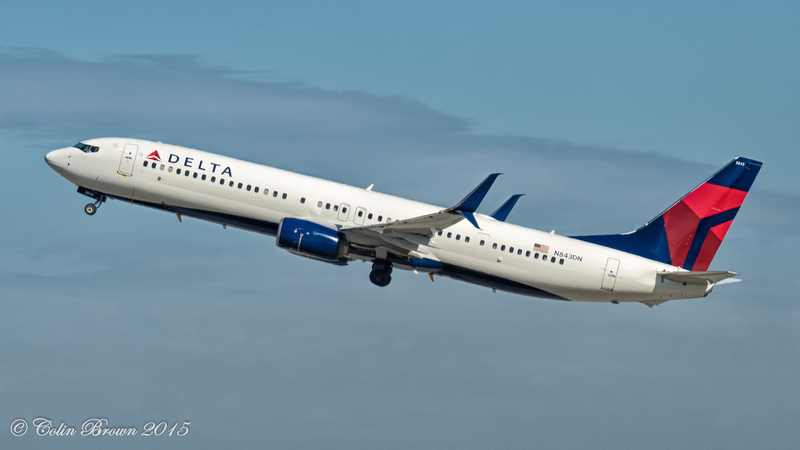
The Delta Q3 earnings miss is small on the face of it and large in what it says about the next six months. Delta Air Lines earned an adjusted $1.72 a share in the September quarter, five cents shy of the $1.77 FactSet consensus. That ended a roughly two-year stretch without an earnings miss even as the carrier produced record quarterly revenue of $17.59 billion, just below the market's roughly $17.65 billion target.
The more consequential number was not the nickel that Delta missed. It was the $1.15 reduction in the midpoint of full-year guidance. Management reset its 2026 adjusted earnings range to $5.10–$5.60 a share from $6.50–$7.50, putting the new $5.35 midpoint below the roughly $5.50–$5.52 analysts had expected. Shares fell about 2% to 4% before Friday's open, trading near $79.97 after closing Thursday at $82.12.
Why this matters
Delta has become the airline industry's clearest test of whether premium demand and disciplined capacity can outrun an energy shock. The company still filled its planes with high-value customers and generated record September-quarter sales. Yet fuel expense climbed 62% to $4.1 billion. When an industry leader cannot fully price through that increase, smaller or less premium-heavy airlines have even less room to maneuver.
The guidance cut also arrives early in the third-quarter earnings season, making Delta a potential signal rather than an isolated disappointment. Investors will listen for the same split from other carriers in coming weeks: resilient revenue on one side, rapidly rising fuel and constrained margins on the other. For travelers, the response is likely to show up through fewer marginal seats, especially in the main cabin, and firmer fares on routes where demand holds.
That does not guarantee an immediate broad fare spike. Airlines price by route, departure time and competitive intensity, and softer demand can still cap increases. But Delta's plan to keep fourth-quarter seat growth below 2%, with cuts concentrated in main cabin, shows the industry's first defense: protect yield before chasing volume.
What Delta reported
Revenue reached $17.59 billion, a September-quarter record, while adjusted EPS landed at $1.72. Delta guided fourth-quarter adjusted EPS to $1.15–$1.65 and revenue to about $17.5 billion, both below prevailing estimates. Chief Executive Ed Bastian said the company now expects roughly $4.5 billion in pretax profit this year while absorbing an annualized fuel-cost increase of about $6 billion.
The quarter's contradiction is sharp. Demand was good enough for a record top line, and Delta expects December-quarter revenue to rise about 20%. But a strong sales number is not the same thing as a strong margin when the input that powers every flight is repricing faster than tickets.
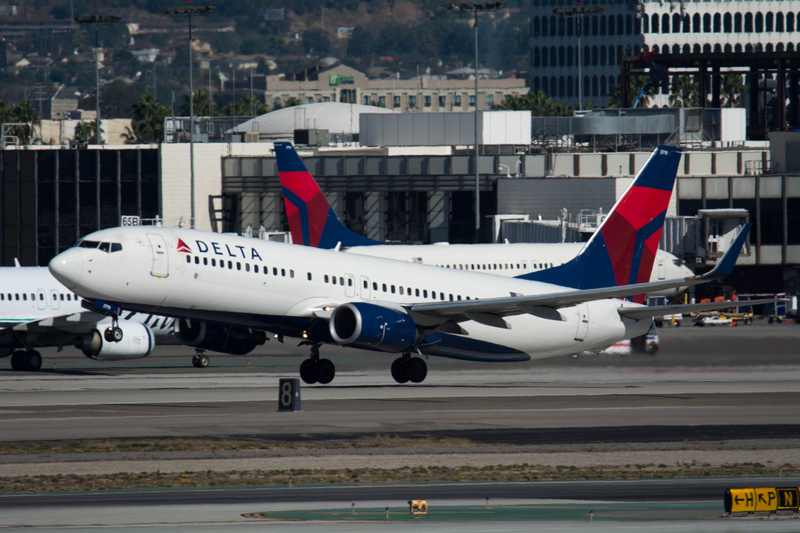
Background: a beat streak meets fuel's round trip
Before Friday, Delta had beaten consensus in six or seven of its previous eight quarters, depending on the estimate set used. That consistency made its former $6.50–$7.50 full-year range look credible to some investors, but it was already ambitious: the range required an unusually strong finish even before the latest fuel move.
Jet fuel traced a brutal round trip in 2026. Prices slumped into June after the U.S.–Iran conflict began February 28, then rebounded roughly 60% from those wartime lows into October. Delta's average fuel price was $3.61 a gallon in the third quarter and the company expects about $4.25 in the fourth. That trajectory matters more than a single quarter because it puts the higher cost base directly into the holiday travel period.
The oil link also connects this earnings report to the broader conflict and market story. Signal Post News has tracked how President Donald Trump's decision to rule out another Iran attack before the midterms eased immediate oil anxiety without removing the underlying supply risk. Read the related analysis: Trump's no-strike pledge and the fuel-price outlook.
The real story is the forecast, not the five-cent miss
A five-cent shortfall against a $1.77 consensus is a miss of less than 3%. On its own, that would be a manageable quarterly wobble. The old guidance midpoint was $7.00; the new midpoint is $5.35. That $1.65 gap is 33 times the quarterly EPS miss and explains why the stock reaction focused on the outlook.
Fuel tells the same story in two time horizons. The third quarter already absorbed a 62% rise in expense to $4.1 billion. Management's estimate of a roughly $6 billion annual increase says the pressure is not confined to one noisy reporting period. And the expected move from $3.61 to $4.25 a gallon suggests the cost curve gets worse before it gets better.
Premium cabins are Delta's margin defense
Delta's strategic answer is mix. Premium-cabin, loyalty and higher-value customer revenue can carry better economics than deeply discounted main-cabin seats. If premium demand keeps growing while overall capacity remains tight, Delta can defend margins without attempting to raise every fare equally. The risk is that consumer weakness spreads upward and makes even premium customers more price-sensitive.
That split echoes another large consumer company reporting this week. PepsiCo also paired operational strengths with a reduced outlook, a reminder that strong brands do not make companies immune to input inflation. See: PepsiCo's Q3 earnings and profit-forecast cut.
Who wins, who loses — and where the debate sits
The value-investor case
For buyers willing to look past the next two quarters, a post-earnings decline may offer an entry into an airline still producing record revenue, leaning into premium demand and repairing its balance sheet. Delta continues to expect about $2.5 billion in free cash flow and more than $2 billion of debt repayment this year. Those figures give the bull case substance: a fuel shock is painful, but not necessarily thesis-breaking.
The short-term shareholder risk
Existing shareholders face a reset in the earnings base. The new full-year midpoint sits below consensus, the fourth-quarter range is light, and fuel is expected to get more expensive. Even if demand remains solid, estimates may have to fall again if crude or refining margins rise.
What travelers could feel
Passengers are unlikely to see a single, explicit fuel surcharge across the board. The practical effects may be subtler: fewer low-fare seats, schedule trims on thinner routes and more aggressive upselling into premium products. Travelers with flexible dates or competing airports may still find bargains; captive business markets face the greatest pricing risk.
The critics' question
Critics will ask whether the old $6.50–$7.50 range was realistic once fuel began its summer recovery. That is a fair question. The counterargument is that the speed and scale of the move — and the lag between buying fuel and repricing seats — made the shock difficult to capture in real time. The next test is whether costs stabilize or whether this becomes a structural squeeze rather than a one-off reset.

What to watch on the 10 a.m. ET call
Friday's call could sharpen four issues. First, how much of the $6 billion annual fuel hit Delta expects to recover through pricing and how quickly. Second, which domestic and international routes face main-cabin capacity cuts. Third, whether premium bookings have held into November and December. Fourth, whether the $2.5 billion free-cash-flow target assumes further fuel hedging, cost reductions or aircraft-plan changes.
October consumer sentiment, expected at 48.0, is the near-term demand wildcard. A weak reading combined with higher inflation expectations would put airlines in the hardest position: customers resisting fares just as fuel bills rise. A steadier consumer would give Delta more room to protect revenue per seat.
The next few weeks will show whether rivals report a similar fuel hit. If they all trim capacity, fare discipline could improve into 2027. If weaker carriers keep adding seats to defend market share, the industry may face the worst combination — high fuel and discounting. Delta's premium strategy gives it a better shield than most, but not immunity.
Technology spending is another lever, from fleet planning to customer distribution. For a wider look at how connectivity economics are changing, read SpaceX's Starlink mobile-spectrum expansion.
Sources and verification
Signal Post News compared the reported quarter, outlook, fuel figures, executive comments and premarket trading across three financial-news reports published October 9, 2026. Estimates are identified as consensus figures and market prices are time-specific.
- Barron's — earnings, revenue, guidance, fuel costs and management commentary.
- Investor's Business Daily — market reaction and earnings context.
- MarketBeat — reported results and consensus comparisons.