Houthi attack Aden presidential palace: five ballistic missiles and drones struck Al-Maashiq Palace on Thursday, killing five people and wounding 16, while Prime Minister Shaya Al-Zindani and his cabinet — inside the compound at the time — escaped unharmed.
Aden: Missiles at the Palace Gates
Track it live: Live war tracker — follow the fighting in Yemen and other active conflicts as they develop, including the Middle East tracker.
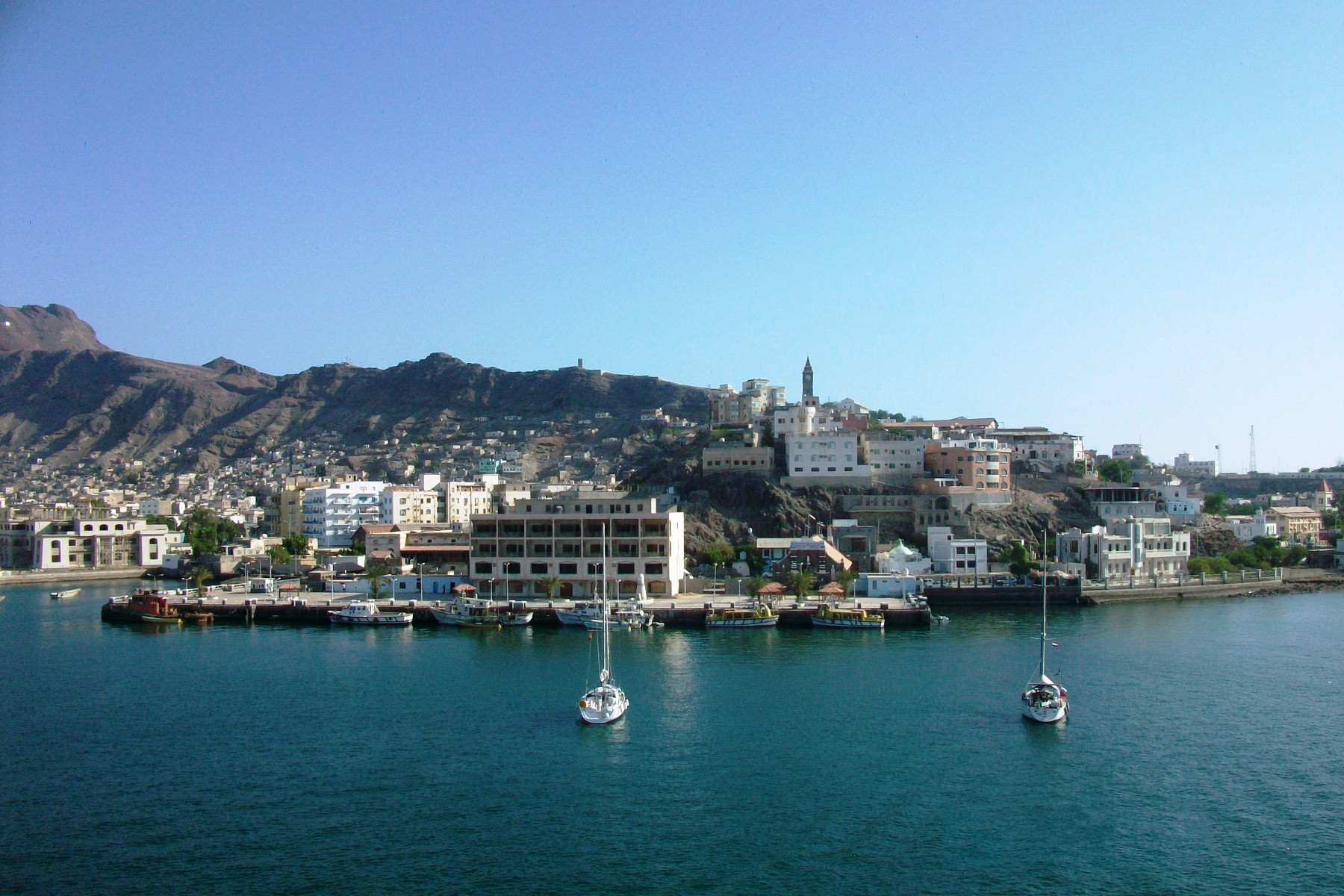
ADEN — The explosions were heard across the Crater district before any official word came. Three witnesses told Reuters they heard loud booms near the palace compound, which sits on a fortified rocky outcrop above Aden's old harbour, reached by a single heavily guarded road. Information Minister Moammar al-Eryani then confirmed what the sound already suggested: the Houthis had fired five ballistic missiles at Al-Maashiq Palace, and Yemen's cabinet said drones were part of the attack as well. Prime Minister Shaya Al-Zindani and the ministers with him were unharmed, Eryani said.
The human cost took longer to settle, and it moved the way casualty figures in this war usually move — upward. The government's first account, given to Reuters by two officials, was two security guards killed. By Thursday evening, Health Minister Qasim Mohammed Buhaibeh put the toll at five dead and 16 wounded, and he was specific about who they were: security personnel guarding the compound and civilian employees who worked in it, among them two members of the prime minister's own security detail. AFP's government sources, in between, reported four dead and ten wounded. The figures may still change; the direction, so far, has only been one way.
Two stories of one strike
What was hit depends on who is describing it, and both descriptions cannot be true in full. The Houthi movement claimed the strike within hours. Its military spokesperson, Yahya Saree, said the group's fighters had bombed what he described as a Saudi military operations headquarters inside the palace compound, along with weapons depots — framing the attack as part of a declared policy of, in his words, targeting Saudi military build-ups wherever they may be. The Houthi-run Saba news agency said the headquarters was run by Saudi officers. Reuters noted it could not independently verify those claims, and no evidence of a Saudi command centre inside Al-Maashiq has been produced publicly.
The government's account is simpler and harder to dispute in its essentials: missiles and drones struck the official headquarters of Yemen's recognised government, killed its guards and staff, and missed its leaders. The cabinet, meeting the strike head-on rhetorically, said the attack would not interrupt the government's work or its military campaign against the Houthis — the offensive it launched earlier this month under the name "Yemen's Dawn." Prime Minister Al-Zindani condemned the strike as cowardly and as a continuation of the group's criminal behaviour. Both sides, in other words, agree on the fact of the strike and on its target being the palace. They disagree about what the palace is: a seat of government, or a Saudi command post wearing one as cover. That disagreement is not a detail. It is the war's central argument, conducted this time in explosives.

A day of fire in every direction
The palace was Thursday's headline, but it was not Thursday's only target. Government forces reported Houthi ballistic missiles fired the same day toward Marib, the oil-rich province east of Sanaa that has been a front-line prize for years. The Saudi-led coalition said it intercepted and destroyed a drone over Khamis Mushait in the kingdom's southwest and another launched toward its southern region, and it listed a cruise missile intercepted over the Medina region — an interception the Houthis, notably, denied being behind, a denial worth recording alongside the claims. Saudi civil defence issued early-warning alerts during the day for Najran and Jazan before later announcing the danger had passed.
The coalition's spokesman, Maj. Gen. Turki al-Maliki, used Thursday to publish a ledger of the recent campaign: 127 weapons storage facilities and launch platforms destroyed in Yemen's mountains, he said, and a running toll for the Houthi strikes on King Khalid International Airport in Riyadh between October 7 and October 11 — 17 people killed and 333 injured, with the airport still closed. Those are coalition figures, offered by a party to the war, and they should be read that way; but the closure of the Saudi capital's airport is a fact anyone can check against a departures board, and it is the backdrop against which Thursday landed. The diplomatic calendar absorbed the shock too: the European Union and the Gulf Cooperation Council postponed a summit that had been set for Riyadh on October 24, with GCC Secretary General Jasem Albudaiwi citing the continuing Houthi attempts on Saudi Arabia and the airport's extended closure. A senior Saudi foreign ministry official, Raed Krimly, added a detail that matters for what comes next — Riyadh had asked the Houthis, in recent weeks, to meet in Muscat to lower tensions, and the Houthis had turned the invitation down. The Houthis, for their part, said Saudi Arabia had launched 65 airstrikes and missile attacks across Yemen in the previous 24 hours, and Yemen's military claimed its forces had killed the Houthis' ballistic missile and drone chief, a commander known as Abu al-Fadl al-Hadrami. That claim, like several of Thursday's, remains unverified independently.
Why this matters
Start with the target selection, because it is the message. In the nine days before Thursday, this site's own reporting tracked the Houthis' escalation ladder rung by rung: missiles at Aden's airport, repeated attacks on Riyadh's international airport that closed it, strikes on Saudi oil infrastructure, and a Houthi warning of a long conflict ahead. A palace is a different category of target. Airports and refineries are infrastructure; a seat of government is sovereignty itself. Striking it — with the cabinet inside — is a demonstration that no address in the government's Yemen is out of range, delivered at the moment the government is trying to prove the opposite with its "Yemen's Dawn" offensive and its advance toward the Bab el-Mandeb Strait.
Second, the strike tests the logic of the government's whole position. Aden has been the recognised government's de facto capital since the Houthis seized Sanaa in 2014, precisely because it was supposed to be the defensible seat — a port city at the country's southern tip, far from Houthi territory, under Saudi-backed protection. Ballistic missiles do not care about distance the way ground offensives do, and Thursday proved the compound's air defences could be saturated or evaded by a five-missile salvo with drones in the mix. If the government cannot guarantee the safety of its own headquarters, every ministry meeting, every visiting delegation and every aid organisation's country office in Aden reprices its risk. The EU-GCC summit postponement is what that repricing looks like in practice: the region's diplomacy literally could not convene where it had planned to.
Third, the timing ties Yemen's war tighter into the region's wider one. This front reignited as the confrontation between the United States, Israel and Iran widened across the Gulf, and President Trump said this week that he believed Iran was encouraging the Houthis' latest attacks — an accusation Saudi officials repeated on Thursday and Iran has not directly answered, beyond its standing position of political support for the group and denial that it supplies their weapons. Whether or not Tehran directed this strike, the effect is the same: a second, southern front of missile fire that threatens Saudi cities, Red Sea shipping and the energy infrastructure the world's markets are already watching through the Hormuz crisis. Escalation in Yemen no longer stays in Yemen. On Friday morning in Seoul, South Korean defence stocks jumped on the news — Hanwha Aerospace up more than 8 percent, Hanwha Systems more than 10 — a small, precise measure of how far the shockwave from five missiles in Aden now travels.
How Yemen got here
The war's current shape was set a decade ago. The Houthis seized Sanaa in 2014; Saudi Arabia intervened the following year at the head of a coalition backing the recognised government, and Yemen split into rival zones that have hardened ever since. Aden became the government's seat — the palace on the Crater heights its most fortified address, renovated after earlier fighting and guarded through every subsequent crisis, including the southern separatist convulsions that repeatedly shook the anti-Houthi camp from within. A long, grinding truce held the main fronts roughly in place for years. It collapsed this past July. Fighting resumed in earnest last month, the Houthis took ground along the Red Sea coast, and the government answered this month with "Yemen's Dawn," recovering territory near Bab el-Mandeb — the strait through which a significant share of the world's seaborne oil and container trade passes — even as the siege of Taiz tightened far to the north. Thursday's strike is best read inside that exchange: a government advancing on the ground, and a Houthi movement answering from the air, over the government's head, into its own headquarters.
Who gains, who loses
The Houthis gain the headline they sought: proof of reach. A movement that can put five ballistic missiles onto the government's palace in a single salvo, while simultaneously firing on Marib and forcing interceptions across southern Saudi Arabia, is advertising a missile force that a decade of coalition bombing has not dismantled — a point coalition spokesman Maliki implicitly conceded by describing an adversary that has acquired advanced technologies and become, in his words, the first group of its kind to field ballistic missiles, attack drones and explosive boats together. The cost to the Houthis is the retaliation now likely to follow, and the hardening of a Saudi position that had, weeks ago, quietly offered talks in Muscat.
The government loses the aura of the safe seat, and gains a grim kind of clarity. Its offensive continues, its cabinet is unharmed, and it can now make its case to the world with a smoking headquarters behind it — that it faces an enemy willing to strike the state itself. Saudi Arabia loses another week of normal life: a closed capital airport, air-raid alerts in its southern cities, a postponed summit, and a renewed Houthi warning on Thursday that Saudi airspace and airports are unsafe, holy cities excepted. The clearest losers, as in every round of this war, are Yemeni civilians — the palace's own civilian employees among Thursday's wounded, and a population for whom aid agencies were already warning this week of rapidly worsening conditions as the fighting spreads. A war that reaches palaces does not spare markets, hospitals or ports on its way there.
What the numbers actually say
Five missiles is a salvo, not a potshot — sized to test defences rather than merely announce intent, and paired with drones, the combination air defenders find hardest. Five dead and 16 wounded at a hardened, evacuated-in-part government compound says less about marksmanship than about how much explosive mass arrived. Set Thursday beside the coalition's own ledger for October 7–11 — 17 killed and 333 injured around Riyadh's airport — and the pattern is a campaign, not an incident: sustained, multi-target, and aimed at the symbols and systems of the Saudi-backed order in both countries at once. The coalition's answer, 127 launch and storage sites claimed destroyed, has not visibly reduced the launch rate; Thursday alone produced firings toward Aden, Marib and the Saudi south. That gap — between sites struck and missiles still flying — is the war's central military fact, and neither side's communiqués close it.
What happens next
The near term writes itself, which is the problem. The coalition has promised to continue degrading Houthi capabilities; the Houthis have promised that Saudi build-ups anywhere are targets and that Saudi airspace is unsafe; the government has promised its offensive continues. The Muscat channel, the one visible off-ramp, was declined before Thursday and looks narrower after it. Watch three things: whether the government relocates or disperses its working seat — a concession the Houthis would read as victory; whether the palace strike draws the United States, already weighing its role on this front, into a larger share of it; and whether the firing reaches again for the two assets the world cannot ignore, Riyadh's airport when it tries to reopen and the shipping lanes at Bab el-Mandeb. The summit that was meant to discuss this region's future on October 24 has been postponed because of this war. The war, on Thursday's evidence, is not postponing anything.
Sources: Reuters reporting from Aden and Riyadh (government officials, witnesses, coalition statements); CNN's report of the attack and the Health Ministry casualty figures; AFP reporting via government sources; Saudi-led coalition statements by spokesman Maj. Gen. Turki al-Maliki; Houthi statements via spokesman Yahya Saree and the Saba news agency. Casualty figures are as officially reported by the parties and may be updated; claims by all sides that could not be independently verified are identified as such in the text.