Starlink restored in Ukraine — that is Kyiv’s announcement. President Volodymyr Zelenskyy says Starlink and Starshield speeds are back in full and the Defence Ministry says its monitors record stable links above 400 kph; but Reuters notes the ministry stopped short of saying service had been fully restored, and a source in Ukraine’s Donetsk region told CNN the 160 km/h cap was still on there on Saturday morning.
Track it live: Ukraine war map, live — Signal Post News tracker · Live war tracker — Signal Post News
Update — claim check, Saturday evening: This article reports Kyiv’s announcement. Reuters, reporting Defence Minister Evhenii Khmara’s Saturday remarks, noted the ministry did not say whether Starlink/Starshield service had been fully restored, and CNN reported that a source on the ground in Ukraine’s Donetsk region said on Saturday morning that speeds in their area continued to be limited to 160 kilometres per hour. The restoration below is therefore presented as the ministry’s and the president’s account, with monitoring figures attributed to the ministry — not as an independently measured fact.
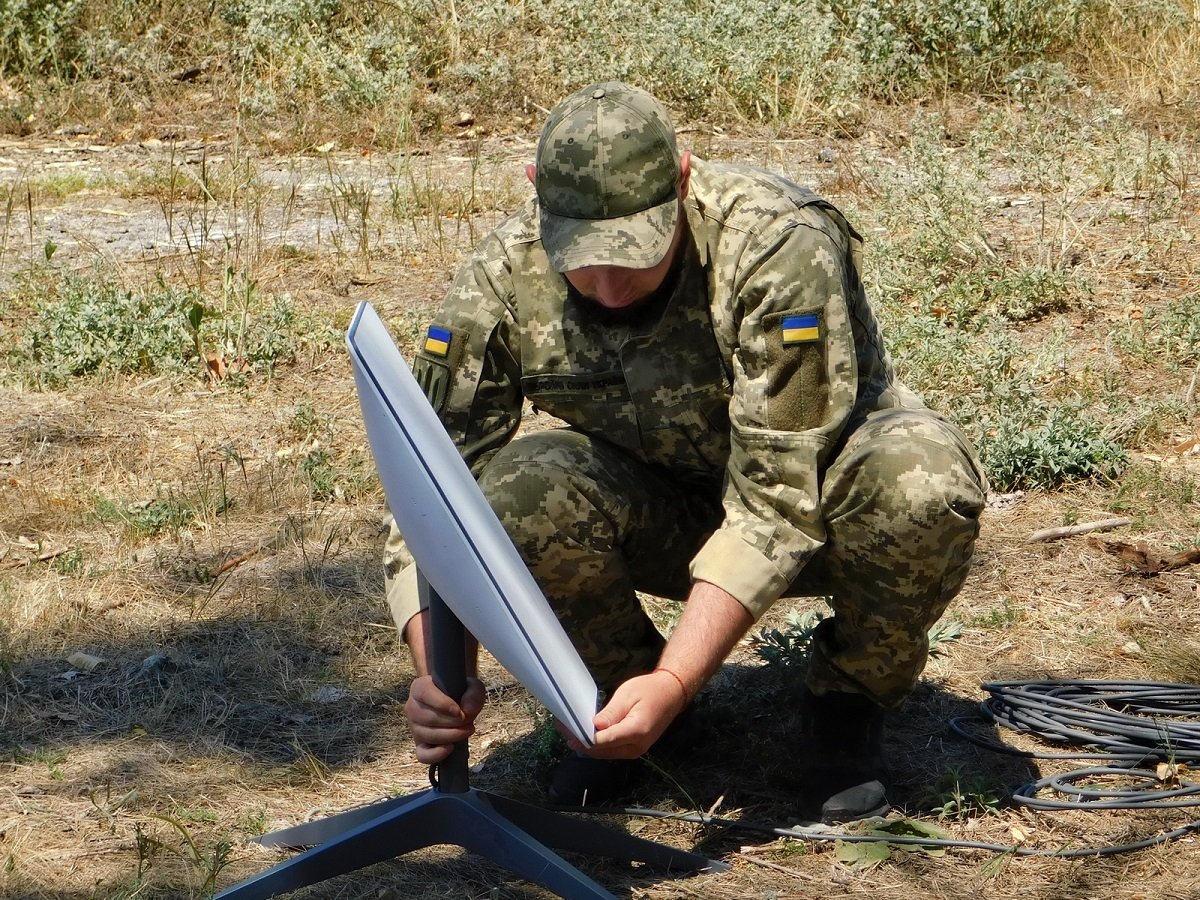
KYIV — Kyiv says the link is back. President Volodymyr Zelenskyy said on X on Saturday, October 24, that Starlink and Starshield operations in Ukraine “have been restored to the speeds we had before the restrictions” and that “the speeds are now where they need to be,” in remarks reported by NPR. The restoration began overnight, Zelenskyy said, and by morning the speeds were sufficient — the first announcement from Kyiv itself that the roughly ten-day slowdown, which cut connections on equipment moving faster than about 100 mph, is over. It is, for now, the president’s and his ministry’s account of the network’s state, and the reporting below attributes it that way.
Zelenskyy said the restoration matters on two fronts at once: for frontline logistics, and for defending Ukraine against Russia’s jet-powered Shahed drones, whose interception depended on links the cap kept breaking. He thanked members of Congress, senators, the media, the State Department and the President for their roles in getting the speeds back. “Protecting lives matters,” he wrote.
Kyiv says its monitors clock connections above 400 kph
Kyiv did not rest the announcement on the president’s word alone. Defence Minister Evhenii Khmara, in remarks reported by Reuters, said: “The Ministry of Defence’s monitoring systems are recording a return to normal speed for Starlink/Starshield. We are recording a speed of over 400 kph. The connection is stable.” Khmara credited “direct dialogue and the Ukrainian president’s persistent stance” for the outcome, the RFE/RL Ukrainian Service reported via TeslaNorth, and said monitoring continues. Reuters noted, however, a qualifier that matters: the ministry did not say whether Starlink/Starshield service had been fully restored.
Speaking to reporters in remarks reported by the Wall Street Journal and carried by TechCrunch, Khmara added further caveats. Starshield appears to be working normally again, he said; the military is still conducting tests; and Ukraine has not received an explanation for the restrictions. So the answer to the question Ukrainian commanders have asked for ten days — is Starlink working in Ukraine again? — is yes at the ministry’s instruments, on the ministry’s account. Whether it is yes everywhere along the front is a separate question, and on Saturday morning at least one answer from the ground said no.
A Donetsk source told CNN the cap was still on there Saturday morning
CNN reported that a source on the ground in Ukraine’s Donetsk region said on Saturday morning that speeds in their area continued to be limited to 160 kilometres per hour — the same ceiling, in metric, that had throttled terminals for ten days. CNN said it was not clear whether the restoration Kyiv announced was being felt across the country. The contrast had surfaced the evening before: Ukraine’s chargé d’affaires, Denys Sienik, told CNN on Friday evening that limits persisted — part of what the network described as mixed messages about whether, and when, the throttle was lifted. Kyiv’s announcement and the Donetsk report are not necessarily irreconcilable — a restoration can roll out across a network unevenly — but as of Saturday, the claim of full restoration rests on the ministry’s monitoring, not on confirmation from every sector of the front.
Ten days under the cap: the Starlink speed limit Ukraine’s drones could not outrun
The restrictions began affecting Ukrainian forces around October 13–14 and lasted about ten days. Under them, Starlink and Starshield terminals cut out when the equipment carrying them moved faster than about 100 mph (160 km/h). For a truck or a command post, that threshold rarely binds. For a drone in flight, it was the whole connection: Kyiv said drones lost connectivity mid-mission — some were lost outright, others flew slower to stay linked and were more vulnerable for it — and Shahed-interception missions and frontline logistics were disrupted or cancelled, as Zelenskyy and his adviser Serhii Beskrestnov described in this site’s earlier coverage. CBS News reported that the restrictions began on October 13.

Why the interceptor drones felt it first
NPR reported that the cap hindered Ukraine’s interception effort specifically — and the arithmetic shows why. Ukraine’s Starlink Shahed interceptor drones hunt jet-powered Shaheds that cruise faster than the 100 mph ceiling the terminals were enforcing; an interceptor that must slow down to keep its link, or lose the link to speed up, is an interceptor geometry problem with no good answer. Speeds previously capped at about 100 mph have now been recorded above 250 mph on the ministry’s monitors, NPR noted — the difference, if the ministry’s figures hold at the front, between a link that quit at the decisive moment and one that holds.
Who ordered the restrictions? Three accounts, and no document
Why was Starlink slowed in Ukraine at all? On that, the principals still contradict one another, and no party has produced documentary proof. Zelenskyy told NBC’s Meet the Press that Ukraine believed the U.S. government was behind the restrictions and that SpaceX acted on a U.S. government “message,” NPR reported. Elon Musk, in a statement posted on October 14, said: “Any limits on speed or usage are decided by the US military and ultimately POTUS” — adding that Starshield is owned and controlled by the U.S. government. The Wall Street Journal, however, reported that Musk himself ordered the throttle — with some sources saying he discussed it with the administration first. In the Journal’s account, via TechCrunch, Musk said Ukraine had “violated Starlink terms of service and used it for offensive drone strikes to kill people,” and warned that if Starlink were turned off, “the Ukrainian front line would collapse immediately.”
The Trump administration denied interfering. CNN reported, citing a person familiar with the call, that President Trump called Musk and asked him to restore service — a call the Wall Street Journal first reported. Asked about it on Friday, Trump was noncommittal about his own role: “Whether I called or whether somebody else called, doesn’t make any difference, I guess. The bottom line – he put it back.” Asked who had ordered the restrictions, he said: “I have no idea, but I wouldn’t tell you if I did” — and defended Musk: “Elon will never do anything wrong.” On Thursday the president had already said Musk had “put it back,” a claim Ukrainian officials disputed at the time; Saturday’s statement from Zelenskyy is the first announcement from Kyiv itself that full speeds are back, subject to the Donetsk caveat above. Russia, whose drones were the targets of the missions the cap disrupted, has not commented on the restoration.
Why this matters
A speed setting became a battlefield variable
The first lesson is about what a modern front line actually runs on. Ukraine’s nervous system — its command traffic, drone video, artillery coordination and logistics — rides on satellite infrastructure Ukraine does not own and does not control. This episode showed a single speed setting, changed without notice to Kyiv, functioning as a battlefield variable: it decided which drones could fly their profiles and which interception missions could be attempted, as surely as weather or ammunition supply. The numbers frame the stakes. A cap of about 100 mph sits below the cruise speed of the jet-powered Shaheds Ukraine must intercept and below the fast profiles its own drones fly; headroom above 400 kph, of the kind the Defence Ministry says its monitors recorded on Saturday, restores the geometry those missions were designed around. Whoever ordered the Starlink restrictions in Ukraine — the question that titles half the argument in Washington — the mechanism itself is now demonstrated: a configuration change in orbit-side software can reach all the way down to a trench.
The cap bracketed a week of peace pressure
The second lesson is timing, and it admits two readings, both of which should be stated plainly. The ten days of throttled connections bracket a week of intense U.S.-led peace pressure: the Oleshky local ceasefire confirmed by both sides, the 270-for-270 prisoner exchange, and trilateral talks planned in Abu Dhabi in November. Read one way, the episode was a technical and contractual dispute — over terms of service and how Starlink may be used — that happened to collide with diplomacy. Read the other way, it was leverage: a reminder, delivered at the negotiating season’s height, of how much of Ukraine’s war effort runs through a switch in American hands. Signal Post News takes no position between those readings, because the evidence does not yet support one: as of Saturday, no party — not Kyiv, not SpaceX, not the White House — has produced documentary proof of who ordered the cap, and the officials closest to the question are giving incompatible accounts of it.
Allies are pricing the precedent
The third lesson is the one being absorbed in other capitals. Every ally that has integrated commercial satellite links into its war plans has now watched a wartime partner’s connectivity throttled mid-war — whoever ordered it — for ten days. That precedent reprices sovereign alternatives: European officials were already weighing the EU’s Govsatcom capacity as a backstop during the disruption, a thread this site’s Brussels coverage raised while the cap was still in force. Kyiv’s announcement, if the restoration proves as complete on the ground as the ministry’s monitors suggest, ends the outage; it does not retire the question the outage asked, which is what a guarantee of wartime connectivity is worth when the network answers to someone else.
The network the front line runs on
Starlink has been load-bearing in Ukraine since the first weeks of the full-scale invasion in 2022, when terminals rushed into the country kept command posts, hospitals and government offices online as Russia struck the power and communications grid. Its role widened into the war’s daily machinery: frontline communications where radios and fibre could not reach, drone operations, artillery coordination, and the unglamorous logistics — including food and water delivery — that NPR noted in its account of the system’s importance, in a lineage that runs back to the besieged defenders of Azovstal in Mariupol, who stayed connected to the outside world over Starlink in 2022.
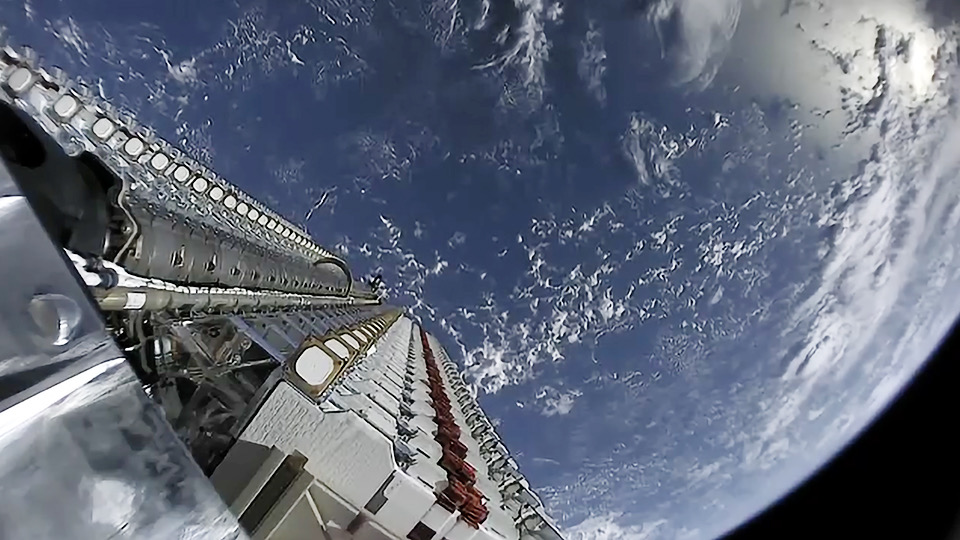
The two names in this story are not interchangeable. Starlink is SpaceX’s commercial satellite internet service, sold to the public and to Ukraine’s military among many customers. Starshield is the military-grade counterpart built for government use — owned and controlled by the U.S. government, on Musk’s own account, with its limits set by the U.S. military and ultimately the president. That distinction is why the question of who ordered the Starlink restrictions in Ukraine has never had a simple address: the throttle sat somewhere between a private company’s terms of service and a government-controlled military system, and each side of that line has pointed at the other. Nor is this the first crisis of its kind: disputes over where and how Starlink could be used in the war have flared into diplomatic rows before, making this at least the second time access to the network became an argument between Kyiv, Washington and SpaceX.
The restoration was announced on a crowded day of war
The announcement came on a day when the war itself was not pausing for the diplomacy around it. The same Saturday, Ukraine said its forces had struck the Togliattikauchuk petrochemical plant in Tolyatti and the Proton plant in Oryol — the missile-parts factory whose strike killed three people, as our report on the Oryol strike detailed — while in Kyiv a Russian drone hit a residential building in the Obolon district, NPR reported. A restored satellite link does not change that ledger; if Kyiv’s account holds across the front, it changes how fast, and how connected, Ukraine can work within it.
What happens next
The first test is durability — and geography. Kyiv’s monitors are still running, the military’s tests continue, and the practical question for frontline units is whether the speeds Kyiv announced hold in Donetsk region as they do on the ministry’s instruments — through the Oleshky ceasefire window, which the Russian Ministry of Defense has said it will implement from October 27, and into the Abu Dhabi talks planned for November, where connectivity guarantees may now sit on the table alongside territory and prisoners. The second test is explanation: Ukraine says it has received none, and whether one is ever given — by SpaceX, by the Pentagon, by the White House — will say much about which of the competing accounts was true. The third is what Kyiv does with the lesson: Ukraine’s push for alternatives and guarantees, from European capacity to contractual protections on the services it already uses, was underway before Saturday and is unlikely to slow down now that the immediate crisis has, on Kyiv’s account, passed. A front line that watched its nervous system throttle once will plan as if it could happen again.
Related coverage: Starlink Disruptions Ukraine Military: Front Lines Feel the Slowdown as Zelenskyy Says Access Is Not Fully Restored — our earlier report on the slowdown at the front and the Brussels reaction · Trump Calls Musk and Asks Him to Lift the Starlink Restrictions Throttling Ukraine’s Drones · Ukraine Missile Strike on Oryol Plant Kills Three as Kyiv Confirms Hit on Missile-Parts Maker · Melania Trump Oleshky Ceasefire: Russia and Ukraine Agree to Halt Fighting in One Front-Line City From October 29
Sources: Reuters (October 24, 2026) — Defence Minister Evhenii Khmara’s Saturday remarks and the ministry monitoring quote (“a return to normal speed for Starlink/Starshield… over 400 kph… the connection is stable”); Reuters’ note that the ministry did not say whether Starlink/Starshield service had been fully restored. CNN (October 24, 2026) — the Donetsk-region ground source still limited to 160 km/h on Saturday morning and CNN’s caveat that it was not clear the restoration was felt across the country; chargé d’affaires Denys Sienik’s Friday-evening statement that limits persisted, and the “mixed messages”; the Trump–Musk call per a person familiar with it, first reported by the Wall Street Journal; Trump’s Friday remarks. NPR (October 24, 2026) — Zelenskyy’s X post announcing the restoration (“restored to the speeds we had before the restrictions”); the overnight restoration timeline; frontline logistics and jet-powered Shahed defence; the thanks to Congress, the State Department and the President; the cap at about 100 mph and its hindrance to interception; the Meet the Press claim that the U.S. government was behind the restrictions; the same-day strikes on Tolyatti and Oryol and the drone hit in Kyiv’s Obolon district. TechCrunch (October 24, 2026), reporting the Wall Street Journal — Khmara on Starshield working normally again, continuing tests and the absence of any explanation; the ten-day restriction at about 100 mph; Musk’s posts on Starshield’s U.S. government control, the terms-of-service claim and the front-line warning. RFE/RL Ukrainian Service via TeslaNorth (October 24, 2026) — Khmara’s credit to direct dialogue and the president’s persistent stance, and the 400 km/h monitoring figure.