Breaking · War / Ukraine
Track it live: Follow the Ukraine war map and latest battlefield developments
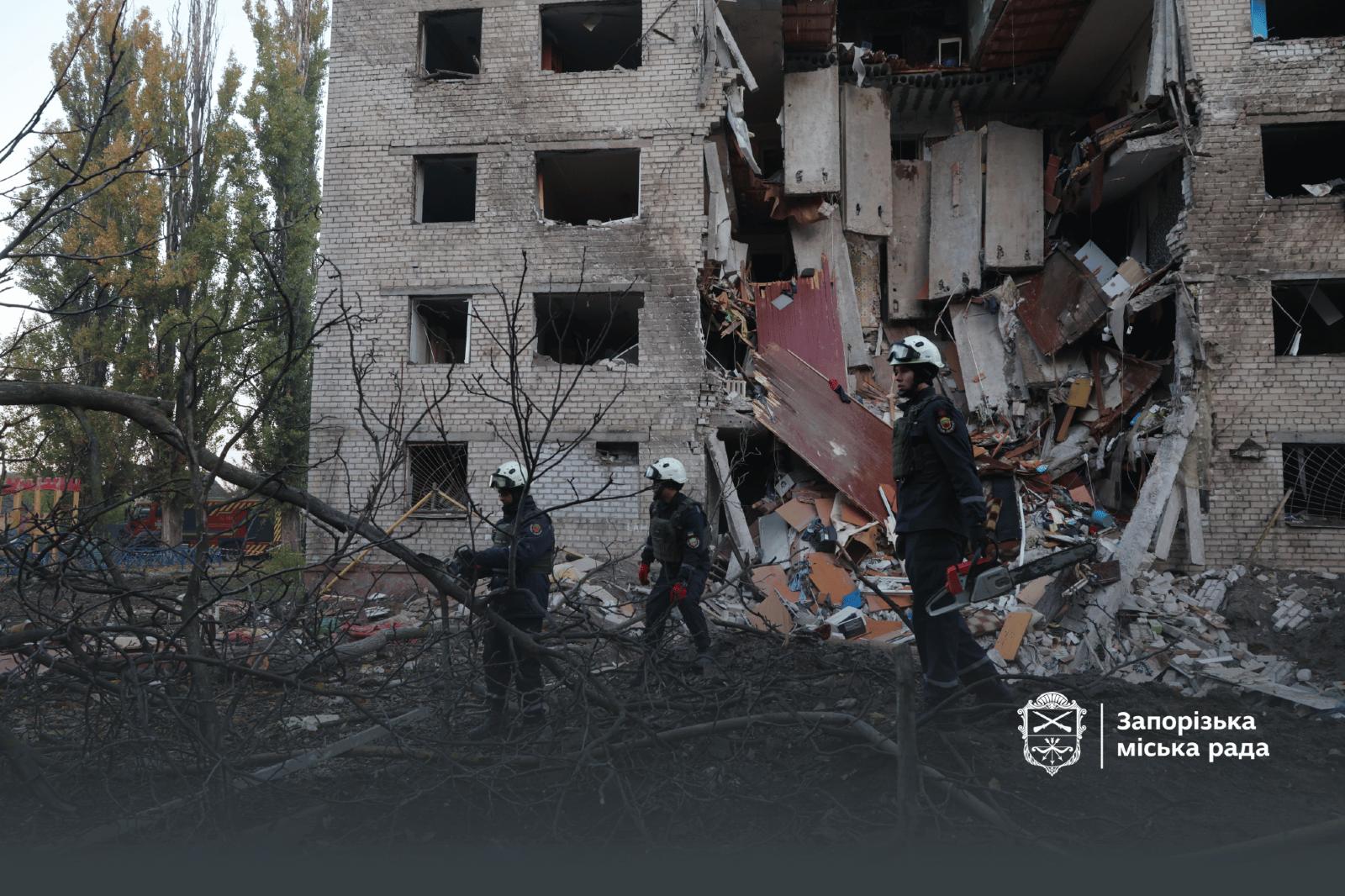
The Zelenskyy Russia thank you diesel strike accusation landed Saturday after five Russian glide bombs hit residential buildings in Zaporizhzhia. President Volodymyr Zelenskyy said the assault was Moscow's “thanks” for the United States lifting restrictions on Russian diesel exports, a direct challenge to the Trump administration one day after it announced a fuel deal with President Vladimir Putin.
Zelenskyy's post initially said 12 people had been confirmed killed, including three children, with 14 injured and 12 missing. Ukrainian emergency services later cited at least 15 deaths. Reuters reported a still-later toll of 20 killed, including three children, and 18 wounded. Those figures come from Ukrainian officials and changed as rescuers searched the ruins; they should not be treated as independently verified or final.
The president's argument was political as well as chronological. The U.S. policy change did not cause the pilots to launch the bombs, and no public evidence shows the diesel decision was part of Russia's targeting process. Zelenskyy's claim is instead about incentives: he says Moscow interpreted relief from economic pressure as proof it could continue military operations without paying a higher diplomatic price.
What Zelenskyy said after the Zaporizhzhia glide bomb attack
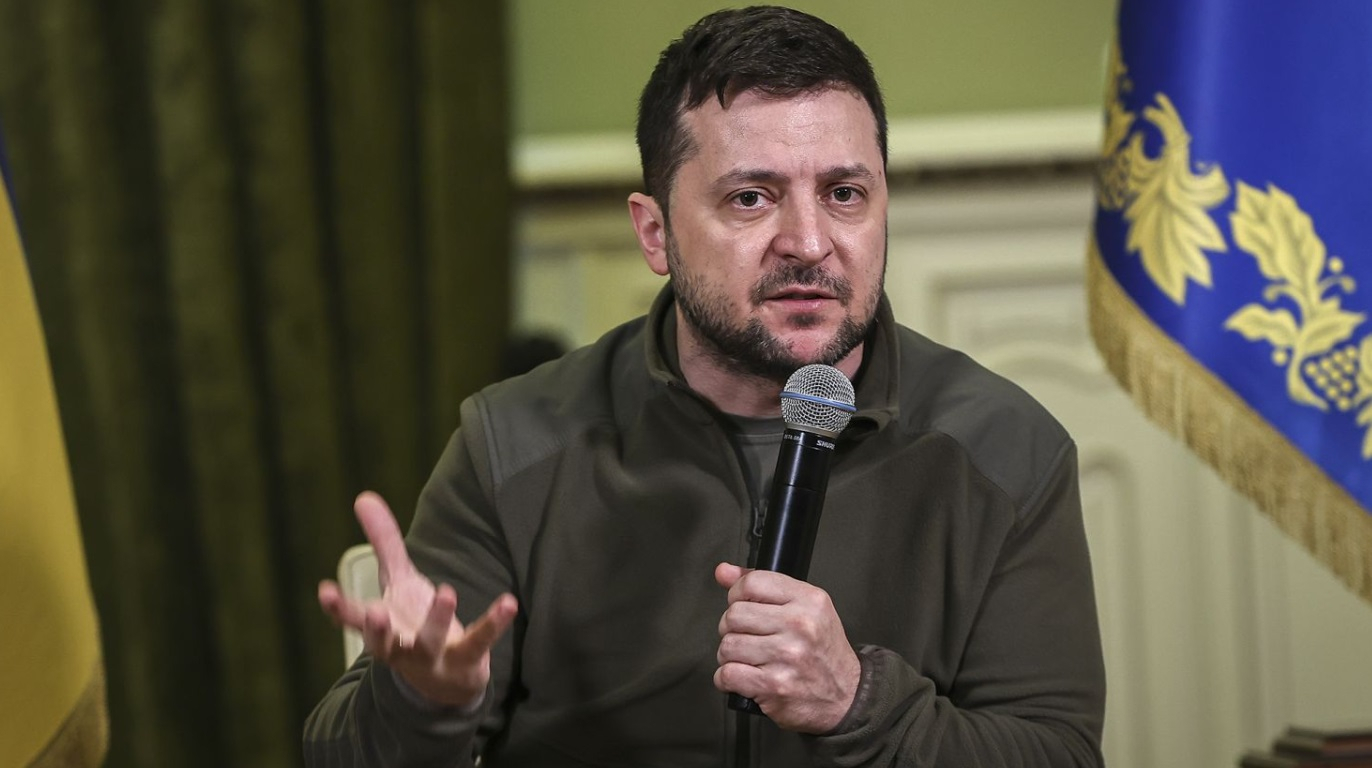
In his Saturday post on the official @ZelenskyyUa account, Zelenskyy wrote: “Last night confirmed once again that in Russia, they take any easing of pressure to mean they can keep fighting, to mean they can keep dropping bombs on cities. Different signals are needed.” His wording was notably sharper than Kyiv's usual request for more sanctions because it attached a specific U.S. decision to a specific mass-casualty attack.
The attack struck homes rather than an announced military facility, according to Ukrainian accounts and imagery cited in reporting. Russia has repeatedly said its broader campaign targets military and energy infrastructure and denies deliberately targeting civilians. Moscow had not, in the reporting available at publication, provided a detailed public account of this strike or evidence identifying the intended targets.
The casualty revisions illustrate a familiar problem in wartime reporting. A first count reflects bodies recovered and survivors located; later totals rise when rescue teams reach deeper sections of a collapsed building. The 12-, 15- and 20-death figures are therefore snapshots from different moments, not necessarily contradictions. The defensible conclusion is that Ukrainian authorities reported a mass-casualty strike, while the precise final toll remained subject to change.
The Trump-Putin diesel deal behind the dispute
Russian diesel sanctions suspension and the promised volumes
President Donald Trump announced the arrangement Friday after speaking with Putin. Trump said Russia would supply more than 300,000 tons of diesel immediately, 500,000 tons in November and 1 million tons soon afterward, followed by another 3 million tons within a short period. IBTimes reported that sanctions were suspended until April 2027 and described a nearly 2 million-ton staggered release in the initial schedule.
The totals need careful reading because political announcements often mix firm cargo commitments with later intentions. The immediate and November figures add to at least 800,000 tons. Including the next 1 million brings the first sequence above 1.8 million tons; the additional 3 million would take the eventual ambition far higher. Whether all of those barrels move, at what price and through which intermediaries will determine the revenue Moscow actually receives.
The White House's rationale is straightforward. Extra diesel supply can ease pressure on wholesale fuel markets, protect trucking and farming costs, and limit price increases before the U.S. midterm elections. Supporters can argue that an energy carveout is not an endorsement of Russia's war but a consumer-protection measure, especially when tight supply transmits quickly into transportation and food prices.
Kyiv's objection is equally direct. Diesel exports generate revenue for Russia, and a suspension reduces one element of the economic pressure intended to constrain the war. Even if the deal lowers prices at U.S. pumps, Ukraine sees money flowing to the state attacking it and a public reward arriving before Moscow accepted a ceasefire.
Miami Ukraine peace talks were already under strain
A surprise announcement during U.S.-Ukraine negotiations
U.S. Special Envoy Steve Witkoff and Jared Kushner met Ukraine's chief negotiator, Rustem Umerov, in Miami on Friday to discuss a proposed settlement. Zelenskyy said the diesel announcement caught Kyiv by surprise, and the Ukrainian delegation headed home Saturday. That sequence matters because negotiations depend not only on written proposals but also on confidence that major policy changes will not be unveiled without consultation.
The Kremlin's description of Friday's Trump-Putin call moved in the opposite emotional direction. Putin aide Yuri Ushakov called it “very substantive and friendly” and said neither leader wanted to be the first to end the conversation. Moscow can present the fuel agreement as proof that selective economic cooperation is possible even while the war remains unresolved.
Russia's likely argument is that sanctions distorted energy trade without changing its security objectives, and that commercial engagement can create a channel for wider diplomacy. Ukraine and several European governments counter that relief before measurable military concessions weakens leverage. Those positions are not merely rhetorical; they represent competing theories about whether incentives should precede or follow de-escalation.
Why this matters
The accusation tests whether sanctions still function as leverage
Zelenskyy's statement elevates the issue from an energy transaction to a credibility test. Sanctions work partly through material restrictions and partly through expectations. If Moscow believes restrictions will ease because fuel prices are politically painful in the United States, it may conclude that waiting creates better terms. If Washington believes targeted relief can buy cooperation or stabilize markets without changing the battlefield, it may view the same move as pragmatic bargaining.
The strongest evidence for either interpretation will come after the announcement, not from the rhetoric surrounding it. Watch whether Russia changes the pace or target set of attacks, whether it makes a verifiable negotiating concession, and whether diesel cargoes move on the promised timetable. A price decline alone would validate the market objective but not the diplomatic one; a battlefield pause without completed shipments would tell a different story.
The human timing makes the policy harder to separate from the war. Reuters described the Zaporizhzhia bombing as the third mass-casualty attack that week. Nearly 80 civilians were reported killed Wednesday and Thursday, including at least 30 in a bombing in Kramatorsk and 22 in a missile attack on Pryluky. Those are Ukrainian official figures reported by news organizations, not an independently audited count, but they show why Kyiv views any easing of pressure as urgent rather than abstract.
Ukraine overnight attacks spread far beyond Zaporizhzhia
Kyiv power outages sharpen the winter energy threat
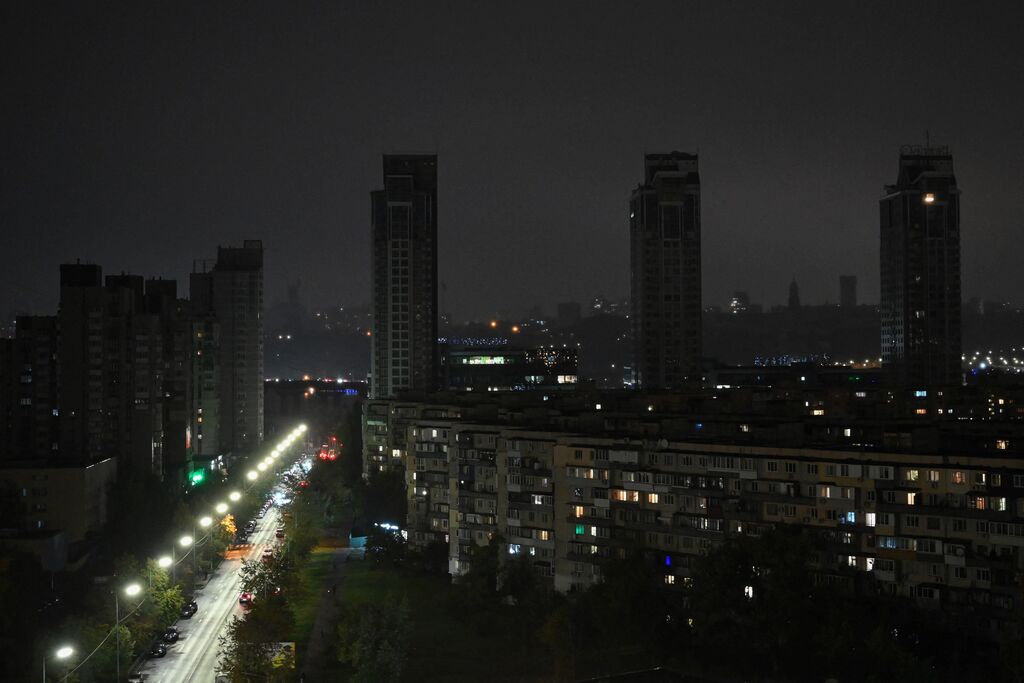
Zelenskyy said 13 other Ukrainian regions were attacked overnight. Ukraine's largest private energy provider reported large-scale outages in Kyiv. Reuters also reported a Saturday afternoon missile strike on a Kyiv restaurant that wounded seven people and said metro trains were halted for the second time that week.
Russia, meanwhile, said it had struck a data-processing center in Kyiv and a cargo ship bound for Odesa. Those claims had not been independently confirmed in the reporting reviewed for this article. They illustrate Moscow's stated military logic: pressure logistics, communications and energy systems that support Ukraine's war effort. Ukraine says the practical effect is widespread civilian harm, especially when power and transit fail.
The winter dimension magnifies every outage. A short summer interruption is disruptive; a repeated winter loss of electricity can also remove heat, water pumping, mobile service and hospital resilience. Russia's winter energy campaign therefore operates on two levels—military degradation and pressure on civilian endurance—while Ukraine's air-defense shortage forces it to choose which cities and systems receive the strongest protection.
Who benefits, who loses and what critics say
Price politics ahead of the U.S. midterms
American consumers and fuel-intensive businesses could benefit if the additional supply lowers diesel benchmarks. That matters politically because diesel feeds into freight, construction and agricultural costs, which eventually appear in store prices. The White House gains a concrete cost-of-living argument if the market responds.
Russia benefits if the sales restore volume, revenue and a precedent for exceptions. Traders, shipping firms and refiners able to handle compliant cargoes may also gain business. Ukraine bears the strategic cost if relief arrives without a reciprocal reduction in attacks, while European allies face the challenge of keeping their sanctions message coherent when Washington chooses a carveout.
Critics say the agreement rewards aggression and gives Putin time and revenue. Supporters can answer that leaders have a duty to manage energy shocks and that commercial contact may support diplomacy. Both claims are hypotheses until measured against outcomes. The key questions are whether prices fall, whether Moscow earns materially more, and whether any verified military restraint follows.
EU Russia sanctions Monday: a widening transatlantic split
European Union foreign-policy chief Kaja Kallas said foreign ministers intended Monday to approve major new listings aimed at Russia's war machine, reported as roughly 1,600 individuals and entities. Kallas framed the diesel arrangement as revenue for Moscow. If the EU tightens restrictions while the U.S. relaxes one, the alliance will be sending two different signals about the price of continued war.
That does not automatically mean the coalition is breaking. The United States could argue that a narrow, temporary energy exemption sits inside a broader pressure strategy, while Europe can continue expanding asset freezes and travel bans. But enforcement becomes harder when sanctioned trade can be routed through an exception that markets expect may grow.
Monday's final legal text will matter more than the advance number. Listings vary in economic weight, and a long roster does not necessarily equal a large revenue loss. The most consequential measures will be those that touch finance, shipping, insurance, technology or firms that keep military production moving.
What happens next
Three scenarios for sanctions, strikes and U.S.-Ukraine relations
First, a narrow transactional path: diesel cargoes move, U.S. prices ease and both Washington and Moscow keep the deal separate from peace talks. This would meet the administration's market goal but leave Zelenskyy's incentive argument unanswered if attacks continue.
Second, conditional diplomacy: Washington ties later volumes or the April 2027 sanctions window to measurable steps such as limits on strikes against energy infrastructure. That would convert the exemption into leverage, but only if conditions are public enough to verify and violations carry consequences.
Third, a widening allied rupture: winter attacks intensify, the EU tightens sanctions and Kyiv openly challenges more U.S. decisions. That outcome would complicate the Miami framework and encourage Moscow to test how far economic interests can divide Ukraine's supporters.
The immediate test is empirical. Track the rescue toll in Zaporizhzhia, the tempo of Russia's winter strikes, the EU's final Monday package, and the actual diesel shipments rather than their announced maximum. Zelenskyy's claim is that policy signals change battlefield behavior. The coming weeks will show whether Washington's relief buys restraint, simply buys fuel, or costs more allied trust than the price benefit is worth.
Related coverage
Sources
- IBTimes Singapore — Zelenskyy statement, diesel terms and Kyiv attacks
- Reuters via KELO — updated casualties and wider attack context
- EA WorldView — U.S.-Russia diesel deal and diplomatic context
- GhanaMMA — regional attacks and European response
- Official @ZelenskyyUa account — presidential statement reference
Reporting note: Casualty figures and claims about targets are attributed to the officials or parties making them. Analysis of incentives and scenarios is Signal Post News's assessment, not an established causal finding.