War / Ukraine — In a 1-hour-50-minute Diary of a CEO interview released Thursday, President Volodymyr Zelenskyy rejected Donald Trump's diesel blame, called a ceasefire itself a "huge compromise," and asked why the rhetoric aimed at him is never aimed at Vladimir Putin.
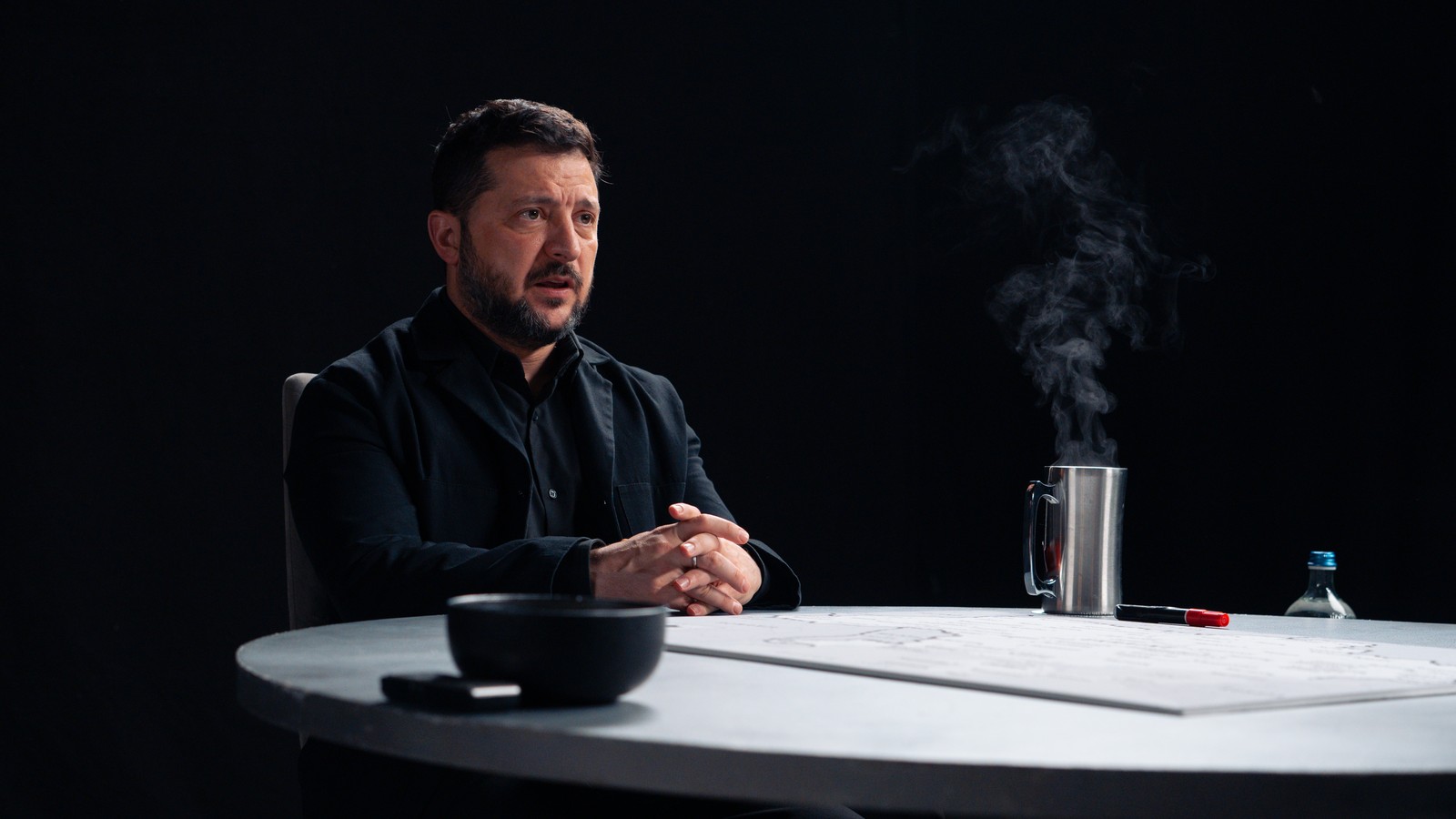
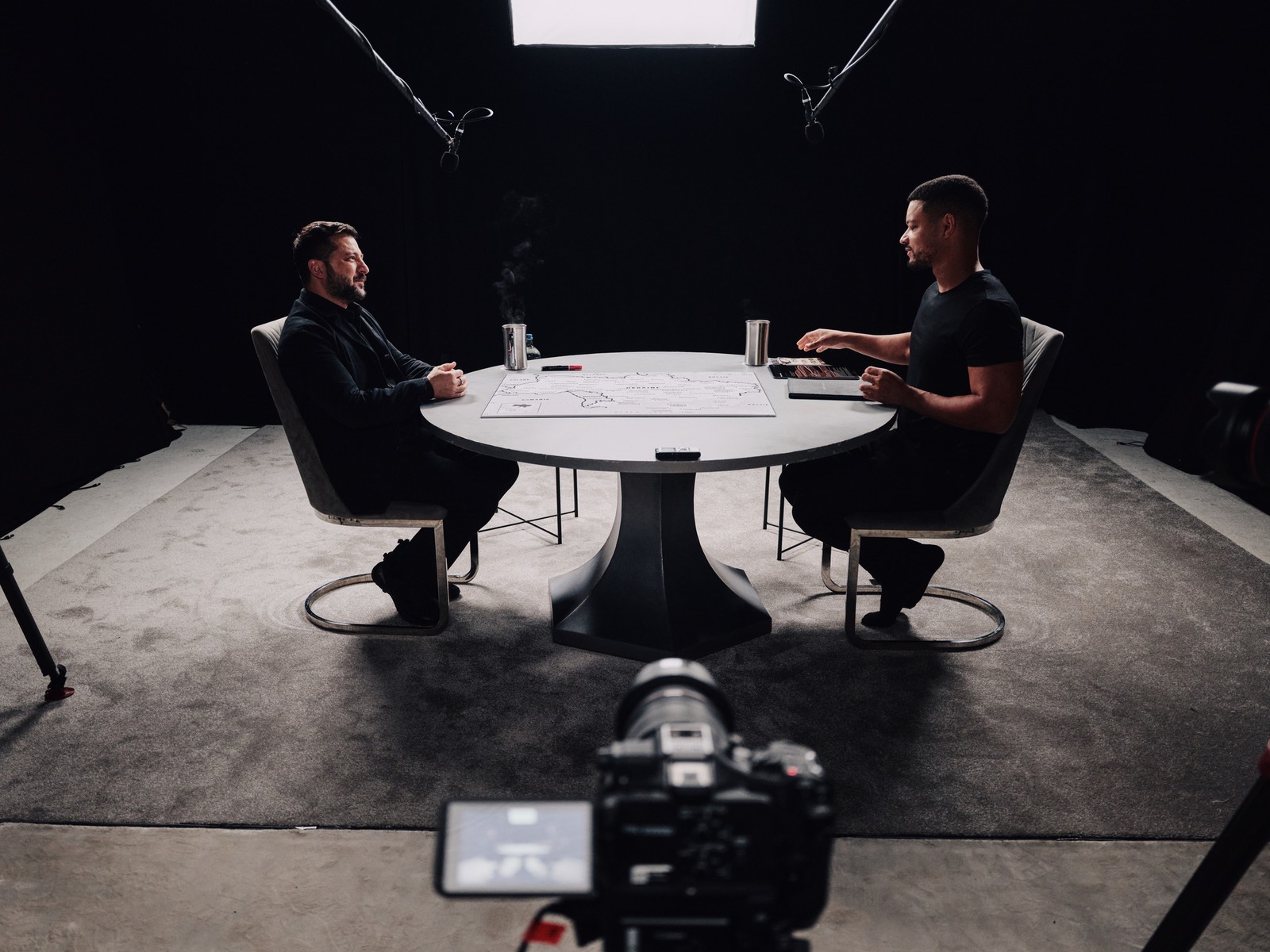
The Zelenskyy Diary of a CEO interview, released on Thursday, October 22, put Ukraine's president in an unusual venue for a wartime leader: across a round table from Steven Bartlett, host of one of the world's most-downloaded podcasts, for a conversation that ran 1 hour and 50 minutes. Its most quoted passage came near the end. Bartlett played Zelenskyy a clip of President Donald Trump saying the Ukrainian leader "could have settled this war many times" and pressing Ukraine to stop striking Russian refineries because of the effect on diesel supplies. Zelenskyy's answer was direct: Russian diesel exports have "zero impact on prices in the United States of America," Ukraine strikes back because Russia is hitting its power grid — and "I think it's wrong and unacceptable that he pins Russia's aggression and Russia's killings on me."
Track it live: Ukraine war map — live front-line and strike tracker
The diesel argument, made in full
Zelenskyy used the long format to make the most complete version yet of an argument he has been building for weeks. "I've always told President Trump, broker an energy ceasefire. At least on energy. At least let's give people light," he said. Putin, he argued, refuses — so the strikes continue. "The Russians hit our energy grid. Our people live without power. We don't have oil, gas, diesel. What hurts us is electricity. They hit our electricity. We strike back at their diesel." Kyiv Post, reporting the interview the same day, noted that Zelenskyy pointed instead to disruption around the Strait of Hormuz as the heart of the energy problem, and that energy analysts have likewise questioned whether additional Russian diesel supplies would significantly reduce fuel prices, pointing to the Hormuz disruption during the US-Israeli war with Iran.
That framing collides head-on with a policy that is already live. Trump has described an arrangement under which Russia supplies 300,000 metric tons of diesel immediately, then 500,000 tons in November and 1 million tons after that, and he has publicly blamed Ukraine's refinery campaign for high American diesel prices — telling supporters that Zelenskyy "wants to make problems for our farmers, our ranchers, with diesel fuel," and suggesting Ukraine should get a new president. Zelenskyy's counter, delivered calmly and at length, is that the causality runs the other way: the refinery strikes are a response to a Russian campaign against Ukrainian electricity that Moscow will not pause, and a reciprocal energy ceasefire remains on the table whenever the Kremlin wants one. He added a condition with a price tag attached: if Washington cannot secure that truce, it should provide the air-defence missiles Ukraine needs to protect its grid — deliveries Kyiv Post noted Kyiv is seeking financed by European partners, not as gifts.
"A ceasefire is a huge compromise"
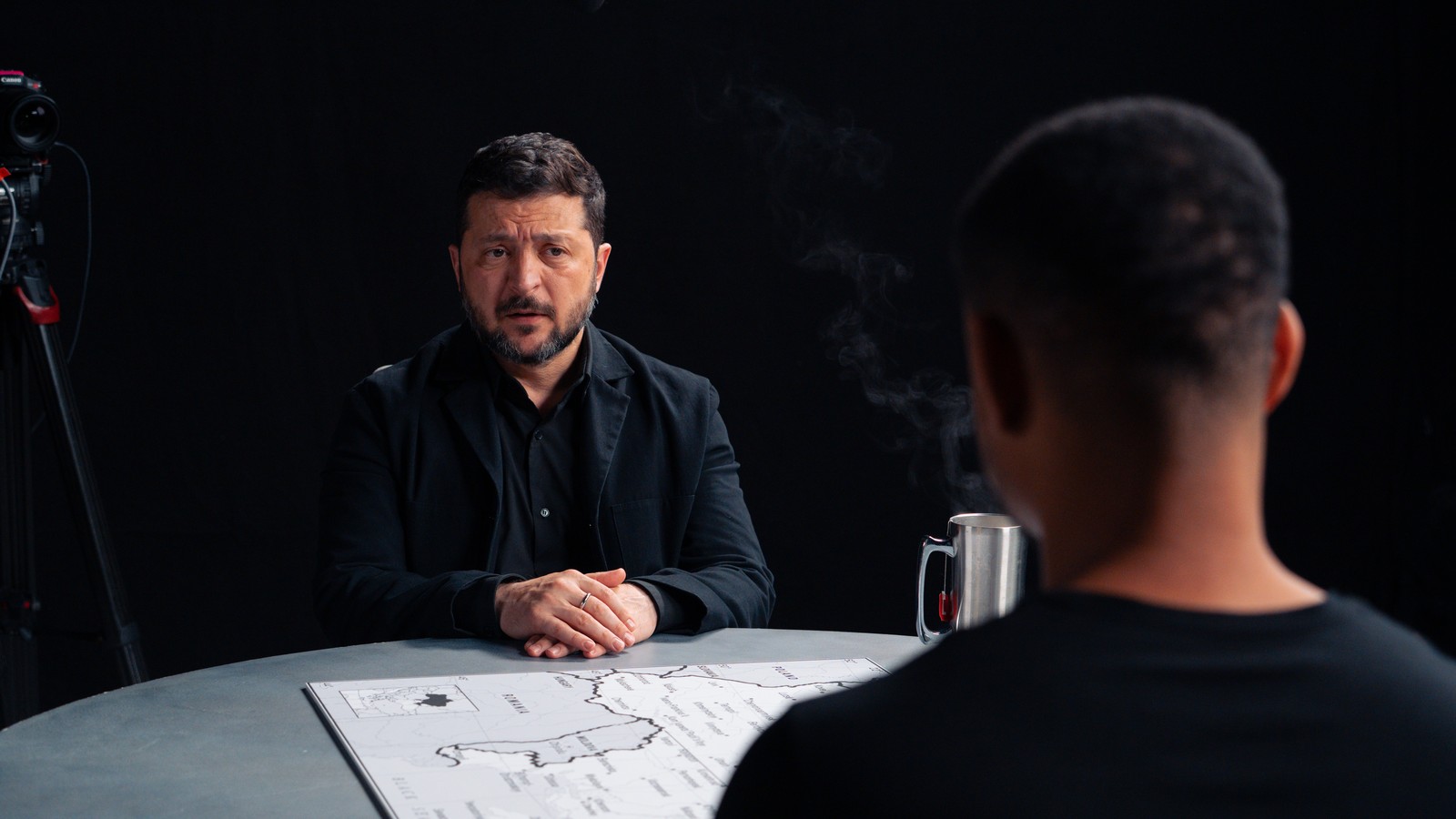
The interview's second major passage concerned what Ukraine is actually being asked to accept. "When President Trump says we need to find a compromise — we live with this," Zelenskyy said. "A ceasefire and sitting down at the negotiating table — it is a huge compromise." He grounded that claim in Bucha, which he named as his hardest day of the war: liberated streets, bodies with hands tied, people tortured and buried in pits. "How can you force them when their child was tortured? How do you forgive? It's impossible. I desperately want justice," he said. "People's hatred isn't going anywhere. It takes time and justice. And that's why it's a huge compromise." He said he has "tried many times to tell the President of the United States: understand us. This is a huge compromise just to hold the lines where we are" — language consistent with his position this week that Kyiv could accept freezing the front lines as a basis for talks, while insisting that freezing them is itself the concession, not the starting point for further ones.
The closing exchange: rhetoric, aimed the other way
Bartlett's final question was how the war realistically ends. "Trump can bring Putin to the negotiating table very easily," Zelenskyy said. "The way he talks about me, President Trump, he needs to adopt that kind of rhetoric about Putin." Asked why that had not happened, he paused: "I don't know. Honestly, I don't know." He was careful, throughout, to separate the man from the argument: "I have a good relationship with him, with Trump," he said — the same conciliatory note he struck the same day on CNN, where he told Christiane Amanpour there was "nothing personal" between him and Trump while warning that lifting sanctions would only make Putin stronger. Kyiv Post reported that Zelenskyy also pointed to sanctions approved by Congress as another instrument available to Washington. There was no immediate White House response to the podcast remarks in the reporting available at publication.
Why this matters
The venue is part of the story. The Diary Of A CEO was ranked No. 1 globally by per-episode downloads and views by Podscribe in July 2026 (4,442,708, ahead of Crime Junkie's 4,387,293) and was named by Spotify the second most-popular podcast worldwide in 2025. A wartime president does not give such a show 110 minutes by accident: the audience Zelenskyy needs — younger, international, not necessarily following the war's daily wires — is precisely the one a podcast reaches and a press conference does not. The episode's early numbers underline the calculation: more than 1.5 million YouTube views by the evening of release day, and same-day write-ups from Ukrainska Pravda and European Pravda to Kyiv Post and the Telegraph.
Substantively, the interview is Zelenskyy's clearest attempt to reframe three arguments at once. On diesel, he contests the factual premise of Trump's Russia deal rather than merely its politics — a claim that can be checked against the Hormuz disruption analysts keep citing. On compromise, he relocates the word: freezing the lines, he argues, is not the absence of compromise but the substance of it, given what Ukrainians are being asked to live alongside. And on rhetoric, he identifies the asymmetry — a US president who calls him more difficult than Putin while describing Putin, this week, through his envoy, in humanitarian terms — as the war's central diplomatic problem. Each framing is aimed over the heads of negotiators at the publics who will judge any deal.
The 2022 passages, and what happens next
Much of the episode is retrospective, and one exchange travelled as far as the politics. Walked back to February 2022 — the bunker, the 64-kilometre convoy, missiles over Kyiv — Zelenskyy recounted President Joe Biden's call offering evacuation help. "What did you say to Biden?" Bartlett asked. "I need ammunition, not a ride." Biden "was the first," he said; "many Europeans offered me that later." Leaving, he said, "would be betrayal. Betrayal of my human decency and the constitution of Ukraine" — and Russia, he argued, wanted him to run so that people would follow. He described an army that grew from 200,000 to 800,000 as volunteers arrived, and opened the conversation with a quieter admission: "Well, it's hard. I'll be honest, I don't sleep. It's a huge, terrifying pain that I wouldn't wish on anyone."
The interview landed in a crowded diplomatic week: hours after another Russian barrage on Kyiv, a day after US envoy Steve Witkoff's three-hour meeting with Putin in St. Petersburg at which the Kremlin signalled it was prepared in principle to resume trilateral talks after November 10, and on the same day Zelenskyy also made his case on CNN. Whether the podcast changes anything in Washington is the open question. Trump's leverage theory has been that pressure on Kyiv produces movement; Zelenskyy's podcast argument is that the pressure is pointed at the wrong capital, and that the one man who could redirect it — "very easily," in his telling — has so far chosen not to. The next test comes quickly: if trilateral talks do resume in November, the rhetoric each side brings to that table will show whether this interview was a footnote or a marker.
Sources
The Diary Of A CEO, President Zelenskyy episode, released October 22, 2026 (episode and transcript excerpts via the show and Podscan); Steven Bartlett's official site, "Steven Bartlett Zelenskyy Interview Makes International News," October 22, 2026; Kyiv Post, "'Wrong and Unacceptable': Zelensky Accuses Trump of Shifting Iran Blame to Kyiv," October 22, 2026; Ukrainska Pravda via European Pravda, "Zelenskyy: Trump can help end war, but must change rhetoric towards Putin," October 22, 2026; CNN, Amanpour interview with President Zelenskyy, October 22, 2026 (same-day context). Related Signal Post News coverage: Zelenskyy blasts Trump's Russia diesel deal; Zelenskyy accepts freezing the front lines; Kyiv missiles and the resumption of peace talks.