Yemen displacement crisis 2026
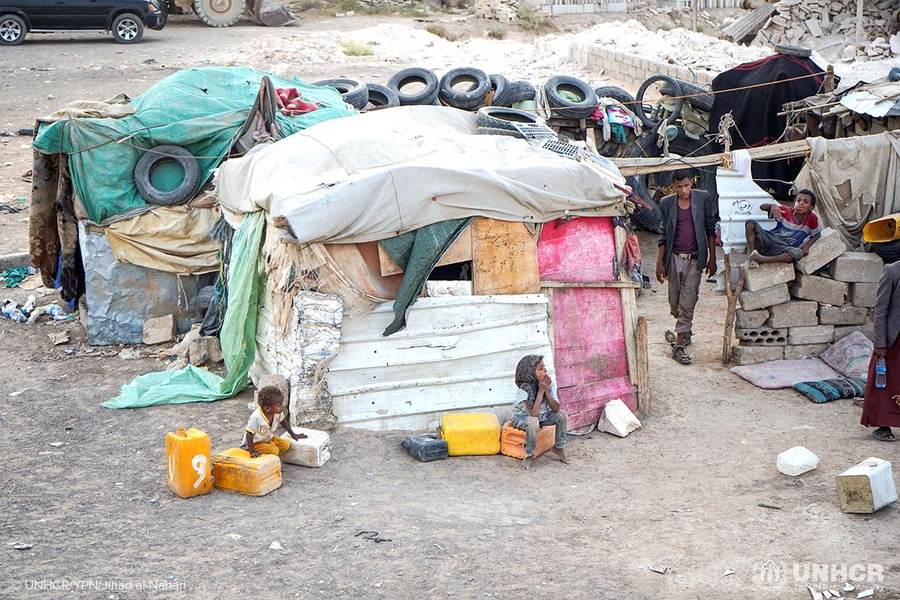
ADEN, Yemen — The Yemen displacement crisis 2026 has entered a more dangerous phase: the World Health Organization says more than 180,000 people have been uprooted across 10 provinces while cholera, dengue and measles spread through communities whose hospitals were already failing before the latest fighting.
Since August 6, renewed clashes in southwest Yemen have killed or injured 4,481 people, including more than 830 deaths reported by health authorities in Aden, according to a September 29 UN briefing. Nine health facilities have been damaged, closed or directly attacked. Only about 60 percent of Yemen's health facilities were fully operational before the surge, leaving a system with little spare capacity to absorb trauma cases, displaced pregnant women, unvaccinated children or waterborne disease.
The result is not one crisis but a chain reaction. Fighting moves families. Movement crowds temporary shelters. Crowding strains water and sanitation. Unsafe water increases cholera risk. Closed schools interrupt both learning and services. Damaged clinics redirect staff from childbirth and routine care to trauma. Each link makes the next more dangerous.
Why this matters: displacement has become the engine of the emergency
Battlefield maps measure who controls a road, port or district. Humanitarian data measures what territorial change does after the front line moves on. In Yemen, that second map is now expanding faster than the first. IOM counted 145,308 displaced people across eight governorates as of September 28, up 15,870 — more than 12 percent — in just one week. WHO's broader count exceeded 180,000 across 10 provinces. NRC said 128,000 people had been displaced since August 1, while MSF cited more than 134,000 displaced since the West Coast escalation began in June.
Those totals should not be casually combined. They cover different dates, geographic areas and tracking methods; some count verified movements while others compile a wider operational picture. The important conclusion is not that one agency must be wrong. It is that every credible measure points sharply upward, and that the gap between 128,000 and more than 180,000 is itself a warning about how hard it is to count people moving repeatedly through active conflict.
At IOM's weekly rate, the tracked population rose by about 2,267 people a day. That pace will not necessarily continue in a straight line, but it shows why aid deliveries planned against last month's caseload can be obsolete before they arrive. IOM Yemen Chief of Mission Abdusattor Esoev put the arithmetic in human terms: “Every week we count thousands more people who have left everything behind.” He said the response must “move as fast as they are.”
Taiz displacement Yemen: the center of a widening map
Taiz alone hosted 81,444 displaced people in IOM's September 28 count — about 56 percent of the eight-governorate total and nearly 8,000 more than a week earlier. Lahj hosted 34,860, Aden 12,456 and Hodeidah 8,244. Aden's count rose nearly 40 percent in one week, while displacement nearly doubled in Hadramawt and increased by two-thirds in Abyan.
The NRC Yemen displacement figures show what those percentages look like on the ground. Nearly 15,000 new arrivals reached NRC-supported sites in Taiz, Lahj and Abyan, a 78 percent jump over their pre-escalation population. Five of the 10 sites NRC supports in Taiz emptied as fighting approached, sending families from one displacement site to another. Some walked two kilometers for water; others waited six hours at a source. Families told NRC they were surviving on one meal a day, sometimes a can of tuna and bread shared among everyone.
“New families are arriving by the hour, many moving from one displacement site to another,” said Alison Bottomley, NRC's advocacy adviser in Yemen. She said families were arriving without food, spare clothing or shelter and that the humanitarian response was falling short of “the vast ocean of needs.” Her warning is also financial: Yemen's 2026 humanitarian response was just over 20 percent funded as of September, according to the NRC release citing OCHA.
MSF recorded the same pattern through a single family. Anwar Abdullah, a 29-year-old father of six, said fighting broke out near his Hodeidah home on September 10. He took his wife and children toward Mocha and then Aden, leaving everything behind. At Koud Othmani in northern Aden, they live in a temporary shelter and cook over firewood because they lack basic equipment. His account does not prove a national trend by itself; it gives the national trend its proper scale — one household losing home, income, routine and access to care in a night.
WHO Yemen health emergency: disease meets damaged hospitals
The WHO Yemen health emergency is especially dangerous because outbreaks are already underway. The UN reported roughly 7,780 suspected cholera cases, more than 9,600 dengue cases and more than 22,000 suspected measles cases. Dengue has been linked to 37 deaths. Cholera, spread through contaminated water and poor sanitation, becomes harder to contain when families crowd into improvised shelters and must travel long distances to find water.
WHO dispatched 59.3 tonnes of supplies worth about $656,000 to 40 facilities and offices across 10 governorates and supports more than 20 mobile medical teams. Yet several lifesaving stocks in its Aden warehouse had already reached zero, including trauma kits and essential medicines. Emergency obstetric and newborn care was suspended at two hospitals as staff and operating capacity shifted to incoming wounded patients. The trade-off is brutal: the same resources cannot simultaneously cover battlefield trauma, safe childbirth, vaccination, malnutrition and epidemic control.
MSF mobile teams serving four sites in Aden and Lahj saw 427 patients in their first week. Most were women and children; about 40 percent had been newly displaced. Teams reported wounds, fever, diarrhea, malnutrition, untreated chronic and infectious disease, pregnant women without antenatal care and children missing vaccinations. The nearest health facilities were four to 10 kilometers away, while fuel shortages and higher prices pushed transport and medicine beyond many families' reach.
Yemen measles and dengue cases expose the cost of interrupted prevention
Trauma dominates wartime headlines because it is immediate and visible. Measles, dengue and cholera reveal the slower loss of public health infrastructure. A damaged clinic is not only one fewer place to treat a wound. It is a lost vaccination point, prenatal visit, nutrition screening and early warning site. A closed school is not only an educational loss; in many emergencies, schools also anchor community information and child-protection networks.
UNICEF says 15 children have been killed and 14 injured since September 3, with three more missing. It also reports 243 schools closed or suspended, affecting more than 137,000 students. Before the latest escalation, 2.2 million children under five were already projected to suffer acute malnutrition in 2026, including more than half a million with severe acute malnutrition. In a recent screening of nearly 2,900 children by mobile teams, more than one in four was acutely malnourished and more than 200 had the severe form.
That baseline changes the meaning of every new displacement. A family arriving with a malnourished child is not merely seeking shelter; it needs specialized food, clinical monitoring, clean water and protection from infection at the same time. When agencies say needs are compounding, this is what they mean.
How Yemen returned to large-scale war
The fighting between Houthi forces and the Saudi-backed government resumed about two months ago after roughly four years of relative calm. The heaviest pressure has fallen across the southwest — Taiz, Lahj, Abyan, Aden and Hodeidah — where roads, ports and coastal approaches are both military objectives and civilian lifelines.
Houthi forces have taken control of Yemen's Red Sea coast, according to the UN account. The same report says they have reportedly announced a blockade on shipping from Saudi Arabia. That blockade claim is not independently confirmed and should not be treated as an established operational fact. But the location matters even without it: the Bab el-Mandeb connects the Red Sea to the Gulf of Aden, so instability around Yemen's coast can raise risk for regional trade and maritime security well beyond the battlefield.
The historical parallel is Yemen's own recent past. Relative calm did not repair the health system or erase hunger; it merely lowered the rate at which war added new damage. The current escalation is therefore landing on institutions weakened by years of conflict rather than on a recovered state. That is why 59.3 tonnes of new medical supplies can be substantial and still inadequate.
Who benefits, who loses — and what critics say
Combatants may gain territory, bargaining power or a stronger narrative from advances along the coast and around Taiz. Regional actors may see leverage in control of roads and shipping approaches. But there is no humanitarian dividend. Host communities in Aden, Lahj and Abyan absorb higher demand for rent, water, clinics and work. Aid agencies stretch already scarce funds from one community to another. Children lose school and nutrition. Patients lose routine care. Families lose assets each time they flee again.
Critics of the aid response can point to the funding gap and ask why a predictable emergency reached this point. Critics of the warring parties can point to damaged facilities, closed schools and blocked movement. The agencies' own evidence supports both concerns, but it also imposes discipline: responsibility for individual attacks and battlefield claims must be attributed, not assumed. Nine health facilities were damaged, closed or directly targeted; the available reports do not establish responsibility for every incident.
Yemen refugees in Djibouti make this a regional crisis
More than 3,600 Yemenis have crossed the sea to Djibouti since September 10, nearly half of them children, according to WHO. Partners are preparing for another 5,000 to 10,000 arrivals in the coming weeks. The crossing itself is dangerous, and Djibouti already faces high malnutrition and recent cholera, measles and malaria risks.
This outward movement matters strategically. A crisis once discussed as internal displacement is now transferring pressure across the Red Sea. If coastal fighting intensifies or southern cities become saturated, more families may decide that a dangerous boat is safer than another road through contested territory.
What happens next: three scenarios
Managed deterioration. The most likely near-term course is continued displacement without a single dramatic collapse. Mobile teams and supply deliveries prevent the worst outcomes in some districts, but disease, hunger and overcrowding worsen faster than services expand.
A front-line shock. New fighting around Taiz, Aden's approaches or the coast could produce another weekly jump like IOM's 12 percent increase. The pressure would fall first on sites already doubling in population and on hospitals already redirecting maternity capacity to trauma.
A public-health break. A sharp cholera acceleration, wider measles transmission or interruption of water supply could turn the displacement emergency into a mass-casualty event without a single new battle. The decisive variables would be clean water, vaccination access, fuel and the ability of aid workers to move safely.
The figures published from September 28 through 30 are not merely another grim update. They show that Yemen's war is crossing a threshold at which displacement itself becomes a weapon of attrition against public health. What happens next depends not only on who holds the coast or the Taiz roads, but on whether water, medicine and access can move faster than the families being forced to flee.
Sources
- UN News / WHO, September 29: displacement, casualties, disease and health-system capacity
- Norwegian Refugee Council via ReliefWeb, September 30: arrivals at supported sites and aid conditions
- International Organization for Migration via ReliefWeb, September 28: governorate totals and weekly increase
- Médecins Sans Frontières via ReliefWeb, September 29: mobile-clinic findings and Anwar Abdullah's account
- UNICEF via ReliefWeb: child casualties, school closures and malnutrition
- UNHCR: source page for the archival Yemen displacement photograph
Reporting basis: Published September 30, 2026. Agency totals use different geographic scopes, start dates and verification methods and are presented separately rather than merged. The reported Houthi shipping blockade is attributed to the UN account and has not been independently confirmed. Analysis is Signal Post News's.