Yemen Mawiya market strike
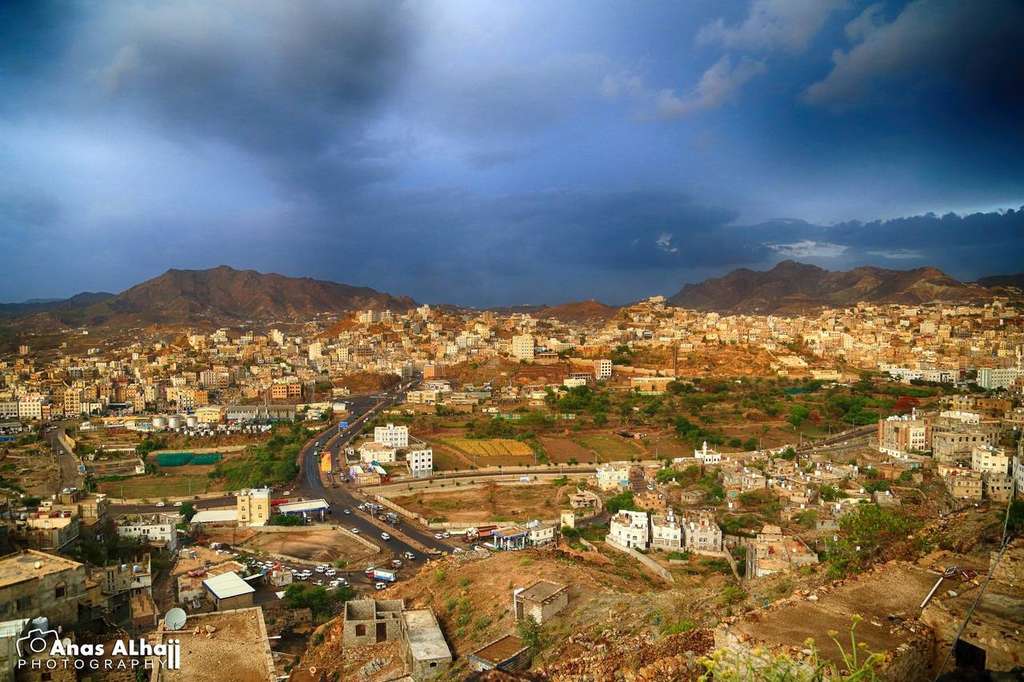
TAIZ, Yemen — The Yemen Mawiya market strike killed seven people and wounded 40, including children, at shops near the Mawiya junction in Al-Taiziyah District, Taiz province, on Sunday, according to the Houthi-run health ministry. But who carried out the attack is sharply contested: Yemen's internationally recognized government says its own forces targeted a Houthi military camp and vehicles at the same junction, while the Houthis blame Saudi aircraft — a claim Riyadh has not officially confirmed.
Why this matters
Seven dead at a market is, in the grim arithmetic of Yemen's war, a small incident — and precisely the kind that ignites larger ones. The strike lands in the middle of the sharpest escalation Yemen has seen in years: roughly 700 people killed since last month's escalation began, according to the WHO via AP, and more than 130,000 displaced. It also lands at a moment of maximum narrative contest.
The Houthi-run health ministry's account — an “atrocious crime perpetrated by enemy Saudi aircraft” hitting a market — and the government's counter-account — a legitimate strike on a Houthi camp and vehicles, with three government military sources telling Reuters the Houthis had recently established a camp near the market — cannot both be fully true. The truth determines whether Sunday's dead were victims of a war crime or collateral damage in a lawful strike. A South24 military source's assessment that Saudi aircraft were likely responsible adds weight to the Houthi version without constituting confirmation; Riyadh's silence keeps the fog intact.
What each side says
Yemen's internationally recognized government said its forces targeted a Houthi military camp and vehicles at the Mawiya junction in Taiz province. Three government military sources told Reuters the Houthis had recently established a camp near the market. The Houthi-run health ministry, by contrast, said a strike hit shops at the market, killing seven people and injuring 40, including children. Each account is presented here with attribution: Reuters could not independently verify either side's battlefield claim.
How we got here
Yemen's war, which began when the Houthis seized Sanaa in 2014, had settled into a grinding stalemate — until this month. On September 3 the Houthis launched an offensive across Taiz and Hodeida provinces that has achieved startling territorial gains, including the port city of Mocha and areas near the Bab el-Mandeb strait, the chokepoint through which a significant share of world trade passes, including waters around Mayyun Island. The internationally recognized government, backed by Saudi Arabia, has been unable to push the offensive back.
On Friday, government leader Rashad al-Alimi issued a national mobilization call; the Mecca Pact framework and a Saudi-led Red Sea naval coalition signal that Riyadh is preparing for a wider confrontation. On Saturday, Saudi Arabia said it intercepted two Houthi drones headed toward Riyadh, and schools in the Saudi capital shifted to remote learning for a week.
Houthi spokesman Yahya Sari, meanwhile, claimed 27 Saudi air force strikes across six Yemeni provinces on Saturday and said Houthi forces downed a Saudi “Karial” reconnaissance drone in Al Tinah — claims that, like all battlefield claims in this war, should be treated as assertions pending verification.
Who gains, who loses, and what the critics say
For the Houthis, a market massacre attributed to Saudi aircraft is politically invaluable — it feeds their narrative of Saudi aggression, rallies domestic support, and complicates Riyadh's international standing. For Yemen's government, admitting its own forces killed market shoppers would be devastating; framing the strike as targeting a Houthi camp the rebels “recently established” near the market shifts blame onto Houthi tactics — using civilian areas as shields, a charge with precedent in this conflict.
For Saudi Arabia, silence is strategic: confirmation invites condemnation, denial invites disproof. The losers, as always, are the civilians of Taiz — a city already described as the “city of snipers,” besieged and battered since 2015, now pushed back to the front lines of a war that had briefly promised to leave it alone. Critics on all sides will note the pattern: markets, hospitals, and funerals have been struck repeatedly in Yemen's war by multiple parties, and independent investigations have been vanishingly rare.
What the numbers actually tell us
Seven killed and 40 wounded — the DPA wire, carried by Demócrata, specifies five minors among the wounded — is a casualty ratio of roughly six wounded for every dead. That is consistent with an explosive strike in a crowded commercial area rather than a precision hit on a military target, though that alone proves nothing about intent or legality.
Set against the WHO-via-AP figure of roughly 700 killed since last month's escalation and more than 130,000 displaced, Sunday's strike is a data point in a rapidly worsening trend: Yemen is producing casualties at a pace not seen in years. The 27 strikes Sari claimed for Saturday across Taiz, Marib, Saada, Amran, Ibb, and Hajjah, if even approximately accurate, describe an air campaign operating at a tempo far above the war's recent baseline.
What happens next
Escalation spiral. If Riyadh confirms or is convincingly shown to have conducted the strike, expect Houthi retaliation toward Saudi territory, following the established pattern of the intercepted Riyadh-bound drones.
Narrative warfare. Both sides weaponize the dead: Houthi media will run the market imagery; government media will run the “camp near the market” line; independent verification will lag by weeks, if it comes at all.
Widening war. With the Red Sea naval coalition forming, the Mecca Pact in play, Houthi control near Bab el-Mandeb, and a Houthi-declared blockade on Saudi energy exports layered over Iran's closure of the Strait of Hormuz, the regional energy-security stakes of Yemen's war are now global.
The most probable near-term outcome is more of the same, faster: Taiz pushed fully back into a front-line city, civilian casualties mounting, and attribution disputes hardening into the casus belli for the next round.
Sources
- Reuters: Seven killed in strike at Yemen market, Houthi-run ministry says
- DPA via Demócrata: seven dead and 40 wounded at the market
- South24 Center: military source assesses Saudi aircraft likely responsible
- TBS News: Reuters report on the contested claims
- WHO casualty and displacement figures via the Associated Press
Reporting basis: Published September 27, 2026. The casualty toll is attributed to the Houthi-run health ministry; the government and Houthi accounts of the target and attacker remain in direct conflict. Riyadh had not officially confirmed responsibility. Analysis is Signal Post News's.