Yemen hospitals overwhelmed civil war 2026
ADEN, Yemen — The phrase Yemen hospitals overwhelmed civil war 2026 is no longer a warning about what could happen. It describes wards already out of beds, maternity units turned into trauma rooms and a seven-year-old boy carried 270 kilometers — about 170 miles — from Mokha to Aden because his father could not find treatment closer to home. Associated Press reporting from southern Yemen describes a health system in a “very dangerous” condition as war-wounded patients arrive faster than facilities can find medicine, oxygen, fuel, staff or space.
The boy, Tarek al-Salami, was suffering from malnutrition and diarrhea when his father, Mohammed, brought him to Aden. The first hospital had no bed because wounded patients had overwhelmed it. A therapeutic feeding center admitted Tarek in what Dr. Arwa Atef called an “acute crisis.” More than a week later, AP reported, he was walking again. His recovery is a narrow success inside a much larger systems failure: care was available only after a long, dangerous journey and only because another facility still had the staff and therapeutic supplies to accept him.
Across affected areas, hospitals are short of medicines and workers, some facilities have been overtaken by armed forces, pregnant patients are being turned away, and children are sharing incubators and beds. The United Nations said most affected hospitals and primary-care centers closed during the first 48 hours of the escalation before resuming operations. The World Health Organization said fewer than 10% of affected health centers were fully equipped for trauma care. Those figures do not mean every hospital has collapsed. They mean the reserve capacity needed for a mass-casualty war is almost gone.
Why this matters
A hospital crisis changes the meaning of every battlefield statistic. A wound that might be survivable in a functioning system becomes fatal when the ambulance lacks fuel, the operating room lacks anesthesia or the referral hospital has no bed. The same shortage then reaches patients who never went near the front: a woman in obstructed labor, a premature infant needing an incubator, a child whose diarrhea becomes dangerous because malnutrition has weakened his body.
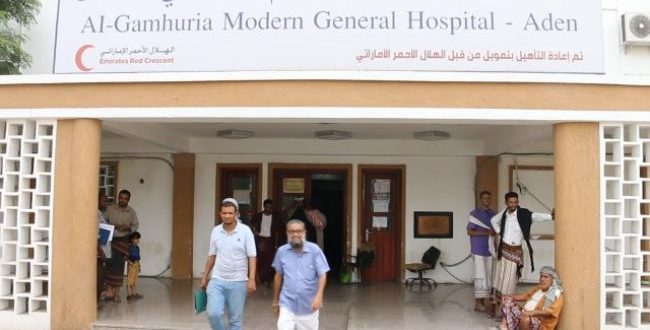
This is why the Yemen war wounded hospitals crisis cannot be measured only by the number of combatants admitted. AP reported that Taiz hospitals had received about 635 casualties, including 112 bodies, while three of the governorate's 17 hospitals were no longer under government control. Al-Gamhouria hospital in Aden received more than 60 wounded patients in one week. The International Committee of the Red Cross delivered 22 tons of medical supplies to overwhelmed hospitals in Sanaa. AP also reported hundreds of wounded patients at a private hospital in Houthi-held territory, although the total number of fighter casualties remains unclear.
WHO figures supplied in current humanitarian reporting count 674 people killed and 2,998 injured since August. Those numbers cover the wider escalation, not a verified hospital census, and they should not be treated as a complete combatant-civilian breakdown. The UN human-rights office separately documented 32 civilian deaths since August, including 15 children and three women. The difference between those totals reflects different methodologies and scopes, not a contradiction that can be resolved by simply choosing the larger number.
Aden hospital with no beds for war wounded
The Aden hospital no beds war wounded account makes the pressure tangible. Aden is the seat of Yemen's internationally recognized, Saudi-backed government and is far from some of the heaviest fighting, yet its hospitals are absorbing patients from a much wider catchment. When a referral center fills, the strain travels backward along the road: district hospitals keep patients they cannot properly treat, ambulances search farther afield and families shoulder transport costs they cannot afford.
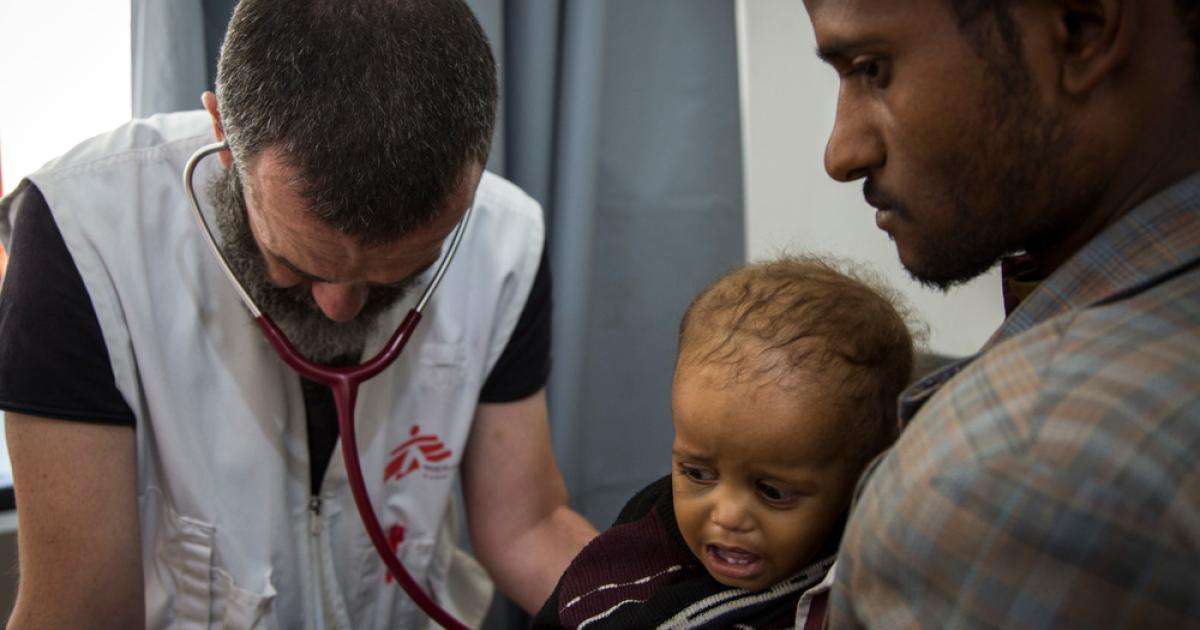
Medical workers told AP that anesthesia, oxygen, gloves, fuel, generators, specialists and ordinary medicines were all in short supply. Staff flight deepens every material shortage. A ventilator without a trained respiratory team or an operating theater without anesthesia is capacity on paper, not at the bedside. Fuel shortages can stop generators, cold chains and ambulances at once, turning an energy problem into a medical one within hours.
Before and after: a weak system meets a new offensive
Yemen's war began in its current form after the Houthis seized Sanaa in 2014 and a Saudi-led coalition intervened the following year on behalf of the internationally recognized government. The conflict is now in its twelfth year. A UN-brokered truce in 2022 sharply reduced cross-border attacks and largely froze the main front lines even after the formal agreement expired. It did not rebuild hospitals, restore regular salaries or erase hunger. It did give exhausted institutions a period in which the flow of mass casualties was lower.
That before-and-after distinction matters. Before the latest escalation, Yemen was already losing about three women every day to pregnancy-related complications, according to figures cited in the AP report. After the August 2026 offensive widened and fighting intensified into September, maternity wards were converted to emergency rooms and some pregnant patients were turned away. About 2,000 pregnant women were on the move and more than 200 were expected to give birth soon. A system built for chronic scarcity is now being asked to absorb acute war trauma without shedding its existing patients; in practice, it is shedding them.
The Houthi advance along the Red Sea coast and fighting around Taiz have pushed casualties and displaced families south and east. Saudi-backed forces say they repelled a Houthi attack on the Hejat al-Abd pass along the Taiz–Aden road, but that localized defense does not reverse the larger medical pressure. The road is both a military supply line and a civilian referral route. If it is cut or repeatedly contested, the same geography that slows reinforcements also slows ambulances.
Bab el-Mandeb turns a hospital emergency into a global risk
Yemen's western coast overlooks Bab el-Mandeb, the narrow gateway between the Red Sea and the Gulf of Aden used by shipping moving toward the Suez Canal. Territorial control of the coast is not the same as control of the waterway, but it can create launch, observation and interdiction positions. Renewed fighting therefore links a local health collapse to global trade and maritime security.
The international incentives are uneven. Shipping companies, importers and crews lose when insecurity raises insurance, routing and fuel costs. Aid agencies lose access and purchasing power when ports and roads are disrupted. Armed actors may gain leverage from controlling terrain near the chokepoint. Yet pressure on Bab el-Mandeb also gives outside powers a reason to prioritize navigation over hospitals — treating civilian care as a secondary humanitarian file rather than part of the same security equation.
Yemen's health-system collapse in 2026 is also a hunger crisis
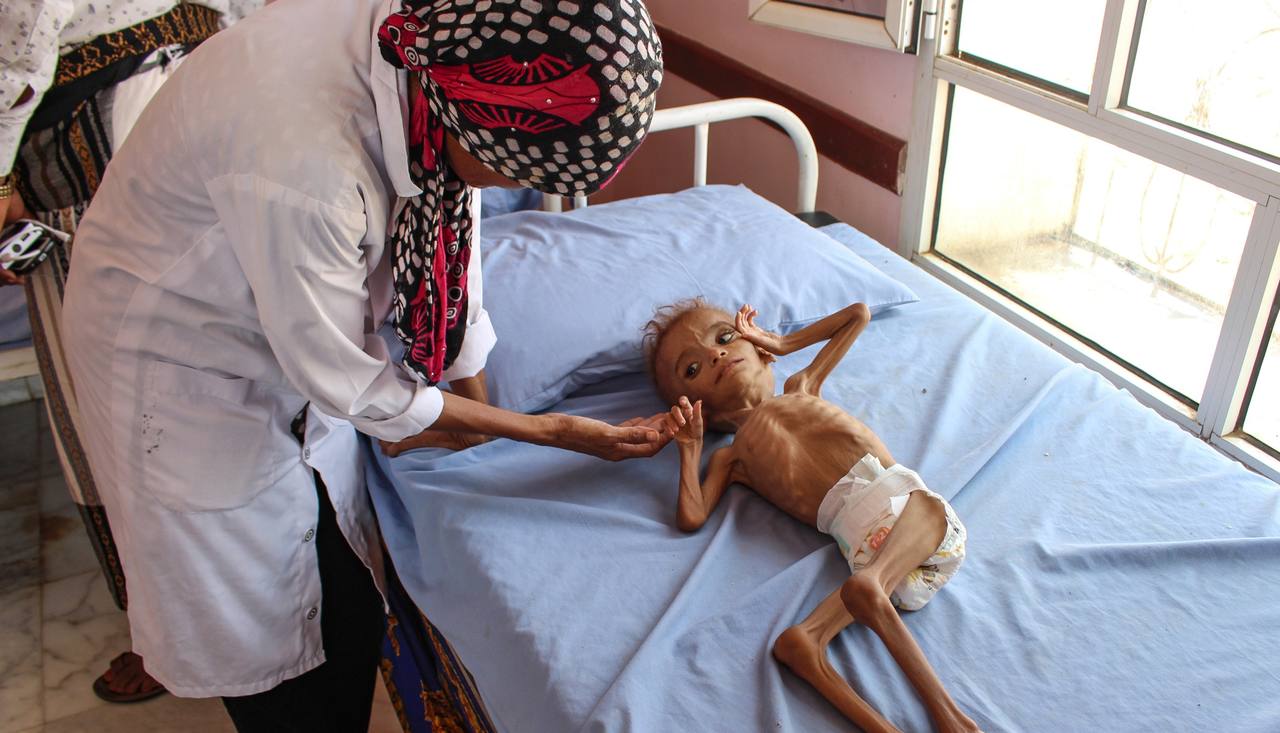
Tarek's case connects trauma capacity to nutrition. UNICEF reported on September 25 that more than a quarter of nearly 2,900 children screened in accessible areas were acutely malnourished, including 200 in the severe category. The screening was not nationally representative and could not reach the hardest-hit areas, so it establishes neither a national prevalence rate nor a full count. It does show severe need among children aid teams could reach. Our report on Yemen's child-malnutrition surge explains why diarrhea and displacement can turn undernutrition into a medical emergency.
The comparison with Yemen's 2018 near-famine period is instructive. Then, large-scale aid operations and therapeutic feeding helped prevent the worst projections from becoming reality, even as millions remained food insecure. In 2026, the baseline is still severe, but access constraints, detained aid personnel, staff flight and renewed front-line movement leave fewer buffers. The medical system is not confronting one emergency after another; it is confronting trauma, hunger, childbirth, infectious disease and displacement at the same time.
Cross-crisis comparison: displacement multiplies every shortage
More than 130,000 people have fled during the renewed fighting, according to UN reporting cited by AP. The exact total varies by reporting date and tracking system: one UN human-rights update put displacement at about 125,000, while UNICEF later cited more than 133,000. The safest conclusion is direction and scale — well over 100,000 people displaced in weeks — rather than false precision.
Compared with a sudden earthquake or flood, war displacement is harder for health planners because the routes, destinations and facilities can remain dangerous. Compared with Yemen's quieter post-2022 years, families are again moving while clinics close temporarily, change hands or lose staff. Compared with other current conflicts, Yemen's documented civilian death toll is lower than some headline totals, but the interaction between injury, malnutrition and a hollowed-out health system means raw deaths do not capture the risk. A smaller influx can break a system that was already operating beyond capacity.
The first 48 hours are a useful stress test. The UN said most affected hospitals and primary-care centers closed and later resumed. Reopening is not the same as recovering: a clinic can unlock its doors while lacking trauma supplies, specialists or fuel. The meaningful measure is not whether a building is open, but what care it can safely deliver.
Who benefits, who loses and what the Houthis say
No civilian constituency benefits from hospitals losing capacity. Patients with trauma, pregnant women, newborns, malnourished children, displaced families and medical workers bear the direct costs. The Saudi-backed government loses legitimacy when people in areas it administers cannot obtain basic care. The Houthis may gain military leverage from territorial advances, but they also assume responsibility for facilities and populations in areas they control. Saudi Arabia can use air power to blunt advances, yet any strike that damages civilian infrastructure or adds casualties intensifies the same hospital emergency it is meant to contain.
The Houthis reject the UN's framing of the escalation. Spokesperson Mohammed Abdulsalam said the human-rights office was “no longer impartial,” called its allegations false and unsupported, and accused it of overlooking Saudi attacks on a correctional facility in al-Hazm as well as homes and schools. Those are claims by a party to the conflict and require independent investigation. The UN, for its part, has demanded the release of more than 70 personnel detained by the Houthis. Detentions and restrictions on access make it harder to verify both Houthi accusations and allegations against the movement.
That evidentiary problem should not flatten all claims into equivalence. Hospital admissions, supply deliveries and named medical testimony can be checked more directly than battlefield casualty claims. The AP reporting supports a clear conclusion about capacity strain. It does not establish a complete allocation of blame for every injury, closure or shortage.
What happens next
Scenario one: emergency stabilization
A localized ceasefire or humanitarian access agreement could keep the Taiz–Aden corridor open, protect medical facilities and allow fuel, oxygen, blood products and trauma kits to move. External donors could finance salaries and generators while the ICRC, WHO and other agencies expand deliveries. This would not repair the health system, but it could keep preventable deaths from rising sharply.
Scenario two: a grinding, divided system
The most plausible near-term course is neither peace nor total collapse. Front lines harden; hospitals remain open intermittently; wounded patients are shifted between government- and Houthi-held areas; families pay for longer journeys; and malnutrition worsens through the end of the year. Under this scenario, the Yemen health system collapse 2026 is uneven — one ward, district and supply chain at a time — and therefore easy for the outside world to normalize.
Scenario three: wider escalation around the coast and Taiz
If fighting expands along the coast, around the highlands or near Bab el-Mandeb, mass-casualty demand would rise while access contracts. Hospitals could be captured, damaged or emptied of staff; maritime insecurity could raise import costs; and further displacement would send more pregnant women and malnourished children toward facilities already refusing patients. The fight over the Taiz–Aden road and the UN's documented civilian-casualty warning are the two immediate indicators to watch.
The most important signal will not be a single casualty number. It will be whether hospitals can keep operating after the next surge: beds available, operating rooms staffed, generators fueled and maternity care protected rather than displaced. Tarek walked again because one center still had a place for him. Yemen's crisis is that the next child, wounded civilian or pregnant woman may reach the end of the same journey and find no door left open.
Sources and reporting notes
- Associated Press via KCAU 9 — hospital reporting from Aden, Taiz and Houthi-held areas
- Associated Press via Florida Sun Journal — “Yemen's civil war returns and overwhelms hospitals”
- Reuters — UNICEF's September 25 child-malnutrition briefing
- UN Human Rights Office — civilian casualties, displacement and detained UN personnel
Reporting cutoff: September 26, 2026. AP's medical reporting anchors this article. Belligerent casualty and territorial claims remain attributed; access limits prevent a complete independent count. Historical photographs do not depict the September 2026 emergency.