Wicknell Chivayo helicopter crash
Wicknell Chivayo Helicopter Crash: Zimbabwe Billionaire, Wife Killed
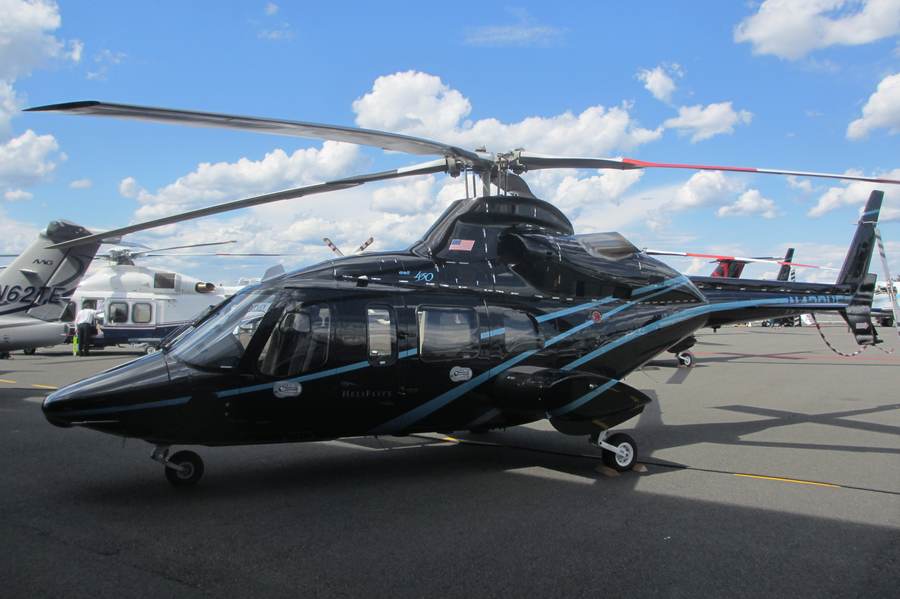
The aircraft came down at Kudenga Farm near Waddilove Mission in the Marondera rural area at about 5 p.m. local time on Wednesday, September 30, according to police and reports carried by Reuters via Sowetan, Informanté and The Sun Nigeria. The site is roughly 70 kilometers east of Harare. The flight had left Gandami in Chikomba, where Chivayo and Muteke were building a rural home, and had been airborne for about 40 minutes.
Zimbabwe Republic Police said six people were aboard and there were no survivors. Five have been publicly named: Chivayo, 43; his wife, Lucy “Lulu” Muteke; her aide Senelisiwe Magagula; and pilots Captain Kelvin T. Soda and Captain Courage Mutavirwa. Early official and media reports alternated between six and seven occupants. Police have not yet released a reconciled passenger manifest that explains the different totals or identifies a sixth person. That distinction is not bookkeeping trivia; it is an early test of the investigation’s command of basic facts.
The bodies were badly burned and authorities said DNA testing would be required for formal identification. Government spokesman Nick Mangwana confirmed the crash, police spokesman Paul Nyathi provided the official account, and family spokesman Herbert Chivayo confirmed the deaths to ZBC News.
Bell 430 helicopter crash Zimbabwe: what investigators have said
Civil Aviation Authority of Zimbabwe director-general George Mashababe said the first indications were that the tail struck the ground, fuel spilled and a fire followed. Those are observations from the scene, not a final finding about cause. There has been no official determination of mechanical failure, pilot error, weather, loading or any other initiating event, and responsible analysis has to stop where the evidence stops.
The next phase of the Zimbabwe private helicopter crash investigation should document the wreckage field, preserve flight-control and engine components, examine maintenance and operator records, reconstruct the route and weather, and establish whether usable cockpit, flight-tracking or other recorded data exist. “Black box” is a familiar phrase, but not every private helicopter carries the same crash-protected recorders required on large airliners. Investigators must first say what equipment this Bell 430 carried and what survived.
Wicknell Chivayo wife Lucy Muteke helicopter crash: a family tragedy
Public attention inevitably fixes on Chivayo’s wealth and political ties, but the casualty list represents several families at once. Muteke was a public figure in her own right; Magagula was traveling as her aide; Soda and Mutavirwa were aviation professionals whose final actions will be scrutinized alongside the machine they flew. Any state ceremony, political tribute or business reckoning should not erase the other people killed.
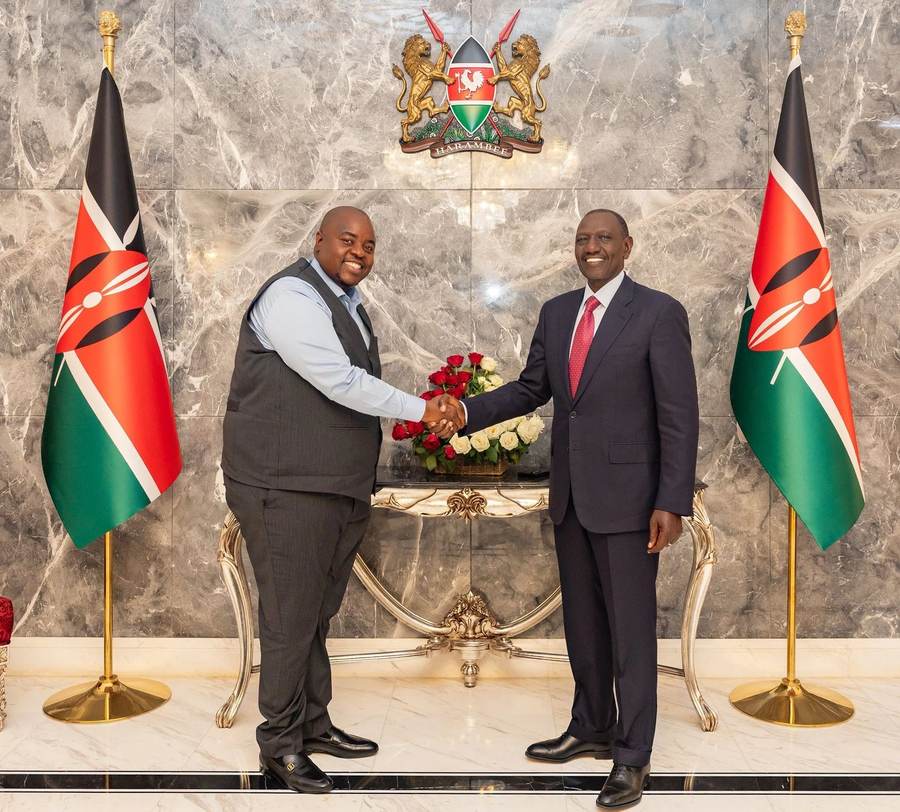
President Emmerson Mnangagwa wrote of “deep shock and grief” on X. Kenyan President William Ruto called Chivayo “a dear friend” and praised “his friendship, his energy and his deep conviction in the possibilities of our continent.” The two had met repeatedly, most recently for a nearly three-hour private dinner at State House Nairobi on September 9.
Why this matters: the loss of a central business-political node
Chivayo’s importance was not reducible to a balance sheet. He occupied the junction where state procurement, ruling-party proximity, cross-border dealmaking and highly visible private generosity met. In patronage systems, such figures are conduits: they connect officials to contractors, financing ambitions to political assurances, and elite networks to a public narrative of success. Removing one conduit does not dismantle the system, but it can unsettle obligations that depended on personal access rather than transparent institutions.
That matters as Zimbabwe approaches its next political cycle. Chivayo’s close identification with Mnangagwa and his conspicuous support for politically connected causes made him valuable to allies and a symbol for critics. His death can trigger competition over unfinished contracts, relationships and influence. It may also make officials more guarded about arrangements once defended through his personality and access.
For regional investors, the signal is double-edged. The crash itself is an aviation tragedy, not evidence about every Zimbabwean company. Yet the uncertainty around succession at a major contractor and the unresolved passenger count reinforce a familiar concern: whether institutions can provide reliable records when a powerful individual is suddenly removed. Investors price governance risk through continuity, disclosure and enforceable contracts. The coming response will therefore be watched far beyond Harare.
Intratrek Zimbabwe founder Wicknell Chivayo and the Gwanda solar project
Born in Chivhu in November 1982, though some profiles have given 1980, Chivayo founded and led Intratrek Zimbabwe in energy and infrastructure. He cultivated the title “Sir Wicknell,” showcased luxury cars and private aviation online, and gave expensive vehicles and cash to clergy, musicians, footballers and other public figures. Supporters viewed those gifts as philanthropy; critics saw a display inseparable from government-linked wealth.
The Gwanda solar project Intratrek story became the central test of his record. The 100-megawatt project, awarded around 2015, suffered years of delay and disputes over an advance payment. Criminal proceedings and related litigation followed, but Chivayo was cleared in court. A separate controversy over election materials led to scrutiny of a deal involving Ren-Form; in December 2025, the Zimbabwe Anti-Corruption Commission said it had found no evidence directly implicating him in the transaction it examined. Chivayo denied fraud and procurement wrongdoing.
That legal history requires precision. It is legitimate to ask how contracts were awarded and delivered. It is not legitimate to turn scrutiny into guilt after courts or investigators declined to sustain a case. The same discipline should govern reporting on Intratrek now: identify each live contract, its contractual counterparty, milestones, payments and succession clauses before predicting collapse or windfalls.
Chivayo Mnangagwa ties and Kenya expansion
The businessman’s proximity to Mnangagwa was central to both his influence and the questions around it. In Kenya, a parallel relationship with Ruto was taking shape. Chivayo said after the September dinner that he intended to invest US$200 million—about Ksh25.9 billion—in Kenyan infrastructure. That was his public claim; State House had not independently confirmed a committed portfolio of projects.
Earlier reporting had linked his IMC Construction Kenya to a consortium around the proposed Jomo Kenyatta International Airport expansion. Transport Cabinet Secretary Davis Chirchir said the company “did not participate as a bidder” and had “no role, involvement or association” with the procurement. Chirchir also said the project figure was Ksh154.2 billion, not the Ksh375 billion widely circulated. The clarification is crucial because personal access to a president is not proof of a government contract.
In August, Chivayo and Muteke visited Ruto’s Intonna Heritage Farm in Kilgoris, where the president was filmed driving him toward a helipad. The William Ruto Chivayo tribute after the crash therefore reflected a relationship visible in both political and family settings—not merely a ceremonial acquaintance.
Who is affected now
Intratrek and its partners: counterparties will need clarity on corporate authority, ownership, insurance and who can sign, finance or renegotiate work. A founder-centered company can keep operating, but only if its governance is stronger than the founder’s personal network.
Political circles in Harare and Nairobi: allies lose a connector who could move between presidents, contractors and public audiences. Rivals may seek his space. Officials will be pressed to distinguish documented state business from conversations and public pledges.
Recipients of his giving: churches, sports figures, artists and community beneficiaries may lose a major donor. Their grief can coexist with public-interest questions about the origin and structure of his wealth; neither should be weaponized to silence the other.
The families: formal identification, return of remains and funeral arrangements come before political accounting. The passenger-count discrepancy must be resolved without forcing relatives to learn critical facts from rumor.
Helicopter risk in context—not a verdict on this crash
A PLOS One study of U.S. civil-helicopter data cited an average of about 4.8 accidents and 0.7 fatal accidents per 100,000 flight hours from 2005 onward. A related turboshaft analysis found the odds of an accident for twin-engine helicopters were about 0.49 times those for single-engine aircraft after accounting for other factors. The Bell 430 is twin-engine, but a population-level association cannot explain one accident.
More recent U.S. figures show improvement: the FAA said 2024 produced a 25-year-low fatal accident rate of 0.45 per 100,000 hours and an overall rate of 3.05. Those figures are useful as a benchmark, not as a proxy for Zimbabwe, where comparable public exposure data and private-flight-hour totals are limited.
The 2020 Sikorsky S-76 crash that killed Kobe Bryant and eight others is often invoked whenever a prominent passenger dies in a helicopter. The comparison should teach method, not encourage analogy. The U.S. National Transportation Safety Board found continued visual flight into instrument conditions, spatial disorientation and loss of control in that case. Investigators reached that conclusion through weather, radar, operational and wreckage evidence. Nothing released in Zimbabwe establishes the same chain. Fire after impact, present in many high-energy crashes, does not by itself identify what caused the aircraft to hit the ground.
What happens next
First comes site control and wreckage recovery. Investigators should map the debris, document impact marks, secure fuel and maintenance evidence, and determine whether foreign technical assistance from the aircraft or engine manufacturers is needed. Any recorder, avionics memory or flight-tracking data must be preserved and described plainly.
Second comes identity and manifest reconciliation. DNA results should formally establish who died, while police must publish one authoritative occupancy count. If a sixth victim has not been named at the family’s request, authorities can say so without disclosing the identity prematurely.
Third comes the business and political succession. Watch for Intratrek board or family statements, notices from contracting agencies and disclosure of which projects are still active. In Kenya, the useful question is not who attended dinner but whether any signed, funded agreement existed.
Finally comes the public farewell. Chivayo’s proximity to Mnangagwa makes some form of high-level or state-associated honor plausible, but no official decision had been announced at publication. The funeral will be a moment of grief and political symbolism. It should not substitute for the harder work: a credible aviation report, an accurate manifest and transparent handling of the contracts left behind.
Sources
- Reuters via Sowetan — crash confirmation, official statements and political context.
- Informanté — Reuters and ZBC reporting on the crash and family confirmation.
- The Sun Nigeria — victim, location and preliminary-investigation details.
- People Daily — Chivayo’s final meetings with President William Ruto.
- Federal Aviation Administration and PLOS One — comparative helicopter-safety data.
Published October 1, 2026. Early casualty reports conflict between six and seven occupants; police said six, while five victims had been publicly named. This report will require correction if authorities release a reconciled manifest or final cause finding.