WAR · SUDAN · NORTH KORDOFAN
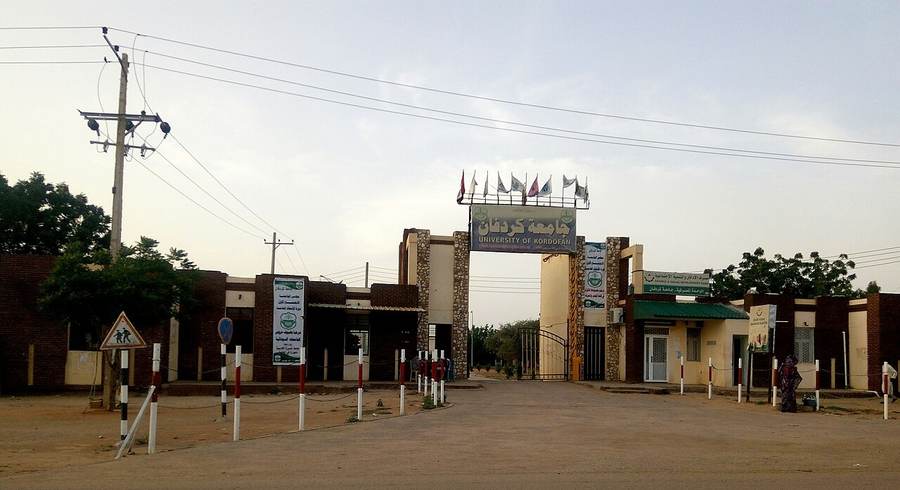
EL OBEID, Sudan — An El Obeid drone strike hit a Kordofan University dormitory on Thursday, October 1, killing five civilians and injuring 47 others, according to the Sudan Doctors Network. The local medical aid group said the casualty count was based on “preliminary information” and attributed the attack to the Rapid Support Forces. Neither the RSF nor the Sudanese army had responded in the available reporting, so responsibility has not been independently established.
The strike was reported by The Eastleigh Voice, citing the Sudan Doctors Network, and was also carried by Radio Tamazuj via GDELT/AtlasWire and Sudan Tribune reporting archived by News as Facts. Across those accounts, the core facts align: the target was a dormitory at the university in North Kordofan's capital, the casualties were civilians, and medics described the toll as provisional.
Why this Sudan university dormitory attack matters
A dormitory is not simply another building on a battlefield map. It is housing attached to an educational institution, occupied because students and staff need somewhere to live and study. Striking such a site multiplies harm: people are killed or injured, families may pull students from classes, university operations become harder to sustain, and a space associated with civilian life becomes a place of fear. The Sudan Doctors Network described the attack as a grave violation of international humanitarian law. That is the group's legal characterization; a formal determination would require an independent investigation into the target, weapon, intent and precautions taken.
The location also matters. El Obeid sits on the road and logistics corridor connecting RSF-held Darfur with the army-held center and east of Sudan. Whoever can isolate, hold or bypass the city can shape movement across the country. That gives the Kordofan campaign significance beyond one provincial capital: it is a contest over the bridge between western strongholds and the national heartland.
Drones have changed how that contest is fought. Long-range systems let both the RSF and the Sudanese Armed Forces strike far behind immediate front lines, applying pressure without first taking territory. The United Nations human rights office said at least 1,120 civilians were killed in drone strikes across Sudan from January through June 2026, accounting for 80 percent of the civilian deaths it documented in that period. OHCHR has said both parties use long-range drones, an essential corrective to any narrative that treats the technology as belonging to only one side.
The Kordofan campaign after El Fasher
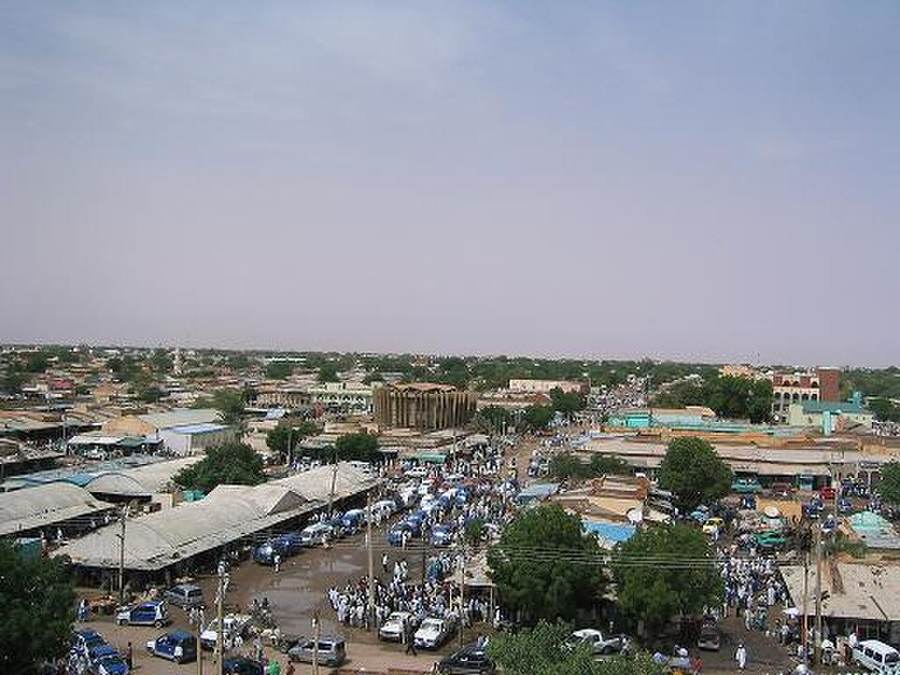
The geography of the war shifted after the RSF captured El Fasher in October 2025, consolidating its position in Darfur. By then, Sudan had already fractured into rival military zones after the war that began in April 2023. The army's later recapture of Khartoum restored the capital to its side and redirected attention westward. In September 2026, the army and allied forces also entered Sodari in North Kordofan, although control across the wider locality remained contested.
That sequence explains why El Obeid is now under such pressure. An army advance west threatens RSF routes and positions; sustained attacks on El Obeid can slow that advance, force air defenses and medical services to spread out, and create political pressure without the immediate costs of an urban ground assault. For the RSF, if the medics' attribution is correct, drones offer reach and deniability. For the army, holding the city protects a staging point toward Darfur. For civilians, the same logic turns daily life into strategic terrain.
The recent pattern is not limited to the university dormitory. On September 9, a drone hit a college in El Obeid, tearing off part of a roof and killing a security guard, according to reporting that quoted dean Abdel Aziz al-Sheikh. North Kordofan authorities then said strikes on Monday hit Sports City and Shikan University College, and they blamed the RSF. The Thursday attack therefore appears as part of a sequence of pressure against public and educational sites, not an isolated incident.
European governments, in a joint warning cited by The Eastleigh Voice, said El Obeid had endured ten consecutive days of drone strikes that killed at least 50 civilians. They warned that roughly 500,000 people were at risk of large-scale atrocities. Those figures describe a population-level emergency. They do not establish the perpetrator of every strike, but they show that the casualty risk extends far beyond one campus.
RSF pressure without a ground assault — and the civilian cost
A drone campaign can serve several military purposes at once. It can test air defenses, interrupt resupply, hit command sites, force troops to disperse and terrorize a population into flight. It can also prepare conditions for a later ground offensive by degrading infrastructure and creating uncertainty about where the next strike will land. Whether that is the plan in El Obeid remains analysis, not a confirmed operational order.
The strategic benefit is asymmetrical. An attacker can impose fear and disruption without immediately committing large formations to urban combat. The defender must protect military positions, roads, hospitals, universities, power systems and crowded neighborhoods at the same time. Civilian institutions lose in every version of that contest: if they remain open, they are exposed; if they close, education, health care and local government erode.
The silence from both belligerents is important. The RSF has not publicly answered the Sudan Doctors Network's accusation in the reporting reviewed here. The army has not issued a response either. In a war saturated with competing battlefield claims, absence of comment is not proof of responsibility. It increases the need for weapon-fragment analysis, verified imagery, witness accounts and a transparent investigation.
What the numbers say about Sudan war civilian casualties
Five killed and 47 injured: the reported toll at the dormitory means more than nine people were injured for every person killed. That ratio may reflect the concentration of people in student housing, the weapon's blast pattern, rapid medical access or an incomplete early count. It should not be overinterpreted before hospitals and responders reconcile their records.
At least 1,120 drone deaths in six months: OHCHR's January-to-June figure shows that remotely delivered explosives have become a principal source of documented civilian death in Sudan. The 80 percent share is especially striking, but it describes deaths documented by the office, not a complete national count. Verification is difficult in inaccessible conflict zones, so the true toll may differ.
At least 12,314 reported fatalities in Kordofan since April 2023: ACLED's total, cited in reporting on the battle for the east-west corridor, places the dormitory attack within a much larger campaign. ACLED event data are built from reported incidents; they are a structured measure of recorded political violence, not a final death registry.
At least 50 civilians in ten days: the European statement's El Obeid figure is more than a statistic. It indicates a sustained tempo of attacks, and the warning that about 500,000 civilians are at risk identifies the scale of potential harm if the city becomes encircled, services fail or a major ground battle begins.
The September 9 college strike provides a concrete comparison. That attack killed one guard and damaged a roof. Thursday's reported toll was substantially higher and again involved an educational site. The pattern raises a critical investigative question: are campuses being deliberately targeted, struck because military assets are nearby, or hit through failures of distinction and precision? The current public record does not answer it.
Who benefits, who loses
The RSF could gain leverage without taking the city if repeated strikes disrupt military logistics and convince residents that the army cannot protect them. That assessment depends on the medics' attribution being correct. A prolonged campaign could also backfire by hardening local opposition, inviting wider condemnation and producing evidence for future accountability proceedings.
The army benefits from holding El Obeid because the city anchors movement toward Darfur and protects its western approach. Yet control carries an obligation to reduce military use of civilian sites and protect people under its authority. The fact that SAF also operates long-range drones means its own strikes elsewhere require the same scrutiny being applied to the RSF allegation here.
Civilians bear nearly every downside. Students lose safe housing and study, families face displacement, hospitals absorb mass casualties, and traders confront damaged roads and disrupted supply. The possibility of an El Obeid siege would make those losses compound: food, fuel, medicine and communications can become instruments of pressure even before front lines move.
Is El Obeid becoming the next El Fasher?
The comparison is unavoidable because El Fasher endured a long siege before falling to the RSF in October 2025. Both cities carry strategic and symbolic weight, and both became refuges for civilians as front lines tightened. Repeated attacks on public facilities can look like the early stages of isolation: degrade services, exhaust defenders, push residents out and make a later assault easier.
But analogy is not destiny. El Obeid sits in a different operational setting, with different supply routes, army deployments and distances from RSF strongholds. The army's recovery of Khartoum and advance into parts of North Kordofan mean the balance around El Obeid is not identical to El Fasher's final months. Calling it “the next El Fasher” is therefore a warning about a possible trajectory, not a statement that the same outcome is inevitable.
The indicators to watch are concrete: whether strikes expand from episodic attacks into continuous suppression of roads and utilities; whether RSF ground units mass near approaches to the city; whether the army can keep supply routes open; whether hospitals and universities close; and whether civilian departures accelerate. Evidence on those points would distinguish coercive drone pressure from preparation for a larger offensive on the Darfur corridor.
Ceasefire diplomacy faces a battlefield clock
U.S. envoy Massad Boulos has promoted a 90-day ceasefire intended to open the way to political negotiations. Army leader Abdel Fattah al-Burhan rejected the visa-conditioned deal as presented, and his camp has demanded changes including an RSF withdrawal from urban areas. The dispute is not abstract in El Obeid. Every day without a pause leaves civilians exposed to a strike cycle that can move faster than diplomacy.
A ceasefire that merely freezes positions would not automatically protect campuses or homes. It would need explicit prohibitions on attacks against civilian objects, verified separation of military assets from schools and dormitories, monitoring access, and consequences for violations by either side. Conversely, waiting for a complete political settlement before stopping attacks would make civilians absorb the price of every unresolved negotiating point.
Three near-term paths are plausible. The first is continued drone pressure without a ground assault, intended to stretch defenses and bargaining power. The second is escalation toward encirclement or a coordinated advance. The third is a monitored pause that interrupts strikes before a siege dynamic takes hold. The university attack increases the urgency of the third path, but it does not make agreement more likely by itself.
For now, the most defensible conclusion is limited but serious: medics report a mass-casualty strike on civilian student housing; they blame the RSF; that attribution remains unverified; and the attack fits a documented escalation around a city central to Sudan's east-west war. The next evidence — independent investigation, belligerent responses and movement on the ground — will determine whether Thursday was another episode in a drone campaign or a marker on the road to a larger battle.
Related coverage
Sources and reporting notes
- The Eastleigh Voice — Sudan Doctors Network casualty figures, preliminary attribution and the European governments' warning.
- Radio Tamazuj via GDELT/AtlasWire — corroborating report on the university dormitory strike.
- Sudan Tribune reporting archived by News as Facts — additional report on casualties and attribution.
- Kordofan campaign context — Reuters and ACLED data on the corridor, prior attacks and reported fatalities.
Reporting cutoff: October 1, 2026 at 9:55 p.m. PDT. Casualty figures and attribution were preliminary. Signal Post News has not independently verified the weapon, launch point or perpetrator. Strategic assessments about siege risk, coercive pressure and possible ground operations are analysis based on the reported pattern, not confirmed plans.